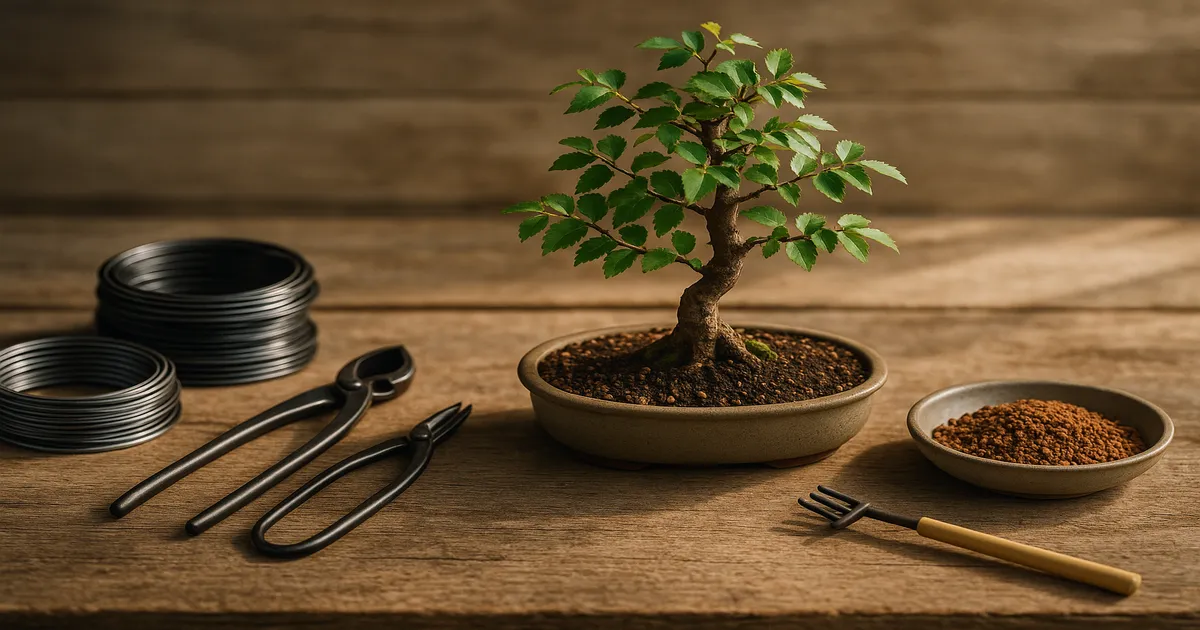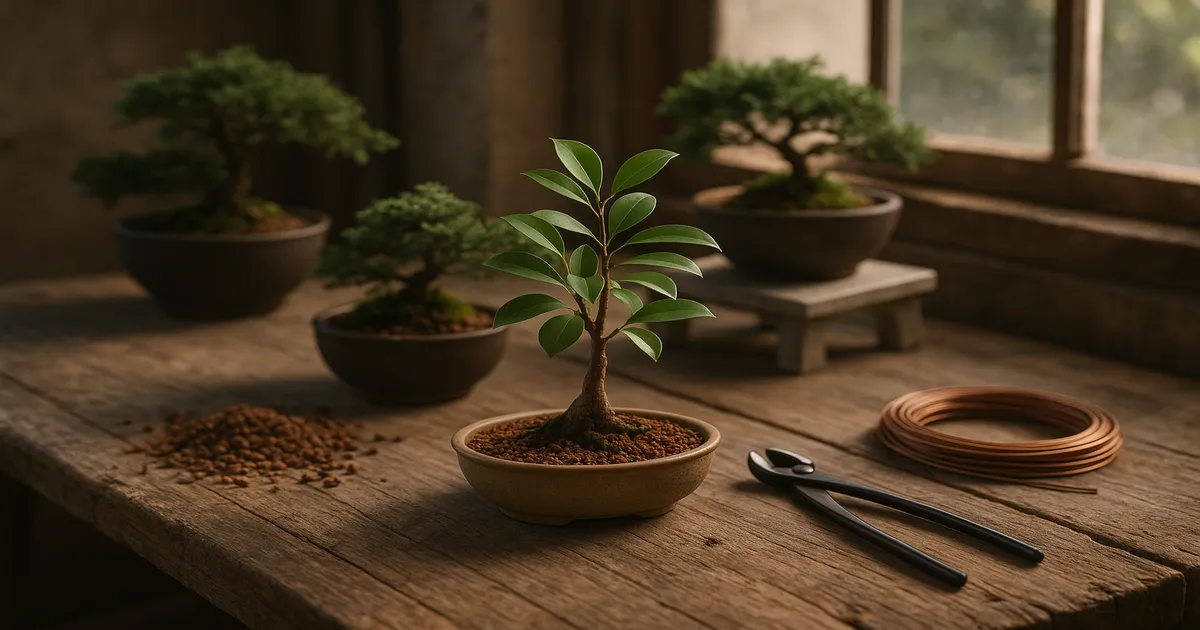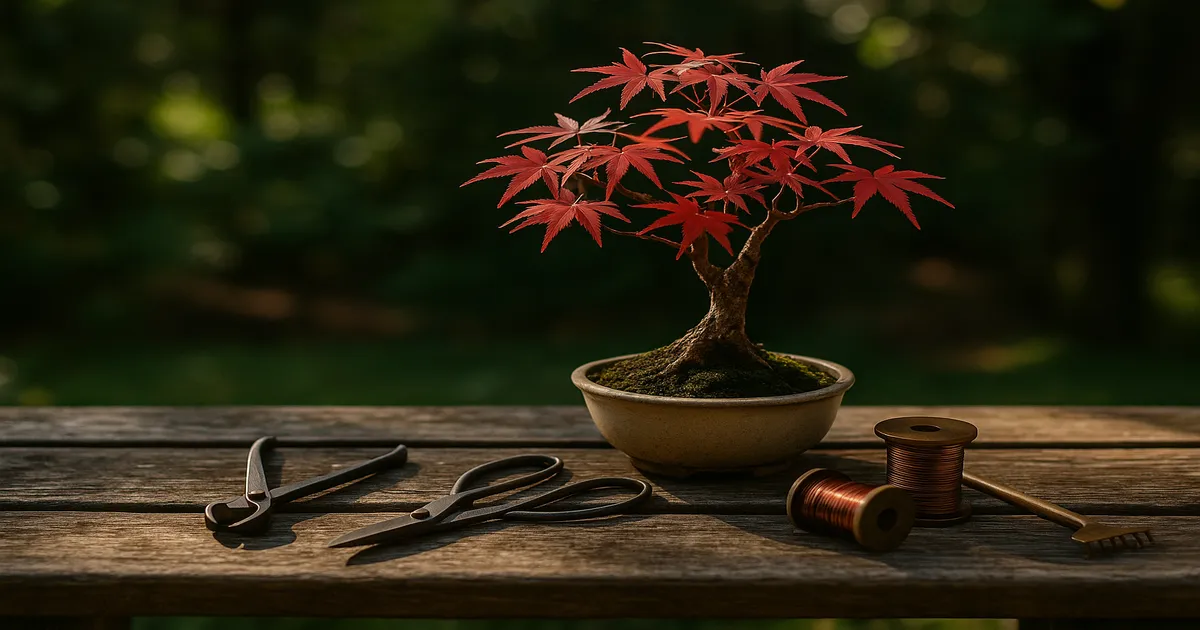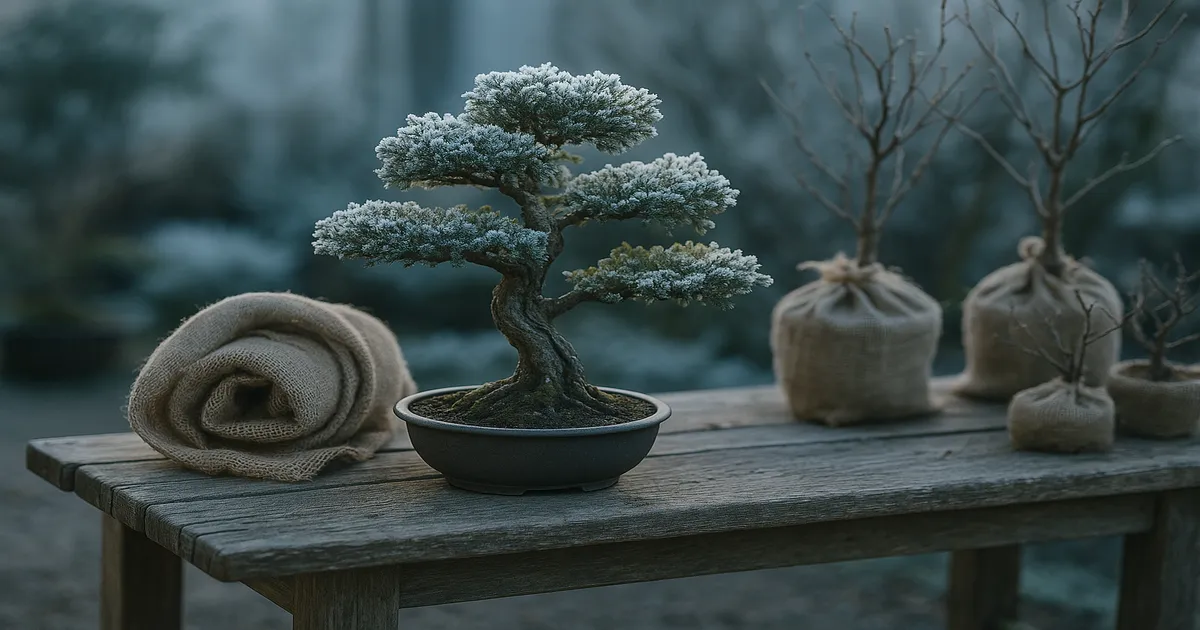
Quick Answer: Whether you can leave bonsai outside in winter depends entirely on the species. Hardy temperate trees like junipers, pines, and maples not only survive outdoors — they need the cold to complete their dormancy cycle. Tropical species like Ficus must come inside once temperatures drop below 50°F (10°C), or they’ll suffer serious cold damage.
The question “can you leave bonsai outside in winter” is one of the most common — and most misunderstood — in the hobby. That’s because bonsai isn’t a species. It’s a cultivation technique applied to hundreds of different trees, each with its own cold tolerance. Get the species right, and winter care becomes straightforward.
Can You Leave Bonsai Outside in Winter? It Depends on the Species
A juniper bonsai left outside through a Zone 6 winter will thrive. A Ficus left outside in the same conditions will likely be dead by January. The species — and your local climate — determine everything.
The Three Categories of Bonsai for Winter Purposes
Knowing which category your tree falls into is the single most important piece of bonsai winter knowledge you can have.
- Hardy temperate species (Juniperus, Pinus, Acer palmatum, Fagus, Zelkova, Carpinus, Larix) — These trees require a period of winter dormancy. Keeping them warm indoors year-round weakens them and eventually kills them.
- Mediterranean and borderline hardy species (Olea, Punica, Cedrus) — These tolerate mild winters but need frost protection during hard freezes.
- Tropical and subtropical species (Ficus, Carmona, Serissa, Schefflera) — No dormancy mechanism exists in these trees. Cold causes cellular damage, not rest. They must come indoors before temperatures fall below 50°F (10°C).
Which Bonsai Species Can Stay Outside in Winter?
Hardy Temperate Species That Require Winter Dormancy
These are the trees most people picture when they think of outdoor bonsai. They’re genuinely cold-hardy and biologically programmed to expect winter.
| Genus | Common Name | USDA Hardiness |
|---|---|---|
| Juniperus spp. | Juniper | Zones 3–9 |
| Pinus spp. | Pine | Zones 3–8 |
| Acer palmatum | Japanese Maple | Zones 5–9 |
| Fagus spp. | Beech | Zones 4–7 |
| Zelkova serrata | Japanese Zelkova | Zones 5–8 |
| Carpinus spp. | Hornbeam | Zones 3–8 |
| Larix spp. | Larch | Zones 2–6 |
Deciduous species in this group need 500–1,500 chilling hours below 45°F (7°C) to break dormancy properly in spring. Skip that cold period and you’ll see weak, irregular budding — or no budding at all.
Mediterranean and Borderline Hardy Species
Olive (Olea europaea) and pomegranate (Punica granatum) sit in an awkward middle ground. They can handle brief frosts — an olive tolerates down to about 20°F (-7°C) for short periods — but extended hard freezes will kill them, especially in containers. Apply frost cloth when temps drop below 25°F (-4°C) and move them into an unheated garage or cold greenhouse during prolonged cold snaps.
Tropical and Subtropical Species That Must Come Indoors
| Genus | Common Name | Minimum Safe Temp |
|---|---|---|
| Ficus retusa/microcarpa | Ficus | 55°F (13°C) |
| Carmona retusa | Fukien Tea | 59°F (15°C) |
| Serissa japonica | Snow Rose | 50°F (10°C) |
| Schefflera spp. | Umbrella Tree | 55°F (13°C) |
| Portulacaria afra | Elephant Bush | 45°F (7°C) |
These trees have no cold-adaptation mechanism whatsoever. Exposure to temperatures below their minimums causes ice crystal formation in cells — damage that often isn’t visible until weeks later, when the tree suddenly drops all its leaves.
Temperature Thresholds and USDA Hardiness Zones
Why Container Roots Are More Vulnerable Than In-Ground Trees
This is the concept most beginners miss. A Japanese maple growing in the ground handles Zone 5 winters with ease. That same tree in a shallow bonsai pot? Its roots are surrounded by just a few inches of soil with no insulating earth mass around them. In practical terms, a bonsai in a container behaves as if it’s one full hardiness zone less hardy than the same species in the ground.
Root cell death in most temperate species begins when the root zone temperature drops below 14–23°F (-10 to -5°C) for extended periods. That’s the number to protect against — not the air temperature, but the temperature at the roots.
Safe Temperature Ranges by Species Category
- Hardy temperate bonsai: Safe outdoor range is roughly 25–95°F (-4 to 35°C). The danger zone is below 15°F (-9°C) in unprotected containers for most Zone 5–6 species. Well-insulated junipers and pines can tolerate down to 0°F (-18°C).
- Mediterranean species: Tolerate brief dips to 20–25°F (-7 to -4°C) but need protection during extended cold periods.
- Tropical species: Keep above 50–59°F (10–15°C) at all times. Optimal indoor winter range is 65–75°F (18–24°C).
USDA Zone Quick Reference for Outdoor Winter Bonsai
| Zone | Avg. Min. Temp | Outdoor Winter Suitability |
|---|---|---|
| Zones 3–4 | -40 to -20°F (-40 to -29°C) | Cold frame or unheated garage required for most species |
| Zones 5–6 | -20 to 0°F (-29 to -18°C) | Hardy species with root insulation; cold frame recommended |
| Zones 7–8 | 0–20°F (-18 to -7°C) | Most hardy species fine outdoors; Mediterranean species need protection |
| Zones 9–10 | 20–40°F (-7 to 4°C) | Hardy and Mediterranean species fine; tropicals may need brief indoor shelter |
| Zone 11+ | Above 40°F (4°C) | Tropicals can stay outdoors year-round |
Winter Protection Methods for Outdoor Bonsai
Cold Frames
A cold frame — a low, unheated wooden or polycarbonate structure — maintains temperatures roughly 10–15°F (5–8°C) above ambient. That margin is often the difference between survival and root death. Cold frames are the go-to solution for Zone 5–7 growers with hardy temperate collections. They let light in, keep dormancy intact, and shield trees from desiccating winds.
Unheated Garage or Shed Storage
An unheated garage keeps root zone temperatures above 15°F (-9°C) in most climates without providing enough warmth to break dormancy prematurely. It’s a solid option for deciduous species. Evergreen conifers, however, need occasional light exposure — move them outside on milder days, or position them near a window.
Mulching and Pot Burial
Sinking pots to their rims in a mulch bed — or burying them directly in the ground — provides excellent root insulation. The surrounding material acts like the soil mass an in-ground tree would have. This is one of the most effective and lowest-cost methods available, particularly for larger trees that won’t fit in a cold frame.
Frost Cloth
A layer of horticultural frost cloth adds 4–8°F (2–4°C) of protection and works well for Mediterranean species during brief cold snaps. It’s not a long-term solution for genuinely cold winters, but for Zone 8–9 growers dealing with the occasional hard frost, it’s often all you need.
Cold and Heated Greenhouses
A cold greenhouse maintains 28–40°F (-2 to 4°C) — ideal for borderline hardy and Mediterranean species that need frost protection but must stay cool to rest properly. A heated greenhouse is what you need for tropicals that can’t tolerate any frost.
One note regardless of method: avoid placing bonsai under roof overhangs. Rain and snow can’t reach the pots there, and trees will dry out undetected — a surprisingly common cause of winter losses.
Watering Bonsai in Winter
Watering Dormant Outdoor Bonsai
Desiccation — not cold — is the leading cause of winter bonsai death. Dormant trees still need water every 7–14 days, depending on conditions. A few simple rules apply:
- Only water when temperatures are above 40°F (4°C) and the soil is not frozen
- Water in the morning so excess moisture evaporates before nighttime temperatures drop
- Never water into frozen soil — wait until it thaws
- Evergreen conifers need checking more often than deciduous species because their needles continue to transpire moisture all winter
Watering Tropical Bonsai Indoors
Indoor tropicals slow down in winter but don’t stop growing. Water every 5–10 days, checking soil moisture before each session rather than following a rigid schedule. The chopstick test works well: push a wooden chopstick 1–2 inches (2.5–5 cm) into the soil — if it comes out damp, wait another day or two.
Central heating dries out indoor air significantly. Most tropical bonsai prefer 50–70% relative humidity; a heated home in winter often sits at 20–30%. A humidity tray (pebbles and water kept below the pot’s drainage holes) or a small room humidifier helps considerably.
Signs of Overwatering vs. Underwatering in Cold Months
Overwatering signs: yellowing leaves (especially older lower leaves), soft or mushy roots, fungus gnats around the pot, soil surface staying wet for days, sudden leaf drop without prior yellowing.
Underwatering signs: leaf edges browning and crisping, soil pulling away from the pot’s inner edges, pot feeling noticeably light when lifted, needle tips browning on conifers, wilting or inward-curling leaves.
Light Requirements During Winter
Hardy Outdoor Species in Dormancy
Fully dormant deciduous species aren’t particularly light-hungry, but don’t store them in complete darkness for months — some light exposure maintains vascular health. Evergreen conifers are different. Even in winter, junipers and pines need at least 4–6 hours of winter sun to photosynthesize and regulate moisture. A cold frame with a clear polycarbonate lid handles this perfectly.
Indoor Light for Tropical Bonsai
South-facing windows are the gold standard for indoor bonsai in winter. Requirements vary by species:
- Ficus and Schefflera: minimum 4–6 hours of bright indirect light daily
- Carmona (Fukien Tea) and Serissa: 6–8 hours; these species really struggle without supplemental light in northern latitudes
If you’re north of roughly 45°N latitude, a south-facing window alone often won’t cut it for the neediest tropical species. Full-spectrum LED grow lights running at 2,000–5,000 lux for 12–14 hours per day, positioned 12–24 inches (30–60 cm) from the canopy, will compensate effectively. Set them on a timer and you’re done.
Soil, Repotting, and Pruning Around Winter
Why Soil Mix Matters More in Winter
Waterlogged soil freezes solid and causes root death — it’s that direct. Well-draining bonsai soil allows excess water to escape before it can freeze around roots. Standard potting compost is almost always unsuitable: it compacts, retains too much moisture, and suffocates roots in cold conditions.
The standard mix for most bonsai is akadama 50% / pumice 25% / lava rock 25% . Adjust by species:
- Conifers (Pinus, Juniperus): go drier with a 1:1:1 akadama, pumice, lava rock mix to reduce rot risk
- Mediterranean species (Olea, Punica): same 1:1:1 ratio — mimics their native rocky, fast-draining soils
- Shohin and mame (small bonsai): increase akadama to around 60%, since tiny pots dry out much faster
- Azalea: use kanuma as the primary component to achieve the required acidic pH of 4.5–5.5
Always sieve out dust particles — fine material clogs drainage holes and defeats the purpose of a well-draining mix. Target 3–6mm particle size for standard bonsai, 1–3mm for shohin.
When to Repot
Don’t repot during deep winter dormancy. Most hardy temperate species are repotted in late winter to early spring, just as buds begin to swell but before they fully open. The tree has energy reserves and is about to push new roots anyway — timing repotting to this window means fast recovery. Repotting in autumn or mid-winter leaves fresh root cuts vulnerable to cold damage with no active growth to heal them.
Pruning Around the Winter Period
Late autumn through late winter is the ideal window for structural pruning of deciduous temperate species. The tree is dormant, the branch structure is fully visible without leaves, and sap pressure is low — wounds heal cleanly with minimal stress. This is the time to remove crossing branches, reduce back to secondary structure, and make the big decisions about your tree’s future shape.
One important exception: Japanese maple (Acer palmatum) should be pruned in late autumn (after leaf drop) or midsummer (July–August) — not in early spring when sap rises hard. Spring pruning causes heavy bleeding that weakens the tree significantly.
For junipers and pines, structural pruning is best done in late winter to early spring before active growth begins. Avoid heavy cuts during deep freezes — wounds heal poorly in cold, and the combined stress of pruning and low temperatures can be too much for the tree.
When making cuts larger than 6mm, apply wound sealant (Kiyonal Bonsai Cut Paste) immediately after cutting. Always sterilize tools with 70% isopropyl alcohol between trees to prevent transmitting fungal or bacterial disease, which spreads more easily through fresh winter wounds. A good pair of sharp concave cutters makes clean cuts that heal faster and reduces the risk of die-back at the wound site.
Frequently Asked Questions: Leaving Bonsai Outside in Winter
Can you leave a juniper bonsai outside in winter?
Yes — in fact, you should. Junipers are hardy temperate trees that need a dormancy period in cool to cold conditions. Most species are rated to Zones 3–9, meaning they can handle serious cold. In containers, protect the roots from sustained temperatures below 15°F (-9°C) using a cold frame, mulch burial, or unheated garage.
At what temperature should I bring my bonsai inside?
It depends on the species. Tropical species like Ficus and Carmona should come indoors before nighttime temperatures consistently drop below 50–59°F (10–15°C). Hardy temperate species like junipers and maples should stay outside — bringing them indoors in winter disrupts their dormancy cycle and weakens the tree over time.
Do bonsai trees need to go dormant in winter?
Hardy temperate species do, yes. Deciduous trees like maples, beeches, and hornbeams need 500–1,500 chilling hours below 45°F (7°C) to complete their biological cycle and emerge strongly in spring. Tropical species have no dormancy mechanism — they grow year-round and simply need stable warm conditions indoors during winter.
How do I protect bonsai roots from freezing in a pot?
The most effective methods are pot burial (sinking the pot to its rim in a mulch bed), cold frame storage, or moving the tree to an unheated garage. The goal is to keep the root zone above 14–23°F (-10 to -5°C), where root cell damage begins. Wrapping the pot in burlap also helps buffer temperature swings.
Can a Ficus bonsai survive outdoors in winter?
Only in frost-free climates — Zone 11 and above, where temperatures stay above 40°F (4°C) year-round. In most of North America and Europe, Ficus bonsai must come indoors for winter. They’re sensitive to temperatures below 55°F (13°C) and have no cold-hardening mechanism, so even a brief frost can cause severe or fatal damage.