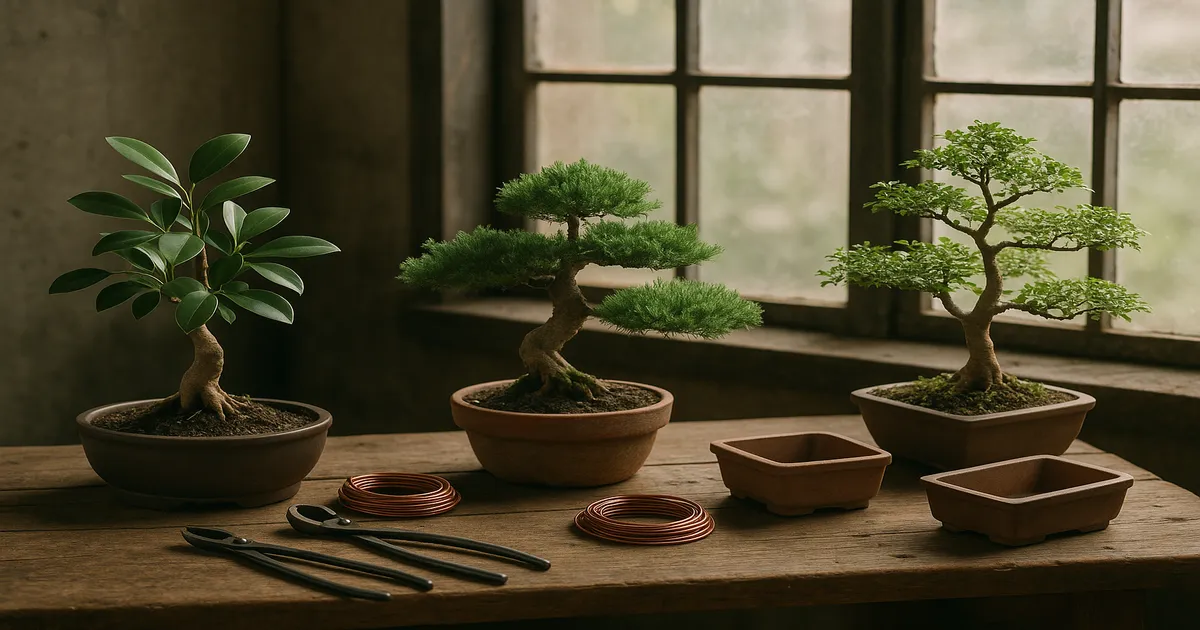
Quick Answer: For indoor growing, Ficus retusa (Ginseng Ficus) is the best bonsai for a beginner — it tolerates inconsistent watering, dry indoor air, and low light better than any competitor. For outdoor growing, Juniperus procumbens ‘Nana’ is the classic choice, combining extreme hardiness with that iconic bonsai silhouette most people picture when they first fall in love with the art form.
Choosing the best bonsai for a beginner comes down to one question before anything else: where will the tree live? Get that wrong and no amount of careful watering or pruning will save it. This guide compares eight beginner-friendly species side by side, walks you through exactly what to look for before you buy, and gives you clear situational recommendations so you can start with confidence rather than guesswork.
What Makes a Good Beginner Bonsai?
Indoor vs. Outdoor: The Decision That Matters Most
This single choice outweighs price, appearance, and everything else. Tropical species like Ficus need warmth and indirect light year-round. Junipers and other temperate species need outdoor sun, cold winters, and genuine dormancy. Putting a juniper on a windowsill is not a compromise — it’s a slow death sentence. Decide where your tree will live before you fall in love with a species.
Forgiveness: Recovery from Beginner Mistakes
Beginners overwater, underwater, prune at the wrong time, and repot too aggressively. A forgiving species back-buds readily, tolerates a missed watering or two, and bounces back from root disturbance. Ficus, Portulacaria, and Chinese Elm score highest here. Fukien Tea and Juniper are less forgiving — beautiful, but they punish errors more visibly.
Availability and Starter Material
The best species in the world is useless if you can’t find decent stock. Ficus Ginseng, Chinese Elm, and Juniper are sold at garden centers, hardware stores, and online bonsai nurseries worldwide. Starting with a pre-bonsai (a young tree already in training) rather than raw nursery stock saves two to five years of development time.
Growth Rate: Seeing Results Quickly
Fast growers are more rewarding for beginners because you see the impact of your pruning and wiring within a single growing season. Ficus, Chinese Elm, Bald Cypress, and Portulacaria are all vigorous growers. Junipers are notoriously slow — beautiful, but patience is genuinely required.
Watering Tolerance
Be honest about your habits. If you travel or forget, choose a succulent species like Portulacaria or Crassula. If you tend to fuss and overwater, Bald Cypress is almost uniquely suited to you — it can literally sit in a water tray. Most other species reward consistent attention without being punishing about occasional lapses.
Best Beginner Bonsai: At-a-Glance Comparison
Use this table as a quick reference before diving into the individual reviews. Difficulty is rated 1–5 (1 = easiest). Minimum temperature reflects the lowest safe exposure for container-grown trees.
| Species | Indoor/Outdoor | Difficulty (1–5) | Watering Tolerance | Min. Temp | Growth Rate | Best Style |
|---|---|---|---|---|---|---|
| Ficus retusa | Indoor/Outdoor | 1 | Moderate — some drought OK | 50°F (10°C) | Fast | Banyan, Informal Upright |
| Juniperus procumbens ‘Nana’ | Outdoor Only | 2 | Moderate | -10°F (-23°C) | Slow | Cascade, Slanting |
| Chinese Elm | Indoor or Outdoor | 2 | Moderate | 10°F (-12°C) | Fast | Informal Upright, Broom |
| Portulacaria afra | Indoor/Outdoor | 1 | Drought-tolerant | 40°F (4°C) | Fast | Broom, Multi-trunk |
| Crassula ovata | Indoor/Outdoor | 1 | Drought-tolerant | 32°F (0°C) | Slow–Medium | Informal Upright |
| Fukien Tea | Indoor/Outdoor | 3 | Moderate — needs consistency | 55°F (13°C) | Medium | Informal Upright |
| Cotoneaster horizontalis | Outdoor Only | 2 | Moderate | -20°F (-29°C) | Medium | Cascade, Rock Planting |
| Bald Cypress | Outdoor Only | 2 | Overwatering-tolerant | -10°F (-23°C) | Fast | Informal Upright, Forest |
Ficus retusa / Ficus microcarpa (Ginseng Ficus)
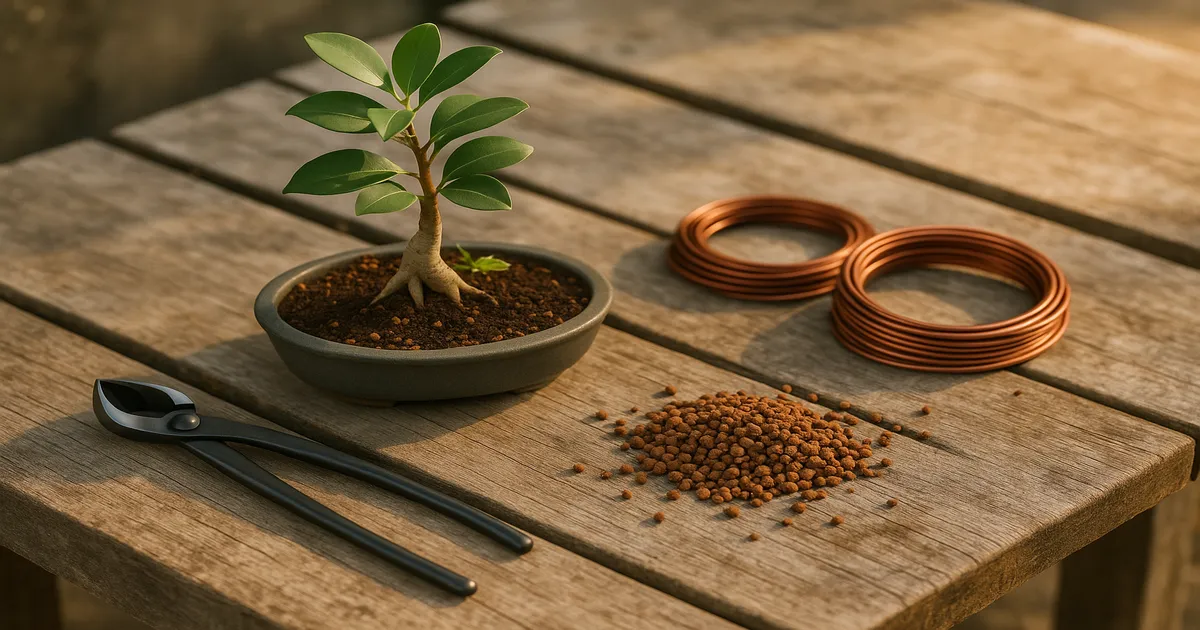
The Ginseng Ficus is the single most recommended indoor bonsai for beginners. It handles the low humidity of heated homes, tolerates inconsistent watering, and pushes new growth aggressively after pruning — meaning your mistakes rarely look like mistakes for long. The “Ginseng” form, with its swollen, gnarly exposed roots, looks impressively ancient even straight out of a garden center.
Key specs:
- Indoor/outdoor; protect below 50°F (10°C)
- Optimal temp: 65–85°F (18–29°C)
- Light: 4–6 hours bright indirect light; south- or west-facing window; grow light recommended in winter
- Soil: 40% akadama, 40% pumice, 20% lava rock
- Watering: every 1–2 days in summer outdoors; every 3–5 days indoors
Pros
- Most forgiving indoor bonsai species available
- Aggressive back-budding makes pruning recovery fast
- Tolerates low humidity and imperfect indoor light
- Widely available and inexpensive as a starter tree
Cons
- Milky latex sap can irritate skin — wear gloves when pruning
- F. benjamina (a related species sometimes sold alongside Ginseng Ficus) drops leaves dramatically with any environmental change; confirm you’re buying F. retusa or F. microcarpa
- Must be protected from temperatures below 50°F (10°C); cold drafts cause leaf drop even at otherwise safe temps
Best for: Anyone growing bonsai indoors for the first time. If you’re not sure what to buy, start here.
Juniperus procumbens ‘Nana’ (Japanese Garden Juniper)
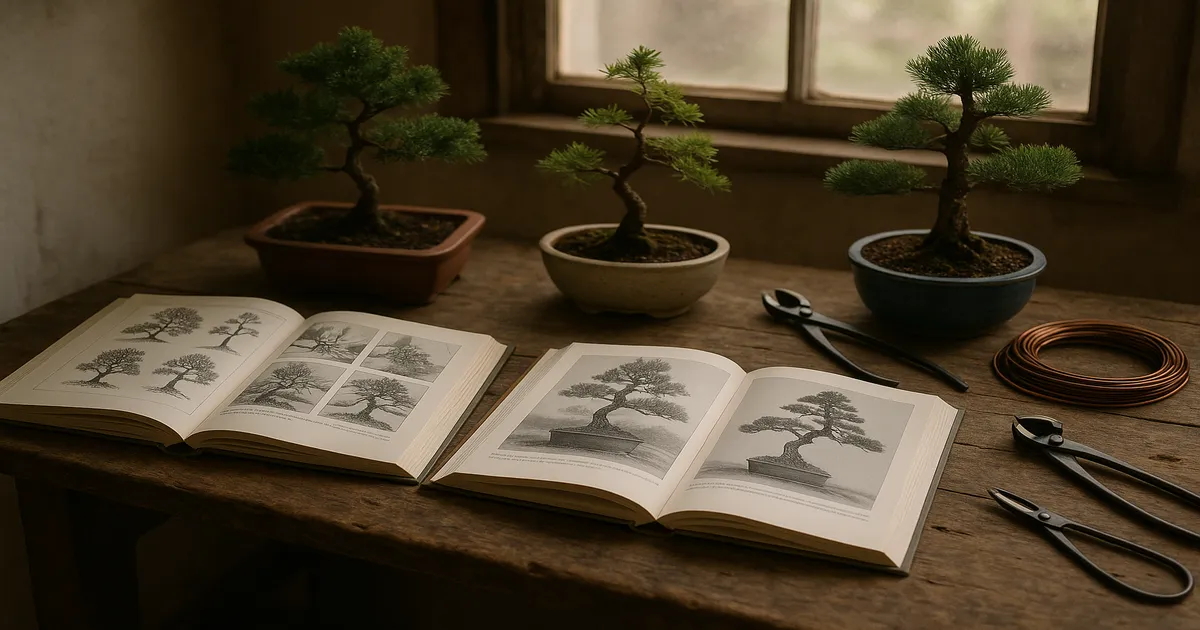
When most people close their eyes and picture a bonsai, they’re imagining a juniper. The dense, fine-textured foliage pads, the twisting trunk, the sense of windswept age — Juniperus procumbens ‘Nana’ delivers all of it, and it’s tough enough to survive the heavy-handed pruning that beginners inevitably apply.
⚠️ Critical warning: Junipers are outdoor-only trees. No exceptions. Keeping a juniper indoors — even briefly — deprives it of the light intensity and air circulation it needs to survive. This is the single most common cause of juniper death among beginners.
Key specs:
- Outdoor only; USDA zones 4–9
- Min. temp: -10°F (-23°C); requires winter dormancy
- Light: 6+ hours full sun daily; 30,000–50,000 lux minimum
- Soil: 50% akadama, 25% pumice, 25% lava rock
- Watering: every 1–2 days in summer; every 5–10 days during winter dormancy
Pros
- Extremely hardy — survives hard frosts in both ground and containers
- Iconic bonsai appearance right out of the nursery
- Tolerates heavy structural pruning and aggressive wiring
- Suits cascade, slanting, literati, and windswept styles beautifully
Cons
- Dies indoors without exception — no amount of a sunny windowsill changes this
- Slow grower; fine ramification takes years to develop
- Winter dormancy requirements can confuse beginners who expect year-round activity
Best for: Outdoor growers in temperate climates who want the classic bonsai look.
Chinese Elm (Ulmus parvifolia)
Chinese Elm is arguably the most versatile species on this list. It grows fast, develops elegant fine branching in a single season, and its attractive flaking bark adds visual interest even on young trees. It adapts to indoor conditions with bright light but genuinely thrives outdoors in temperate climates — making it ideal if you’re not quite sure how you want to grow.
Key specs:
- Prefers outdoor; can survive indoors with bright light
- USDA zones 5–9; min. temp 10°F (-12°C) in containers
- Optimal temp: 60–80°F (15–27°C)
- Light: full sun outdoors; 4,000–6,000 lux minimum indoors
- Soil: 50% akadama, 25% pumice, 25% lava rock
- Watering: every 1–2 days in summer; every 3–4 days indoors
Pros
- Works both indoors and outdoors — the most flexible option on this list
- Back-buds readily; very forgiving of pruning errors
- Develops elegant structure and fine ramification faster than most beginner species
- Attractive flaking bark develops relatively quickly on young trunks
Cons
- Semi-deciduous leaf drop in autumn or winter alarms many beginners (it’s normal and temporary)
- Needs genuinely bright light indoors — a dim corner won’t cut it
- Container roots need protection below 15°F (-9°C)
Best for: Beginners who want flexibility — the ability to grow indoors or outdoors depending on the season or their living situation.
Portulacaria afra (Dwarf Jade / Elephant Bush)
If you’ve ever killed a houseplant by forgetting to water it, Portulacaria afra is your species. Its succulent stems and small rounded leaves store water effectively, making it remarkably tolerant of the kind of benign neglect that kills most bonsai. It’s often confused with the common Jade Plant (Crassula ovata), but Portulacaria has smaller leaves, develops trunk girth faster, and is generally preferred for bonsai work.
Key specs:
- Indoor/outdoor; USDA zones 9–11; protect below 40°F (4°C)
- Optimal temp: 65–80°F (18–27°C)
- Light: full sun to bright indirect; minimum 4–6 hours daily
- Soil: 50% pumice, 30% lava rock, 20% akadama — maximum drainage is essential
- Watering: every 3–5 days in summer; every 10–14 days in winter
Pros
- Extremely drought-tolerant; forgives missed waterings better than any non-succulent species
- Develops thick, impressive trunk faster than Crassula
- Works indoors and outdoors; adaptable to a wide range of conditions
- Small leaves reduce naturally over time with proper bonsai technique
Cons
- Frost-sensitive; any hard freeze can kill it — must come indoors before temperatures drop to 40°F (4°C)
- Will rot quickly in moisture-retentive soil; drainage is non-negotiable
- The variegated form (‘Variegata’) grows noticeably slower and is less suitable for beginners
Best for: Forgetful waterers, frequent travelers, or anyone in a warm climate (USDA zones 9–11) who wants a fast-developing indoor/outdoor bonsai.
Crassula ovata (Jade Plant Bonsai)
Crassula ovata is probably already sitting on a shelf somewhere in your neighborhood — it’s in every garden center, grocery store, and home goods shop, which makes it one of the most accessible entry points into bonsai. Its naturally tree-like silhouette and thick trunk development over time are genuinely impressive, even if its larger leaves are less refined than Portulacaria’s.
Key specs:
- Indoor/outdoor; USDA zones 10–12; protect below 32°F (0°C)
- Optimal temp: 65–80°F (18–27°C)
- Light: bright light; south-facing window preferred; minimum 4 hours direct sun indoors
- Soil: 50% pumice, 30% lava rock, 20% akadama
- Watering: every 5–7 days in summer; every 14–21 days in winter
Pros
- Available literally everywhere — the most accessible species on this list
- Extremely tolerant of drought and indoor neglect
- Develops impressive trunk girth and natural tree-like form over time
- Naturally tree-like branching structure requires less initial shaping
Cons
- Larger leaves are less refined than Portulacaria and don’t reduce as easily with bonsai technique
- Very frost-sensitive — a single hard freeze can be fatal
- Slow to develop the fine branch ramification that defines mature bonsai aesthetics
Best for: Beginners who want the easiest-possible entry point and are happy sourcing starter material from a local store rather than a specialist nursery.
Fukien Tea (Carmona retusa)
Fukien Tea is genuinely beautiful — small dark leaves, delicate white flowers, and tiny red berries that can appear almost year-round. It’s also a step up in difficulty from Ficus, and that distinction matters for absolute beginners. It needs consistent humidity (50–70%) that most indoor environments don’t provide naturally, and it’s sensitive to cold drafts in ways that can be hard to predict.
Key specs:
- Indoor/outdoor (tropical); USDA zones 10–11; keep above 55°F (13°C)
- Optimal temp: 65–80°F (18–27°C)
- Light: bright indirect; 3,000–5,000 lux; avoid harsh afternoon direct sun
- Soil: 40% akadama, 40% pumice, 20% lava rock
- Watering: every 2–3 days; do not let soil dry out completely
Pros
- Flowers and small berries provide year-round visual interest unlike most species
- Beautiful small, dark leaves with a naturally refined appearance
- Tolerates slightly lower light levels than most indoor bonsai species
Cons
- Requires consistent 50–70% humidity — a humidity tray or humidifier is not optional
- Sensitive to cold drafts; placement near windows in winter can cause sudden decline
- Less forgiving than Ficus for beginners who are still developing their watering instincts
Best for: Beginners who have already kept a Ficus successfully and want a more visually dramatic indoor tree — provided they’re willing to manage humidity actively.
Cotoneaster horizontalis (Rockspray Cotoneaster)
Cotoneaster is one of the most underrated outdoor beginner species. Its herringbone branching pattern is naturally bonsai-like, its small leaves reduce easily, and the combination of spring flowers, summer foliage, autumn berries, and winter silhouette gives it genuine four-season appeal. For cold-climate growers who want something more interesting than a juniper, this is the answer.
Key specs:
- Outdoor only; USDA zones 4–7; min. temp -20°F (-29°C)
- Light: full sun preferred; partial shade tolerated
- Soil: 50% akadama, 25% pumice, 25% lava rock
- Watering: every 1–2 days in summer; reduce significantly in winter
Pros
- Outstanding four-season interest: flowers, berries, autumn color, and elegant bare winter structure
- Extremely cold-hardy — handles the harshest temperate winters with ease
- Naturally fine, herringbone branching structure accelerates development
- Tolerates heavy pruning without stress
Cons
- Outdoor only — not suitable for any indoor growing situation
- Bare in winter, which can disappoint beginners expecting year-round foliage
- Less commonly sold as pre-styled bonsai; may require sourcing raw nursery stock
Best for: Cold-climate outdoor growers (USDA zones 4–7) who want four-season drama and are willing to source raw material from a garden center.
Bald Cypress (Taxodium distichum)
Bald Cypress occupies a unique niche: it’s the one species you genuinely cannot overwater. Native to the swamps of the southeastern United States, it can sit in a water-filled tray without complaint — a property that makes it almost uniquely suited to the beginner who fusses, worries, and waters constantly. Its feathery foliage, dramatically buttressed trunk, and vivid orange-red autumn color are simply spectacular.
Key specs:
- Outdoor only; USDA zones 4–11; min. temp -10°F (-23°C)
- Light: full sun; minimum 6 hours daily
- Soil: standard mix or moisture-retentive mix; can sit in a shallow water tray
- Watering: daily to every other day in summer; can tolerate sitting in water
Pros
- Nearly impossible to overwater — uniquely tolerant of saturated soil
- Vigorous, fast grower with impressive trunk development
- Vivid autumn color and dramatic buttressed trunk make it a showstopper
- Extremely wide hardiness range (zones 4–11) suits most of the US
Cons
- Outdoor only — no indoor growing whatsoever
- Deciduous; bare in winter, which surprises beginners unfamiliar with deciduous bonsai
- Less commonly available as pre-styled starter bonsai than Juniper or Ficus
Best for: Over-waterers, or beginners in the southeastern US where Bald Cypress grows natively and raw material is easy to find.
Our Verdict: Best Beginner Bonsai by Situation
Best Overall Beginner Bonsai: Ficus retusa
For the majority of beginners — growing indoors, in an apartment, or in a climate that doesn’t support outdoor growing year-round — Ficus retusa is the default correct answer. It’s forgiving, fast-growing, widely available, and looks like a real bonsai almost immediately. Start here unless you have a specific reason not to.
Best Outdoor Beginner Bonsai: Juniperus procumbens ‘Nana’
If you have outdoor space in a temperate climate and can commit to leaving your tree outside year-round (including through winter dormancy), Juniper delivers the most iconic bonsai experience available to beginners. Just never, ever bring it inside.
Best for Forgetful Waterers: Portulacaria afra
Portulacaria afra is the right call if your track record with houseplants involves a lot of “I forgot.” Its succulent nature provides a genuine buffer against neglect, and it develops impressive trunk girth faster than the Jade Plant.
Best All-Rounder (Indoor or Outdoor): Chinese Elm
Chinese Elm is the species to choose when you’re not sure how you’ll grow — indoors now, outdoors later, or some combination of both. It’s fast, forgiving, and develops beautiful structure quickly.
Best for Cold Climates: Cotoneaster horizontalis
For growers in USDA zones 4–7 who want more seasonal drama than a juniper provides, Cotoneaster’s combination of flowers, berries, autumn color, and elegant winter silhouette is unmatched.
Best for Over-Waterers: Bald Cypress
If you water compulsively and have outdoor space, Bald Cypress is your tree. Nothing else on this list tolerates saturated soil as well, and its dramatic trunk and autumn color reward the investment.
Essential Tools for Your First Bonsai
You don’t need much to start, but the right tools make a real difference. Here’s what actually matters:
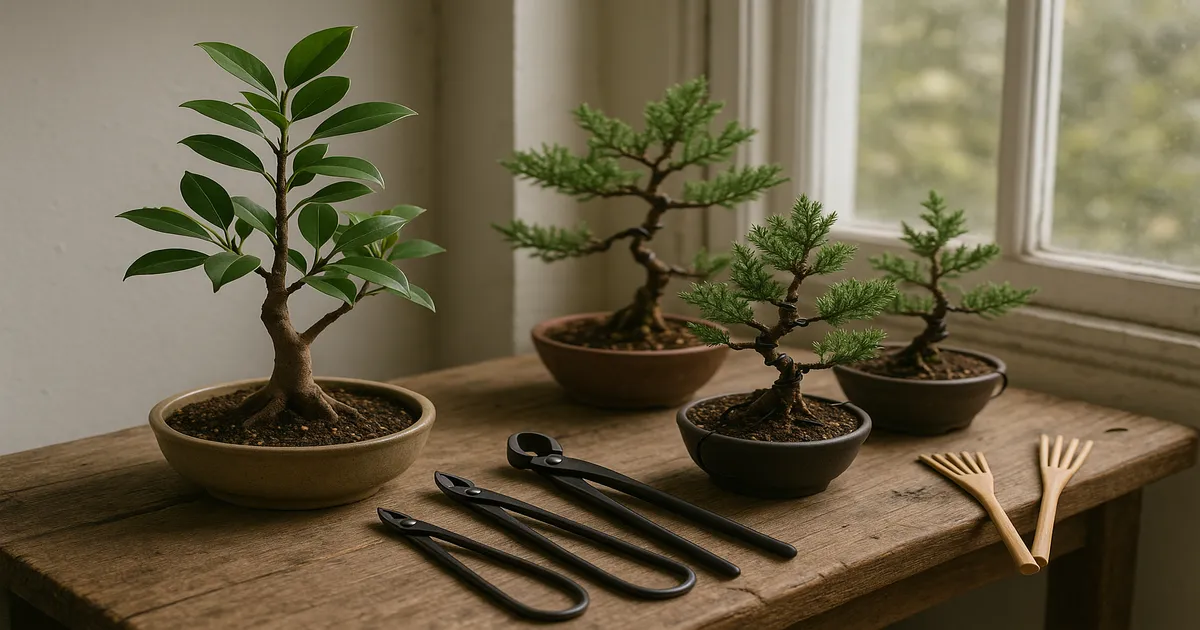
- Concave branch cutters — The single most important bonsai-specific tool. These create slightly hollowed cuts that heal flush with the trunk rather than leaving ugly stubs.
- Bonsai scissors — For trimming foliage and fine branch work. A sharp dedicated pair beats any cheap multi-tool.
- Anodized aluminum bonsai wire — Aluminum is easier for beginners than copper. A starter set covering 1mm, 1.5mm, and 2.5mm sizes handles most beginner applications.
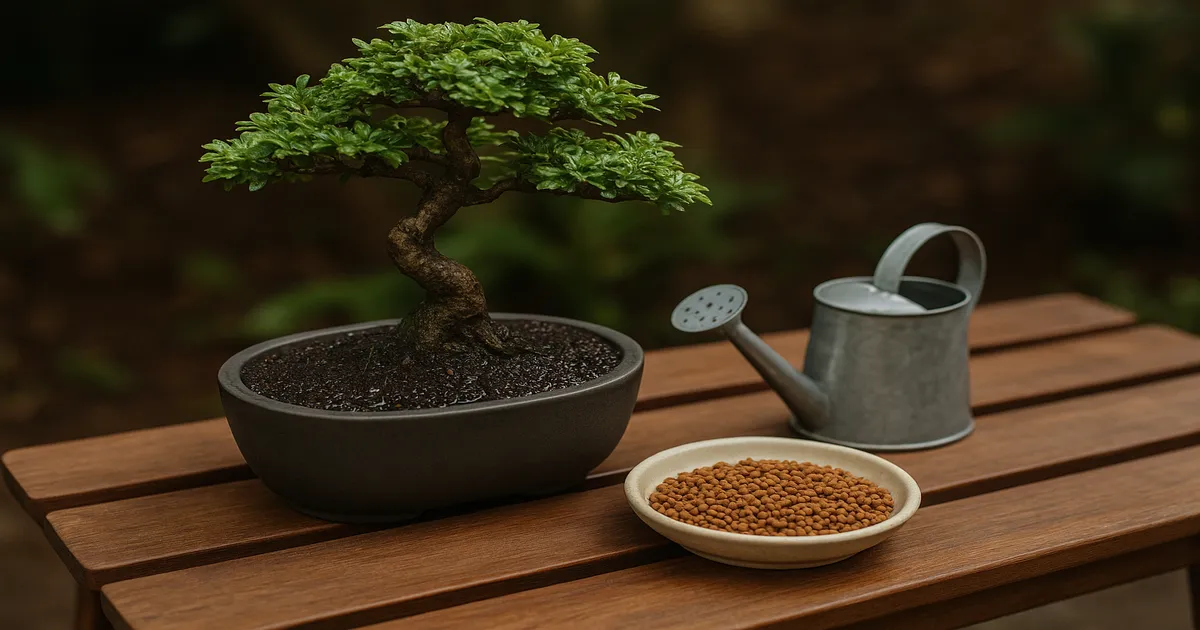
- Akadama soil — The foundation of any proper bonsai mix. Hard-fired akadama holds up longer than soft-fired and is worth the extra cost.
- Humidity tray — Essential for any tropical species grown indoors. Fill with gravel and water; keep the pot above the waterline so roots never sit in standing water.
- Bonsai turntable — Not strictly essential, but a rotating turntable lets you check all angles while wiring or pruning without constantly repositioning the pot. Beginners who use one develop better spatial awareness faster.
The core message of this entire guide is simple: match your species to your environment first, then worry about technique. A well-matched beginner bonsai in imperfect conditions will outlast a “premium” species in the wrong setting every single time. Pick one tree, learn it well, and build from there. The skills transfer — and so does the confidence.
Frequently Asked Questions About Beginner Bonsai
What is the easiest bonsai tree for a beginner to keep alive?
Ficus retusa (Ginseng Ficus) is the easiest indoor bonsai to keep alive — it tolerates low humidity, inconsistent watering, and imperfect indoor light better than any other common species. For outdoor growing, Juniperus procumbens ‘Nana’ is the most resilient choice, surviving hard frosts and aggressive pruning without complaint.
Can beginner bonsai trees be kept indoors?
Yes, but only tropical and subtropical species. Ficus, Portulacaria afra, Crassula ovata, and Fukien Tea all adapt well to indoor conditions. Temperate species like Juniper, Cotoneaster, and Bald Cypress must be grown outdoors year-round — keeping them inside, even temporarily, will cause them to decline and eventually die.
How often should a beginner water a bonsai tree?
There’s no fixed schedule — water when the top half-inch of soil is dry. In practice, most bonsai need watering every one to two days in summer and every three to seven days in winter, though succulents like Portulacaria can go much longer between waterings. A simple trick: lift the pot. A light pot means dry soil; a heavy pot means moisture is still present.
What soil should a beginner use for bonsai?
Avoid standard potting soil — it retains too much moisture and compacts over time, leading to root rot. A basic beginner mix of 40% akadama, 40% pumice, and 20% lava rock works well for most tropical and temperate species. Succulents like Portulacaria and Crassula need even sharper drainage: use 50% pumice, 30% lava rock, and 20% akadama. Pre-mixed bonsai soil from a reputable supplier is a perfectly reasonable shortcut while you’re getting started.
Do beginner bonsai trees need special pots?
Not immediately. A standard nursery container works fine while a tree is in early development. When you’re ready to move to a proper bonsai pot, choose one with large drainage holes and size it so the pot’s length is roughly two-thirds the tree’s height. Unglazed ceramic pots are traditional and breathe better than plastic, which helps prevent root rot in species that prefer drier conditions.