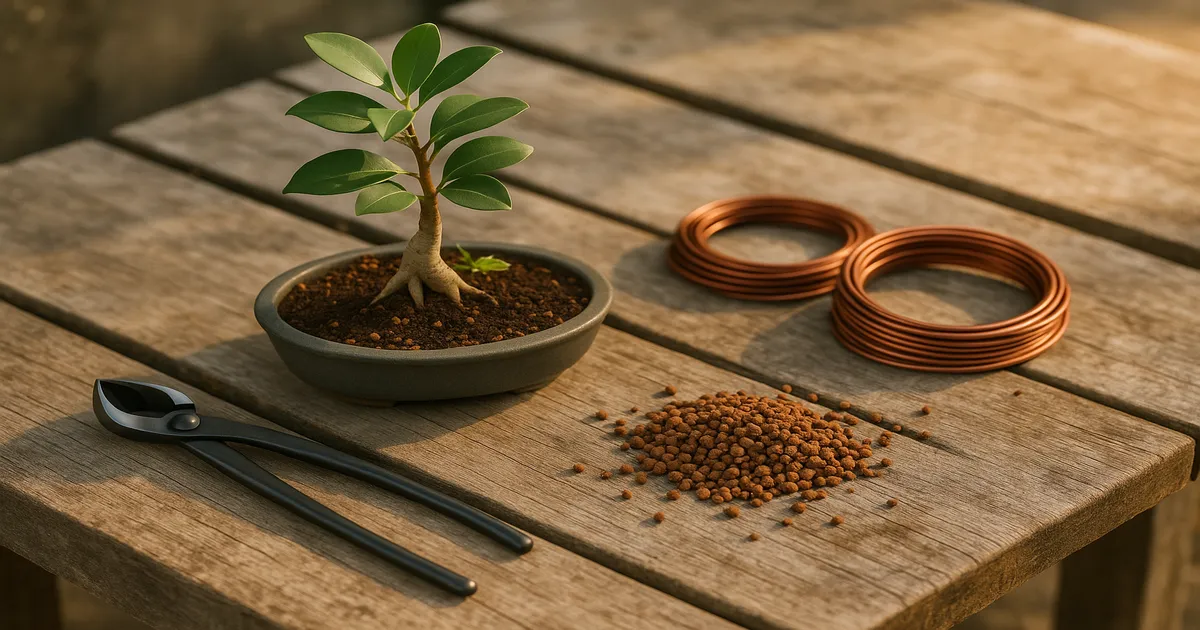
Quick Answer: Bonsai is a horticultural practice — not a specific plant species — in which any woody-stemmed tree is trained and maintained in miniature form. To start a bonsai tree as a beginner, choose a forgiving species matched to your environment (Ficus or Chinese Elm indoors; Juniper or Japanese Maple outdoors), plant it in a fast-draining bonsai substrate, and learn to water based on soil moisture rather than a fixed schedule.
Learning how to start a bonsai tree as a beginner comes down to three fundamentals: picking the right species, giving it the right environment, and mastering a handful of core techniques. Get those right and bonsai is genuinely accessible — even for complete newcomers. Get them wrong (usually by keeping a juniper on a windowsill) and even a healthy tree will decline fast. This guide walks you through every step.
How to Start a Bonsai Tree as a Beginner: Choosing Your Species
What Is a Bonsai Tree, Really?
Bonsai (盆栽) translates literally as “planted in a container.” It originated in China over 1,300 years ago as penjing before being refined into a distinct aesthetic discipline in Japan during the Heian period. The practice was never about a single plant — it’s a set of techniques applied to almost any woody-stemmed species.
That matters for beginners because your choice of species is entirely open. The goal is to find a tree that matches your climate, your living situation, and your schedule.
The Five Best Bonsai Species for Beginners
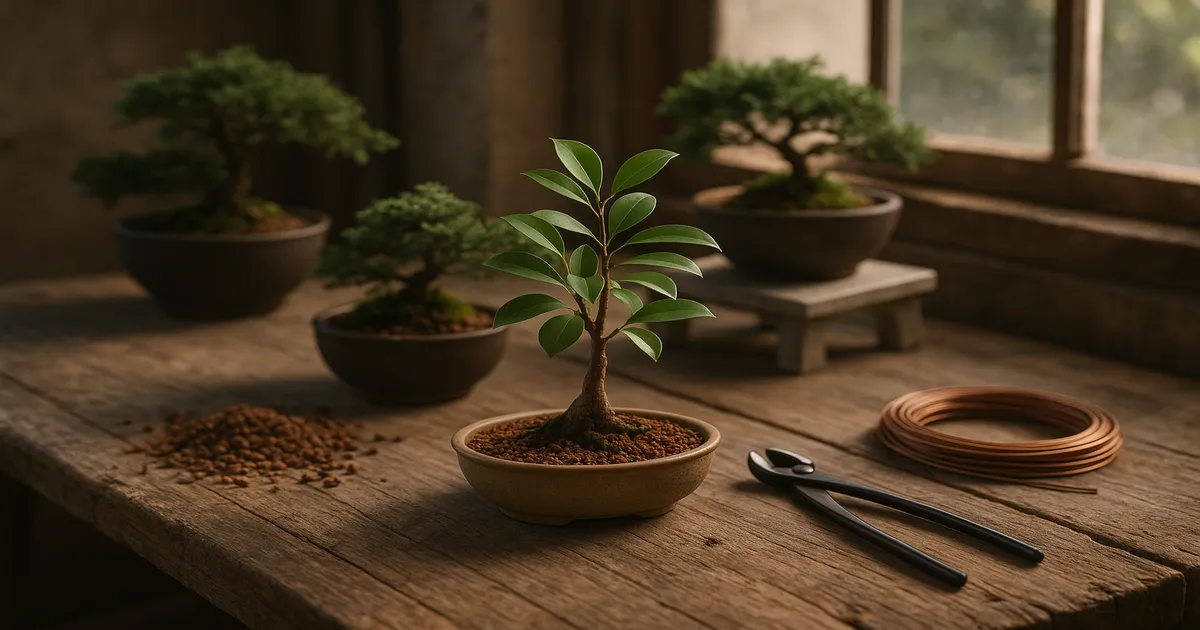
Ficus is the gold-standard indoor beginner tree. It tolerates low humidity, inconsistent watering, and the dim light of most apartments better than any other species. Start here if you’re growing indoors. The ‘Tiger Bark’ variety (F. retusa) is especially popular for its attractive mottled bark.
Chinese Elm produces beautiful fine-twiggy branching and forgives hard pruning remarkably well. It prefers outdoor placement but adapts to a very bright indoor window — a good middle-ground option.
Juniper is the classic bonsai silhouette and widely available, but it is an outdoor-only tree. It will die within weeks on a windowsill. Choose it only if you have outdoor space.
Japanese Maple rewards patience with spectacular seasonal colour — fresh green in spring, fiery red and orange in autumn, elegant bare branches in winter. It needs outdoor placement and a proper cold dormancy period each year.
Jade (Crassula ovata) is a succulent rather than a traditional bonsai subject, but it’s nearly indestructible indoors and an excellent choice for dry climates or forgetful waterers.
| Species | Indoor | Outdoor | Difficulty |
|---|---|---|---|
| Ficus | ✅ Excellent | ✅ (frost-free only) | Easy |
| Chinese Elm | ⚠️ Bright light needed | ✅ Preferred | Easy |
| Juniper | ❌ Not suitable | ✅ Required | Easy–Moderate |
| Japanese Maple | ❌ Not suitable | ✅ Required | Moderate |
| Jade | ✅ Good | ✅ (frost-free only) | Easy |
Light, Temperature, and Placement
How Much Light Does a Bonsai Need?
Light is the engine of bonsai health. Too little and growth becomes weak and leggy, foliage pads thin out, and the tree loses its ability to recover from pruning.
Indoors: Ficus needs a minimum of 1,000–2,000 lux, though 3,000–5,000 lux is ideal — achievable from a south- or east-facing window. Jade demands more: at least 4–6 hours of direct sun through a south-facing window. Chinese Elm can be kept indoors, but only in front of the brightest window you have. In lower light it becomes leggy and loses its characteristic fine branching. If your best window is north-facing, stick with Ficus.
If your windows can’t deliver enough light, a full-spectrum LED grow light is the solution. Aim for 5,000–10,000 lux at canopy level, position the fixture 6–18 inches (15–45 cm) above the tree, run it for 12–16 hours per day, and choose a daylight spectrum of 5,000–6,500K.
Outdoors: Juniper needs full sun — a minimum of six hours of direct sunlight daily, no exceptions. Japanese Maple does best with morning sun and afternoon shade in hot climates; protect it from temperatures above 90°F (32°C) to prevent leaf scorch. Chinese Elm tolerates full sun to partial shade and handles heat well.
Temperature and Winter Protection
Temperate species — Juniper and Japanese Maple — require winter dormancy. Never bring them into a heated home. An unheated garage, cold frame, or sheltered outdoor spot protects the roots (which are vulnerable in shallow pots below 15°F / -9°C) while allowing the tree to complete its natural cycle.
Ficus and Jade are frost-sensitive. Keep them above 55°F (13°C) and away from cold drafts and air conditioning vents, which can trigger sudden leaf drop even when overall temperatures seem acceptable.
The Most Common Beginner Mistake: Keeping Junipers Indoors
This deserves its own callout because it’s that common. Junipers are sold in gift shops, supermarkets, and garden centres as “indoor bonsai.” They are not. Junipers are native to exposed mountain terrain in temperate Asia and Europe. Indoors, they receive insufficient light, no air circulation, and no cold dormancy — and they decline within weeks, often without obvious warning until it’s too late.
If you’ve already brought a juniper indoors, move it outside immediately (weather permitting) and give it a position with at least six hours of direct sun. Recovery is possible if caught early.
Bonsai Soil: What to Use and Why It Matters
Why Standard Potting Soil Fails
Regular potting mix holds too much moisture, compacts over time, and suffocates the fine feeder roots that bonsai depend on. In a shallow pot, poor drainage is a death sentence.
The Three Core Components
- Akadama — fired Japanese clay granules that retain moisture and support root chemistry. It breaks down over 2–3 years, which is one reason repotting is necessary.
- Pumice — volcanic glass that improves drainage and aeration without breaking down. Very stable long-term.
- Lava rock (scoria) — porous volcanic rock that anchors roots and drains quickly. Long-lasting and structurally stable.
Recommended Mixes by Species
| Species | Akadama | Pumice | Lava Rock |
|---|---|---|---|
| Ficus | 40% | 30% | 30% |
| Chinese Elm / Japanese Maple | 50% | 25% | 25% |
| Juniper | 33% | 33% | 33% |
| Jade | 20% | 40% | 40% |
Jade gets the most drainage-heavy mix because retained moisture is its biggest threat.
If akadama isn’t available locally, Turface MVP (calcined clay, widely sold in the US) is the best substitute. Haydite or expanded shale works in place of lava rock. Avoid perlite (it floats out during watering), standard sand (clogs pore spaces), and any regular potting mix.
Watering Your Bonsai Tree
The Golden Rule
Water when the soil begins to dry — never on a fixed schedule. A Ficus in a warm, sunny spot in July needs water far more often than the same tree on a cool windowsill in December.
How to Check Soil Moisture
Push a wooden chopstick 1–2 inches (2.5–5 cm) into the soil. If it comes out with damp particles clinging to it, wait. If it comes out dry and clean, water thoroughly. This simple test beats any calendar schedule.
Watering Frequency by Species
- Ficus (indoors): Every 3–7 days in summer; every 7–14 days in winter
- Chinese Elm (outdoors, summer): Every 1–2 days in peak heat; every 3–5 days in cooler weather
- Juniper (outdoors): Every 1–3 days in summer; every 5–10 days in winter dormancy
- Japanese Maple: Every 1–2 days in summer; morning watering preferred
- Jade: Every 7–14 days in summer; every 14–21 days in winter; let soil dry completely between waterings
Technique: The Two-Pass Method
Use a fine-rose watering can or a gentle hose attachment — high-pressure water displaces soil and damages surface roots. Water once to moisten the soil, wait 30 seconds for it to absorb, then water again until it drains freely from the holes beneath. Always use room-temperature water. Ficus and maples benefit from filtered or aged tap water (leave it in an open container overnight to off-gas chlorine).
Humidity Indoors
Ficus prefers 50–70% relative humidity. Below 30%, leaf tip browning and pest problems increase. Two practical fixes: fill a tray with gravel and water, then set the pot on top of the gravel (not sitting in the water) — evaporation raises local humidity by 10–15%. Alternatively, mist the foliage in the morning so leaves dry before evening and fungal issues are minimised.
Overwatering vs. Underwatering: Quick Diagnosis
| Symptom | Likely Cause |
|---|---|
| Yellow leaves, especially inner/lower foliage | Overwatering |
| Leaves dropping while still green | Overwatering |
| Foul smell from soil | Overwatering / root rot |
| Crispy brown leaf edges | Underwatering or low humidity |
| Soil shrinking from pot edges | Underwatering |
| Juniper browning from tips inward | Kept indoors / underwatering |
Pruning, Wiring, and Shaping: A Beginner’s Primer
Maintenance vs. Structural Pruning
Maintenance pruning is the ongoing work of keeping your tree’s shape tidy — trimming new shoots back to 2–4 leaves on deciduous trees, pinching conifer growth with your fingers (cutting causes browning at the tips). You’ll do this every few weeks during the growing season.
Structural pruning is the bigger, less frequent work of establishing branch architecture — removing crossing branches, downward-growing branches, and anything that conflicts with your intended design. Think of it as editing, not maintenance.
When to Prune Each Species
- Deciduous trees (Chinese Elm, Japanese Maple): Major structural work in late winter before bud break, or after summer growth hardens off
- Conifers (Juniper): Early spring or late summer; avoid the heat of midsummer
- Tropicals (Ficus, Jade): Year-round, though ease off in winter when growth slows
Essential Tools for Beginners
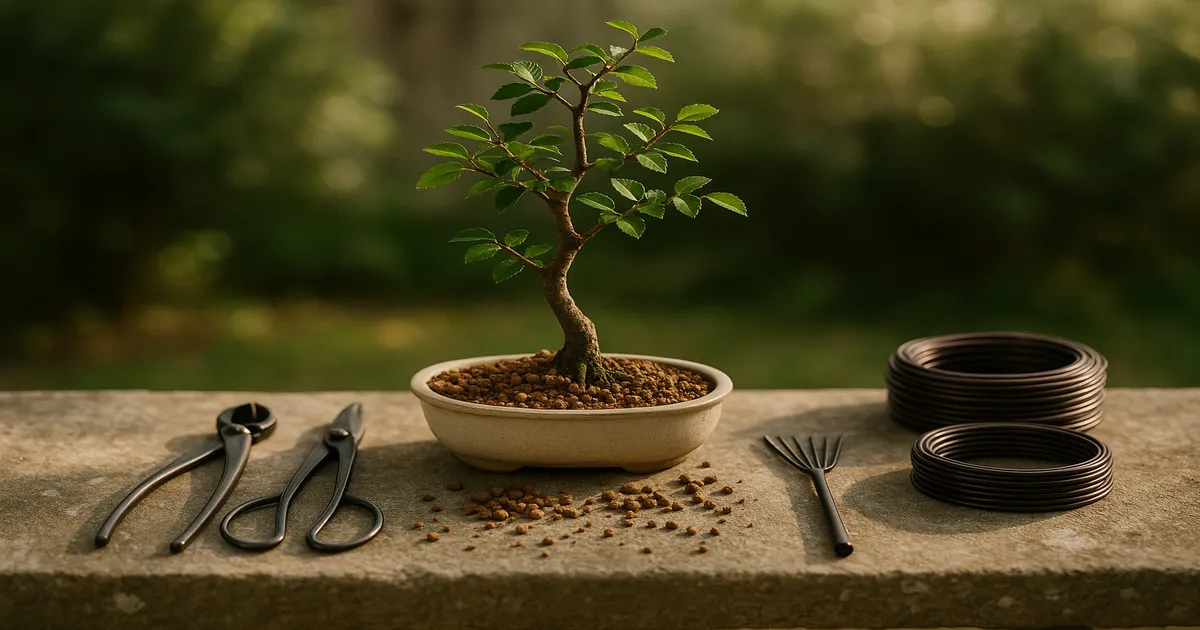
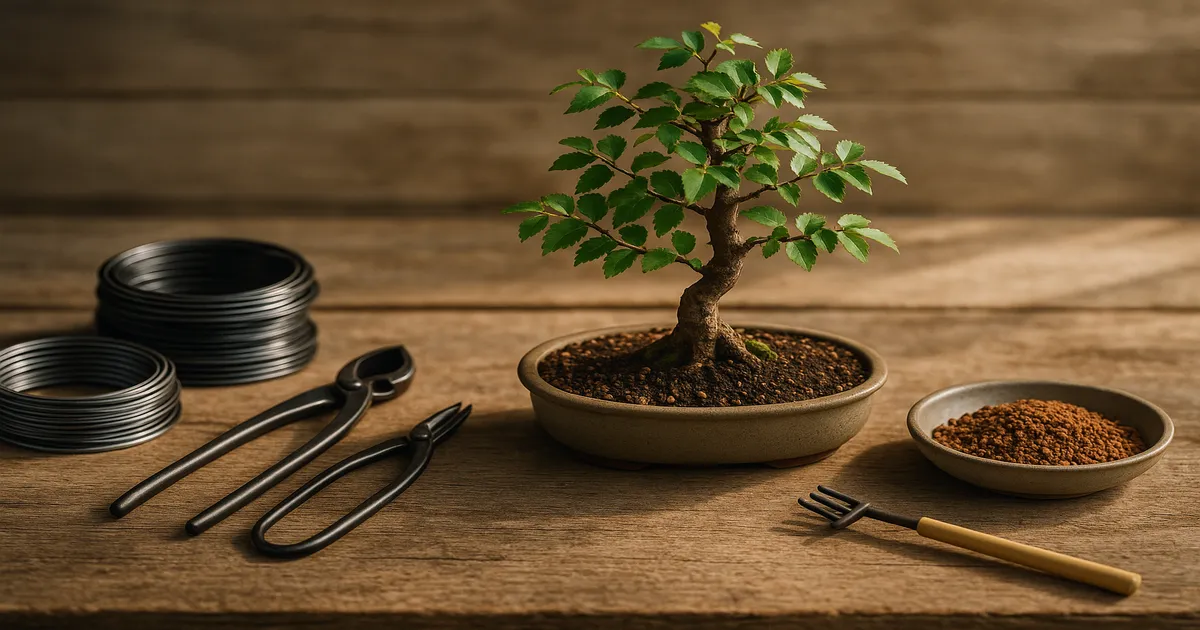
A minimal starter kit covers most needs. Concave cutters leave a slightly hollow wound that heals flush with the branch — they’re the single most useful bonsai-specific tool you’ll buy. Round that out with bonsai scissors for fine trimming, purpose-made wire cutters for removing wire without damaging bark, and knob cutters for cleaning up old stubs.
Introduction to Wiring
Wiring lets you reposition branches gradually by wrapping wire around them at a 45-degree angle and bending them into the desired position. Aluminium wire is the right choice for beginners — it’s softer and more forgiving than copper, and much easier to work with.
Check wired branches every 4–6 weeks. As the tree grows, wire can cut into bark surprisingly fast — especially on vigorous species like Ficus and Chinese Elm. Remove wire before it bites by cutting it off in sections rather than unwinding, which risks snapping branches.
Repotting: When, Why, and How
Why Repotting Matters
Repotting isn’t just about giving a tree more room. It refreshes exhausted soil (especially as akadama breaks down), prevents root-bound stress, and allows you to prune the root mass — which is what keeps the tree in miniature scale over decades.
Signs Your Bonsai Needs Repotting
- Roots circling the base of the pot or emerging from drainage holes
- Water draining very slowly
- Tree rocking or becoming unstable
- It’s been 2–3 years since the last repot (for fast-growing species)
Repotting Frequency
- Ficus, Chinese Elm: Every 2–3 years
- Juniper, Japanese Maple, Jade: Every 3–5 years
Step-by-Step Repotting
- Time it right — early spring before bud break for most species; Jade can wait until late spring when temperatures are reliably warm
- Remove the tree carefully; use a root hook or chopstick to loosen it from the pot
- Comb out the roots with a root rake, removing old soil from around the root mass
- Prune the roots — remove up to one-third of the total root mass, cutting cleanly with sharp scissors
- Prepare the pot — cover drainage holes with mesh and thread tie-down wires through the holes
- Add a base layer of fresh bonsai substrate
- Position the tree and secure it with the tie-down wires so it doesn’t rock
- Fill in with fresh substrate, working it into gaps with a chopstick
- Water thoroughly, then move the tree to a sheltered, shaded spot for 2–4 weeks while it recovers
For pot choice, unglazed clay suits most species — it’s breathable and helps regulate moisture. Glazed pots work well for tropicals and succulents. As a rough guideline, pot depth should be approximately equal to the trunk diameter at the base.
Troubleshooting Common Problems
Yellowing or dropping leaves are most commonly caused by overwatering, but low light, cold drafts, and natural seasonal leaf drop (Chinese Elm drops leaves in autumn — this is normal) are also frequent culprits. Check your watering first, then assess light and temperature.
Brown or crispy foliage usually points to underwatering, low humidity, or sunscorch. On junipers specifically, browning from the tips inward is the classic symptom of being kept indoors.
Root rot announces itself with a foul smell from the soil, mushy stems at soil level, and green leaves dropping suddenly. Remove the tree from its pot, cut away all black or mushy roots back to healthy tissue, rinse the remaining roots with a dilute hydrogen peroxide solution (3% H₂O₂ diluted 1:4 with water) or a fungicide drench, then repot in fresh, dry substrate. Hold back on watering for the first week.
Common pests:
- Spider mites — tiny webs on Ficus and Jade, especially in dry conditions; treat with insecticidal soap or neem oil
- Scale insects — brown or white crusty bumps on Ficus and Elm stems; scrape off manually, then follow up with neem oil
- Aphids — soft green or black clusters on Japanese Maple in spring; knock off with water, follow up with insecticidal soap
- Vine weevil — root damage in outdoor pots; look for notched leaf edges and sudden wilting; treat with nematodes or a systemic drench
Frequently Asked Questions
How long does it take to grow a bonsai tree from scratch? A bonsai grown from seed can take 5–10 years before it looks like a convincing miniature tree. Most beginners start with nursery stock or a pre-bonsai — a young tree with a decent trunk — which cuts that timeline to 2–4 years of active training.
Can I start a bonsai tree for beginners indoors? Yes, but only with species suited to indoor conditions. Ficus and Jade are the most reliable choices. Junipers, Japanese Maples, and most conifers will not survive indoors long-term, regardless of how much care you give them.
How often should I fertilise my bonsai? During the growing season (spring through early autumn), feed every 2–4 weeks with a balanced fertiliser — something like a 10-10-10 NPK ratio works well for most species. Switch to a low-nitrogen, high-phosphorus formula in late summer to harden growth before winter. Don’t fertilise a recently repotted tree for at least 4–6 weeks.
What is the easiest bonsai tree to start with? Ficus (Ficus retusa or F. benjamina) is the easiest overall, particularly for indoor growers. It tolerates low light, inconsistent watering, and dry air better than any other common bonsai species. For outdoor growers, Juniper is equally forgiving as long as it stays outside.
Do bonsai trees need special pots? Not strictly — any container with drainage holes will work while you’re learning. That said, proper bonsai pots are shallow and wide, which encourages lateral root development and suits the aesthetic. Unglazed clay pots are breathable and help prevent overwatering, making them the best practical choice for most beginners.