Quick Answer: The vast majority of bonsai trees are temperate species that must be kept outside to survive — they need real seasons, genuine dormancy, and full sun to thrive. Successful outdoor bonsai care comes down to four things: the right species for your climate, 6–8 hours of daily sunlight, fast-draining inorganic soil, and appropriate winter protection. Keep reading for the complete breakdown.
Can You Keep Bonsai Outside?
If you’ve ever killed a bonsai on a windowsill, here’s why: most bonsai are outdoor trees, full stop. Species like Japanese maple, juniper, pine, and Chinese elm are temperate trees that evolved through four distinct seasons. Keeping them indoors year-round is like keeping a deer in a studio apartment — technically possible for a while, but nothing good comes of it.
Temperate bonsai follow a hard-wired annual cycle: spring bud break, active summer growth, autumn hardening, and winter dormancy. That dormancy period — typically several weeks below 45–50°F (7–10°C) — isn’t optional. It’s when the tree builds carbohydrate reserves, sets buds for the following year, and completes essential physiological housekeeping. Skip it, and the tree slowly exhausts itself.
The “bonsai as houseplant” myth is probably the single biggest killer of beginner trees. It persists because bonsai look delicate and decorative. They’re not. A shimpaku juniper is a mountain tree that endures snow, wind, and freezing temperatures in the wild. It doesn’t want to sit next to your radiator. The only true indoor bonsai species are subtropical trees — ficus, jade, fukien tea — and even those need bright light that most homes simply can’t provide.
Best Species for Keeping Bonsai Outside
Temperate Deciduous Species
These are the workhorses of outdoor bonsai and the best starting point for most growers.
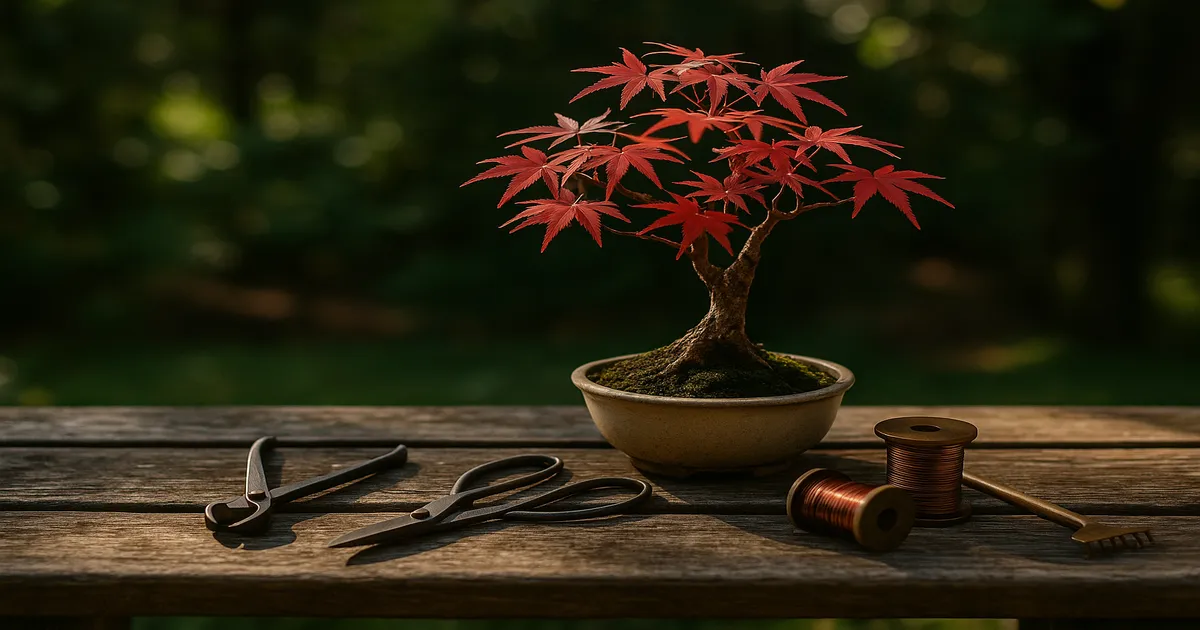
- Japanese maple (Acer palmatum) — stunning autumn colour, delicate foliage, prefers morning sun with afternoon shade in hot climates. Hardy to Zone 5.
- Trident maple (Acer buergerianum) — more heat-tolerant than Japanese maple, with an exceptional root system for developing dramatic surface roots. Zones 5–9.
- Chinese elm (Ulmus parvifolia) — the most forgiving outdoor species for beginners. Semi-evergreen in mild winters, fully deciduous in cold zones. Zones 5–9.
- European beech (Fagus sylvatica) — slow-growing but rewarding, with smooth grey bark and leaves that cling into winter. Zones 4–7.
Conifers
Conifers are the heart of the Japanese bonsai tradition and reward patient, precise cultivation.
- Japanese black pine (Pinus thunbergii) — the quintessential bonsai pine. Full sun, excellent salt tolerance, capable of dramatic needle reduction through decandling. Zones 5–8.
- Japanese white pine (Pinus parviflora) — shorter blue-green needles, more refined character, often grafted onto black pine rootstock for vigour. Zones 4–7.
- Shimpaku juniper (Juniperus chinensis ‘Shimpaku’) — the most important juniper in Japanese bonsai, prized for its scale-like foliage and deadwood potential. Zones 4–9.
Flowering and Fruiting Species
- Japanese flowering cherry (Prunus serrulata) — spectacular spring bloom; pruning wounds need careful management as they’re prone to dieback.
- Crabapple (Malus spp.) — flowers, fruit, and autumn colour in one package. Malus halliana is particularly valued in the Japanese tradition.
- Wisteria (Wisteria floribunda, W. sinensis) — grown almost entirely for its extraordinary pendulous flower clusters; pruning timing is critical to preserve flower buds.
Choosing the Right Species for Your Climate Zone
Match your species to your USDA hardiness zone before anything else. A shimpaku juniper handles a Zone 4 winter with minimal protection; a trident maple thrives in Zone 9 where a Japanese maple might struggle with the heat. Getting this foundation right makes every other aspect of care easier.
Sunlight and Temperature Requirements for Outdoor Bonsai
Most outdoor bonsai need 6–8 hours of direct sunlight daily during the growing season. Insufficient light produces weak, elongated growth, poor ramification, and trees far more susceptible to pests and disease.
- Full-sun species (pines, junipers, trident maple): place in an unobstructed south or southeast-facing position.
- Partial-shade species (Japanese maple, beech): morning sun with afternoon shade is ideal, especially in Zones 7 and above where afternoon temperatures regularly exceed 90°F (32°C). Direct afternoon sun scorches their delicate foliage.
Why Potted Bonsai Are More Cold-Sensitive Than In-Ground Trees
A tree in the ground has its roots insulated by surrounding soil. A tree in a pot has its root zone exposed on all sides — pot temperatures can drop 10–15°F (5–8°C) below ambient air temperature during a hard freeze. Practically, this means a species rated as hardy to Zone 5 in the ground should be treated as one to two zones less hardy in a container. Plan your winter protection accordingly.
Outdoor Bonsai Soil: The Best Mix for Healthy Roots
Standard potting soil compacts rapidly inside a small bonsai pot, cutting off oxygen to the roots and retaining water far too long. The result is root rot, poor ramification, and a slow decline that’s hard to diagnose until it’s too late.
The Three-Component Inorganic Mix
The modern standard for outdoor bonsai soil is a predominantly inorganic mix. A reliable general-purpose blend is:
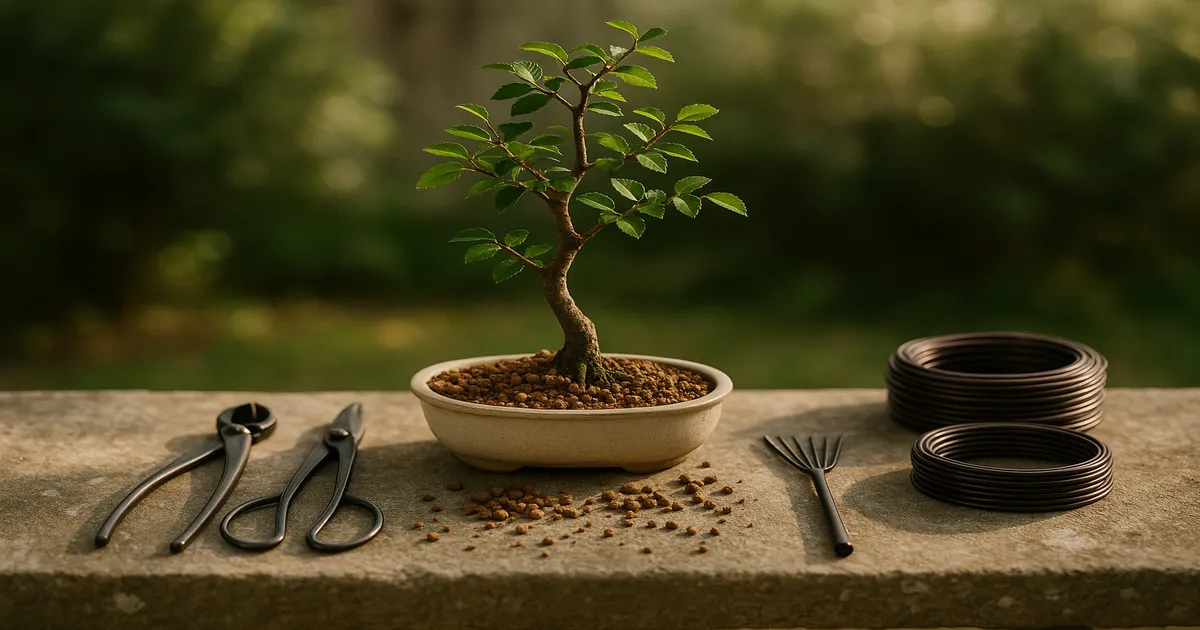
- Akadama 40% — fired Japanese clay granules that retain nutrients and provide good initial drainage. They break down over 2–3 years, gradually increasing moisture retention, so repot before they turn to mush.
- Pumice 30% — volcanic silica that provides long-term structural stability and excellent aeration. It promotes fine root development and doesn’t break down.
- Lava rock 30% — porous volcanic scoria with superior drainage and anchor points for mycorrhizal fungi. Extremely durable.
Species-Specific Soil Adjustments
- Pines and junipers (prefer drier conditions): shift to 30% akadama, 35% pumice, 35% lava rock
- Maples and elms (prefer slightly more moisture): increase akadama to 50–60%, reduce lava rock to 15–20%
- Flowering and fruiting species: add 10–15% composted bark to support heavier nutrient demands during flowering and fruit set
Never use standard potting soil, peat-based mixes, or fine sand. Fine sand is a particularly common mistake — it clogs pore spaces and actually reduces drainage rather than improving it.
Watering Outdoor Bonsai
Watering is the skill that takes the longest to develop. There’s no universal schedule — weather, pot size, species, and season all change the equation daily.
How Often to Water by Season
- Summer (above 80°F / 27°C, full sun): once or twice daily; small pots under 6 inches may need watering 2–3 times a day in extreme heat
- Spring and autumn: every 1–2 days, adjusted for rainfall and temperature
- Winter dormancy: every 1–3 weeks — roots must never fully dry out, but overwatering dormant trees causes root rot
Technique and Common Mistakes
Water thoroughly until water flows freely from all drainage holes, ensuring complete saturation and flushing accumulated mineral salts. Then let the soil approach dryness before watering again. The lift test — judging pot weight by hand — is one of the most reliable methods experienced growers use. A fine-rose watering can or gentle hose nozzle prevents soil displacement and surface root damage.
Signs of overwatering: yellowing leaves starting at the base of shoots; soft, mushy roots; soil staying wet 24+ hours after watering; excessive moss on the soil surface.
Signs of underwatering: leaf margins browning and crisping inward; premature leaf drop in deciduous species; soil pulling away from pot edges. In conifers, needles turn yellow-brown from the tips inward — often appearing months after the actual drought event, which makes diagnosis tricky.
In climates below 30% relative humidity, place pots on humidity trays filled with gravel and water, keeping the pot base above the water line. Mist foliage in the early morning only — water droplets in hot afternoon sun can scorch leaves.
Pruning and Wiring Outdoor Bonsai
Maintenance Pruning
Maintenance pruning is ongoing work — you’re responding to growth as it happens. For deciduous trees, cut new shoots back to 1–2 leaves once they’ve extended to 4–6 leaves. This redirects energy to interior buds and promotes the fine branching (ramification) that gives bonsai their refined appearance.
For junipers, always pinch new growth tips between thumb and forefinger rather than cutting — cutting leaves brown tips on scale-like foliage, and junipers won’t bud back from bare wood. For pines, the decandling technique involves removing extending spring candles by 50–75% before needles open, which balances vigour across the tree.
Structural Pruning: Timing by Species
- Deciduous species: late winter to early spring, just before bud break (February–March in most temperate zones). The leafless state lets you see branch structure clearly, and wounds callus fastest as growth begins.
- Conifers: late autumn to early winter, or early spring. Avoid midsummer structural cuts on pines, which can cause excessive sap loss.
- Flowering species: immediately after flowering, to preserve next year’s flower buds.
For any cut over ½ inch (12 mm) in diameter, apply a cut paste to prevent desiccation and pathogen entry. Concave cutters create a slightly hollowed wound that heals flush with the trunk rather than leaving a raised knob. Callus rates vary dramatically: Japanese maple can close large wounds in 2–3 seasons; pines may take 5–10+ years.
Wiring
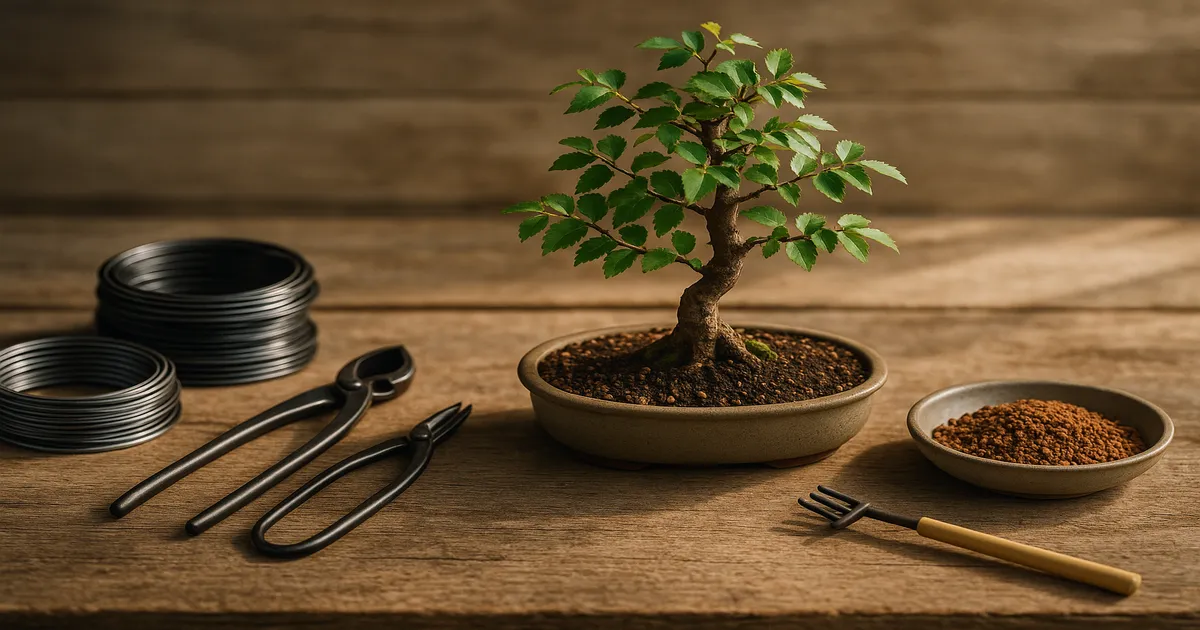
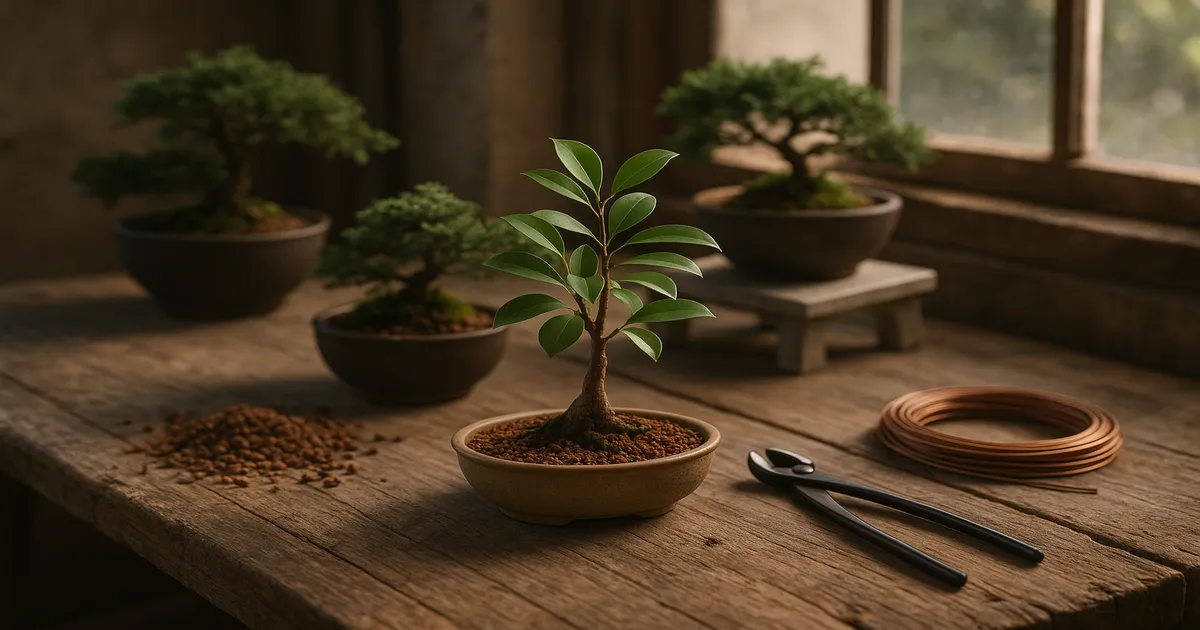
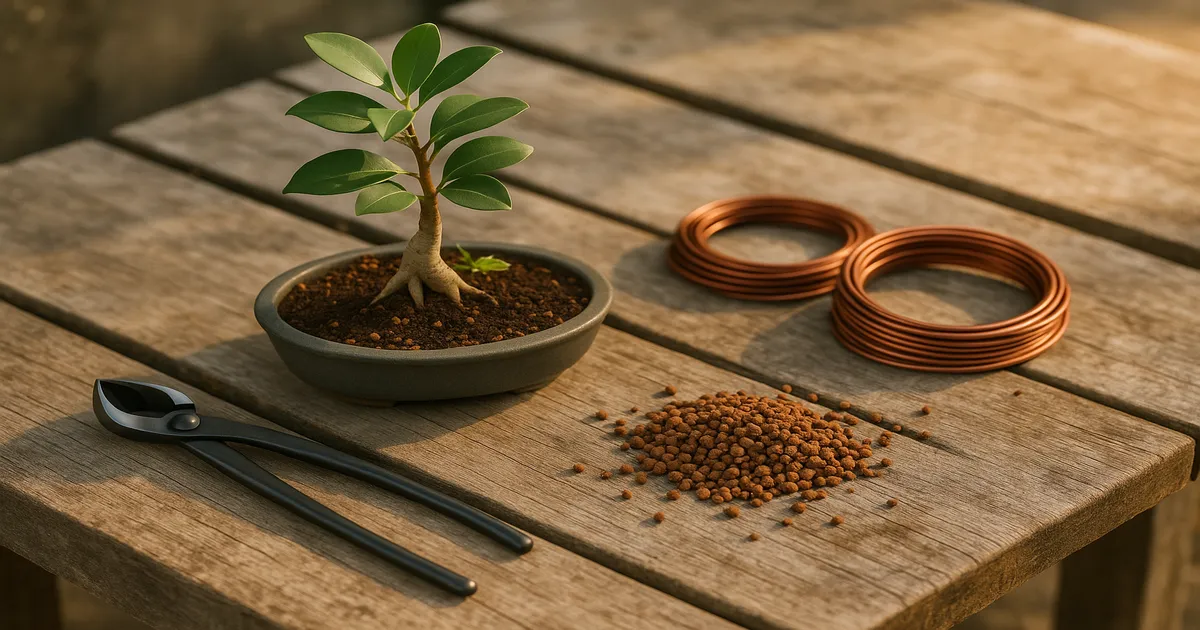
Copper wire holds its shape exceptionally well and requires less wire relative to branch thickness — the traditional Japanese choice, ideal for pines and junipers. Aluminium wire is softer and more forgiving, making it the better choice for beginners and for deciduous species with delicate bark. You’ll need roughly 1.5× the diameter of copper to achieve equivalent holding power.
Select a gauge approximately one-third the diameter of the branch you’re wiring. Wire deciduous trees after leaf drop in autumn or just before bud break in spring — avoid wiring during active growth when bark is tender and wire cuts in rapidly. Check wired branches every 2–3 weeks during spring. Remove wire by cutting it in sections rather than unwinding, which risks snapping the branch or tearing bark.
Winter Protection for Outdoor Bonsai
Dormancy isn’t just rest — it’s a physiological necessity. Trees build carbohydrate reserves, complete bud set, and harden off tissues during this period. A tree denied proper dormancy for several years running will weaken progressively and eventually die. This is why bringing outdoor bonsai inside for winter is one of the most common and most damaging mistakes beginners make.
Cold Climate Strategies: Zones 3–5
- Cold frames: unheated or minimally heated structures targeting 25–38°F (-4–3°C) inside; polycarbonate panels allow enough light to prevent etiolation during mild winter spells
- Unheated garage or shed: suitable for fully dormant deciduous trees once leaves have dropped; check soil moisture every 2–3 weeks
- Mulch pits: bury pots to the rim in mulch or wood chips in a sheltered spot — effective and inexpensive, though watch for rodent damage
Mild Climate Strategies: Zones 6–8
Wrap pots with frost cloth or burlap during hard freeze events below 20°F (-7°C). Grouping trees on the sheltered side of a wall or fence reduces wind chill significantly.
Critical Winter Mistakes That Kill Bonsai
- Heated greenhouse above 50°F (10°C): breaks dormancy prematurely, exhausts reserves, and creates ideal conditions for spider mites
- Pots freezing solid for extended periods: root cell damage occurs when root zone temperatures drop below 15–20°F (-9 to -7°C) for more than 24–48 hours
- Plastic sheeting over trees: traps moisture and creates perfect conditions for Botrytis and other fungal pathogens
- Bringing outdoor bonsai inside: even a week in a heated room can trigger premature bud break the tree can’t sustain
Frequently Asked Questions About How to Keep Bonsai Outside
Can bonsai trees stay outside all year round?
Most temperate bonsai species can and should stay outside all year. In Zones 6–8, minimal frost protection is usually sufficient. In colder zones (3–5), trees need shelter in a cold frame, unheated garage, or mulch pit to prevent pots from freezing solid — but they must remain cold enough to complete dormancy.
How do I protect outdoor bonsai from frost?
The key is protecting the root zone, not the canopy. Wrap pots with frost cloth or burlap, or move trees into an unheated shed or cold frame when temperatures threaten to drop below 20°F (-7°C). Never let pots freeze solid for more than a day or two, as this damages roots even in cold-hardy species.
Can I bring my outdoor bonsai inside during winter?
No — this is one of the most common mistakes in bonsai care. Heated indoor environments disrupt dormancy, cause premature bud break, and create conditions that favour spider mites and fungal disease. If your tree needs winter protection, move it to an unheated but sheltered space, not your living room.
How much sunlight does an outdoor bonsai need each day?
Most outdoor bonsai need 6–8 hours of direct sunlight daily during the growing season. Full-sun species like pines and junipers need unobstructed sun all day. Partial-shade species like Japanese maple do best with morning sun and afternoon shade, particularly in hot climates where afternoon temperatures exceed 90°F (32°C).
How do I know if my outdoor bonsai needs watering?
The most reliable method is the lift test — pick up the pot and judge its weight. A pot that feels noticeably lighter than when freshly watered needs water. You can also press a finger 1–2 cm into the soil; if it’s dry at that depth, water thoroughly. Don’t wait for wilting — by the time leaves droop, the tree is already under stress.