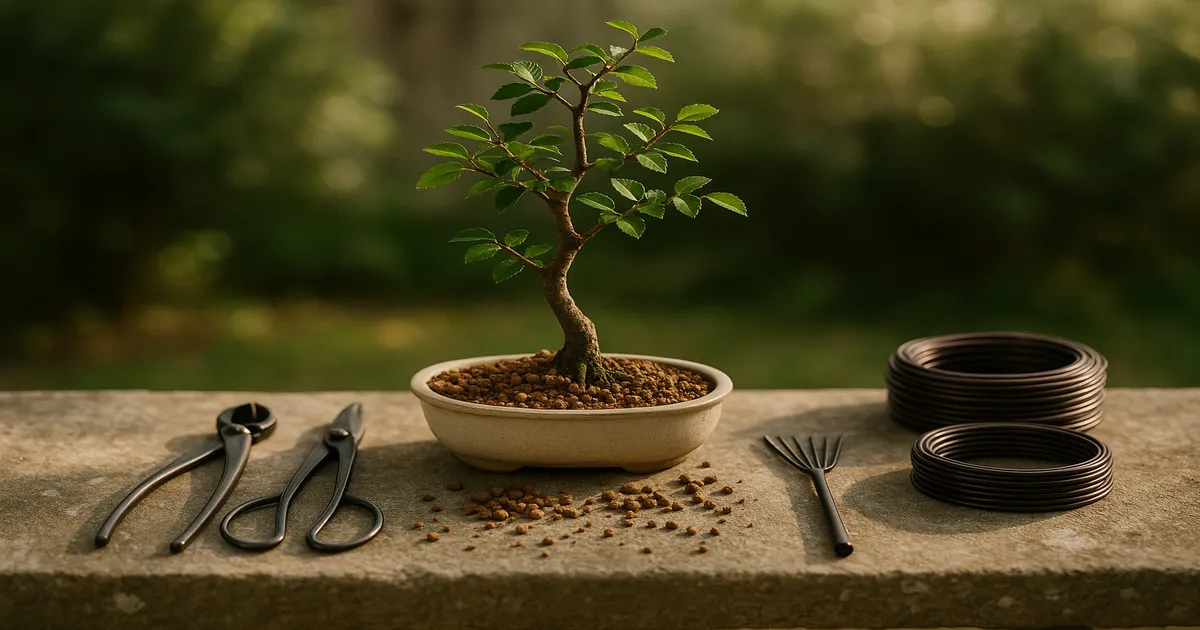
Quick Answer: The best bonsai for beginners book teaches you five core skills — species selection, soil and watering, pruning, wiring, and repotting — and frames bonsai as a long-term living art practice, not a houseplant hobby. Start with a forgiving species like Chinese Elm or Ficus, master the fundamentals of well-draining soil and attentive watering, and the rest follows naturally.
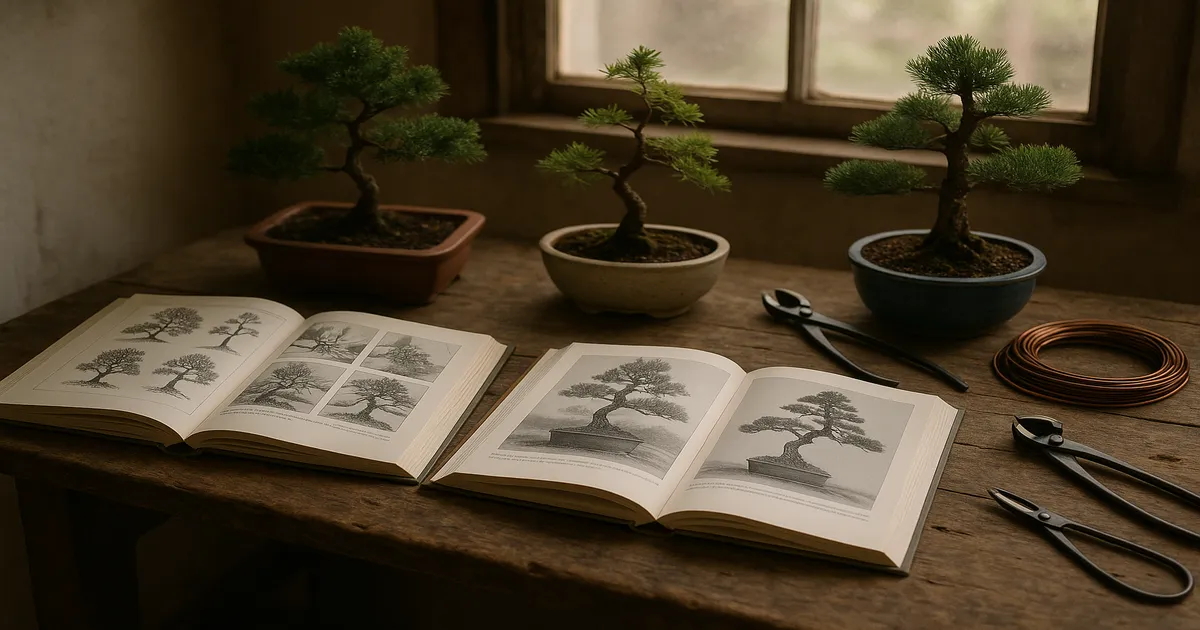
Picking up a good bonsai for beginners book is one of the best investments you can make when starting out. Bonsai draws from over a thousand years of tradition — Japanese, Chinese penjing, and Korean bunjae — and a solid book translates that depth into practical, actionable guidance. This article covers everything a quality beginner book should teach you: species selection, soil mixes, pruning timing, wiring technique, and more.
What Every Bonsai for Beginners Book Should Cover
What Is Bonsai and Why Does It Matter?
The word bonsai combines bon (tray) and sai (planting). You’re cultivating a full-sized tree’s essence inside a container, shaping it over years — sometimes decades — to evoke nature in miniature form.
This isn’t a houseplant you water twice a week and forget. Bonsai is a living art practice with philosophical depth, seasonal rhythms, and real craft skills to master. The sooner you embrace that mindset, the faster you’ll improve.
The Five Core Skills Every Beginner Must Master
Any quality beginner bonsai book will build its content around these five pillars:
- Species selection — choosing a tree suited to your climate and living situation
- Soil and watering — the single biggest factor in whether your tree lives or dies
- Pruning — both maintenance trimming and structural shaping
- Wiring — repositioning branches to create movement and aesthetic form
- Repotting — refreshing roots and growing medium every few years
Master these five and you have a complete foundation.
Choosing Your First Tree: Best Beginner Bonsai Species
Ficus: The Forgiving Indoor Classic
Ficus (Ficus retusa, F. microcarpa, F. benjamina) is the go-to recommendation for apartment dwellers or anyone who can’t keep a tree outdoors. Native to tropical Asia, it handles low light and irregular watering better than almost any other species. It grows vigorously, responds well to heavy pruning, and naturally develops aerial roots that add dramatic character over time.
Juniper: The Iconic Outdoor Beginner Tree
Juniper (Juniperus procumbens ‘Nana’) is probably the most recognizable bonsai species in the world — and one of the most misunderstood. It is an outdoor-only species, full stop. Many beginners bring junipers inside and wonder why they slowly decline. The answer is simple: junipers need cold dormancy, real sunlight, and fresh air to survive. Keep it outside with at least six hours of direct sun daily and it’s remarkably tough, tolerating temperatures down to 10°F (-12°C).
Chinese Elm: The All-Rounder in Every Bonsai for Beginners Book
Ulmus parvifolia earns its place in virtually every beginner bonsai book for good reason. It’s semi-evergreen, develops fine twiggy ramification quickly, and its small leaves reduce naturally with training. It prefers outdoors but can overwinter inside in cold climates. If you want one species that teaches you the most skills the fastest, Chinese Elm is it.
Japanese Maple and Trident Maple: For the Ambitious Beginner
Acer palmatum (Japanese Maple) and Acer buergerianum (Trident Maple) are outdoor deciduous trees that reward patience with spectacular results — autumn color, elegant branching, and impressive nebari (surface roots). Japanese Maple is more sensitive to heat and drought; Trident Maple is tougher and more heat-tolerant. Both require cold dormancy and should never overwinter indoors.
Jade Plant: A Succulent Gateway Species
Crassula ovata isn’t a traditional bonsai species, but it’s a useful gateway plant for Western beginners. It’s drought-tolerant, easy to shape, and thrives indoors at 65–75°F (18–24°C). Keep it away from frost — anything below 40°F (4°C) will damage it.
Indoor vs. Outdoor Species at a Glance
| Species | Indoor | Outdoor | Key Note |
|---|---|---|---|
| Ficus | ✅ Yes | Warm climates only | Bright indirect light indoors |
| Juniper | ❌ No | ✅ Required | Needs dormancy — never bring inside |
| Chinese Elm | Partial | ✅ Preferred | Can overwinter indoors in cold climates |
| Japanese Maple | ❌ No | ✅ Required | Needs cold dormancy |
| Jade Plant | ✅ Yes | Warm climates | Frost-sensitive below 40°F |
Light, Temperature, and Winter Care
How Much Light Does a Beginner Bonsai Need?
Outdoor species — Juniper, Maple, Elm — need a minimum of six hours of direct sunlight daily, ideally on a south- or east-facing bench. Indoor species like Ficus and Jade manage at lower intensities; place them within 12–24 inches of a south-facing window. If natural light falls short, supplement with a 5000–6500K full-spectrum LED grow light (Mars Hydro TS600) running 12–14 hours per day.
Ideal Temperature Ranges by Species
- Ficus: 65–85°F (18–29°C); avoid drafts below 55°F (13°C)
- Juniper: active growth at 50–85°F (10–29°C); dormancy down to 10°F (-12°C)
- Chinese Elm: active growth at 55–80°F (13–27°C); dormancy at 25–40°F (-4 to 4°C)
- Japanese Maple: active growth at 55–75°F (13–24°C); dormancy at 20–35°F (-7 to 2°C)
- Jade Plant: 65–75°F (18–24°C) year-round; never below 40°F (4°C)
Winter Protection and Dormancy
Temperate species need cold dormancy, but pot-bound roots are more vulnerable to freeze-thaw damage than in-ground roots. The sweet spot is an unheated garage, cold frame, or cold greenhouse holding 25–40°F (-4 to 4°C). This keeps the tree dormant without exposing roots to damaging hard freezes below 15°F (-9°C).
Bringing a juniper or maple into a heated living room in winter is one of the most common beginner mistakes. It disrupts dormancy, stresses the tree, and often leads to decline by spring.
Bonsai Soil and Watering: The Foundation of Tree Health
Why Standard Potting Soil Fails Bonsai
Regular potting mix retains too much moisture and compacts over time, suffocating the fine feeder roots bonsai depend on. Bonsai need fast-draining, inorganic-dominant mixes that allow air to reach roots between waterings.
The Standard Bonsai Soil Mix
The industry-standard mix for most deciduous and conifer species is 50% akadama, 25% pumice, 25% lava rock:
- Akadama — fired Japanese clay that retains some moisture while slowly breaking down over 2–3 years, acting as a built-in repotting reminder.
- Pumice — volcanic glass that promotes drainage and fine root development
- Lava rock — hard, long-lasting drainage component that resists compaction
Use particle sizes of 3–6mm for most bonsai, with larger 6–9mm particles as a bottom drainage layer.
Species-specific adjustments:
- Ficus: 40% akadama / 30% pumice / 30% perlite — slightly more moisture retention
- Jade/Succulents: 20% akadama / 40% pumice / 40% coarse grit — maximum drainage
- Japanese Maple: 60% akadama / 20% pumice / 20% lava rock — extra moisture for fine feeder roots
Watering Technique and Frequency
Water when the top ½ inch of soil begins to dry — but before it dries completely. In summer heat, some trees need watering twice daily. In cool winter conditions, once every 3–5 days may be plenty. Never water on a fixed schedule. Always check the soil first.
When you do water, go thoroughly — water until it flows freely from the drainage holes. This hydrates the entire root mass and flushes accumulated salts. Use a fine-rose watering can (Haws Slimcan 1L) or a soft-spray hose attachment to avoid disturbing the soil surface.
Signs of overwatering: yellowing inner leaves, soft or mushy roots, soil staying wet for more than 2–3 days, fungus gnats, bark darkening at the soil line.
Signs of underwatering: leaf curl, crispy brown edges, soil pulling away from pot edges, pot feels unusually light.
Managing Humidity for Indoor Bonsai
Tropical species like Ficus prefer 50–70% relative humidity — well above the 20–30% typical of heated homes in winter. Place the pot on a humidity tray filled with pebbles and water, keeping the pot itself above the waterline. Morning misting helps too, though it supplements rather than replaces proper watering.
Pruning Your Bonsai: Maintenance and Structural Cuts
Maintenance Pruning
Maintenance pruning happens throughout the growing season. The goal is to maintain your tree’s silhouette, encourage denser branching (ramification), and keep foliage pads compact.
- Deciduous trees: trim new shoots back to 1–2 leaves once they’ve extended 4–6 leaves
- Junipers: pinch new growth with your fingers — scissors brown the needles
- Ficus: trim back to 2 leaves after every 6–8 leaves of new growth; let the milky sap dry naturally
Structural Pruning
Structural pruning establishes the primary branch architecture — removing crossing branches, eliminating competing leaders, and refining the trunk line. Timing matters:
- Deciduous trees: late winter to early spring, just before bud break
- Conifers: late summer to early fall, or early spring — avoid midsummer on stressed trees
- Tropical species: any time the tree is actively growing
For any cut over ½ inch in diameter, apply a wound sealant like Kiyonal or Lac Balsam immediately after cutting. Use concave cutters for all branch removal — they create a slightly hollowed cut that heals flush with the trunk, leaving far less visible scarring than standard scissors or shears.
Wiring Techniques: Shaping Branches
Aluminum vs. Copper Wire
Start with anodized aluminum wire . It’s softer, more forgiving, easier to apply, and less likely to scar bark if you make a mistake. Copper wire holds position better but is significantly less forgiving in beginner hands.
Wire gauge rule of thumb: wire diameter should be approximately one-third the thickness of the branch being wired.
- 1.0–1.5mm: fine twigs and young shoots
- 2.0–2.5mm: medium branches
- 3.0–4.0mm: primary branches and trunk work
Whenever possible, double-wire — run one piece of wire across two adjacent branches to anchor it properly.
Wiring Application
- Anchor the wire at the trunk or a larger branch before wrapping outward
- Wrap at a 45-degree angle — steeper than 60° loses holding power; shallower than 30° concentrates pressure and damages bark
- Apply with consistent, firm pressure — touching bark but not biting in
- Work from the base of the branch toward the tip
- After wiring, gently bend to the desired position
How Long to Leave Wire On
- Deciduous trees: 3–4 months during the growing season; check monthly
- Conifers: 6–12 months (slower growth)
- Tropical species: check every 4–6 weeks during active growth
Always cut wire off — never unwind it. Use wire cutters to snip every 2–3 coils and remove in segments. Unwinding risks snapping a branch that has begun to set in its new position.
Repotting: Refreshing Roots for Long-Term Health
When and How Often to Repot
Two things drive the need to repot: roots filling the pot and circling until the tree becomes root-bound, and soil breaking down until drainage is compromised. Regular repotting keeps the root system healthy and the growing medium functional.
Repotting frequency:
- Young, fast-growing trees (Ficus, Elm under 10 years): every 1–2 years
- Mature deciduous trees: every 2–3 years
- Mature conifers: every 3–5 years
Best timing:
- Deciduous trees: early spring, just as buds begin to swell but before leaves open
- Conifers: early spring before new candles extend, or late summer/early fall
- Tropical species: spring or early summer, when temperatures are consistently warm
The One-Third Root Pruning Rule
Remove the tree from its pot and use a root hook or chopstick to gently comb out circling roots. Never remove more than one-third of the total root mass in a single session. After pruning, repot into fresh bonsai mix, water thoroughly, and keep the tree in a sheltered spot out of direct sun for 2–3 weeks while it recovers.
Troubleshooting Common Beginner Problems
Yellowing leaves: Almost always overwatering. Check for soft, mushy roots. If root rot has set in, remove the tree from its pot, trim away any black or mushy roots, let the root ball dry slightly, and repot into fresh, well-draining mix.
Leaf curl and crispy edges: Underwatering or low humidity. Increase watering frequency and check that the entire root mass is being saturated — not just the surface.
Wire scarring: Wire left on too long. Spiral scars can take years to fade on deciduous trees. Set a calendar reminder to check wired trees every 4 weeks during the growing season.
Leggy, sparse growth: Insufficient light. Move outdoor trees to a sunnier position or supplement indoor trees with a grow light.
Sudden leaf drop on Ficus: Usually caused by a change in environment — moving the tree, a cold draft, or a sudden drop in humidity. Ficus are sensitive to change but recover quickly once conditions stabilize.
Frequently Asked Questions
What is the best bonsai for beginners book? The most consistently recommended titles are The Complete Book of Bonsai by Harry Tomlinson, Bonsai: The Art of Growing and Keeping Miniature Trees by Peter Chan, and Bonsai Techniques I by John Yoshio Naka. Tomlinson’s book is the best all-around starting point — it covers all five core skills with clear photography and species-specific guidance.
Can I keep a bonsai indoors? Yes, but only tropical or subtropical species like Ficus or Jade Plant. Temperate species — Juniper, Maple, Elm — need outdoor conditions and cold dormancy to survive long-term. Keeping a juniper indoors is one of the most common reasons beginners lose their first tree.
How often should I water my bonsai? There is no fixed schedule. Water when the top ½ inch of soil begins to dry out. In summer this may mean daily or twice daily; in cool winter conditions, every 3–5 days. Always check the soil before watering.
When should I repot my bonsai? For most deciduous species, repot every 2–3 years in early spring just before bud break. Fast-growing trees like Ficus and young Chinese Elm may need repotting every 1–2 years. The clearest sign: roots visibly circling the pot or emerging densely from drainage holes.
Is bonsai difficult for beginners? The basics are straightforward — choose the right species, use well-draining soil, water attentively, and prune regularly. The difficulty lies in patience and observation. Bonsai rewards people who slow down and pay attention to their tree rather than following rigid rules. A good beginner book gives you the framework; the tree teaches you the rest.