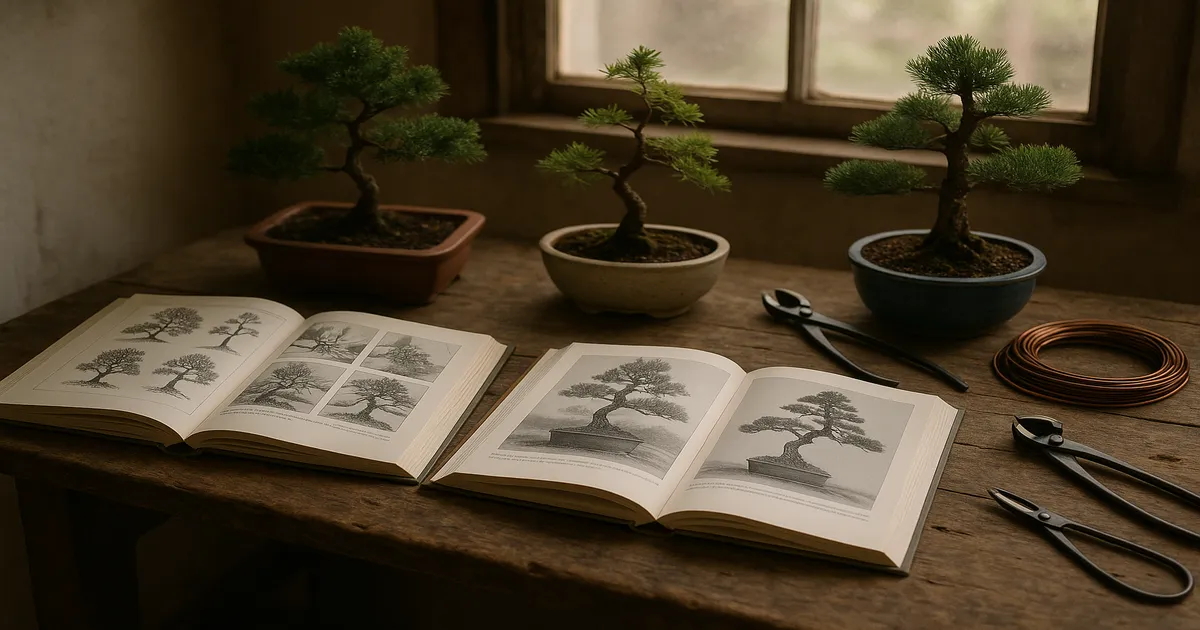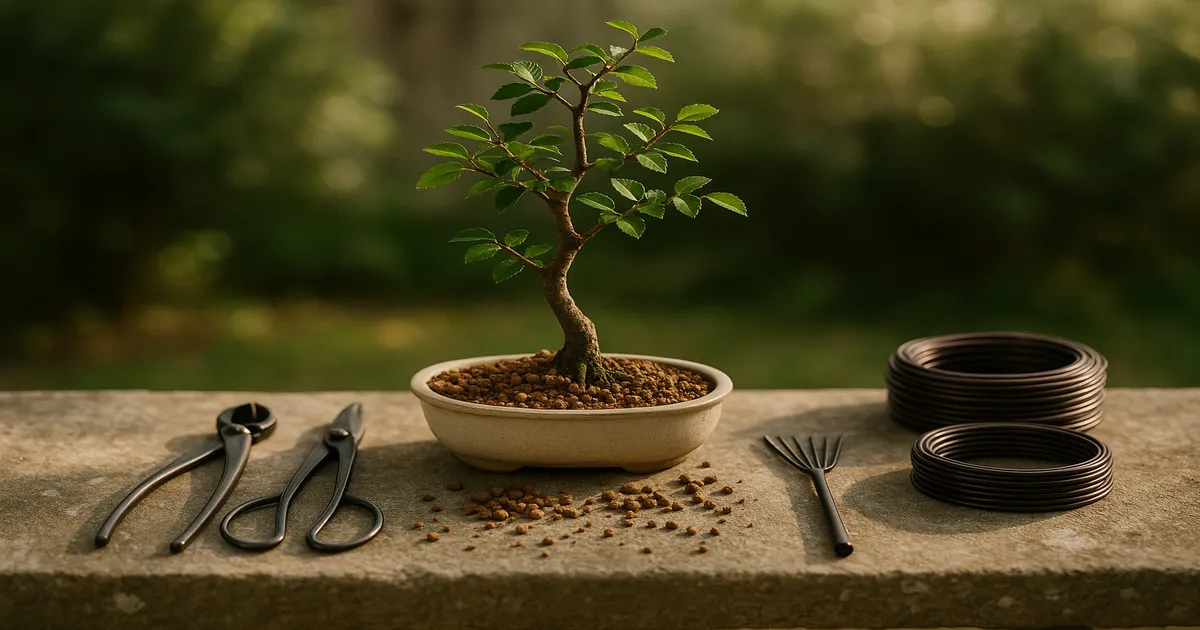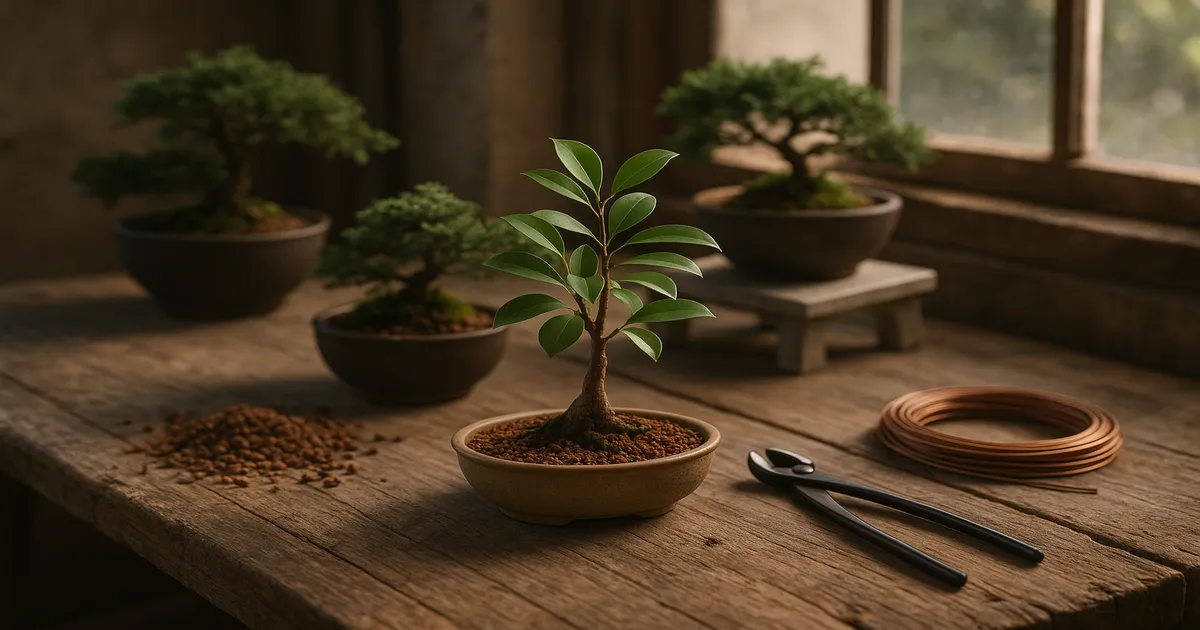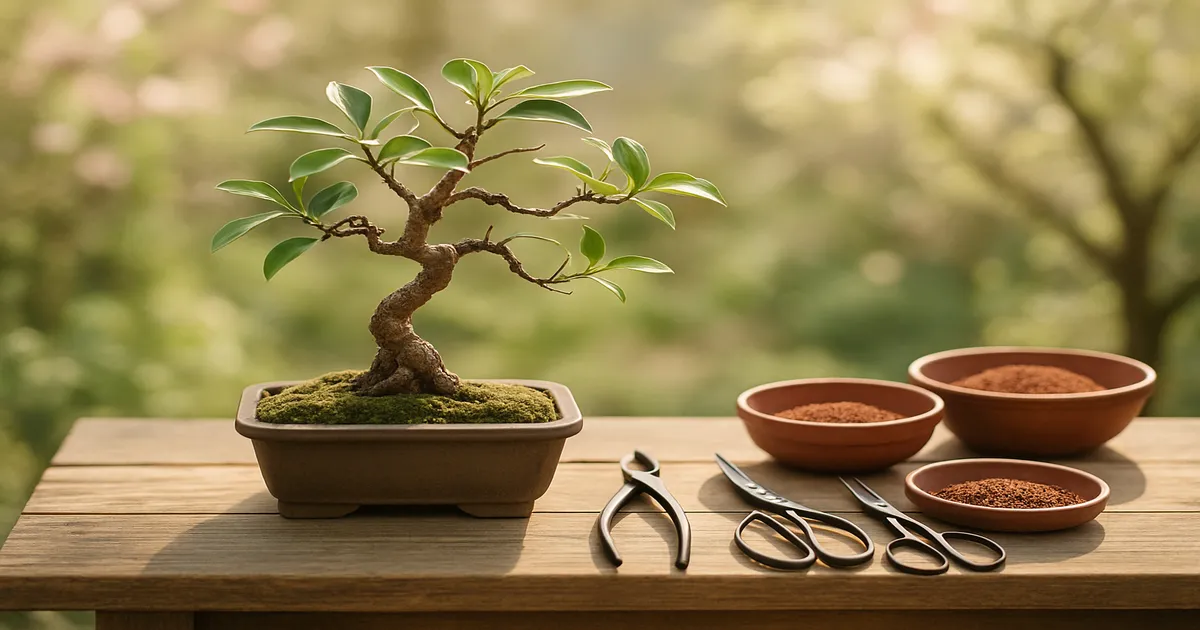
Quick Answer: Bonsai is a horticultural art practice — not a plant species — where you train any woody-stemmed tree or shrub to look like a full-sized, ancient tree in miniature. To get started with bonsai for beginners, pick the right species for your climate, give it proper light, use a fast-draining inorganic soil mix, water correctly, and prune or wire it into shape. The learning curve is real, but with the right fundamentals, almost anyone can grow a healthy, beautiful bonsai.
Learning how to bonsai for beginners comes down to five non-negotiable fundamentals — and most beginner failures trace back to getting just one of them wrong. This guide covers everything: species selection, light, soil, watering, pruning, wiring, and what to do when things go sideways.
How to Bonsai for Beginners: The 5 Fundamentals
What Is Bonsai, Really?
The word bonsai (盆栽) literally means “planted in a tray.” It evolved from the Chinese art of penjing and was refined in Japan into the practice we recognize today. Bonsai is not a species of tree — it’s a technique applied to ordinary trees and shrubs to create the illusion of a massive, weathered tree scaled down to fit in your hands.
Any woody-stemmed plant can technically become a bonsai. The goal is capturing movement, taper, and aged character in miniature form.
The 5 Things Every Beginner Must Get Right
- Species selection — choose a tree suited to your climate and living situation
- Light — most species need far more than a windowsill provides
- Soil — standard potting mix will kill your tree; an inorganic mix is essential
- Watering — the single biggest cause of beginner failure, in both directions
- Pruning and wiring — how you shape the tree and maintain its design
One more thing: set realistic expectations. Trunk thickening takes years, and a truly refined bonsai takes decades. Patience isn’t just a virtue here — it’s the practice itself.
Choosing the Best Bonsai Tree for Beginners
Top 5 Beginner-Friendly Species
| Species | Placement | Growth Habit | Beginner Rating |
|---|---|---|---|
| Juniper (J. procumbens ‘Nana’) | Outdoor only | Spreading conifer | ⭐⭐⭐⭐⭐ |
| Chinese Elm (Ulmus parvifolia) | Outdoor; tolerates bright indoors | Semi-evergreen, fine branching | ⭐⭐⭐⭐⭐ |
| Ficus (Ficus retusa/microcarpa) | Indoor or warm outdoor | Tropical, vigorous | ⭐⭐⭐⭐ |
| Japanese Maple (Acer palmatum) | Outdoor only | Deciduous, elegant | ⭐⭐⭐ |
| Fukien Tea (Carmona retusa) | Indoor or warm outdoor | Tropical, small leaves | ⭐⭐⭐ |
Juniper and Chinese Elm are the top picks for most beginners. Junipers are forgiving, widely available, and respond beautifully to wiring. Chinese Elms grow fast, develop fine branching quickly, and tolerate a wider range of conditions than almost any other species.
Indoor vs. Outdoor Bonsai: The Most Common Beginner Mistake
This is where most beginners go wrong before they’ve even started. Walk into any mall gift shop and you’ll find junipers labeled “indoor bonsai.” They are not. Junipers will die indoors — usually within a few months — because they need full sun, fresh air, and cold winter dormancy.
The rule is simple: tropical species (Ficus, Fukien Tea) can live indoors year-round. Temperate species (Juniper, Japanese Maple, Chinese Elm) belong outside. Chinese Elm can adapt to a very bright indoor spot, but it always performs better outdoors.
Where to Buy Your First Bonsai
Pre-styled bonsai from a specialist nursery look beautiful on day one, but they’re expensive and you learn less from them. Nursery stock — a young juniper or elm from a garden center, typically sold for a few dollars — is the best starting point. You get to develop the tree yourself, and early mistakes don’t cost much. Look for stock with an interesting trunk base, some natural taper, and healthy foliage. Avoid anything root-bound in a tiny plastic pot.
Light and Temperature Requirements
How Much Light Does a Bonsai Need?
Outdoor species need a minimum of 6 hours of direct sunlight per day. More is usually better. When summer temperatures regularly exceed 95°F (35°C), afternoon shade helps prevent scorching — but don’t compensate by cutting morning sun.
Indoor species should sit within 12–18 inches of a south- or east-facing window. If natural light is weak or days are short, supplement with a 5000–6500K grow light running 12–14 hours a day. A reliable option is the Barrina T5 Full Spectrum Grow Light, which covers a standard bonsai bench without overheating the foliage. Without adequate light, even tropical species decline slowly and become vulnerable to pests and disease.
West-facing windows are marginal for indoor bonsai. North-facing windows don’t provide enough light for any bonsai species.
Winter Protection for Outdoor Bonsai
Container roots are far more vulnerable to freezing than in-ground roots. Most outdoor bonsai need protection once temperatures drop below 20°F (-7°C). Your best options:
- Unheated garage or shed — keeps temps between 25–40°F (-4–4°C) and maintains dormancy
- Cold frame — ideal for holding 28–38°F (-2–3°C) with some light
- Mulching the pot — bury the pot in the ground or surround it with straw for insulation
Do not bring outdoor bonsai into a heated room for winter. Warmth breaks dormancy prematurely and weakens the tree. Tropical species are the opposite — never let them drop below 50°F (10°C).
Bonsai Soil and Repotting
Why Standard Potting Soil Kills Bonsai
Regular potting mix compacts over time, retains too much moisture, and suffocates roots. Bonsai roots need a careful balance: enough water retention to stay hydrated, enough drainage to prevent rot, and enough air pockets for oxygen. Standard organic mixes fail on the last two counts.
The Three Core Soil Components
| Component | Function | Particle Size |
|---|---|---|
| Akadama | Water retention, cation exchange | 3–6mm |
| Pumice | Aeration, drainage, root anchorage | 3–6mm |
| Lava Rock | Drainage, long-term structure | 3–6mm |
Recommended Mix Ratios
| Tree Type | Akadama | Pumice | Lava Rock |
|---|---|---|---|
| Deciduous (Maple, Elm) | 50% | 25% | 25% |
| Conifer (Juniper) | 33% | 33% | 33% |
| Tropical (Ficus, Fukien Tea) | 33% | 33% | 33% |
| Beginner Universal | 40% | 30% | 30% |
Most beginners do well starting with the universal 40:30:30 mix. Target a soil pH of 6.0–7.0 for most species. Pre-blended options like Boon’s Bonsai Soil Mix take the guesswork out of sourcing and measuring individual components.
If akadama is hard to source, use 50% coarse perlite + 25% coarse horticultural sand + 25% fine pine bark. Avoid beach sand, standard fine perlite, and peat moss — they either compact or retain too much moisture.
When and How to Repot
- Young trees: every 1–2 years
- Mature trees: every 3–5 years
- Timing: early spring, just before bud break
When you repot, trim back up to one-third of the root mass with clean scissors. This keeps the root system in proportion to the canopy and encourages fresh feeder root development. A dedicated pair of root scissors — like the Kaneshin No. 11 — makes clean cuts without tearing.
How to Water a Bonsai Tree
The Golden Rule
Water when the top ½ inch of soil begins to dry — never on a fixed schedule. Season, temperature, pot size, soil mix, species, and sun exposure all affect how fast the soil dries. A schedule that works in March will drown your tree in July.
Seasonal Frequency Guide
- Summer (outdoor): Once or twice daily during heat waves
- Winter (dormant outdoor): Every 7–14 days — just enough to prevent complete desiccation
- Indoor tropicals: Every 2–5 days; check the soil daily
Watering Technique
- Water thoroughly until water flows freely from the drainage holes
- Wait 30 seconds, then water again to ensure complete saturation
- Never leave the pot sitting in a saucer of standing water
- Use a fine-rose watering can or a gentle hose nozzle to avoid disturbing the soil surface. The Haws Slimline Watering Can is a popular choice for its controlled flow and comfortable balance.
- Keep water temperature close to ambient — avoid ice-cold water on tropical species
Overwatering vs. Underwatering
| Symptom | Overwatering | Underwatering |
|---|---|---|
| Leaves | Yellowing, soft, dropping | Crispy edges, curling, dropping |
| Soil | Constantly wet, sour smell | Bone dry, pulling away from pot edges |
| Roots | Brown, mushy, foul odor | White/tan but brittle and dry |
| Branches | Dieback from tips inward | Brittle, dieback from tips |
Tropical species prefer 50–70% relative humidity — higher than most homes. A humidity tray (a shallow tray filled with pebbles and water, with the pot sitting above the waterline) is the most effective passive solution. Skip misting the foliage; it barely affects ambient humidity and can promote fungal disease.
Pruning and Wiring for Beginners
Maintenance vs. Structural Pruning
Maintenance pruning is ongoing. Pinch back new growth every 2–6 weeks during the growing season to maintain the silhouette and encourage fine branching. For deciduous trees, cut back to 1–2 leaves on each new shoot. For conifers, pinch new growth with your fingers rather than scissors — cutting leaves brown tips on the foliage.
Structural pruning is the bigger work: removing entire branches to establish or redesign the primary framework. This is done seasonally and requires more planning.
Which Branches to Remove First
When doing structural work, prioritize:
- Crossing branches — anything crossing the trunk front or other branches
- Bar branches — two branches at the same height on opposite sides of the trunk
- Back branches — growing directly toward the viewer
- Downward-growing branches — unless you’re deliberately creating a weeping effect
- Whorls — three or more branches emerging from the same point