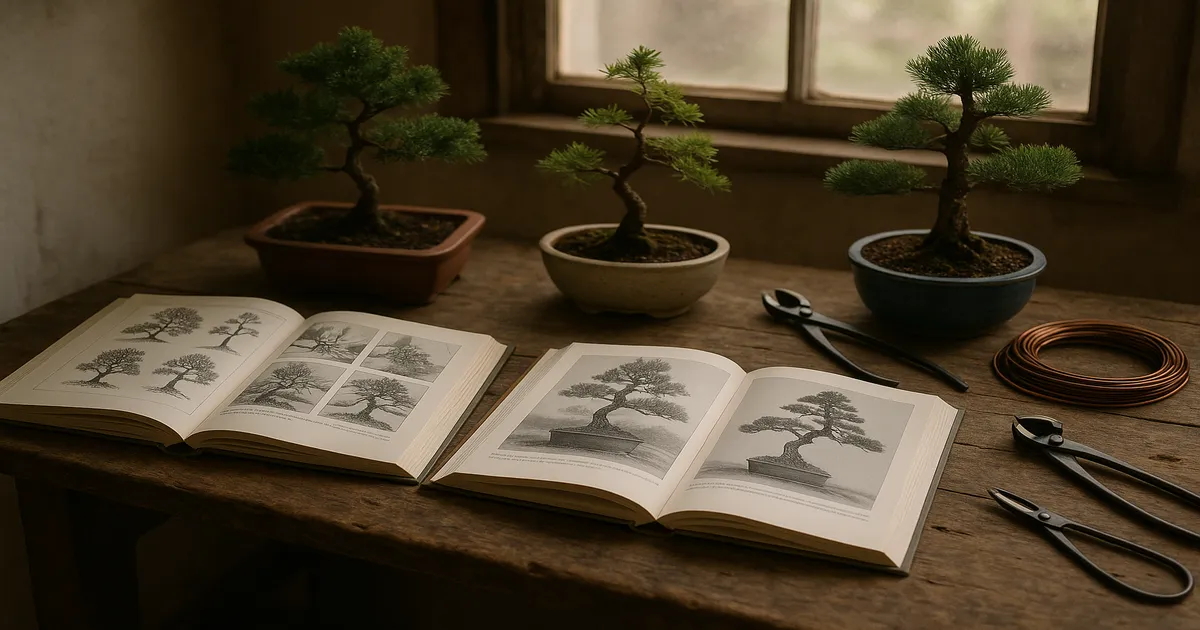
Quick Answer: For most beginners, Bonsai Heresy by Michael Hagedorn is the best bonsai tree book for beginners who want accurate, up-to-date horticultural advice — it covers modern soil science, watering principles, and the indoor/outdoor distinction clearly. If you want a broader visual reference with wide species coverage, The Complete Book of Bonsai by Harry Tomlinson is the best budget-friendly classic to pair with it.
Picking up your first bonsai is exciting. Picking the wrong book to go with it can quietly undo months of effort. The best bonsai tree book for beginners needs to do more than explain what bonsai is — it needs to tell you exactly how to care for the specific tree sitting on your windowsill, whether that’s a Ficus, a Chinese Elm, or a Juniper you grabbed at a garden center. Generic advice about “water regularly” and “give it light” simply isn’t enough.
The six books reviewed below were chosen because they collectively cover the full range of beginner needs, from absolute first-timers to people who’ve already killed a tree and want to understand why.
What to Look for in a Beginner Bonsai Book
Species Coverage
A good beginner book should cover at minimum 8–12 species commonly found at garden centers, big-box stores, and online nurseries. That list should include Ficus, Juniper, Chinese Elm, Japanese Maple, Jade, and ideally Portulacaria afra (Elephant Bush). How thoroughly a book covers Chinese Elm is often a reliable quality indicator — it’s arguably the best all-around beginner species, and its presence (or absence) tells you a lot about whether the author knows what beginners actually buy.
Indoor vs. Outdoor Clarity
This is where more books fail than anywhere else. Keeping an outdoor Juniper on a sunny windowsill is one of the most common ways beginners kill their first tree — and many mass-market books are vague enough that a reader would never know they were doing something wrong. Any book worth buying states clearly and early: most traditional bonsai species are outdoor trees that require genuine seasonal change.
Soil and Watering Guidance
If a book recommends standard potting compost or peat-based mixes, put it down. Modern bonsai horticulture uses inorganic, mineral-dominant substrates. The most widely recommended starting point is a 1:1:1 mix of akadama, pumice, and lava rock — all three components are readily available online. Books published before 2000 almost universally miss this, and even some newer titles haven’t caught up.
On watering, the correct message is simple: water when the top half-inch of soil begins to dry, assessed by the finger test or chopstick test — not on a fixed daily schedule. Any book prescribing “water every three days” is giving advice that will kill trees in some conditions and drown them in others.
Technique Progression
A beginner book should introduce structural pruning, wiring basics, and repotting as connected skills, not isolated chapters with no context. Look for coverage of apical dominance, back-budding, wire gauge selection (roughly one-third the diameter of the branch), and the principle of removing no more than one-third of root mass at repotting. Books that only cover maintenance pruning — without explaining sacrifice branches or structural work — leave beginners stuck at the same skill level indefinitely.
For wiring, aluminum wire is the standard recommendation for beginners: it’s softer, easier to work with, and less likely to damage bark than copper. A good book should specify wire gauges (typically 1.0 mm–4.0 mm for most beginner work) rather than leaving the reader to guess.
Visual Quality
Wiring and repotting are physical skills. A book that describes them only in prose, without clear sequential photographs or diagrams, is significantly harder to learn from. Step-by-step photo sequences for wiring, root pruning, and pot placement are worth paying extra for.
Publication Date
Books published before 2000 often reflect horticultural thinking that has since been revised — particularly around soil composition, species recommendations, and fertilization. They can still be valuable for styling philosophy and aesthetics, but shouldn’t be your primary care reference. Books published after 2010 are generally safer as a starting point for practical technique.
Best Bonsai Tree Books for Beginners: At-a-Glance Comparison
| Title | Author | Year | Species Covered | Indoor/Outdoor Distinction | Modern Soil Advice | Best For |
|---|---|---|---|---|---|---|
| The Complete Book of Bonsai | Harry Tomlinson | 1990 | 100+ | Partial | No | Wide species reference |
| Bonsai: The Complete Guide | Craig Coussins | 2005 | 60+ | Yes | Partial | Styling depth |
| Bonsai for Beginners | Brenda van der Bos | 2020 | 15+ | Yes | Yes | True first-timers |
| The Art of Bonsai | Yoshimura & Halford | 1957 | 30+ | No | No | Historical/aesthetic context |
| Bonsai: A Beginner’s Guide | Ken Norman | 2010s | 20+ | Yes | Partial | Concise starter guide |
| Bonsai Heresy | Michael Hagedorn | 2019 | 30+ | Yes | Yes | Modern science-based approach |
The Complete Book of Bonsai by Harry Tomlinson
Tomlinson’s book has been a staple recommendation for decades, and for good reason. It covers an unusually wide range of species with solid photographic support and a genuinely useful styling section. The photography is dated by today’s standards, but the breadth of species profiles remains hard to match at this price point. It’s widely available secondhand for a few dollars, which makes it easy to recommend as a supplementary reference.
Key specs: Author: Harry Tomlinson | Publisher: Abbeville Press | Approx. pages: 224 | Species coverage: 100+ | Key topics: species profiles, styling, pruning, wiring, repotting
Pros
- Exceptional species breadth — covers trees you’ll rarely find together in a single beginner volume
- Strong styling section with clear explanations of chokkan, moyogi, and other classic forms
- Widely available at low cost, new and secondhand
- Good photographic reference for identifying species and styles
Cons
- Published in 1990, so soil recommendations lean organic-heavy — ignore the mix suggestions and substitute a 1:1:1 akadama/pumice/lava blend
- Portulacaria afra is absent, along with several species that have become beginner staples since the 1990s
- Indoor/outdoor distinction is present but not always clearly emphasized for beginners
Best for: Beginners who want the widest possible species reference at minimal cost, used alongside a more modern guide for soil and watering advice.
Bonsai: The Complete Guide to Art and Technique by Craig Coussins
Coussins goes further than most beginner books in covering styling philosophy. If you want to understand why a branch goes where it does — not just how to wire it — this book delivers. The species profiles are detailed, and the wiring diagrams are among the clearest in any single-volume bonsai reference. The caveat is that this book occasionally assumes some prior horticultural knowledge, which can be disorienting for absolute beginners.
Key specs: Author: Craig Coussins | Publisher: Firefly Books | Approx. pages: 256 | Key topics: styling forms (chokkan, moyogi, hokidachi, kengai), species profiles, structural pruning, wiring, repotting
Pros
- Excellent coverage of traditional styling forms with clear diagrams
- Addresses container hardiness vs. in-ground hardiness — a distinction many books skip
- Wiring diagrams are detailed and genuinely useful for self-teaching
- Strong on structural pruning and branch selection principles
Cons
- Can overwhelm absolute beginners — the depth that makes it valuable also makes it dense
- Soil advice is partially updated but not fully aligned with modern inorganic substrate recommendations
- Some sections use terms like “apical dominance” without defining them first
Best for: Beginners who have kept a tree alive for a season or two and are ready to develop their styling eye and technique vocabulary.
Bonsai for Beginners by Brenda van der Bos
Van der Bos writes with genuine clarity for people who have never grown a bonsai before. The indoor/outdoor distinction is handled well, the watering guidance correctly emphasizes soil dryness over fixed schedules, and the pruning section explains apical dominance in plain language without making it feel like a botany lecture. It’s one of the few beginner books that feels genuinely written for beginners rather than simplified from a more advanced text.
Key specs: Author: Brenda van der Bos | Publisher: Rockridge Press | Approx. pages: 160 | Species coverage: 15+ | Key topics: species selection, watering, pruning, wiring, repotting, common problems
Pros
- Accessible, jargon-free language throughout — explains back-budding and apical dominance clearly
- Correctly teaches watering by soil dryness, including the chopstick/finger test
- Good coverage of commonly sold beginner species: Ficus, Chinese Elm, Juniper, Jade
- Practical pest and disease section relevant to beginner collections
Cons
- Doesn’t go deep on advanced topics — candle-cutting for pines, sacrifice branches for trunk development, and leaf reduction for deciduous trees are lightly covered or absent
- Species list, while solid for beginners, is narrower than Tomlinson’s
- Most readers will outgrow it within a year or two
Best for: Absolute first-timers who want a friendly, accurate guide that won’t overwhelm them before they’ve repotted their first tree.
The Art of Bonsai by Yuji Yoshimura and Giovanna Halford
Published in 1957, this is one of the first serious English-language bonsai texts, and its historical importance is real. Yoshimura’s grounding in traditional Japanese aesthetics comes through clearly, and for understanding why bonsai looks the way it does — the philosophy behind the form — this book still has value. As a practical care guide for modern beginners, however, it has significant limitations.
Key specs: Authors: Yuji Yoshimura and Giovanna Halford | Publisher: Faber & Faber / Tuttle | Approx. pages: 200 | Key topics: traditional styling, species profiles (Japanese-centric), pruning, wiring
Pros
- Foundational styling philosophy that explains the aesthetic logic of bonsai better than most modern books
- Strong on traditional Japanese aesthetics — excellent for understanding the cultural and artistic context
- Covers classic temperate species (pine, maple, juniper) with genuine depth
Cons
- Soil and fertilizer recommendations are entirely outdated — organic mixes throughout; do not follow them
- Chinese Elm and Portulacaria afra are absent; the species list reflects what was available in Japan in the 1950s
- No guidance on indoor/outdoor distinction, grow lights, or tropical species care
Best for: Readers who want to understand the historical and aesthetic foundations of bonsai, used alongside a modern practical guide — not as a standalone care reference.
Bonsai: A Beginner’s Guide by Ken Norman
Norman’s guide earns its place through sheer practicality. It’s concise, well-organized, and prioritizes the concepts beginners most urgently need: which trees can actually live indoors, how to read soil moisture rather than follow a watering calendar, and what to do when leaves start dropping. The pest and disease identification section is genuinely useful and better illustrated than most books at this price point.
Key specs: Author: Ken Norman | Publisher: Various | Approx. pages: 128 | Key topics: species selection, indoor/outdoor guidance, watering, wiring, repotting, pest identification
Pros
- Concise and beginner-friendly — doesn’t bury key concepts under unnecessary detail
- Clear indoor/outdoor guidance, including a practical warning about keeping outdoor junipers indoors
- Good pest and disease identification with photographs
- Step-by-step wiring and repotting sequences are easy to follow
Cons
- Deciduous species are covered more shallowly than conifers — leaf reduction and ramification development for maples and elms get limited attention
- Pine candle work is mentioned but not explained in enough depth for someone actually growing pines
- Soil advice is partially updated but doesn’t fully commit to modern inorganic ratios
Best for: Beginners who want a compact, practical guide they can keep next to their trees and consult quickly — not a deep reference, but a reliable starter.
Bonsai Heresy by Michael Hagedorn
Hagedorn is a professional bonsai artist and one of the most respected voices in modern Western bonsai. Bonsai Heresy is different from every other book on this list because it’s explicitly written to correct the bad advice beginners have already absorbed — from outdated books, garden center tags, and well-meaning but misinformed online sources. If you’ve already killed a tree and can’t figure out why, this is the book that will tell you.
The soil science is current and specific. Hagedorn recommends inorganic substrates clearly, explains why peat-based mixes fail, and addresses the container hardiness vs. in-ground hardiness distinction that most books ignore. The watering chapter is the best single explanation of the topic in any beginner-accessible bonsai book — it covers pot material variables (unglazed ceramic dries faster than plastic), seasonal adjustment, and the difference between surface dryness and root-zone dryness.
Key specs: Author: Michael Hagedorn | Publisher: Stone Lantern Publishing | Approx. pages: 200 | Key topics: soil science, watering principles, winter protection, container hardiness, species-specific care, fertilization, common myths debunked
Pros
- Up-to-date horticultural science throughout — akadama/pumice/lava ratios addressed clearly
- Exceptional watering guidance: covers soil dryness, pot material variables, and seasonal adjustment better than any comparable book
- Strong on winter protection and container hardiness — critical for outdoor temperate species that can die when pot-bound roots freeze at temperatures they’d survive in the ground (typically roots need protection below about 25°F / -4°C in containers)
- Directly addresses common beginner mistakes and the myths behind them
Cons
- Less visual than competitors — readers who learn primarily through photographs and diagrams may find it slower going
- Species coverage, while accurate, is narrower than Tomlinson’s broad reference
- Some chapters assume at least one season of prior experience, which can make certain sections feel slightly advanced for day-one beginners
Best for: Beginners who want the most accurate, science-based foundation available — and anyone who has already killed a tree following advice from an older book.
Our Verdict: Best Bonsai Tree Book for Beginners by Use Case
Best Overall
Bonsai Heresy by Michael Hagedorn. It’s the only book on this list that gets soil, watering, and the indoor/outdoor distinction fully right by modern horticultural standards. Pair it with Tomlinson for species breadth and you have an excellent two-book starter library.
Best Budget Pick
The Complete Book of Bonsai by Harry Tomlinson. Available secondhand for a few dollars, and the species coverage alone makes it worth owning — just ignore the soil mix recommendations and substitute a 1:1:1 akadama/pumice/lava blend.
Best for Indoor Bonsai Growers
Bonsai for Beginners by Brenda van der Bos. It handles tropical and indoor species clearly, explains the watering test properly, and won’t send you down the path of trying to keep a Juniper alive on a kitchen counter.
Best for Outdoor and Temperate Species
Bonsai Heresy by Michael Hagedorn. The winter protection and container hardiness guidance is unmatched, and the soil science applies directly to junipers, maples, and pines.
Best for Visual Learners
Bonsai: The Complete Guide to Art and Technique by Craig Coussins. The wiring diagrams and step-by-step styling sequences are the clearest in this group.
Best for Beginners Who Want to Progress Quickly
Bonsai: The Complete Guide to Art and Technique by Craig Coussins, once you’ve had a tree for a season. The styling depth and structural pruning guidance will push your skills faster than any other book here.
One final note: no single book covers everything. As your collection grows, consider pairing a broad beginner guide with a species-specific reference — there are dedicated books on Japanese Maples, pines, and Ficus that go far deeper than any general introduction can. A good bonsai pot and a reliable turntable also make hands-on practice considerably easier when you’re learning to wire and style.
Frequently Asked Questions: Best Bonsai Tree Book for Beginners
What is the best bonsai book for an absolute beginner?
Bonsai Heresy by Michael Hagedorn is the strongest choice for an absolute beginner who wants accurate, current advice. It covers modern soil science, explains watering by soil dryness rather than fixed schedule, and clearly distinguishes indoor from outdoor species. If you want a more visual companion alongside it, Bonsai for Beginners by Brenda van der Bos is written in genuinely accessible language and handles the most commonly sold beginner species well.
Do I need a different bonsai book for indoor vs. outdoor trees?
Most good books cover both, but with varying depth. If you’re growing indoor tropical species like Ficus or Jade, prioritize books that address lighting (healthy indoor growth typically requires 10,000–20,000 lux), humidity management, and tropical species profiles. If you’re growing outdoor temperate trees like Juniper or Japanese Maple, winter protection, dormancy guidance, and the container hardiness distinction are non-negotiable topics — a pot-bound tree is significantly more cold-vulnerable than the same species planted in the ground.
Are older bonsai books still worth buying?
Yes, with caveats. Classic texts like Yoshimura’s The Art of Bonsai retain genuine value for understanding styling philosophy and traditional Japanese aesthetics. However, their soil recommendations, species lists, and sometimes their watering advice reflect horticultural thinking that has since been revised. Books published after 2010 are generally safer as your primary care reference; older books work well as aesthetic supplements once you have a modern guide as your foundation.
How many species should a good beginner bonsai book cover?
A minimum of 8–12 species is a reasonable baseline, and that list should include the trees beginners actually encounter: Ficus, Chinese Elm, Juniper, Japanese Maple, Jade, and ideally Portulacaria afra. The presence or absence of Portulacaria afra is a useful proxy for how current the book is — it’s now widely recommended as a beginner species but was largely absent from bonsai literature before 2010.
Can I learn bonsai from a book alone, or do I need other resources?
Books are an excellent foundation, but they can’t give you feedback on whether you’ve wired a branch at the right angle or pruned to the correct node. Supplement your reading with reputable online communities (the r/Bonsai subreddit has a well-moderated beginner section), video tutorials for hands-on technique, and — most valuably — a local bonsai club workshop where an experienced practitioner can look at your actual tree. Books teach the principles; practice and feedback teach the skill.