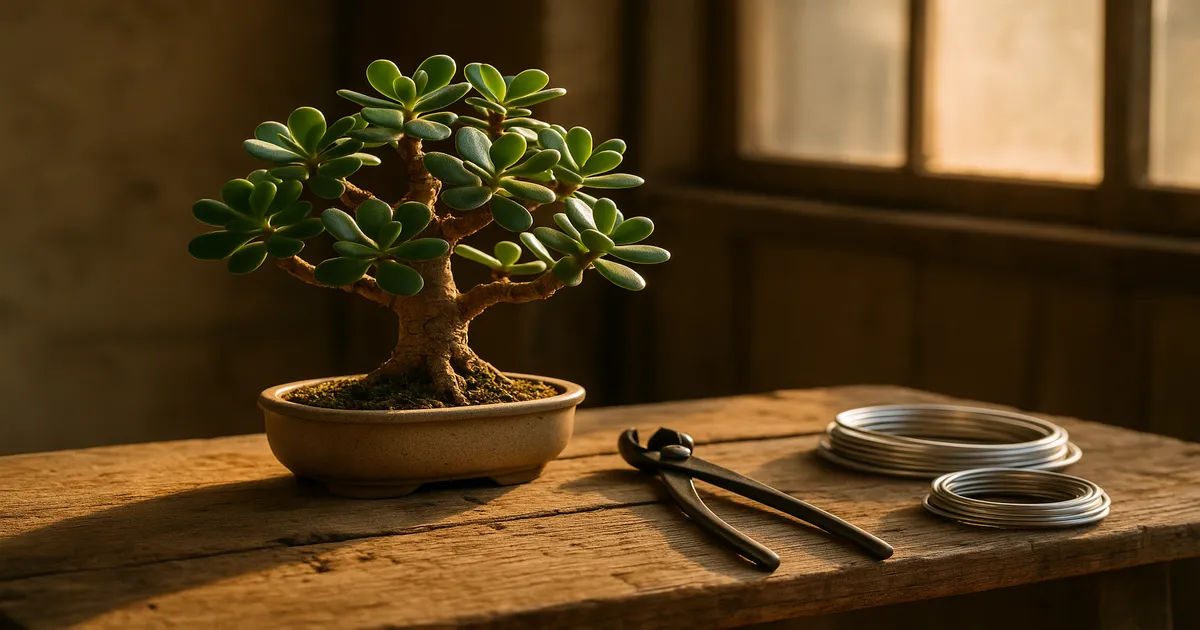
Quick Answer: Jade plants (Crassula ovata and related species) make outstanding bonsai subjects — especially for indoor growers — thanks to their naturally thickening trunks, forgiving care requirements, and long lifespans. Successful bonsai style jade cultivation comes down to four fundamentals: bright light, fast-draining soil, careful watering, and patient styling. Get those right and jade will reward you for decades.
Bonsai Style Jade: Choosing Your Species
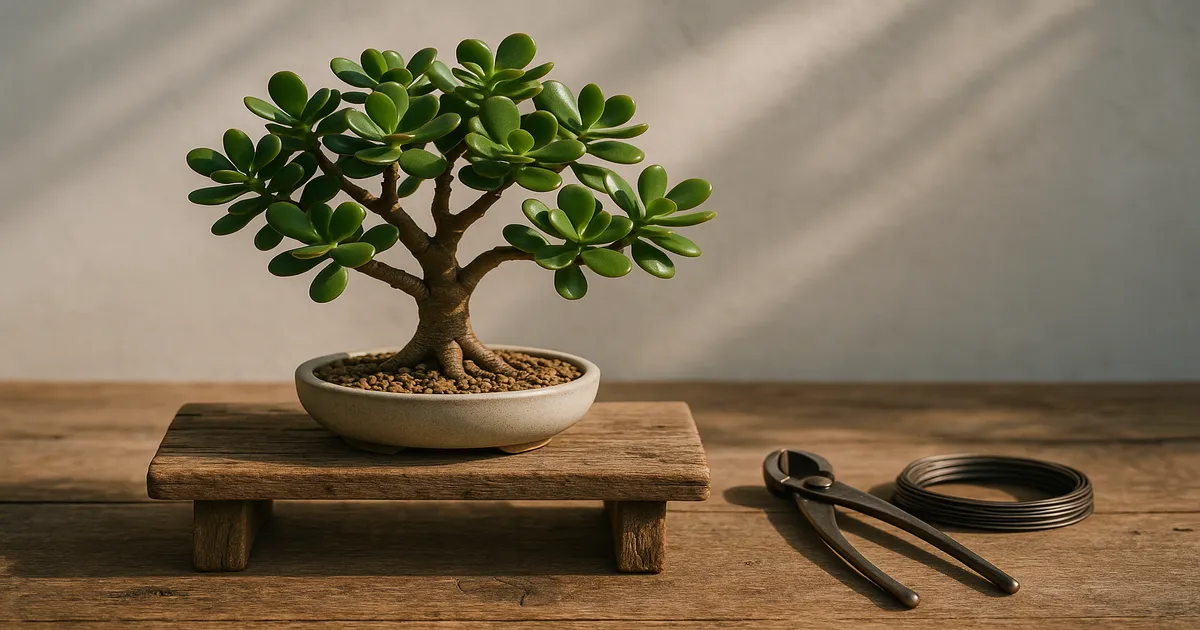
Jade plants are native to the rocky hillsides of South Africa’s Eastern Cape, where they grow as gnarled, woody-trunked shrubs up to 10 feet tall. That natural growth habit — thick tapered trunk, dense branching, small leaves — translates almost perfectly to bonsai aesthetics without years of coaxing. Well-maintained specimens routinely survive 50–80 years in cultivation, meaning the tree you start today could genuinely become a family heirloom.
Crassula ovata: The Workhorse
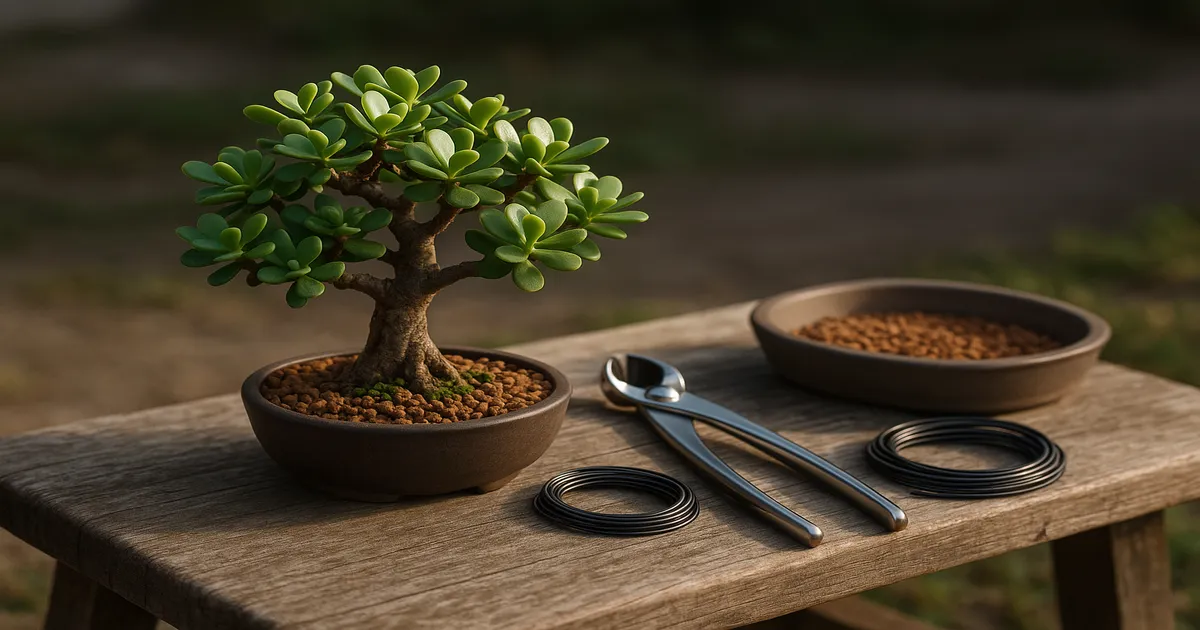
Crassula ovata is the starting point for most practitioners. It grows vigorously, thickens its trunk quickly, and is available at virtually every garden center. Its oval, glossy leaves reduce proportionally with consistent pinching and restricted root space. Not all cultivars perform equally, though:
- ‘Gollum’ and ‘Hobbit’ — tubular or curled leaves create a striking silhouette, but leaf size is harder to reduce
- ‘Minima’ — naturally smaller leaves make it proportionally better suited to refined work from the start
- ‘Tricolor’ — variegated green, white, and pink foliage is beautiful but slower-growing and more delicate; skip it if you’re a beginner
Crassula arborescens and Crassula sarcocaulis
Crassula arborescens (silver or blue jade) develops excellent trunk girth quickly and has striking blue-grey leaves with red margins — a good choice if you want faster structural development.
Crassula sarcocaulis is the specialist’s pick. Its naturally tiny leaves and proportionally massive trunk make it arguably the most bonsai-ready plant in the genus, ideal for shohin-scale work. It’s harder to find but worth seeking out. Leaf size is the limiting factor in refined bonsai aesthetics, so start with the smallest-leaved species or cultivar you can find.
Light, Temperature, and Placement
How Much Light Does Bonsai Style Jade Need?
The minimum is 4–6 hours of direct sunlight daily. Indoors, a south- or west-facing window is ideal, with the tree positioned within 12–18 inches of the glass. Outdoors in summer, jade handles full sun but needs gradual acclimation over 2–3 weeks to prevent sunscald — don’t move it from a dim windowsill directly into afternoon sun.
Jade bonsai thrive outdoors year-round only in USDA Hardiness Zones 10–12, where winter temperatures stay above 30–35°F (-1–2°C). Everywhere else, treat jade as an indoor bonsai with optional summer placement outside — a practice that dramatically accelerates growth and trunk development.
For northern latitudes in winter, full-spectrum LED or T5 fluorescent fixtures running at 2,000–5,000 lux for 12–14 hours per day can successfully supplement or replace natural light.
Temperature and the Winter Rest Trick
The optimal growing range is 65–75°F (18–24°C). Jade tolerates 50–95°F (10–35°C) with care, but sustained frost causes cellular damage and rot — bring trees indoors before nighttime temperatures drop below 40°F (4°C).
One underused technique: a cool winter rest at 50–55°F (10–13°C) for 6–8 weeks encourages mature jade to produce its beautiful star-shaped pink or white flowers. On a well-developed bonsai, this is a spectacular seasonal feature worth planning for.
Etiolation — long, weak internodes, pale leaves, and a leggy growth habit — is the most common indoor problem. It’s caused entirely by insufficient light. Move the tree to a brighter position immediately; etiolated growth won’t reverse, but new growth will be compact once light levels improve.
Soil and Watering
The Right Soil Mix for Jade Bonsai
Root rot from waterlogged soil is the single most common cause of death in jade bonsai. The solution is an inorganic-dominant mix that drains within minutes. A reliable recipe is 1 part akadama : 1.5 parts pumice : 1 part lava rock (roughly 25% akadama, 37% pumice, 25% lava rock, with the remainder flexible).
- Akadama provides moisture retention and cation exchange capacity
- Pumice handles drainage, aeration, and root anchoring
- Lava rock adds drainage and thermal regulation
Use particle sizes of 3–6mm for most jade bonsai; drop to 1–3mm for C. sarcocaulis and refined shohin work. Never use peat-based potting compost — it stays wet far too long.
Watering: Frequency and Method
- Summer (active growth): Water when the top 1–2 inches of soil are dry — typically every 3–7 days depending on pot size, temperature, and humidity
- Winter (reduced growth): Allow soil to dry almost completely between waterings — every 10–21 days is normal
Always check the soil rather than watering by the calendar. Water thoroughly until water flows freely from the drainage holes, then let the pot drain completely. Never allow the pot to sit in a saucer of standing water — jade roots in standing water will rot within days.
Jade is moderately sensitive to fluoride and chlorine accumulation, which causes leaf-tip browning over time. Rainwater or filtered water is the best choice; if you use tap water, letting it sit overnight helps dissipate chlorine. Avoid misting the foliage — water sitting on succulent leaves in low light promotes fungal rot.
Overwatering signs: soft or translucent leaves, yellowing lower leaves, black discolouration at the stem base. Underwatering signs: shriveled or wrinkled leaves, dry soil pulling away from pot edges.
Pruning Jade Bonsai
Maintenance Pruning and Pinching
Maintenance pruning can happen year-round, though spring through early summer offers the fastest recovery. Cut just above a leaf node using sharp, clean scissors or concave cutters; new shoots will emerge from the nodes below. The goal is ramification — progressively finer branch subdivision that creates the dense, cloud-like pads characteristic of mature bonsai.
For the finest ramification, pinch out new growth tips with your fingers or tweezers when shoots reach 2–4 leaves. Each pinched tip typically produces 2–4 new shoots, multiplying branch density with each growing season.
Structural Pruning
Structural pruning is about establishing primary branch architecture, removing heavy branches, and creating taper. Time these cuts for late winter to early spring, just before the main growth flush, or after summer growth hardens off. When deciding what to remove:
- Eliminate branches growing directly toward or away from the viewer
- Remove crossing branches and any with reverse taper
- Prioritize branches that contribute to a balanced triangular silhouette
Jade produces a milky sap at cut surfaces — let it dry for 30–60 minutes before applying wound sealant. (Kiyonal Cut Paste) For cuts over 1cm diameter, sealant helps prevent desiccation and fungal entry. Expect callus formation to take 6–18 months on medium cuts. Jade heals well but slowly.
Deadwood tends to rot rather than develop the silver jin seen on junipers and pines. Keep deadwood work minimal, and treat any you do create with wood hardener to slow decomposition.
Wiring Jade Bonsai
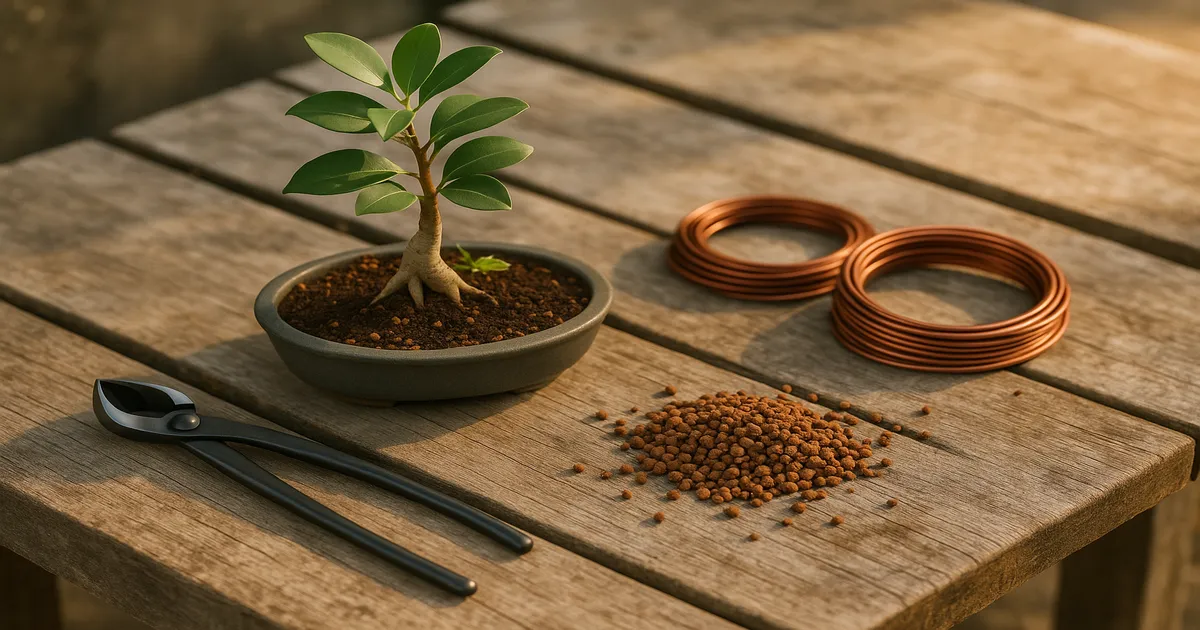
Always use aluminum wire — jade branches are succulent and relatively soft, and copper wire’s greater rigidity significantly increases the risk of cutting into that soft tissue. Wire diameter should be approximately 1/3 the diameter of the branch; 1.0–2.5mm aluminum covers the vast majority of branches you’ll encounter.
Apply wire at a 45-degree angle, working from the trunk outward. Keep the application firm but not tight — you should be able to slip a fingernail under the wire. Avoid wiring immediately after heavy watering; turgid succulent tissue bruises and cracks more easily.
Branches typically need 3–6 months to set in position. Check monthly during the growing season — jade’s soft tissue means wire can bite in surprisingly quickly during active growth flushes. In summer, check every 2–3 weeks. Always cut wire off in small segments using wire cutters; never unwind wire from jade branches, as the motion can snap brittle stems cleanly.
Repotting Jade Bonsai
Timing and Frequency
- Young, developing trees: Every 1–2 years
- Mature specimens: Every 3–5 years, or when roots are visibly pot-bound
Early to mid-spring, as new growth begins to emerge but before the main growth flush, is ideal. Avoid repotting during winter dormancy or when temperatures exceed 90°F (32°C).
Root Pruning Technique
- Remove the tree and gently tease away old soil with a root hook or chopstick — succulent roots are brittle, so work slowly
- Remove all dead, rotted (black or mushy), or circling roots first
- Reduce the overall root mass by no more than 25–30% in a single session
- Air-dry the cut root ends for 30–60 minutes before repotting — this allows the surfaces to callus slightly and dramatically reduces rot risk
- Repot into fresh, dry or barely moist soil mix
Pot Selection and Post-Repotting Care
Choose a pot approximately 2/3 the height of the tree for upright styles, or 2/3 the width of the canopy for wider informal styles. Unglazed terracotta is genuinely beneficial for jade — its breathability helps the soil dry evenly. Avoid very shallow pots under 2 inches (5cm); jade needs sufficient root volume for water storage. Earthy tones — terracotta, brown, grey — complement jade’s green foliage naturally.
Do not water for 5–7 days after repotting. This allows cut roots to callus properly and is the single most important aftercare step for succulent bonsai. Place the tree in bright indirect light — not full direct sun — for 2–3 weeks, and hold fertiliser for 4–6 weeks.
Common Problems and How to Fix Them
Pest Quick-Reference
| Pest | Symptoms | Treatment |
|---|---|---|
| Mealybugs | White cottony masses at leaf axils | 70% isopropyl alcohol on a cotton swab; systemic insecticide for severe cases |
| Scale insects | Brown bumps on stems; sticky honeydew | Manual removal + neem oil spray; repeat every 7–10 days |
| Fungus gnats | Tiny flies around soil; larvae damage fine roots | Let soil dry thoroughly; yellow sticky traps; beneficial nematodes |
| Spider mites | Fine webbing, stippled leaves | Insecticidal soap or miticide spray |
| Root mealybugs | White waxy coating on roots; stunted growth | Systemic insecticide soil drench; consider full repot with root wash |
Root Rot: Emergency Treatment
Root rot is the most serious threat to jade bonsai. Symptoms include a blackening stem base, mushy roots, and sudden collapse. If you catch it early: remove the tree immediately, cut all rotted tissue back to healthy white tissue, air-dry roots for several hours, then repot into completely fresh, dry, fast-draining mix. Hold water for 7–10 days. Speed is everything — a tree that looks salvageable today may be beyond saving in a week.
Environmental Stress Symptoms
- Red leaf edges — healthy and desirable; high light and slight drought trigger anthocyanin production
- Leaf tip browning — fluoride toxicity from tap water; switch to rainwater or filtered water
- Corky bark lesions (oedema) — caused by irregular watering; improve consistency
- Sudden leaf drop — check for temperature fluctuations, drafts, overwatering, or repotting shock
Quarantine any new plant for 2–4 weeks before introducing it to your collection — most pest infestations arrive this way. Beyond that, the best prevention is simply good growing conditions: appropriate light, fast-draining soil, and disciplined watering.
Frequently Asked Questions About Bonsai Style Jade
Can jade plants be styled as bonsai indoors?
Yes — jade is one of the best bonsai subjects for indoor growing. It tolerates the low humidity and stable temperatures of heated homes far better than most species. The key requirement is light: position the tree within 12–18 inches of a bright south- or west-facing window, or supplement with a grow light during winter months.
How long does it take to develop a jade bonsai?
A basic, presentable bonsai style jade can be achieved in 3–5 years from a nursery plant with a decent trunk. A truly refined specimen with fine ramification and a well-developed nebari takes 10–20 years. Jade’s relatively fast trunk development makes it quicker than many temperate species, but patience is still the primary tool.
How often should I fertilise jade bonsai?
During the active growing season (spring through early autumn), fertilise every 2–4 weeks with a balanced liquid fertiliser diluted to half strength, or use a slow-release granular fertiliser monthly. Reduce to once every 6–8 weeks in winter, or stop entirely if the tree is in a cool rest period. Avoid high-nitrogen feeds in late summer — they produce soft growth that’s more vulnerable to cold damage.
Why are my jade bonsai leaves dropping suddenly?
Sudden leaf drop almost always points to one of four causes: overwatering, a sharp temperature drop or cold draft, repotting shock, or a dramatic change in light levels. Check the soil moisture first — overwatering is the most common culprit. If the soil is fine, look for environmental changes: a moved pot, a newly opened window, or a heating vent nearby.
Can I use jade bonsai for formal upright or literati styles?
Jade is most naturally suited to the informal upright (moyogi) style, which mirrors its wild growth habit. It also works well as a multi-trunk or clump planting. Formal upright is difficult to achieve convincingly because jade rarely grows with the perfectly straight trunk that style demands. Literati is possible on older, naturally gnarled specimens but requires careful branch selection to avoid looking sparse rather than elegant.