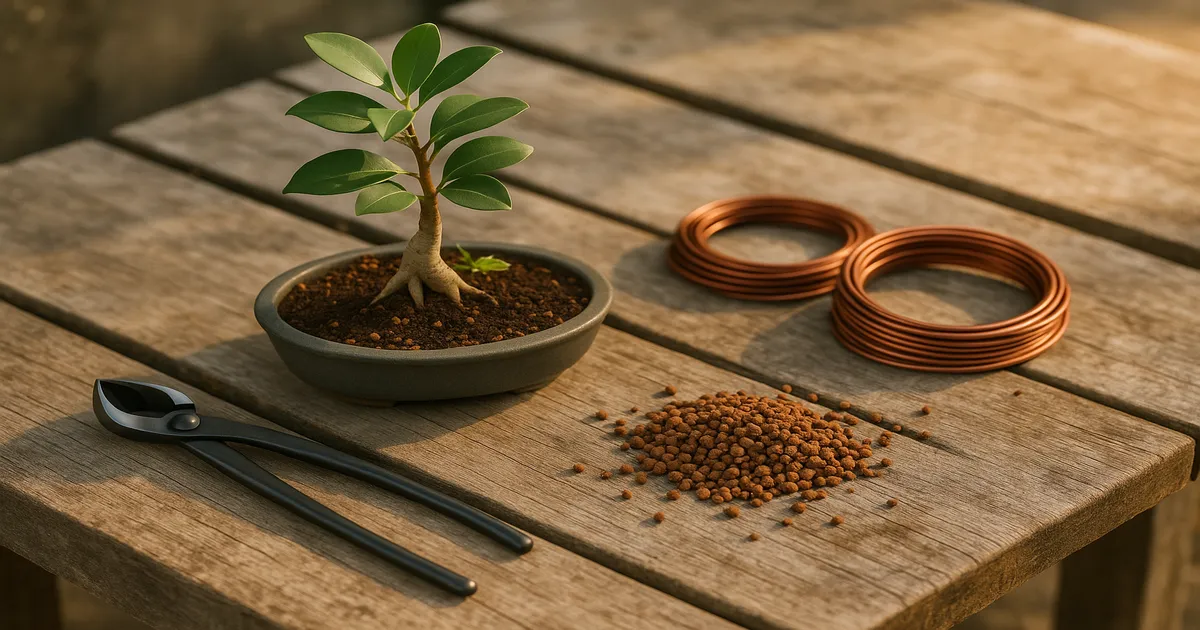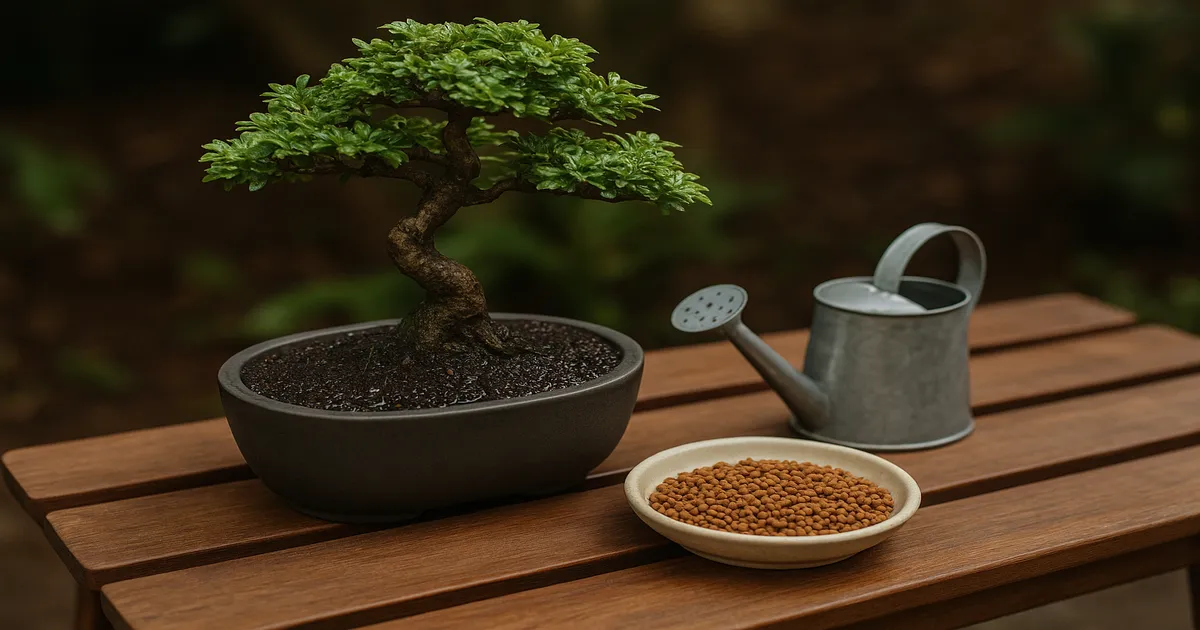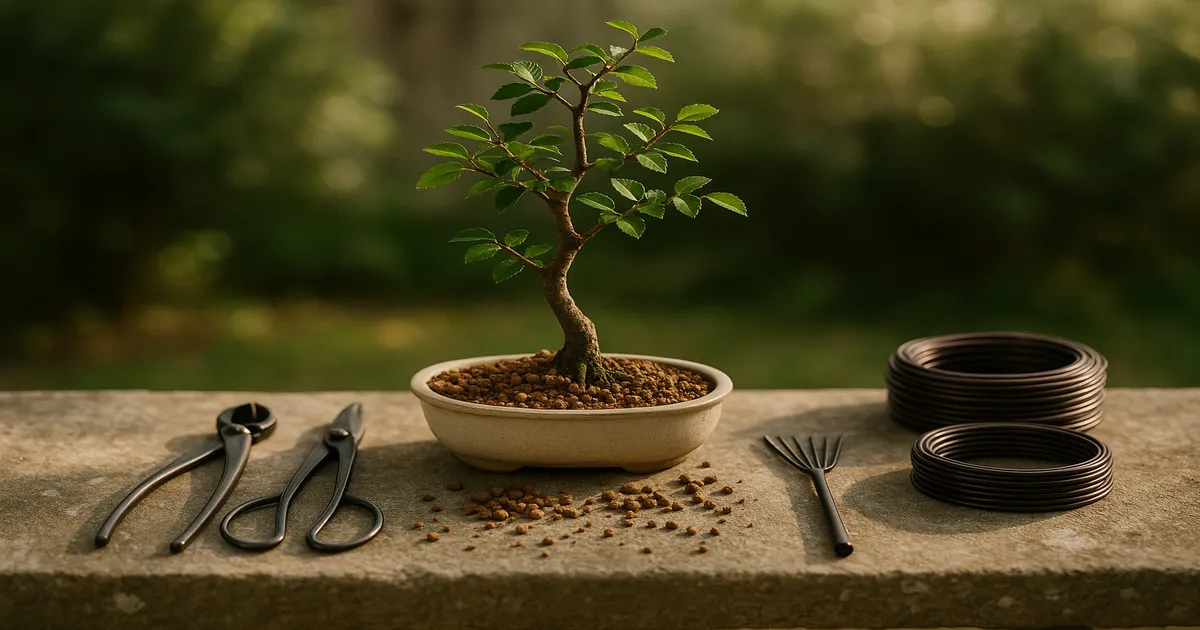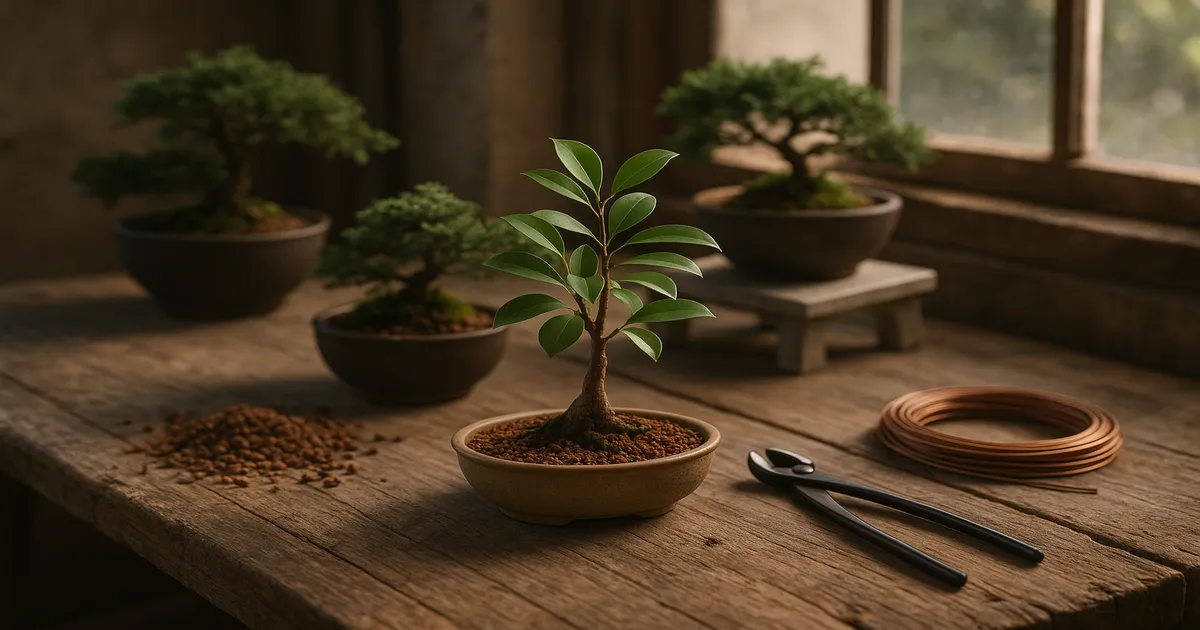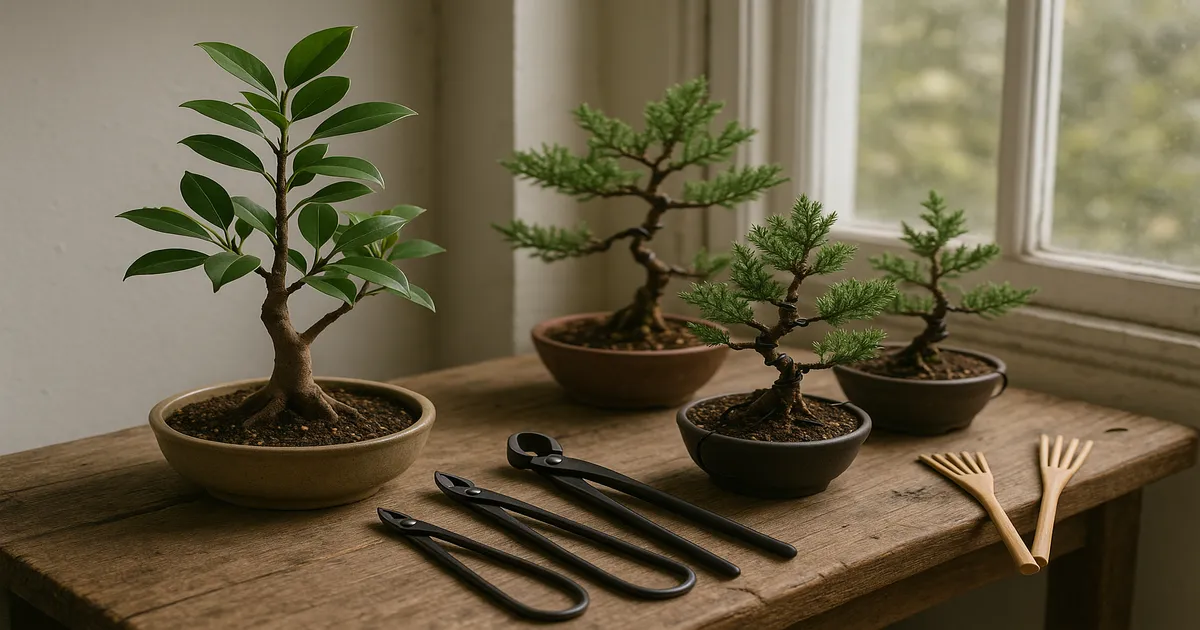
Quick Answer: For most beginners, the Ginseng Ficus is the best indoor bonsai — it tolerates low humidity, forgives watering mistakes, and thrives on a bright windowsill. If you have outdoor space in USDA Zones 5–9, the Chinese Elm is the top pick, offering fast development, stunning bark, and remarkable resilience.
Figuring out what is the best bonsai for beginners comes down to one thing above all else: matching the tree to your environment. A juniper that thrives on a sunny patio will die on an apartment windowsill. A Ginseng Ficus that glows indoors will sulk in a cold garden. Species choice — not your pruning technique, not your pot, not your tools — is the single biggest factor in whether your first bonsai survives and inspires you to keep going.
This guide compares the five most beginner-friendly species side by side so you can make the right call for your specific situation.
Best Bonsai Trees for Beginners: Top Picks
Best Overall Indoor Beginner Bonsai: Ginseng Ficus
The Ginseng Ficus (Ficus microcarpa) earns the top indoor spot because it was practically built for imperfect care. It tolerates the dry air of a centrally heated apartment, bounces back from both overwatering and underwatering, and produces reliable new growth after pruning. The dramatic swollen root system also means it looks like a mature, characterful bonsai from day one — which matters when you’re still building confidence.
Best Overall Outdoor Beginner Bonsai: Chinese Elm
The Chinese Elm (Ulmus parvifolia) is the species professional bonsai instructors recommend most consistently worldwide. It develops fine, elegant twig structure faster than almost any other beginner species, tolerates a wide range of conditions, and forgives the occasional missed watering. Whether you want a formal upright, a windswept style, or a cascading form, this tree can do it.
What to Look For When Choosing a Beginner Bonsai
Indoor vs. Outdoor Suitability
This is the non-negotiable starting point. Tropical species like Ficus and Fukien Tea are adapted to warm, stable conditions and live happily on a windowsill year-round. Temperate species like Juniper and Chinese Elm need seasonal change — shifting light levels, temperature swings, and a period of cold dormancy — to stay healthy long-term. Putting a juniper indoors isn’t a minor mistake; it’s a slow death sentence for the tree.
Forgiveness: Watering and Light Tolerance
Beginners will make watering mistakes. The question is whether your tree survives them. Ginseng Ficus and Dwarf Jade are the most forgiving species on this list. Fukien Tea is the least — it reacts badly to inconsistency, which is why it disappoints so many beginners who receive it in gift kits.
Growth Rate and Styling Potential
Fast-growing species like Chinese Elm and Ginseng Ficus reward beginners with visible progress within months. Junipers grow slowly but develop stunning deadwood features over time. Knowing whether you’re a patient grower or results-oriented helps narrow the choice considerably.
Climate Zone Compatibility
Check your USDA hardiness zone before buying any outdoor species. A Chinese Elm in Zone 6 needs winter protection; the same tree in Zone 8 is nearly bulletproof. Ignoring zone compatibility is one of the most common — and entirely avoidable — reasons beginners lose trees.
Beginner Bonsai Species: At-a-Glance Comparison
| Species | Indoor/Outdoor | USDA Zone | Watering Forgiveness | Light Requirement | Growth Rate | Dormancy Required | Best For | Difficulty (1–5) |
|---|---|---|---|---|---|---|---|---|
| Ginseng Ficus | Indoor (primarily) | 10–12 outdoor | High | Bright indirect, 4–6 hrs | Medium-Fast | No | Apartment dwellers | 1 |
| Japanese Juniper | Outdoor only | 4–9 | Medium | Full sun, 6–8+ hrs | Slow | Yes | Outdoor gardeners, wiring practice | 2 |
| Chinese Elm | Outdoor / adaptable | 5–9 | High | Full sun preferred | Fast | Beneficial | All-rounders, every style | 1–2 |
| Fukien Tea | Indoor (with care) | 10–11 outdoor | Low | Bright indirect, 4–6 hrs | Medium | No | Dedicated beginners with humidity control | 3 |
| Dwarf Jade | Indoor (bright) / Outdoor | 9–11 outdoor | Very High | Full sun, 4–6 hrs min | Medium | No | Forgetful waterers, sunny apartments | 1 |
The clearest takeaway: if you’re indoors with limited light, choose Ginseng Ficus or Dwarf Jade. If you’re outdoors with full sun, go with Juniper or Chinese Elm. Fukien Tea is the only species here that genuinely requires effort to keep happy — worth it for the right grower, but not the right first choice for everyone.
Ginseng Ficus (Ficus microcarpa)
The “ginseng” name doesn’t refer to a separate species — it describes the root style. Nurseries grow seedlings in sand to encourage the bulbous, exposed surface roots that give this tree its distinctive appearance. What you’re usually buying is Ficus microcarpa, sometimes the tiger bark form (F. retusa with mottled gray-orange bark), or the ‘Green Island’ cultivar with thicker, rounder leaves. All are excellent for beginners.
Key specs:
- Indoor suitability: Excellent
- Light: Bright indirect, 4–6 hours minimum; south or west window ideal
- Temperature: 60–95°F (15–35°C); never below 55°F (13°C)
- USDA Zones: 10–12 outdoors; grown as an indoor tree elsewhere
- Watering: Every 1–3 days in summer; every 3–7 days in winter
Pros
- Recovers from both overwatering and underwatering better than almost any other species
- Reliable back-budding after pruning — the tree practically wants to grow
- Tolerates the dry air of centrally heated homes; 40–60% humidity is fine
- Widely available at garden centers and online; usually affordable
Cons
- Needs protection below 55°F (13°C) — cold drafts cause sudden leaf drop
- Aerial root development requires humidity above 70%, which most homes can’t provide without a humidifier
- Milky latex sap is a mild skin irritant — wear gloves when pruning
Soil and Watering for Ficus
Use a 50% akadama, 25% pumice, 25% lava rock mix. (Bonsai Jack Gritty Mix #111) This gives enough moisture retention for the Ficus’s moderate needs while draining fast enough to prevent root rot. Water thoroughly when the top half-inch of soil begins to dry — the first pass wets the soil, the second fully saturates it. In summer that may mean every one to two days; in a cool winter room, every four to six days.
Verdict
Best for: Apartment dwellers, true beginners, and anyone without reliable outdoor space. If you buy one tree and want it to survive your learning curve, this is it.
Japanese Garden Juniper (Juniperus procumbens ‘Nana’)
The juniper is the tree most people picture when they think “bonsai” — gnarled branches, dramatic deadwood, ancient character. J. procumbens ‘Nana’ is the dwarf cultivar sold in virtually every bonsai nursery in North America, and it delivers on that classic aesthetic. Just understand one thing before you buy: this tree must live outdoors. No exceptions.
Key specs:
- Indoor suitability: None — outdoor only
- Light: Full sun, minimum 6 hours daily (8+ preferred)
- Temperature: Hardy to -20°F (-29°C) in ground; protect pot when temperatures drop below 15°F (-9°C)
- USDA Zones: 4–9
- Watering: Every 1–2 days in summer; every 3–5 days in winter (if not fully dormant)
Pros
- Extremely hardy once established — handles cold, heat, and wind well
- One of the best species for learning wiring; branches hold position reliably
- Dramatic deadwood potential — jin and shari techniques look spectacular on junipers
- Inexpensive and widely available, often pre-styled at nurseries
Cons
- Will die indoors — this is the most common and most preventable beginner mistake with this species
- Requires winter dormancy; skipping it weakens the tree cumulatively over time
- Susceptible to spider mites in shade or poor air circulation; slow growth rate can frustrate impatient beginners
Soil and Watering for Juniper
A classic equal-thirds blend works well: 33% akadama, 33% pumice, 33% lava rock. Drainage is critical — junipers hate sitting in wet soil, especially in winter. Never let the soil dry out completely in summer; despite appearances, junipers are less drought-tolerant than succulents. Misting the foliage during heat waves helps, but the pot must drain freely after every watering.
For wiring branches, a good set of anodised aluminium training wire in 1.0 mm, 1.5 mm, and 2.5 mm gauges covers most juniper work.
Verdict
Best for: Outdoor gardeners in USDA Zones 4–9 who have a full-sun spot and want to learn wiring and deadwood techniques on a tough, characterful tree.
Chinese Elm (Ulmus parvifolia)
The Chinese Elm is the species most professional bonsai instructors reach for when a student asks what to buy first. It develops fine, elegant twig ramification faster than almost anything else on this list, its exfoliating bark becomes genuinely beautiful with age, and it tolerates both indoor winters and outdoor summers without drama. One caveat: it’s often mislabeled as Zelkova in nurseries — true Zelkova (Z. serrata) is a related but distinct species. Always check the Latin name before buying.
Key specs:
- Indoor/Outdoor: Adaptable; performs best outdoors, tolerates indoor winters
- Light: Full sun preferred outdoors; brightest possible window indoors
- Temperature: Hardy to 0°F (-18°C) in ground; protect pot when temperatures drop below 20°F (-7°C)
- USDA Zones: 5–9
- Watering: Every 1–2 days in summer; every 3–7 days in winter
Pros
- Vigorous back-budding and naturally fine twig structure — looks like a mature bonsai relatively quickly
- Suits every traditional bonsai style: formal upright, informal upright, slanting, forest, cascade
- Forgiving of minor watering lapses; recovers well from hard pruning
- Stunning mottled gray-orange exfoliating bark develops without any special effort
Cons
- Marginal as a permanent indoor tree — needs outdoor summers or strong grow lights to thrive long-term
- Autumn leaf drop can alarm beginners who don’t expect it; it’s normal, not a sign of decline
- Nursery mislabeling (sold as Zelkova) is common — always verify the species before purchasing
Soil and Watering for Chinese Elm
50% akadama, 25% pumice, 25% lava rock — the same mix as Ficus, reflecting the Chinese Elm’s preference for consistent moisture with good drainage. It tolerates brief drying better than Fukien Tea but appreciates more regular watering than Dwarf Jade. During summer growth flushes, daily watering is often necessary; in winter dormancy, cut back significantly.
Verdict
Best for: All-round beginners who want a tree that can be styled multiple ways, develops quickly, and works in both outdoor and adaptable indoor settings. The top recommendation from professional instructors worldwide — and for good reason.
Fukien Tea (Carmona retusa)
Fukien Tea is genuinely beautiful — glossy dark leaves with tiny white dots, delicate white flowers, and red or black berries that appear year-round indoors. It’s also the species most commonly sold in gift-shop bonsai kits, which is something of a problem. Those kits rarely mention that Fukien Tea needs humidity above 50%, consistent warmth, and filtered water. When those conditions aren’t met, it declines fast — and beginners blame themselves when the tree was simply mismatched to their environment.
Key specs:
- Indoor suitability: Good, with consistent warmth and humidity
- Light: Bright indirect, 4–6 hours minimum
- Temperature: 65–85°F (18–29°C); never below 55°F (13°C)
- USDA Zones: 10–11 outdoors
- Watering: Every 1–3 days in summer; every 3–5 days in winter
Pros
- Year-round flowers and berries make it one of the most ornamental bonsai species available
- Naturally compact growth with small internodes — less aggressive pruning needed
- Rewarding and beautiful when the right conditions are consistently maintained
Cons
- Sensitive to cold drafts, air conditioning vents, and sudden temperature swings — placement matters enormously
- Requires humidity above 50%; most homes without a humidifier run at 30–40%, causing leaf drop and spider mites
- Sensitive to fluoride and chlorine in tap water — use rainwater or filtered water exclusively
Soil and Watering for Fukien Tea
Use 40% akadama, 30% pumice, 30% lava rock for slightly higher moisture retention than a pure drainage mix. Always water with rainwater or filtered water — chlorine and fluoride accumulate in the soil and stress the roots over time. Keep the soil evenly moist but never waterlogged; soggy roots are as damaging as drought for this species.
Verdict
Best for: Dedicated beginners who can provide consistent warmth (65–85°F), humidity above 50%, and filtered water. Not recommended as a first tree for casual or time-pressed growers.
Dwarf Jade / Elephant Bush (Portulacaria afra)
Don’t confuse this with the common Jade Plant (Crassula ovata). Portulacaria afra has smaller, rounder leaves, more flexible branches that respond well to wiring, and a much faster growth rate — making it far superior for bonsai purposes. In its native South Africa it grows into a small tree; as bonsai it stays compact and develops a genuinely impressive trunk with age. If you tend to forget to water, or if you travel regularly, this is your tree.
Key specs:
- Indoor suitability: Good with bright light; excellent on south-facing windowsills
- Light: Full sun preferred; minimum 4–6 hours of direct sun
- Temperature: 50–95°F (10–35°C); bring indoors below 32°F (0°C)
- USDA Zones: 9–11 outdoors
- Watering: Every 3–7 days in summer; every 14–21 days in winter
Pros
- Most drought-tolerant species on this list by a significant margin — stores water in stems and leaves
- Thrives on a south-facing windowsill where other species would burn or dry out
- Fast-growing for a succulent; responds well to pruning and develops trunk girth relatively quickly
- Easy repotting; roots are forgiving and recover quickly
Cons
- Etiolates (stretches out, loses compact form) quickly in low light — bright sun is non-negotiable
- Not cold-hardy; frost will kill it, so outdoor growing requires vigilance in autumn
- Less traditional bonsai aesthetic than Ficus or Chinese Elm; may not satisfy beginners who want the “classic” look
Soil and Watering for Dwarf Jade
This species needs maximum drainage: 20% akadama, 40% pumice, 40% lava rock. The lean mix ensures water passes through quickly and roots never sit in moisture. Allow the soil to dry out completely between waterings in summer — the opposite of advice for most other bonsai. In winter, water once every two to three weeks at most.
Verdict
Best for: Beginners who travel frequently, tend to forget to water, or have a bright sunny apartment. Also the best choice if you want the most forgiving possible first bonsai experience.
Our Verdict: Which Beginner Bonsai Should You Buy?
Best Overall Indoor Bonsai: Ginseng Ficus
The Ficus wins indoors because it genuinely tolerates the conditions most people actually have — a moderately bright window, dry central heating, and an imperfect watering schedule. No other species on this list is as forgiving across the board for apartment-based beginners.
Best Overall Outdoor Bonsai: Chinese Elm
Versatile, fast-developing, and beautiful, the Chinese Elm is the professional’s go-to recommendation for good reason. It works in nearly every bonsai style, tolerates a range of conditions, and rewards beginners with visible progress within a single growing season.
Best for Forgetful Waterers: Dwarf Jade (Portulacaria afra)
If your schedule is unpredictable or you simply tend to neglect plants, Dwarf Jade is your safety net. It will wait patiently between waterings while other species on this list would be in serious trouble — provided it gets enough direct sun.
Best for Outdoor Gardeners in Cold Climates: Japanese Juniper
In Zones 4–9 with a full-sun garden, the Juniper is the classic choice — tough, dramatic, and ideal for learning the foundational skills of wiring and deadwood carving. Just keep it outside, always.
Best for Ornamental Appeal (Advanced Beginners): Fukien Tea
If you can provide consistent warmth, humidity above 50%, and filtered water, the Fukien Tea rewards you with year-round flowers and berries that no other species here can match. It’s a step up in care requirements, but the payoff is real.
Here’s a simple decision tree:
- Apartment with a bright window → Ginseng Ficus or Dwarf Jade
- Garden in USDA Zones 4–9 with full sun → Japanese Juniper or Chinese Elm
- Adaptable space, want fast development → Chinese Elm
- Can manage humidity and use filtered water → Fukien Tea
Any of these five species, given appropriate care, will outlast your beginner phase and grow with you as your skills develop. The goal right now isn’t perfection — it’s choosing a tree that matches where you live, then learning as you go.
Frequently Asked Questions: Best Bonsai for Beginners
Can I keep a juniper bonsai indoors?
No — this is one of the most common and costly mistakes beginners make. Junipers are temperate trees that require full outdoor sun (6–8+ hours daily) and a period of winter cold dormancy below 40°F (4°C) to stay healthy. Kept indoors, they weaken over weeks and typically die within a few months, often without obvious warning signs until it’s too late.
What is the easiest bonsai tree to keep alive?
For indoor growers, the Ginseng Ficus is the most forgiving — it handles low humidity, inconsistent watering, and moderate light better than any other common beginner species. If drought tolerance is your main concern, Dwarf Jade (Portulacaria afra) is even harder to kill, as long as it gets enough direct sun.
How often should a beginner water their bonsai?
Forget fixed schedules — water when the top half-inch (1.3 cm) of soil begins to dry out. In summer, that might mean every one to two days for Juniper or Chinese Elm, or every three to seven days for Dwarf Jade. In winter, most species need water far less frequently. Stick your finger into the soil; if it’s still damp an inch down, wait another day.
What soil should I use for a beginner bonsai tree?
Standard potting mix retains too much moisture and causes root rot — the number one killer of beginner bonsai. Use an inorganic mix of akadama, pumice, and lava rock in the ratios listed for each species above. If cost is a concern, Turface MVP (calcined clay, widely available at farm supply stores) is a solid budget substitute for akadama at roughly one-fifth the price, with slightly reduced cation exchange performance.
Do beginner bonsai trees need special pots?
Not at first. Any container with adequate drainage holes works while you’re learning. That said, moving your tree into a proper unglazed ceramic bonsai pot once it’s established does improve drainage and temperature regulation. For most beginners, a mid-sized oval or rectangular pot in a neutral earth tone suits the widest range of species and styles.