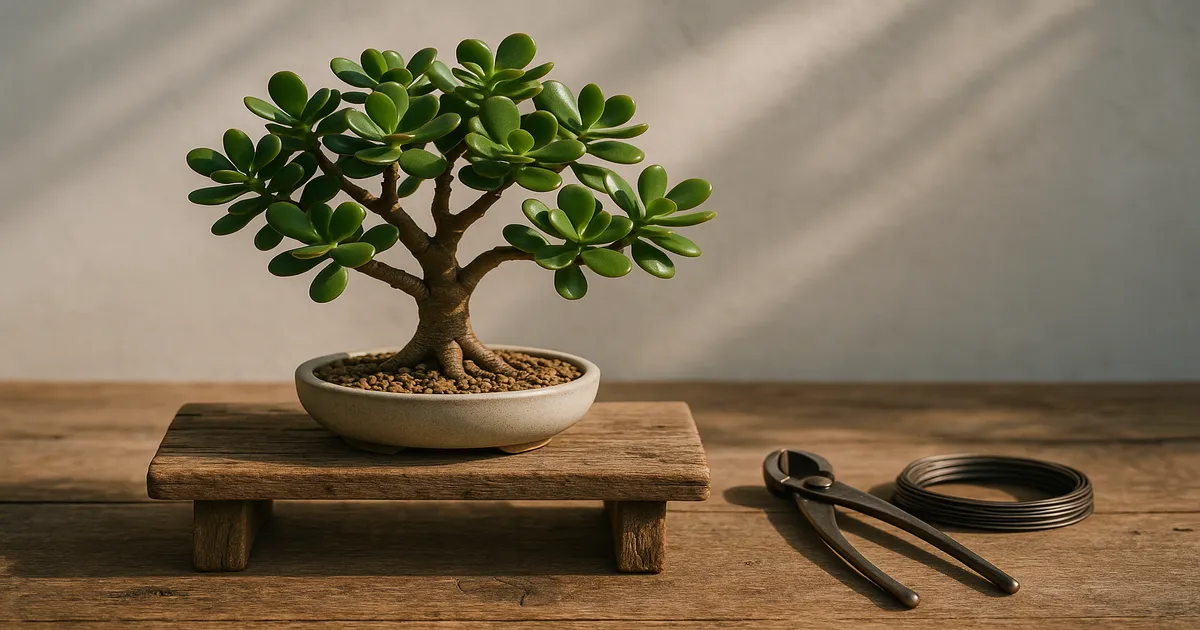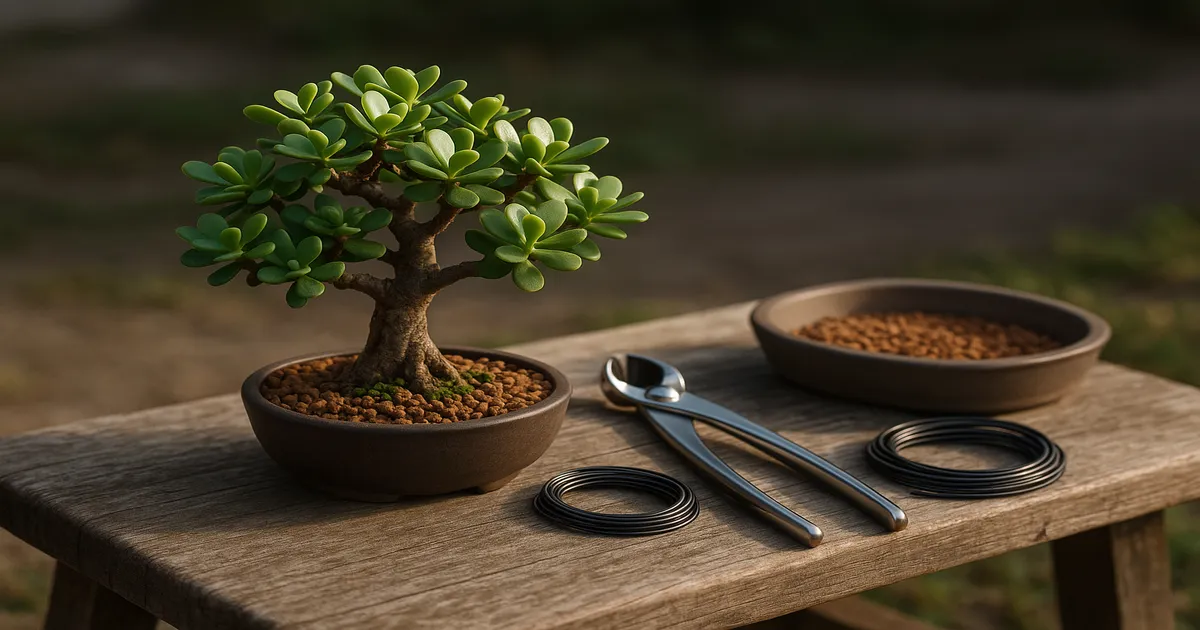
Quick Answer: Prune a jade bonsai (Crassula ovata) using three techniques: maintenance pruning year-round (most productive in spring and early summer), structural pruning in late winter before the growth flush, and defoliation in early summer for advanced growers only. Each cut above a leaf node produces two new shoots, building the fine ramification that makes pruning bonsai jade plant so rewarding. Jade heals fast, back-buds reliably, and is one of the best species for beginners learning pruning fundamentals.
Pruning Bonsai Jade Plant: What It Achieves
Pruning a jade bonsai does three things that matter: it reduces leaf size so foliage stays proportional to the miniature scale, it builds ramification (the fine branch division that creates an aged appearance), and it lets you control the overall silhouette. Left unpruned, jade produces long, leggy branches with large leaves — impressive on a windowsill but wrong for bonsai. Regular pruning redirects that energy into denser, more refined growth.
Crassula ovata is genuinely forgiving. It calluses quickly, back-buds reliably, and tolerates mistakes that would kill less resilient species. That makes it an ideal training ground for beginners still developing their eye and their technique.
Pruning Calendar at a Glance
| Season | Pruning Type | Notes |
|---|---|---|
| Late winter / early spring | Structural pruning, wiring | Just before growth flush; best wound-sealing capacity |
| Spring / early summer | Maintenance pruning, pinching | Peak growing season; most productive for ramification |
| Early summer | Defoliation (advanced only) | Vigorous trees only; strict eligibility criteria |
| Summer / fall | Light maintenance | Minor shape corrections; avoid heavy cuts |
| Winter | Minimal / rest | Cleanup only; let the tree rest |
Species Traits That Shape Your Pruning Decisions
Growth Habit and Vigor
Jade naturally develops thick, fleshy stems that lignify with age, creating the trunk taper and character bonsai aims for. Under bonsai conditions it grows roughly 2–4 inches per year — fast enough to reward your work, slow enough that you’re not constantly correcting runaway shoots. Its naturally rounded, dome-shaped canopy maps well onto classic informal upright and broom-style designs.
Jade uses CAM (Crassulacean Acid Metabolism) photosynthesis, storing energy in its leaves and stems rather than relying on constant photosynthetic activity. In practice this means the plant carries significant energy reserves — which is why it recovers so well from pruning. It also means you need to respect those reserves: don’t combine heavy pruning with repotting, don’t defoliate a stressed tree, and always let cut surfaces dry before resuming watering.
Best Cultivars for Bonsai Work
The straight C. ovata species outperforms cultivars for most growers. Its vigor, leaf-reduction response, and wound-healing capacity are simply better. For shohin and mame styles, C. ovata ‘Minima’ is the standout choice — smaller leaves and compact internodes make it naturally suited to small-scale work. Avoid ‘Tricolor’ if you’re still learning; its variegation comes at the cost of weaker growth that punishes pruning errors.
Essential Tools for Pruning Bonsai Jade Plant
You don’t need a full toolkit to get started, but the right tools make a real difference with jade’s succulent tissue.
- Concave branch cutters — for any branch over 6 mm (¼ inch). The concave profile leaves a slightly hollow wound that heals flat rather than leaving a raised bump.
- Bud scissors or fine scissors — for twig work, leaf trimming, and pinching. Precision matters here.
- Knob cutters — for removing old stubs flush with the trunk. Worth having once your tree has been through several structural pruning sessions.
- Wound sealant — apply to cuts over 12 mm (½ inch). Use a product formulated for succulents or a thin layer of grafting wax — never petroleum-based products, which trap moisture and promote rot. (Kiyonal Cut Paste)
Wipe blades with 70% isopropyl alcohol between trees and after cutting any diseased material. Sharp tools are non-negotiable — blunt cuts crush succulent tissue, slow callus formation, and open a wider entry point for rot.
Maintenance Pruning: Keeping Your Jade in Shape
Timing and Frequency
Minor trimming can happen year-round, but you’ll see the best results during active growth in spring and early summer. That’s when the tree is producing new shoots fastest and every cut translates quickly into two new branches. In winter, stick to cleanup only — removing dead leaves and obvious problem growth.
Step-by-Step Technique
- Step back and study the tree before cutting anything. Identify which shoots are extending beyond the desired silhouette.
- Locate the leaf node just inside the silhouette line.
- Cut cleanly just above that node — about 2–3 mm above it — at a slight angle.
- Each cut typically produces two new shoots from the node below, doubling your branch count over time.
- Remove cuttings from the pot surface to prevent fungal issues.
Consistent light trimming builds better ramification than infrequent heavy cuts. Aim to trim before shoots extend more than 2–3 nodes beyond your target length.
Pinching for Bushier Development
During peak growing season, pinch soft new growth with your fingernails before it hardens. No tool wound, minimal stress, and the same branching response as a scissor cut. Pinch when the new shoot has developed its first pair of leaves but before the internode below it elongates.
Problem Growth to Remove
Some growth works against your design regardless of how well you prune around it. Remove water shoots (fast-growing vertical shoots that drain energy from the rest of the tree), downward-pointing branches, crossing branches, and anything that breaks the silhouette without contributing to the design.
Structural Pruning: Building the Primary Branch Framework
Best Timing
Late winter to early spring is the window — after the cold has passed but just before the main growth flush begins. Pruning at this point means the tree’s full growing-season energy goes immediately into sealing wounds. Jade calluses faster than most bonsai species (expect visible callus within 2–4 weeks during the growing season), so correct timing makes that advantage work for you.
Branch Selection Principles
Good branch structure follows a few clear rules. Primary branches emerge from the lower third of the trunk and are the thickest. Placement alternates — left, right, back in sequence as you move up the trunk — to create visual depth. Avoid bar branches (two branches at the same height directly opposite each other). Each branch moving up the trunk should be noticeably thinner than the one below it, and at least one back branch adds three-dimensionality. Work from the bottom of the tree upward, and from the trunk outward. Step back frequently.
Making Clean Structural Cuts
For branches over 6 mm, use concave branch cutters. Position the concave face toward the trunk so the resulting wound is slightly hollow — this encourages the callus to grow inward and heal flat. Cut in one smooth, deliberate motion; don’t saw or adjust mid-cut.
After any significant pruning session, give the tree a 3–5 day dry rest in a well-ventilated spot before resuming normal watering. Keep repotting and heavy structural pruning at least 6–8 weeks apart.
Defoliation: Advanced Leaf Reduction
Defoliation — deliberately removing a significant portion of the leaves — forces the tree to produce a new flush of smaller, more proportional foliage. Done correctly on a vigorous tree, it also improves ramification as multiple buds break simultaneously. This is an advanced technique, not a routine one.
The window is early summer, when the tree is at peak vigor and has maximum time to recover before winter. Before attempting it, your tree must meet all of these criteria:
- In the same pot for at least one full growing season
- Showing strong, vigorous growth with healthy foliage
- Not recently repotted, wired, or under any other stress
- Watered on a consistent schedule with no signs of disease
Remove 50–75% of the leaves, leaving the newest growth at shoot tips intact. Use clean scissors and cut the leaf stem — don’t pull. Never strip all the leaves from a jade bonsai. Afterward, move the tree to bright indirect light for 1–2 weeks and reduce watering slightly until new buds break. New growth should appear within 3–4 weeks.
Wiring After Pruning
Jade’s succulent stems are heavier and more brittle than woody bonsai species. They snap more readily, their thin bark gets cut by wire quickly, and the water weight in the stems increases breakage risk at branch junctions. Always use aluminum wire — copper is too rigid and dramatically increases bark damage.
| Branch Diameter | Recommended Wire Gauge |
|---|---|
| Up to 6 mm (¼ inch) | 1.0–1.5 mm aluminum |
| 6–12 mm (¼–½ inch) | 2.0–2.5 mm aluminum |
| 12–19 mm (½–¾ inch) | 3.0–3.5 mm aluminum |
| Over 19 mm (¾ inch) | Guy wires preferred |
Water the tree 2–3 days before wiring — slightly dehydrated stems are noticeably more flexible. Wrap at a 45° angle, apply consistent gentle pressure, and support the branch base with your thumb while bending. Make one smooth, deliberate bend rather than multiple small adjustments — jade cracks with repeated flexing. For dramatic repositioning, work in stages over multiple growing seasons.
Check wire every 3–4 weeks during the growing season. Typical wiring duration is 2–4 months in summer, up to 6 months over winter. Always cut wire off — never unwind it. Cut into short segments every 5–8 cm and lift each piece away.
Aftercare: Supporting Recovery After Pruning
Light and Temperature
After any significant pruning, move the tree to bright indirect light for 1–2 weeks before returning it to full sun. Keep temperatures in the 65–75°F (18–24°C) range and away from heating vents, air conditioning drafts, and cold night air.
Watering
Wait 3–5 days after significant pruning before resuming normal watering. When you do resume, water thoroughly, then wait until the top 1–2 inches of soil are dry before watering again. Overwatering during recovery is one of the most common ways growers lose a jade bonsai after an otherwise successful pruning session.
Soil
Good drainage directly supports recovery after pruning. A recommended inorganic mix is 30% akadama, 40% pumice, and 30% lava rock — this drains freely while retaining just enough moisture for active root growth.
Troubleshooting Common Pruning Problems
Leggy growth after pruning almost always points to insufficient light. Jade needs at least 5,000 lux to maintain compact growth. Below that threshold, new shoots reach for the light source and produce the open, stretched growth you’re trying to avoid. Move the tree to a brighter location and resume pinching as soon as new growth appears.
Wounds not healing or showing rot — check three things: Did you use a petroleum-based wound sealant? Are you watering too soon after pruning? Is humidity high with poor airflow? Trim back any rotted tissue to clean growth, allow a fresh dry-rest period, and apply appropriate sealant.
Branch breakage during wiring almost always comes from wiring when stems are fully turgid, using copper wire, or bending too aggressively in one session. Switch to aluminum wire, water 2–3 days before your next session, and plan dramatic bends over two or three growing seasons.
Leaf drop after pruning — a few leaves dropping is normal stress shedding. Widespread drop is not. The most likely causes are overwatering after pruning, cold drafts, or a sudden move to much lower light. Identify which environmental factor changed, correct it, and reduce watering until the tree stabilizes.
Frequently Asked Questions About Pruning Bonsai Jade Plant
When is the best time to prune a jade bonsai?
The best time for structural pruning is late winter to early spring, just before the main growth flush. This maximizes wound-sealing capacity going into summer. For maintenance pruning and pinching, spring through early summer is most productive, though light trimming can be done year-round.
How do I make a jade bonsai trunk thicker?
Trunk thickening is driven by unrestricted growth, not pruning. Allow the tree to grow freely in a large nursery container for 2–3 years without heavy pruning. Once you’ve achieved the trunk diameter you want, move it to a bonsai pot and begin structural development. Pruning alone won’t thicken the trunk — it needs canopy mass and root volume to drive girth.
Can I prune a jade bonsai in winter?
Light cleanup pruning — removing dead leaves, crossing twigs, and minor shape corrections — is fine in winter. Avoid heavy structural pruning. Jade’s growth slows significantly below 60°F (15°C), which means wounds heal much more slowly and the risk of complications increases. Save major cuts for late winter when temperatures are rising and the growth flush is approaching.
Why is my jade bonsai dropping leaves after pruning?
A small amount of leaf drop right after pruning is a normal stress response. Widespread drop usually means overwatering — jade should have a 3–5 day dry rest after significant pruning before normal watering resumes. Cold drafts and sudden moves to lower light are the other common triggers. Check your environment before assuming the pruning itself is the problem.
How do I reduce leaf size on a jade bonsai?
Consistent maintenance pruning combined with strong light (at least 10,000 lux) naturally reduces leaf size over time as the tree puts energy into finer branching. For faster results, defoliation in early summer — removing 50–75% of leaves on a vigorous, healthy tree — encourages a new flush of smaller foliage. Only attempt this on trees showing strong, established vigor.