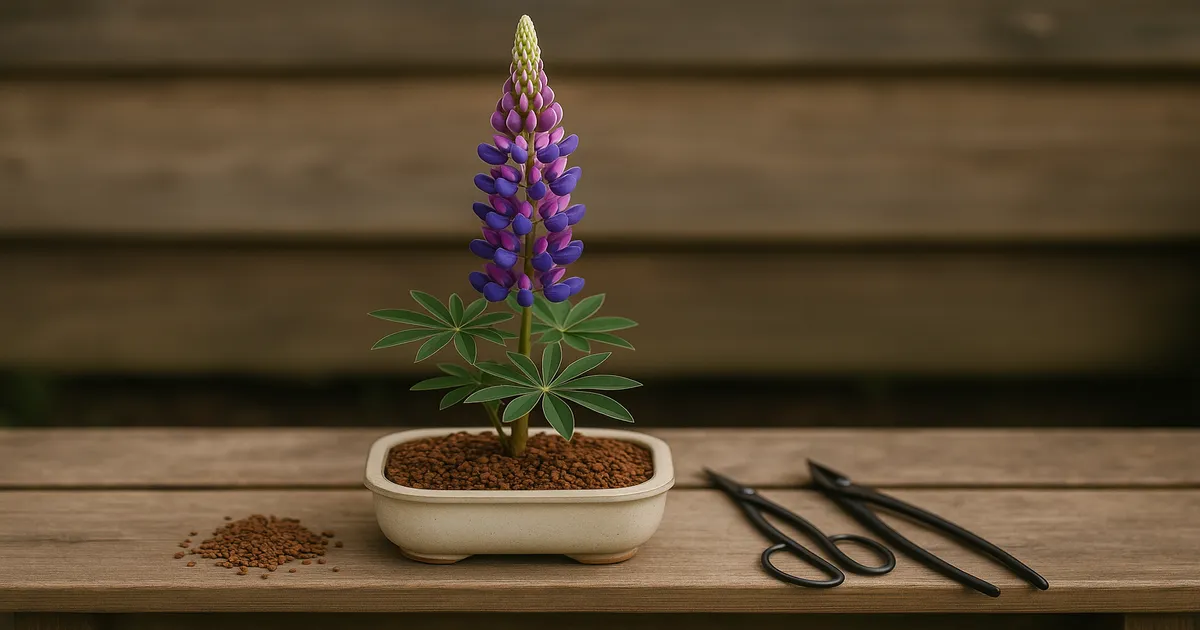
Quick Answer: Lupines earn their Dr. Seuss reputation through a combination of towering flower spikes packed with impossible color gradients, cartoon starburst palmate leaves, and a hydrophobic leaf surface that makes water bead into perfect silver spheres. The visual effect is genuinely surreal — and entirely botanical. This article explores both what makes one lupine look like it’s from a Dr. Seuss book and what it actually takes to grow them in containers, including an honest look at the challenges involved.
Why Does One Lupine Look Like It’s From a Dr. Seuss Book? The Botany Behind the Fantasy
If you’ve ever stood in front of a lupine in full bloom, you’re not imagining things. Every structural feature of this plant seems designed to defy botanical convention — the towering spires, the impossible color combinations, the leaves that shed water like polished glass.
Raceme Flower Spikes: Nature’s Most Improbable Architecture
The flower spike — technically a raceme — is the centerpiece of the Seussian effect. These spires reach 12–24 inches (30–60 cm) tall, densely packed with dozens of small pea-like florets. Lupines belong to Fabaceae, the legume family, which makes their flamboyance all the more surprising. What makes them surreal isn’t just the height — it’s the color.
Russell Hybrid lupines produce bicolor and tricolor gradients on a single spike: magenta bleeding into violet bleeding into white, or red fading into yellow. These combinations look digitally enhanced. They’re not. It’s just Lupinus.
Palmate Leaves: The Cartoon Starburst Effect
The leaves match the flowers for sheer visual drama. Each leaf is divided into 5–17 leaflets radiating outward from a central point — exactly like an outstretched hand, or the exaggerated starburst foliage you’d find in The Lorax. The geometry is precise and repetitive in a way that reads as artificial. It’s one of the clearest reasons why one lupine can look like it’s from a Dr. Seuss book even before it flowers.
The Lotus Effect: Why Water Beads Like Mercury on Lupine Leaves
Run your finger across a lupine leaf after rain and you’ll find it completely dry. The surface is coated in microscopic wax structures that create extreme hydrophobicity — water forms perfect spherical droplets and rolls off rather than spreading. This is the same “lotus effect” seen in lotus flowers and some tropical plants. On lupine leaves, it makes water bead up like liquid mercury scattered across green velvet.
A Note on the Name
The name Lupinus comes from Latin lupus (wolf), based on the old myth that lupines “wolfed” nutrients from soil. The reality is the opposite. Lupine roots host Bradyrhizobium bacteria in specialized nodules that fix atmospheric nitrogen, actually enriching the soil. The wolf name stuck anyway — even as the plant kept producing color combinations that no landscape designer could reasonably claim credit for.
Lupine Species and Varieties: Which One Has the Most Seussian Look?
Not all lupines are created equal. The species you choose determines both the visual payoff and what’s realistically possible in a container.
Russell Hybrids: The Classic Candy-Colored Spectacle
Russell Hybrids (Lupinus polyphyllus × garden hybrids) are the gold standard for the full Dr. Seuss effect — 2–4 ft (0.6–1.2 m) tall, in every bicolor combination imaginable. They are entirely herbaceous, though. No woody structure, no persistent trunk. Spectacular in a border or container display, but not bonsai candidates.
Lupinus arboreus (Tree Lupine): The Only Woody Candidate for Structural Work
Lupinus arboreus — the Tree Lupine — is the outlier. Native to coastal California, it develops a semi-woody structure and can reach 3–8 ft (0.9–2.4 m). It’s the only species realistically suited to structural container work or anything approaching bonsai-adjacent cultivation. Flowers are typically yellow or white, less flamboyant than Russell Hybrids but architecturally more interesting as a long-term specimen.
Dwarf and Container-Friendly Varieties
If you want lupines in a pot for seasonal display, the Gallery Series (18–24 inches / 45–60 cm) and Minaret Series (around 18 inches / 45 cm) are the most manageable. They won’t give you a bonsai, but they’ll give you a genuinely spectacular container plant for a season.
Wild Lupine and Sky Lupine: Native Charm
Lupinus perennis (Wild Lupine) is the most cold-hardy species (Zones 3–8) and the sole host plant for the endangered Karner Blue butterfly. L. nanus (Sky Lupine) is a compact annual topping out at 4–24 inches (10–60 cm) — the most manageable in small containers. Neither develops meaningful woody structure.
| Variety/Species | Height | Woody? | Container Suitability |
|---|---|---|---|
| L. arboreus (Tree Lupine) | 3–8 ft (0.9–2.4 m) | Semi-woody | Best for structural work |
| Russell Hybrids | 2–4 ft (0.6–1.2 m) | No | Seasonal display |
| Gallery Series | 18–24 in (45–60 cm) | No | Container display |
| Minaret Series | 18 in (45 cm) | No | Container display |
| L. perennis (Wild Lupine) | 1–2 ft (30–60 cm) | No | Native gardens |
| L. nanus (Sky Lupine) | 4–24 in (10–60 cm) | No — annual | Small containers |
Light, Temperature, and Climate: What Lupines Actually Need
Full Sun Is Non-Negotiable for Flowering
Lupines need a minimum of 6–8 hours of direct sunlight daily, with light levels ideally reaching 40,000 lux or above. Below that threshold, growth becomes etiolated — stretched, weak, and reluctant to flower. In climates regularly above 85°F (29°C), 2–3 hours of afternoon shade helps extend bloom time without sacrificing overall light exposure.
Indoor cultivation is essentially impractical. Even with grow lights delivering 40,000–60,000 lux for 14–16 hours a day, flowering remains poor. Treat any indoor display as a temporary showcase — two weeks maximum before moving the plant back outside.
Cool-Season Roots: Vernalization and the 80°F Cliff
Lupines are cool-season plants. The optimal growing range is 55–75°F (13–24°C), and many varieties require vernalization — 6–8 weeks of cold exposure at 35–45°F (2–7°C) — to trigger flowering. Skip the cold period and you may get lush foliage with no blooms at all.
Performance drops sharply above 80°F (27°C). Above 90°F (32°C), flower abortion and leaf scorch become common. In hot-summer climates, lupines are essentially a spring event.
Cold hardiness by species:
- L. polyphyllus and Russell Hybrids: Zones 4–8
- L. perennis: Zones 3–8 (most cold-hardy)
- L. arboreus: Zones 8–10; frost-sensitive below 28°F (-2°C)
For container-grown specimens, move pots to an unheated garage or cold frame when temperatures drop below 25°F (-4°C). For L. arboreus, wrap with horticultural fleece (Agribon AG-19 Floating Row Cover) or move to frost-free shelter before temperatures hit 28°F (-2°C).
Soil and Watering: Where Lupines Defy Conventional Bonsai Logic
Why Lupine Soil Needs Run Counter to Standard Potting Mixes
Lupines want acidic pH (5.5–7.0), excellent drainage, and low fertility. That sounds compatible with bonsai philosophy — and it mostly is. The real problem is standard potting mixes, peat-heavy blends, and any sustained-release fertilizer with high nitrogen. Lupines fix their own nitrogen via Bradyrhizobium root nodules, so high-nitrogen fertilizers actively suppress flowering.
Recommended Container Mix
- 30% akadama (coarse, 3–6mm) — water retention and cation exchange
- 40% pumice (3–6mm) — drainage, aeration, root development
- 20% lava rock (3–6mm) — drainage and mineral content
- 10% decomposed granite or coarse sand — pH adjustment and additional drainage
Keep organic content below 10% of total mix volume. Above that, you’re inviting fungal disease and nitrogen levels that work against flowering.
Watering and Humidity
Allow the top 1–2 inches (2.5–5 cm) of soil to dry between waterings. In active spring growth, that typically means watering every 2–3 days in warm weather; during cool or dormant periods, stretch to every 7–14 days. Always water deeply until it flows freely from drainage holes. Never let containers sit in standing water.
Lupines prefer 40–60% relative humidity. Above 70% RH with poor air circulation, powdery mildew becomes almost inevitable.
Overwatering signs: yellowing lower leaves, soft or mushy stem base, wilting despite moist soil, gray-white mold at the soil surface, foul odor from the pot.
Underwatering signs: leaf edges browning and curling inward, palmate leaves folding along the midrib, premature flower drop, soil pulling away from container edges, dull matte leaf surface.
Pruning, Wiring, and Repotting: The Honest Limits
Deadheading and Structural Pruning
Cut spent raceme stems back to the first set of healthy leaves immediately after flowers fade. Done consistently, this can trigger a secondary flush — smaller than the first, but worthwhile. Use sharp, sterilized bypass pruners (Tinyroots Stainless Steel Pruning Shears) and sterilize with 70% isopropyl alcohol between cuts.
For L. arboreus, the best window for structural pruning is late winter to early spring, just before new growth emerges. Remove crossing branches and anything growing inward. Maintain a clear primary trunk line and preserve any branches with natural horizontal movement — they’re rare on lupines and visually valuable. Avoid cutting into bare wood older than two years; lupines have limited back-budding ability.
Lupines callus slowly. Large wounds on L. arboreus may take 2–3 full seasons to close. Apply cut paste to any wound larger than 6mm in diameter, and avoid large structural cuts on specimens under three years old.
Wiring: A Candid Assessment
Wiring herbaceous lupines is pointless — there’s no lignified structure to hold a set. Everything here applies exclusively to L. arboreus.
Use 1.0–2.0mm aluminum wire for young branches (1–3 years old). Copper wire’s greater rigidity poses a real bark damage risk on thin-barked specimens. The best window is late winter to early spring before leaf emergence. Wrap at a 45-degree angle, apply gentle even pressure, and bend slowly — lupine wood snaps without warning at angles beyond 30–45°. Check wired branches every 3–4 weeks; wire bites fast on fast-growing lupines. Maximum duration in active growth is 8–12 weeks. Always cut wire off in sections — never unwind.
Repotting and the Nitrogen-Fixing Nodules
Repot young specimens (1–3 years) every 1–2 years; established L. arboreus every 2–3 years. The optimal window is early spring, just as growth buds begin to swell.
The most overlooked aspect of lupine root work is the Bradyrhizobium nodules — small, pink or red rounded structures attached to the roots. They’re essential to the plant’s health. Preserve as many as possible. Destroying them en masse during aggressive root pruning is one of the fastest ways to stress or kill a container-grown lupine.
Remove no more than 25–30% of root mass per session. Cut cleanly with sterilized root shears — never tear. Many lupine species develop a deep taproot; reduce it gradually over multiple repotting cycles rather than cutting it drastically in one go. Use deep pots — minimum 8–10 inches (20–25 cm). Unglazed terra cotta is ideal for moisture regulation.
Common Problems: Pests, Diseases, and the Lupine Aphid Threat
The Lupine Aphid: A Specialist Pest to Take Seriously
Macrosiphum albifrons is not your ordinary garden aphid. It’s a specialist species — pale green to pink, noticeably larger than common aphids, and capable of building colonies in the thousands on a single plant. A severe infestation can collapse entire flower spikes before they open. Inspect plants weekly during the growing season.
Treatment options: 2% insecticidal soap spray applied directly to colonies; neem oil as a systemic deterrent; a strong water jet to knock colonies off new growth; and encouraging natural predators like ladybugs and lacewings.
Slugs, Whitefly, and Spider Mites
Slugs leave irregular holes in leaves and silvery slime trails — use iron phosphate bait and copper tape around container rims. Whitefly appear as clouds of white insects when plants are disturbed; yellow sticky traps and good air circulation keep populations manageable. Spider mites produce fine webbing and stippled, bronzed leaves — treat with neem oil or miticide and maintain adequate humidity.
Powdery Mildew and Crown Rot
Powdery mildew (Erysiphe spp.) shows as a white powdery coating on leaves, typically in late summer when air circulation is poor. Treat with potassium bicarbonate spray or sulfur fungicide. Prevention is more effective than treatment: water at soil level, maximize air circulation, and choose mildew-resistant varieties where available.
Crown rot (Phytophthora, Pythium) is almost always a drainage failure. Symptoms are sudden wilting, a brown mushy crown, and a foul odor from the soil. If caught early, remove affected tissue, apply copper fungicide, and repot into fresh sterile mix. The pumice-heavy container mix described earlier is your primary defense — if the soil drains properly, crown rot rarely takes hold.
FAQ: Why Does One Lupine Look Like It’s From a Dr. Seuss Book?
Q: Can I grow lupines indoors permanently? No. Lupines need 6–8 hours of direct outdoor sun and a cold vernalization period to flower reliably. Indoor displays work for up to two weeks as a showcase, but the plant needs to go back outside after that.
Q: Why won’t my lupine flower even though it looks healthy? The two most common causes are insufficient cold exposure (vernalization) and too much nitrogen in the soil or fertilizer. Lupines fix their own nitrogen — adding more suppresses blooming. Check that the plant received 6–8 weeks of cold at 35–45°F (2–7°C) before the growing season.
Q: Is Lupinus arboreus a true bonsai subject? It’s the only lupine species with semi-woody structure, making it the only realistic candidate for structural container work. But it’s not a conventional bonsai subject — it calluses slowly, has limited back-budding, and the wood is pithy. Think of it as bonsai-adjacent rather than a traditional bonsai tree.
Q: How do I keep lupines blooming as long as possible? Deadhead spent spikes immediately, provide afternoon shade in temperatures above 85°F (29°C), and avoid high-nitrogen fertilizers. A low-phosphorus, low-nitrogen feed applied once in early spring is sufficient.
Q: Are lupines toxic to pets or children? Yes. All parts of the lupine plant contain quinolizidine alkaloids, which are toxic if ingested by humans, dogs, cats, and livestock. Keep plants out of reach of children and pets, and wash hands after handling seeds or foliage.