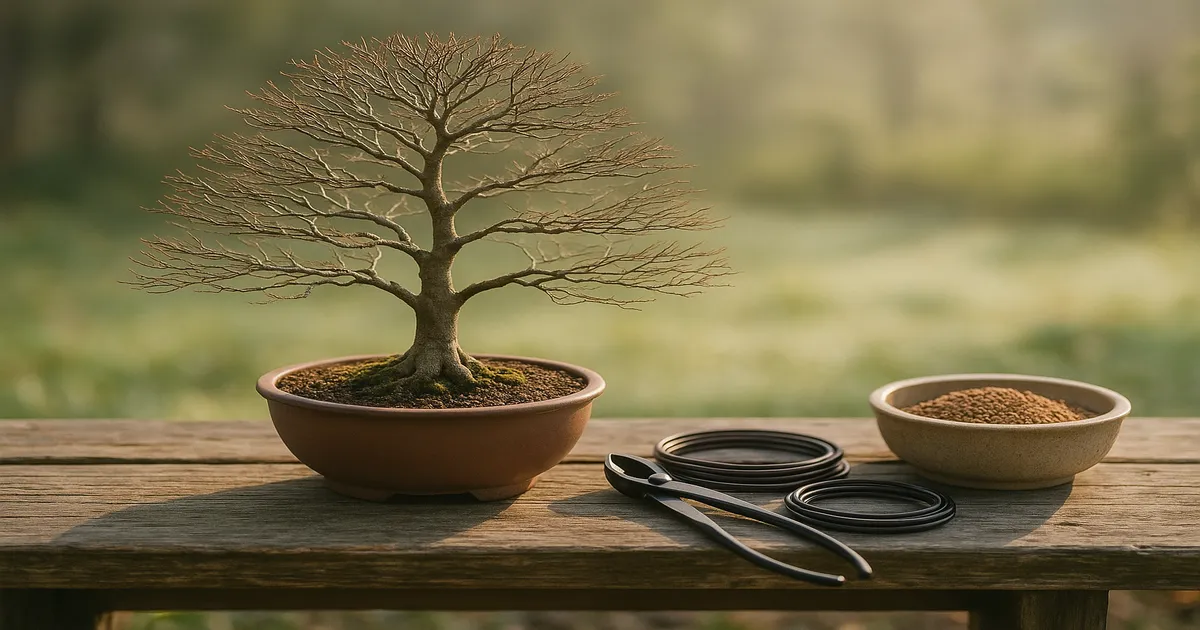
Quick Answer: Zelkova serrata (Keyaki) is an outdoor deciduous bonsai that needs at least 6 hours of direct sun daily, genuine winter dormancy, a well-draining akadama-based soil mix, and consistent watering through the growing season. Hardy in USDA Zones 5–9, it rewards regular pruning with its signature fine-branched broom silhouette and spectacular autumn colour.
Knowing how to look after bonsai zelkova properly is the difference between a tree that thrives for generations and one that slowly declines from a handful of avoidable mistakes. Zelkova serrata — the Japanese Keyaki — is one of the most revered deciduous species in bonsai, and for good reason. Its naturally vase-shaped branching, beautiful flaking bark, and flaming autumn colour make it endlessly rewarding to grow. It does have specific needs, though, and this guide covers every one of them.
Zelkova Bonsai: Species Overview
Zelkova serrata — The Keyaki Explained
Zelkova serrata belongs to the Ulmaceae family, making it a close relative of the elm. Native to Japan, Korea, and eastern China, wild specimens can live for over 1,000 years. A well-kept bonsai routinely reaches 100–200 years — this is potentially a tree you pass on to the next generation.
Bark starts smooth and grey-brown on young trees, then matures into an attractive flaking, mottled grey-orange pattern. Leaves are small (1–2.5 inches / 2.5–6 cm), ovate with toothed margins, and arranged alternately along fine twigs. Other species such as Zelkova schneideriana appear in penjing traditions, and cultivars like ‘Green Vase’ are popular in Western bonsai, but for serious practice Z. serrata is the clear choice.
Natural Growth Habit and Bonsai Potential
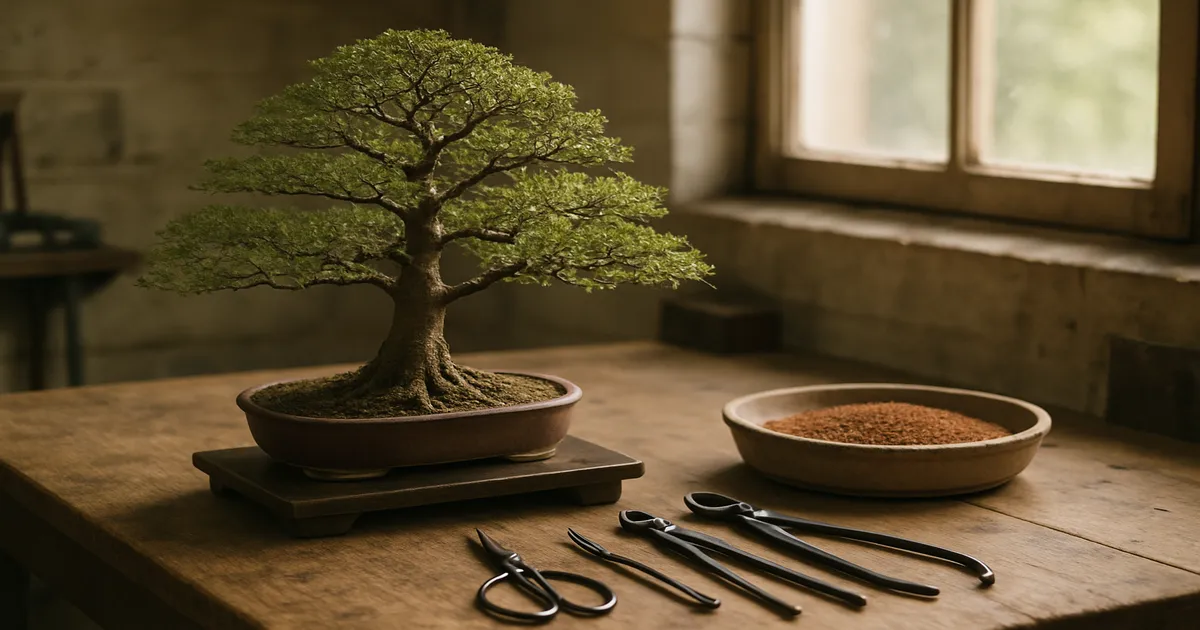
The zelkova’s natural form is a broad, vase-shaped canopy with upward-arching branches that divide repeatedly into fine twigs — exactly the structure bonsai artists seek in the hokidachi (broom) style. The species back-buds reliably and develops ramification naturally over time, which is a significant advantage when building a refined canopy.
One point worth emphasising: zelkova is an outdoor species. It cannot be kept indoors permanently. Brief indoor display of 3–5 days for special occasions is fine, but it must go back outside promptly.
Seasonal Interest: Spring Through Winter
- Spring: Fresh, vivid green new growth emerges with energy
- Summer: Dense, deep green canopy; vigorous extension growth
- Autumn: Outstanding orange, red, and russet colour — genuinely spectacular
- Winter: Bare branch structure reveals the tree’s architecture in full
Few bonsai species offer this level of year-round visual interest.
How to Look After Bonsai Zelkova: Light and Temperature
Outdoor Placement and Sunlight Needs
Zelkova needs a minimum of 6 hours of direct sunlight daily throughout the growing season. A south- or east-facing position works best, providing strong morning sun with some natural afternoon shade. In climates where summer temperatures regularly exceed 100°F (38°C), a 30–40% shade cloth in the afternoon protects foliage from scorching without starving the tree of light overall.
Insufficient light is one of the most common care mistakes. The symptoms are easy to spot: elongated internodes, weak growth, and disappointing autumn colour.
Ideal Temperature Ranges by Season
| Growth Phase | Ideal Temperature Range |
|---|---|
| Active growing season | 60–85°F (16–29°C) |
| Optimal summer growth | 65–80°F (18–27°C) |
| Dormancy trigger | Below 50°F (10°C) |
| Safe dormancy range | 25–45°F (-4–7°C) |
| Cold damage threshold | Below 15°F (-9°C) for containerised roots |
Winter Dormancy and Cold Protection
Dormancy is non-negotiable — and genuinely beneficial. The tree needs that rest period to build energy reserves for the following season. Never try to prevent it by moving the tree into a heated space; temperatures above 50°F (10°C) will break dormancy prematurely, exhaust the tree’s reserves, and leave it vulnerable to late frosts.
The tree itself is cold-hardy to around 5°F (-15°C) in the ground, but containerised roots have far less insulation and are significantly more vulnerable. Protection strategy depends on your zone:
- Zones 7–9: An unheated cold frame, greenhouse, or sheltered wall position is usually sufficient
- Zones 5–6: Move to an unheated but frost-protected structure (garage, shed, cold greenhouse) once temperatures consistently drop below 28°F (-2°C); aim to keep roots between 25–40°F (-4–4°C)
- Zone 4 and colder: Bury the pot to its rim in garden soil or deep mulch; add frost cloth over the canopy during extreme cold snaps
Soil, Watering, and Feeding
The Right Soil Mix for Zelkova Bonsai
Zelkova roots need excellent drainage and good aeration, with enough moisture retention to support vigorous growth. The standard recommendation:
- Mature trees: 2:1:1 akadama, pumice, lava rock (50% akadama, 25% pumice, 25% lava rock)
- Young/developing trees: Increase akadama to around 60% (3:1:1) to support faster growth
- Particle size: 3–6 mm for most bonsai; 1–3 mm for shohin (trees under 8 inches / 20 cm)
Avoid standard potting compost, garden soil, or anything peat-based. These compact over time, restrict oxygen to the roots, and hold moisture far longer than zelkova can tolerate. Target a slightly acidic to neutral pH of 6.0–7.0 — akadama naturally falls within this range.
How Often to Water: Seasonal Guidelines
There is no fixed watering schedule. You are responding to actual soil moisture, not the calendar. That said, here is a practical framework:
- Spring and summer: Daily watering is typical; in heat above 85°F (29°C), twice daily (morning and early evening) may be necessary
- Autumn: Every 1–2 days as growth slows and temperatures drop
- Winter dormancy: Every 5–10 days — never let the roots fully desiccate, even when the tree is leafless
Watering technique: Insert your finger about ½–1 inch (1–2 cm) into the soil. Water when the top layer is approaching dryness but before the entire rootball has dried out. Water thoroughly — until it flows freely from the drainage holes — wait 10 minutes, then water again to ensure complete saturation. Never leave the pot sitting in standing water.
Overwatering signs: leaves yellowing and dropping prematurely (outside of autumn), soft or mushy surface roots, soil still wet 24+ hours after watering, or wilting despite wet soil.
Underwatering signs: leaf edges browning and crisping, leaves curling inward, soil pulling away from pot edges, or the pot feeling unusually light when lifted.
Feeding Through the Growing Season
Feed zelkova from the first signs of spring growth through to early autumn. A balanced fertiliser (such as a 10-10-10 or similar NPK ratio) works well from spring through midsummer. Switch to a low-nitrogen, high-potassium formula from late summer onward to harden growth and support strong autumn colour. Reduce feeding to nothing once the tree enters dormancy.
Pruning and Shaping Your Zelkova Bonsai
Maintenance Pruning for Ramification
This is the work that builds a refined canopy over time. Once new shoots have extended to 4–6 leaves, cut them back to 1–2 leaves using sharp bonsai scissors. Repeat every 3–4 weeks during active growth from late spring through midsummer. Zelkova back-buds reliably, so consistent maintenance pruning pays off quickly in finer twig structure.
Structural Pruning: Timing and Technique
Structural work — establishing primary branches, correcting design flaws, removing thick branches — is best done in late winter to very early spring, just before buds begin to swell. The branch structure is fully visible, wound healing kicks in immediately with the spring growth flush, and sap pressure is low. Midsummer, after the first growth flush has hardened, is an acceptable secondary window for moderate structural cuts.
When selecting branches to keep or remove:
- Remove: Crossing branches, downward-growing branches, bar branches (two emerging from the same node), and anything disrupting taper
- Keep: Branches with good movement, appropriate taper, and positions that contribute to an upward-arching silhouette
Apply cut paste to any wound larger than ¼ inch (6 mm) immediately after cutting. Use concave branch cutters to make cuts that heal flush with the trunk rather than leaving stubs. Large cuts may take 2–5 years to fully callus, so minimise heavy structural work on show trees.
Developing the Classic Broom Style (Hokidachi)
The hokidachi broom style is the defining aesthetic for Keyaki bonsai — upward-arching primary branches that divide repeatedly into finer and finer twigs, creating a full, rounded canopy. Zelkova does this naturally. Your job is to encourage it by consistently pruning back to outward- and upward-facing buds and removing anything growing downward or inward.
Defoliation: When and How to Do It Safely
Full defoliation — removing all leaves in early summer — can reduce leaf size, increase ramification, and intensify autumn colour. It is an advanced technique, not a routine one. Only defoliate a zelkova that is fully healthy, well-established in its current pot, and showing vigorous growth in the current season. In the Northern Hemisphere, early June gives the tree enough time to push a second flush and harden it before autumn. Partial defoliation (removing only the largest leaves) is a safer option for less vigorous specimens.
Wiring Zelkova Bonsai Branches
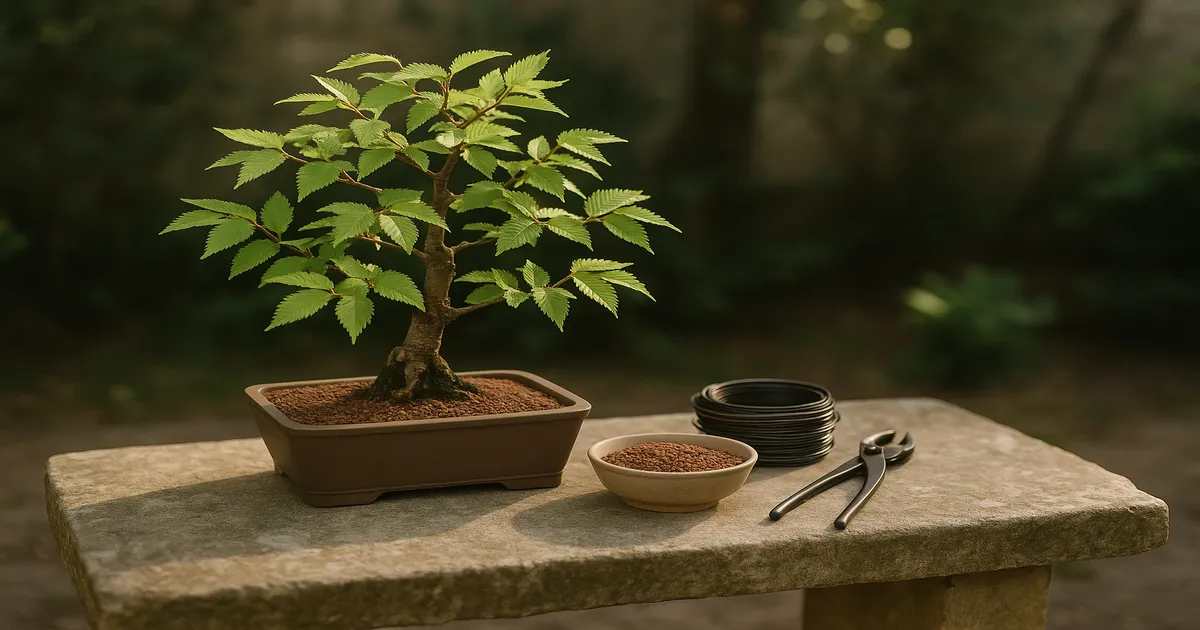
Aluminium wire is the go-to choice for zelkova — softer, easier to apply, and far less likely to damage the relatively thin bark. Reserve copper wire for heavier structural work where more holding power is needed.
| Branch Thickness | Recommended Wire |
|---|---|
| Very fine twigs (< 2 mm) | 1.0–1.5 mm aluminium |
| Small branches (2–4 mm) | 2.0–2.5 mm aluminium |
| Medium branches (4–8 mm) | 3.0–3.5 mm aluminium |
| Larger branches (8–15 mm) | 4.0–5.0 mm aluminium or copper |
Wire diameter should be roughly one-third the thickness of the branch being wired.
The two best wiring windows are late winter/early spring before bud break and autumn after leaf drop. Avoid wiring during the active spring growth flush — rapid cell expansion means wire can embed within days.
Always wire two branches with one piece of wire, anchored around the trunk or a larger branch. Apply wire at a 45-degree angle, keep it snug but not tight, and bend branches slowly and deliberately. Zelkova branches can crack under aggressive bending.
Check wire every 2–3 weeks during active growth. Remove it by cutting into short segments rather than unwinding — unwinding risks snapping fine branches and tearing bark. Young branches typically set position in 4–8 weeks during the growing season; older branches may need a full overwinter.
Repotting Zelkova Bonsai
How Often to Repot
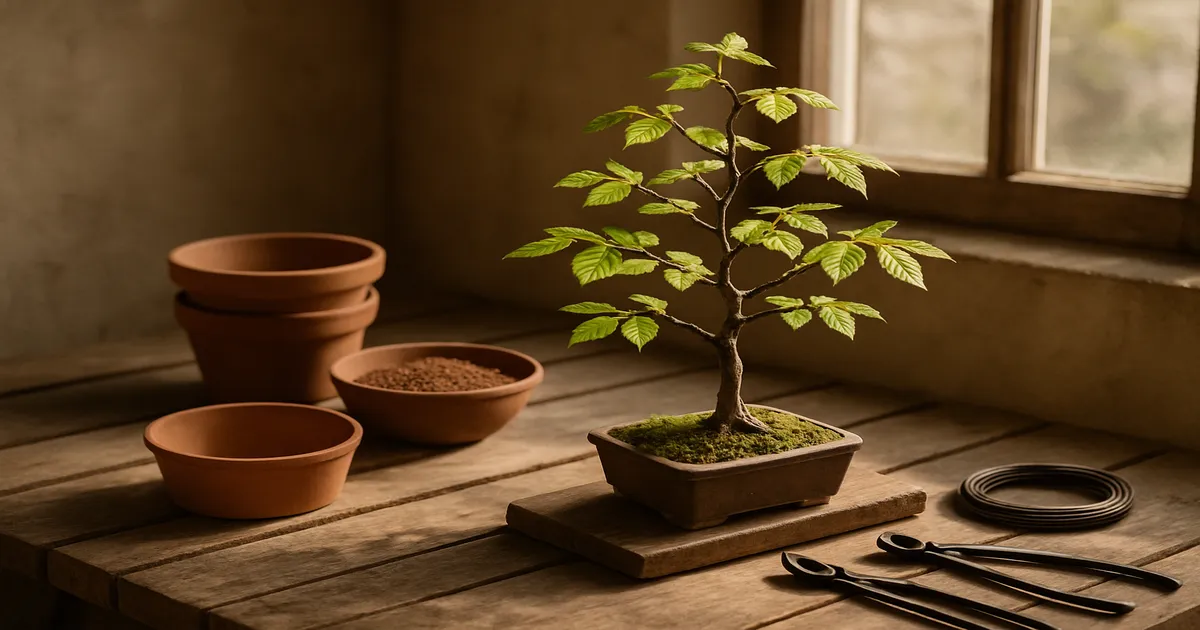
- Young/developing trees: Every 1–2 years
- Mature specimens: Every 2–3 years
Zelkova is a vigorous root producer — err toward more frequent repotting. Clear indicators it is time: roots circling the container walls, noticeably slower drainage, or the pot drying out unusually fast after watering.
Timing and Technique
Repot in early spring, just as buds begin to swell but before they open. This is the single most critical timing consideration. The tree’s energy is mobilised and ready to support root regeneration, and new feeder roots develop rapidly once repotted.
Steps:
- Remove the tree from its pot and inspect the root mass
- Gently tease away old soil, working outward from the trunk
- Prune up to one-third of the root mass, removing circling roots and any that are dead or mushy
- Position the tree in the new pot with fresh soil mix, ensuring good contact around all roots
- Water thoroughly until water flows freely from all drainage holes
After repotting, keep the tree in a sheltered position out of strong wind and direct midday sun for 2–4 weeks. Resume normal care once new growth appears. Shallow oval or rectangular pots suit the broom style well; unglazed earth tones complement zelkova’s grey-brown bark without competing with it.
Troubleshooting Common Zelkova Bonsai Problems
Aphids cluster on new spring growth and can be knocked off with a strong water jet or treated with insecticidal soap. Spider mites appear in hot, dry conditions — look for fine webbing and stippled leaves; increase humidity and apply neem oil. Scale insects cling to bark and branches; scrub off manually with a soft brush and treat with a systemic insecticide for severe infestations.
Powdery mildew appears as a white, dusty coating on leaves, typically caused by poor air circulation combined with humidity. Improve airflow and apply a diluted fungicide if needed. Root rot results from overwatering or poor-draining soil — if caught early, repot immediately into fresh mix and prune affected roots back to clean tissue.
Leaf scorch (brown, crispy edges) points to underwatering or excessive heat. Yellowing and premature drop outside of autumn usually indicates overwatering or root rot. Weak growth and poor autumn colour are almost always caused by insufficient light — move the tree to a sunnier position first before investigating other causes.
Frequently Asked Questions: How to Look After Bonsai Zelkova
Can zelkova bonsai be kept indoors?
No. Zelkova requires genuine seasonal dormancy triggered by cold temperatures and reduced light, which cannot happen in a heated indoor environment. Brief indoor display of 3–5 days is acceptable for special occasions, but the tree must return to outdoor conditions promptly.
How often should I water a zelkova bonsai?
It depends on season, temperature, pot size, and soil mix — there is no fixed schedule. In summer, daily watering is typical, with twice-daily watering in heat above 85°F (29°C). In autumn, every 1–2 days; during winter dormancy, every 5–10 days. Always use the finger test: water when the top ½–1 inch of soil is approaching dryness.
When is the best time to prune a zelkova bonsai?
Maintenance pruning (cutting new shoots back to 1–2 leaves) happens throughout the growing season from late spring to midsummer. Structural pruning is best done in late winter to early spring, just before buds swell, when the branch structure is fully visible and wound healing begins immediately with the new growth flush.
How do I protect my zelkova bonsai in winter?
The approach depends on your climate zone. In Zones 7–9, a cold frame or unheated greenhouse is usually enough. In Zones 5–6, move the tree to an unheated but frost-protected structure once temperatures consistently drop below 28°F (-2°C). In Zone 4 and colder, bury the pot to its rim in garden soil and cover with frost cloth. Never overwinter in a heated space — temperatures above 50°F (10°C) will break dormancy prematurely.
Why are the leaves on my zelkova bonsai turning yellow?
Outside of normal autumn colour change, yellowing leaves most commonly indicate overwatering or the early stages of root rot. Check the soil — if it is staying wet for more than 24 hours after watering, reduce frequency and verify your soil mix is draining properly. Insufficient light can also cause pale, yellowing foliage, particularly in summer.