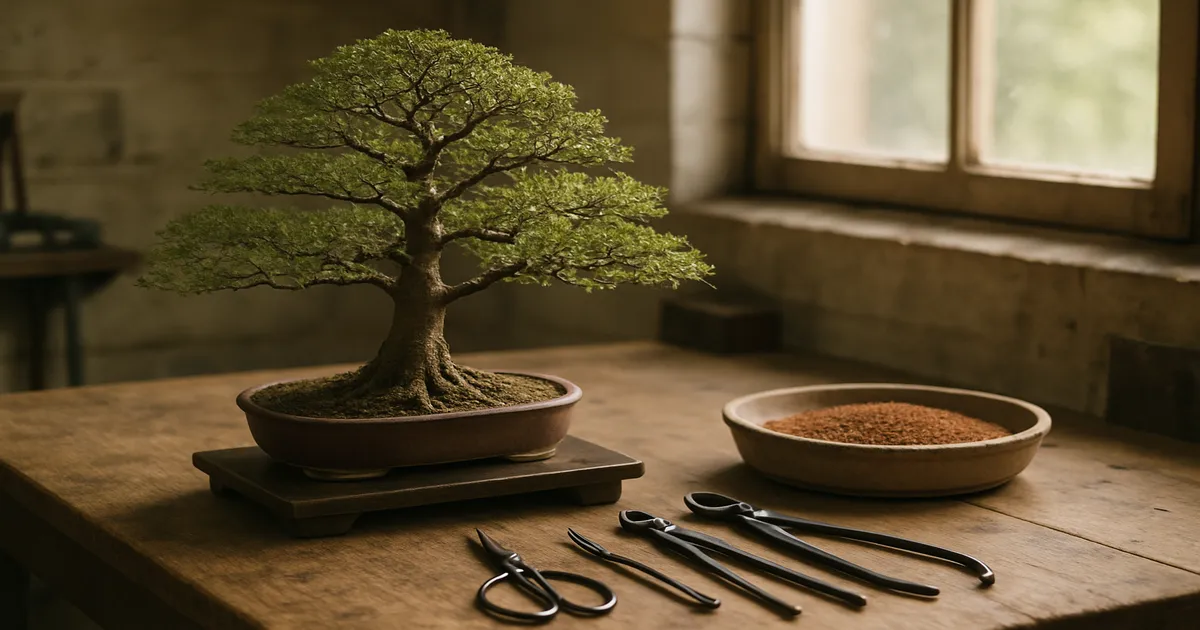
Quick Answer: Zelkova bonsai (Zelkova serrata, or Keyaki) is a vigorous outdoor deciduous tree that needs full sun, excellent drainage, regular clip-and-grow pruning, and a genuine cold winter dormancy. Keep it outside year-round except during the hardest freezes, repot every one to three years, and this tree can reward you for generations — healthy specimens routinely live 200–300+ years.
Learning how to look after a zelkova bonsai tree is one of the most rewarding journeys in the hobby. The species sits at the very top of Japanese bonsai tradition, regularly displayed at the prestigious Kokufu-ten National Bonsai Exhibition, and it’s easy to see why — fine ramification, flaking orange-brown bark, and blazing autumn colour make it genuinely spectacular. It’s also forgiving enough for intermediate growers willing to follow a few non-negotiable rules.
What Is a Zelkova Bonsai?
Botanical Profile: Zelkova serrata (Japanese Keyaki)
Zelkova serrata belongs to the elm family (Ulmaceae) and goes by several names: Japanese Zelkova, Japanese Elm, Saw-leaf Zelkova, and most beautifully, Keyaki (欅). Native to Japan, Korea, eastern China, and Taiwan, it grows in moist, well-drained valleys and along riverbanks up to around 5,900 ft (1,800 m) elevation. In the wild it can live over a thousand years; bonsai specimens regularly reach 200–300 years with proper care.
Growth Habit, Bark, and Aesthetic Appeal
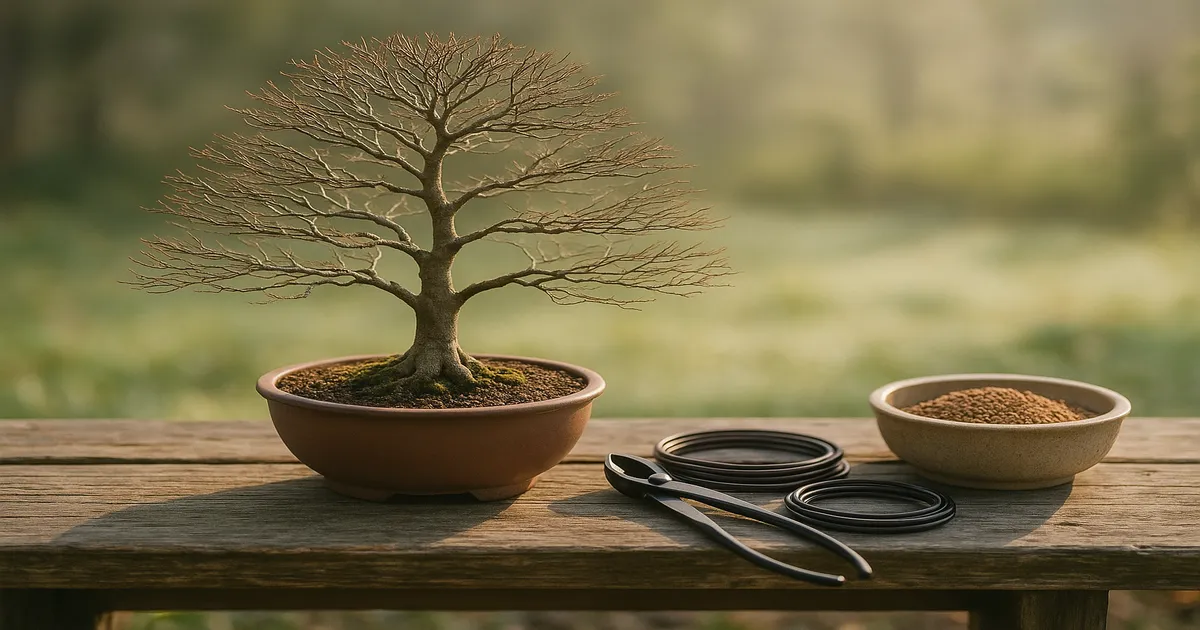
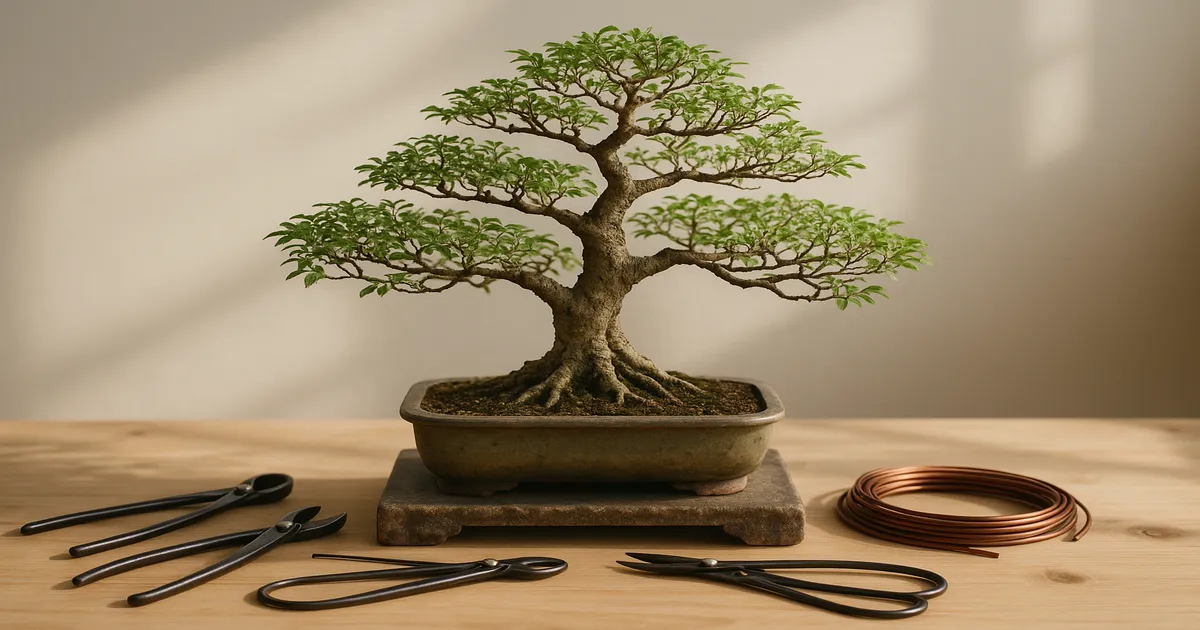
Zelkova naturally develops a broad, vase-shaped broom crown — a single dominant trunk that divides and subdivides into hundreds of fine, upward-arching twigs. This makes it almost perfectly suited to the classic broom (hokidachi) style. Bark is smooth and grey-brown on young trees, then develops attractive flaking patches that reveal warm orange-brown tones beneath, a feature that becomes more pronounced with age. Mature specimens also develop exceptional nebari (surface root spread), one of the most admired qualities in finished bonsai.
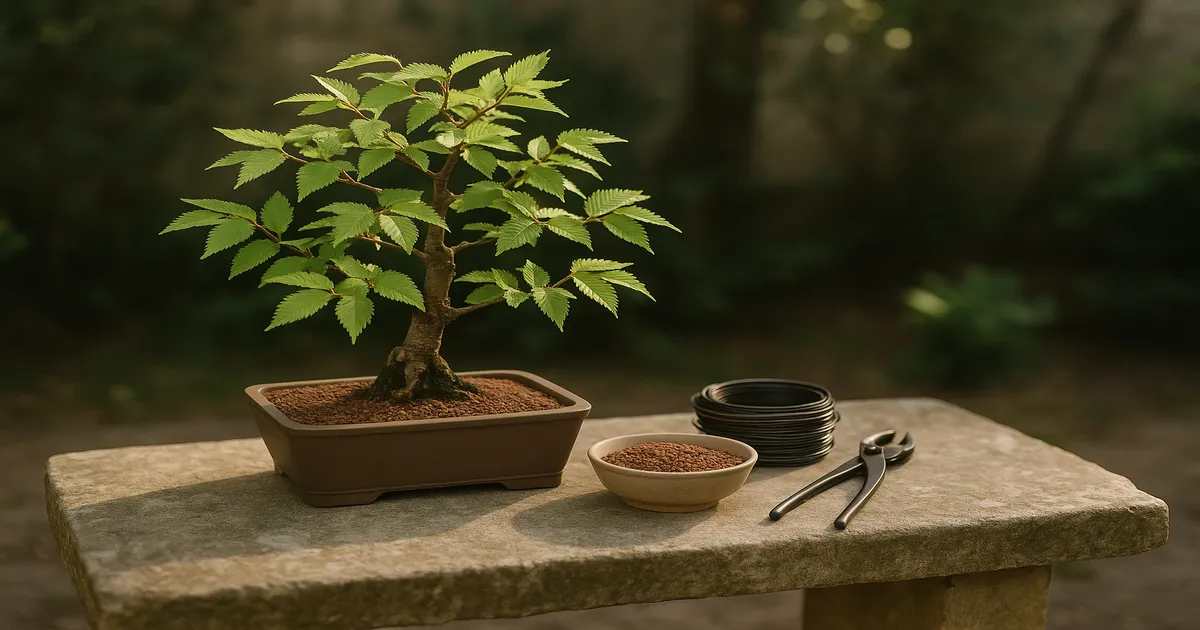
Leaves are small (1–2 inches / 2.5–5 cm), serrated, and alternate. They emerge fresh green in spring, deepen through summer, then turn yellow, orange, and red in autumn before dropping cleanly.
Common Varieties Used in Bonsai
- Zelkova serrata — the standard species; most widely used; outstanding ramification potential
- ‘Musashino’ — narrowly upright form; occasionally trained but less common
- ‘Ogon’ — golden-yellow spring foliage; used by some contemporary artists
- Zelkova carpinifolia — Caucasian Zelkova; popular in European bonsai; more cold-hardy but less refined branching
- Zelkova sinica — Chinese Zelkova; used in penjing; slightly smaller leaves than Z. serrata
How to Look After a Zelkova Bonsai: Light, Temperature, and Winter Protection
Why Zelkova Cannot Live Indoors Permanently
This is the single most important thing to understand: zelkova is an outdoor bonsai. It needs genuine seasonal dormancy triggered by cold temperatures and shortening days. Keep it indoors permanently and it will decline within one to three years — not dramatically at first, but steadily and irreversibly. Short indoor display (three to seven days maximum) is fine for exhibitions or special occasions. Get it back outside promptly.
Sunlight Requirements Through the Seasons
During the growing season, aim for a minimum of six hours of direct sunlight daily — more is generally better. In climates where summer temperatures regularly exceed 95°F (35°C), some afternoon shade helps prevent leaf scorch without sacrificing vigour. Low light is a silent problem: internodes elongate, ramification weakens, and the fine twig structure you’ve worked hard to build slowly unravels.
Hardiness and Container Vulnerability
Zelkova serrata is rated for USDA Zones 5–8. The catch is that roots in a shallow bonsai pot are far more exposed to freezing air than roots insulated by the ground. Treat your containerised zelkova as roughly one to two zones less hardy than the species rating suggests. The practical rule: don’t let roots sit at temperatures below 15–20°F (-9 to -7°C) for extended periods.
Winter Protection
The goal is cold dormancy, not frozen dormancy. Aim for temperatures between 25–45°F (-4 to 7°C) through winter — cold enough to stay fully dormant, warm enough that roots don’t freeze solid.
Good options include:
- Unheated garage, shed, or cold greenhouse — ideal; temperatures stay above 15°F (-9°C) while the tree experiences real cold
- Cold frame with an insulating cover on the coldest nights
- Pot insulation — wrap the pot (not the crown) with bubble wrap or horticultural fleece; works well in Zones 7–8
- Grouping pots together to reduce heat loss from individual containers
Move the tree to winter protection after the first hard frost triggers full leaf drop — typically October to November depending on your location. Never bring it into a heated room, which breaks dormancy prematurely and exhausts the tree’s energy reserves before spring arrives.
Soil, Watering, and Feeding Your Zelkova Bonsai
The Ideal Soil Mix
Zelkova wants excellent drainage combined with enough moisture retention to support vigorous growth. The standard mix is akadama 50% / pumice 30% / lava rock 20%. In wetter climates, or if you tend to overwater, shift to akadama 40% / pumice 40% / lava rock 20%. Use 3–6 mm particle size for most trees and 1–3 mm for shohin and mame. Target a soil pH of 6.0–7.0.
Each component earns its place. Akadama retains moisture and supports fine root development but breaks down over two to three years — one reason repotting is necessary on schedule. Pumice improves drainage and resists compaction. Lava rock adds structural stability and contributes beneficial minerals. Avoid peat-based mixes, garden soil, or anything that stays wet for more than 48 hours after watering.
For a ready-to-use option, a quality pre-blended bonsai substrate saves time and delivers consistent results.
Seasonal Watering Guide
- Spring and summer: Potentially once or twice daily during hot weather — zelkova is a thirsty species in active growth
- Autumn: Every one to two days as growth slows and temperatures drop
- Dormancy: Every two to three weeks, just enough to prevent the root ball drying out completely
Always water thoroughly until water flows freely from the drainage holes, then let the pot drain completely. Never leave a zelkova sitting in a saucer of standing water. Use the finger test: push a finger about half an inch (1.5 cm) into the soil and water when the top layer is approaching dryness. Rainwater is ideal; if you use tap water with high mineral content, letting it sit overnight helps off-gas chlorine.
Fertilising
Feed with a balanced fertiliser (NPK roughly 6-6-6 or similar) from bud break through midsummer, then switch to a low-nitrogen, high-phosphorus and potassium formula from late summer through early autumn to harden growth before dormancy. Solid organic fertiliser cakes are a popular choice — they release nutrients slowly and suit zelkova’s steady growth pattern well. (Biogold Original Bonsai Fertilizer) Withhold fertiliser entirely during winter dormancy.
Pruning Your Zelkova Bonsai for Ramification and Shape
The Clip-and-Grow Method
Where conifers are shaped primarily by wiring, zelkova is shaped primarily by cutting. The clip-and-grow method is the cornerstone of zelkova refinement and works beautifully with the species’ natural branching habit:
- Allow new shoots to extend three to four nodes
- Prune back to one to two nodes above the desired branching point
- Repeat as new growth extends — zelkova will give you multiple rounds per season
Over several seasons this builds the dense, twiggy ramification that makes a mature zelkova so visually striking in winter silhouette. Keep bonsai scissors sharp and use them regularly.
Structural Pruning
Major structural work — removing whole branches or significantly altering the tree’s architecture — is best done in late winter just before bud break. The branch structure is fully visible, and the surge of spring energy that follows helps wounds callus quickly. Autumn after leaf drop is the second-best window.
When selecting which branches to keep: favour branches that alternate direction (left, right, front, back) as you ascend the trunk; remove bar branches (parallel branches at the same height on opposite sides); eliminate crossing branches, downward-drooping branches, and anything growing directly toward or away from the viewer.
Use concave branch cutters to create slightly hollowed cuts that heal flush with the trunk. Apply wound sealant to any cut larger than about ¼ inch (6 mm) in diameter. (Kiyonal Cut Paste) Small cuts may callus within one growing season; larger cuts can take two to five years or more.
Defoliation
Full or partial defoliation in early summer (late May to early June in temperate climates) can reduce leaf size, improve light penetration to inner branches, and enhance autumn colour. It’s a useful tool — but only on healthy, vigorous trees. Never defoliate a tree that has been recently repotted, is recovering from stress, or shows any signs of weakness.
Wiring Zelkova Bonsai Branches
Late winter before bud break is the best wiring window — branches are flexible, structure is visible, and you can set positions before the season’s growth begins. Autumn after leaf drop is the second-best option. During the growing season, wiring is possible but demands weekly monitoring: zelkova grows fast enough that wire can bite into bark within weeks, and wire marks on smooth zelkova bark can take years to fade.
Anodized aluminum wire is the better choice for most growers — more forgiving than copper and less likely to damage bark. Use approximately 1.5× the gauge you’d use in copper to achieve equivalent holding strength. Gauge guidance: 1.0–1.5 mm for fine tertiary branches, 2.0–2.5 mm for secondary branches, and 3.0–4.0 mm for primary branches on younger material.
Wrap at a 45-degree angle and leave a very slight gap between wire and bark. Always cut wire off rather than unwinding it — unwinding risks snapping branches and almost guarantees bark damage on zelkova’s smooth surface.
Repotting Your Zelkova Bonsai
How Often and When
- Young, vigorous trees: Every one to two years
- Mature, established specimens: Every two to three years
Repot in early spring, just as the buds begin to swell but before leaves break. At this point the tree’s energy is mobilising toward growth, so it recovers from root disturbance quickly. Don’t wait until leaves have opened — you’ll miss the window.
Step-by-Step Process
- Remove the tree from its pot and gently comb out the root mass with a root hook
- Prune the root mass by up to one-third, removing circling roots and any dead or mushy material
- Select an appropriate pot — the classic guideline is two-thirds the tree’s height for oval pots
- Add a layer of fresh soil mix, position the tree, and secure it with tie-down wire through the drainage holes
- Fill in around the roots, working soil into all gaps with a chopstick to eliminate air pockets
- Water thoroughly
Post-Repotting Care
Keep the tree in a sheltered, semi-shaded position for two to four weeks while new feeder roots establish. Water carefully — the reduced root mass can’t support the same uptake as before. Hold off on fertilising for four to six weeks, and avoid defoliation or heavy pruning in the same season as repotting.
Troubleshooting Common Zelkova Bonsai Problems
Pests
Aphids cluster on tender new spring growth and are usually the first pest you’ll encounter. Spider mites appear in hot, dry conditions — look for fine webbing and stippled, dull-looking leaves. Scale insects are slower to appear but harder to shift once established. Neem oil or insecticidal soap handles most infestations if caught early; for persistent scale, a systemic insecticide may be necessary. Always treat in the evening to avoid leaf scorch.
Diseases
Powdery mildew shows as a white, dusty coating on leaves — improve air circulation, avoid evening misting, and use a fungicide if it spreads. Root rot (Phytophthora or Pythium) is almost always a drainage or overwatering problem; improve the soil mix and watering habits, and repot into fresh mix if roots are already affected. Canker presents as sunken, discoloured patches on bark; remove affected wood cleanly with sterilised tools.
Environmental Problems
Crispy brown leaf edges in summer usually mean afternoon sun is too intense or the tree is underwatered — check both. Premature leaf drop outside of autumn is almost always a stress signal: overwatering, root rot, or sudden environmental change. Poor ramification and elongated internodes point clearly to insufficient light.
Frequently Asked Questions About How to Look After a Zelkova Bonsai Tree
Can a zelkova bonsai be kept indoors?
No — not permanently. Zelkova requires genuine cold-season dormancy to stay healthy, which it cannot achieve in a heated indoor environment. Short-term indoor display of three to seven days is acceptable, but permanent indoor placement leads to progressive decline within one to three years.
How often should I water a zelkova bonsai?
It depends on the season. During hot summer weather you may need to water once or twice daily. In autumn, every one to two days is typical. During winter dormancy, check the soil every two to three weeks and water just enough to prevent the root ball from drying out completely.
When is the best time to prune a zelkova bonsai?
Maintenance pruning using the clip-and-grow method can be done throughout the growing season from spring to early autumn. Major structural pruning is best carried out in late winter just before bud break, when the branch structure is fully visible and spring growth will quickly help wounds callus over.
How do I encourage fine ramification on my zelkova bonsai?
Consistent clip-and-grow pruning is the primary method — allow shoots to extend three to four nodes, then cut back to one to two nodes. Combine this with adequate sunlight (at least six hours daily), appropriate fertilising, and annual or biennial repotting to keep the root system healthy. Early summer defoliation on vigorous trees can also improve branching density.
Why are the leaves on my zelkova bonsai turning yellow and dropping early?
Early yellowing and leaf drop is usually a sign of stress. The most common causes are overwatering or poor drainage leading to root rot, sudden changes in environment (such as moving the tree indoors), or insufficient light. Check the soil drainage first — if the soil stays wet for more than 48 hours after watering, improving the mix and adjusting your watering routine should be the first step.