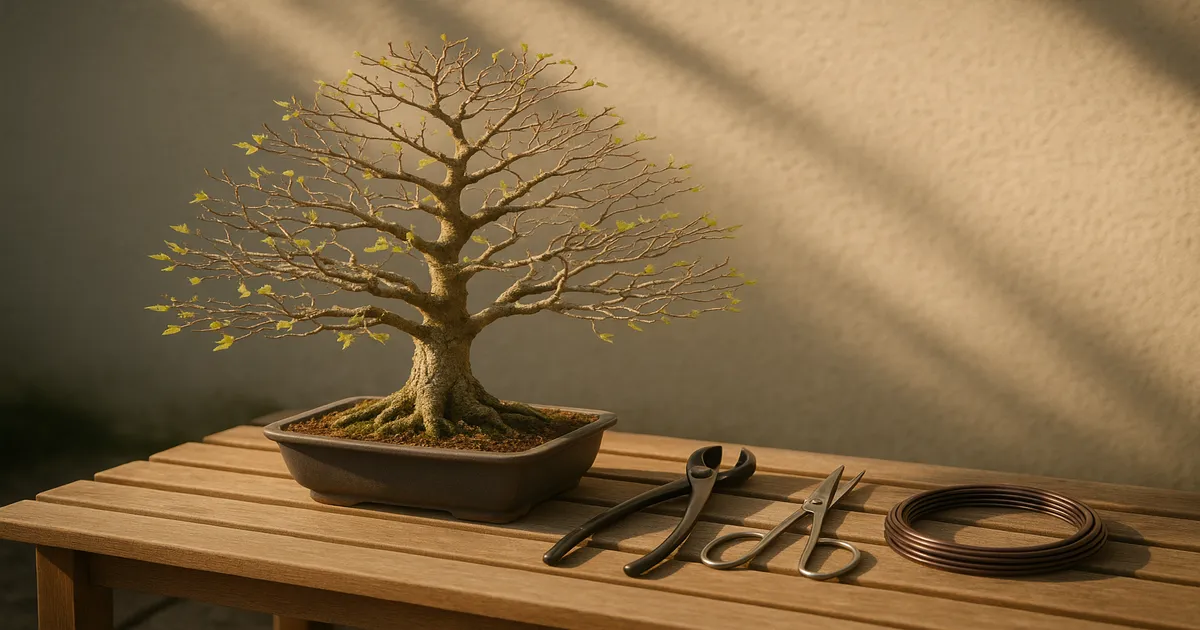
Quick Answer: The two best times to prune a hornbeam bonsai are late winter (February–March) for structural cuts before bud break, and late spring (late May–early June) after the first flush of growth hardens off. A secondary maintenance window opens in mid-July to early August for refined trees. Exact timing shifts slightly depending on your USDA zone and whether you’re doing structural or maintenance work.
Knowing when to prune a hornbeam bonsai is just as important as knowing how. Get the timing wrong and you’ll waste the tree’s stored energy, trigger excessive sap bleeding, or leave new growth without enough time to harden before frost. Get it right and hornbeam rewards you with one of the finest ramification responses of any deciduous bonsai species.
Hornbeam Species: What You Need to Know Before Pruning
Key Hornbeam Species Used in Bonsai
The genus Carpinus offers several excellent bonsai candidates, each with slightly different characteristics:
- Carpinus betulus — European hornbeam; the most widely used in Western bonsai
- Carpinus japonica — Japanese hornbeam (Soro); highly prized in traditional Japanese practice
- Carpinus turczaninowii — Korean hornbeam; considered the gold standard for refined bonsai thanks to its naturally small leaves and dense ramification
- Carpinus laxiflora — Loose-flowered hornbeam; popular in Korean and Japanese collections
- Carpinus caroliniana — American hornbeam (musclewood); native to eastern North America and among the hardiest of the genus (Zones 3–9)
Growth Habit and Why It Affects Pruning Decisions
All hornbeam species share traits that directly shape pruning decisions. They grow at a moderate-to-slow pace, produce opposite branching, and back-bud exceptionally well when cut at the right moment. Short internodes and naturally fine twigs make them ideal for building refined branch structures — but only if you work with their growth rhythm rather than against it.
When to Prune a Hornbeam: The Full Seasonal Calendar
Understanding the hornbeam’s growth cycle is the key to choosing the right pruning window.
Spring Bud Break and the First Flush
As temperatures rise in early spring, hornbeam converts its stored winter energy into a rapid first flush of growth. New shoots can extend three to six nodes in just a few weeks. This is the tree’s most energy-intensive period, which is exactly why pruning during bud break is a mistake — you’re removing growth the tree already paid for.
Summer Hardening and the Second Flush
Once the first flush matures, leaves firm up and deepen in color. That hardening-off signals the tree has stabilized and can handle maintenance pruning. A well-timed cut at this stage triggers back-budding and typically produces a second flush within three to six weeks. Prune the second flush too late, and new growth won’t harden before autumn cold arrives.
Autumn Leaf Drop and Dormancy
Before dropping its leaves, hornbeam sets next year’s buds and enters dormancy — a non-negotiable period of cold rest essential to long-term health. Trees kept too warm over winter exhaust their energy reserves, which weakens their pruning response the following spring. Hornbeam is not an indoor tree; it needs genuine cold dormancy to thrive.
Structural Pruning: When to Make Major Cuts
Primary Window: Late Winter Before Bud Break (February–March)
Late winter is the best time to prune a hornbeam for any significant structural work. The vascular system is dormant, so sap bleeding is minimal. The leafless branch structure is fully visible. And because wounds begin healing the moment the growing season starts, the tree heals and grows simultaneously rather than sequentially.
What to do during this window:
- Remove dead, crossing, or redundant branches
- Reduce overly thick branches to improve taper
- Make directional cuts to redirect branch movement
- Perform jin work if desired
- Apply cut paste to any wound larger than ¼ inch (6 mm) in diameter
Use a quality concave branch cutter for all significant cuts — the concave profile encourages callus to roll inward and eventually produce a flush surface, which is far more aesthetically pleasing than a flat stub. A well-made Japanese cutter like the Kaneshin No. 2 Concave Branch Cutter holds an edge well and makes clean cuts through hornbeam’s relatively hard wood.
Secondary Window: After Leaf Drop in Autumn (October–November)
Autumn is a useful time to evaluate structure and remove branches that became obvious problems during the growing season. That said, wounds heal more slowly in autumn than in late winter, and in Zones 5–6, large cuts don’t have enough time to begin closing before hard dormancy sets in. Reserve major structural work for late winter and use this window for light thinning only.
Wound Care After Heavy Cuts
Small cuts under ¼ inch typically callus over within one to two growing seasons without intervention. Larger cuts need sealant. Traditional Kiyonal paste is the standard choice; Lac Balsam is a solid modern alternative. Expect cuts over ½ inch to take three to five years to fully close. Keeping the tree well-fed and in strong health is the single best way to maximize healing speed.
Maintenance Pruning: Building Ramification Through the Season
Primary Refinement Window: Late Spring After the First Flush Hardens
Late May to early June (Zones 5–7) is the most important maintenance pruning of the year. By this point, new shoots have extended three to six nodes beyond the desired silhouette and leaves have shifted from soft, light green to firm, darker green — the reliable visual cue that the flush has hardened.
Cut new shoots back to one or two leaves using sharp, clean scissors. This triggers back-budding on older wood, which is the primary mechanism for building dense ramification over time. A second flush typically emerges within three to six weeks.
Secondary Refinement Window: Midsummer Second Flush
Once the second flush hardens — typically mid-July to early August — you can repeat the same technique. This step is optional for trees still in development but important for exhibition-quality trees where tight canopy density matters. In Zones 5–6, stop pruning by mid-August so new growth has time to harden before the first frost. Growers in Zones 7–8 can push this to early September.
Ongoing Pinching for Exhibition-Quality Trees
For highly refined trees, finger-pinching is a continuous practice rather than a scheduled event. When new shoots reach three to four leaves, pinch off the growing tip between thumb and forefinger. No tool needed, no visible wound left behind — it’s the gentlest way to maintain a tight silhouette through the growing season.
Pruning Timing by USDA Zone
| Zone | First Flush Prune | Second Flush Prune | Stop Pruning By |
|---|---|---|---|
| 3–4 | Early–mid June | Late July | Early August |
| 5–7 | Late May–early June | Mid-July to early August | Mid-August |
| 7–8 | Mid-May | Mid-July | Early September |
Branch Selection Principles
Dealing With Opposite Branching
Hornbeam naturally produces opposite branching — two branches emerging from the same node on opposite sides. For refined bonsai, remove one branch from each opposite pair to create a more naturalistic, alternating structure. Keep whichever branch has better placement, movement, and taper.
Preserving Taper and Avoiding Bar Branches
Hornbeam branches taper beautifully on their own. Protect that quality by cutting cleanly rather than leaving blunt stubs. When reducing a branch, always cut back to a smaller side branch or bud so the taper continues naturally.
A bar branch — two branches at exactly the same height on opposite sides of the trunk — looks mechanical and unnatural. Always remove or reposition one. Aim for branches distributed at varying heights and angles around the trunk, creating three-dimensional depth when viewed from any angle.
Wiring Hornbeam: Timing and Technique
When and How to Wire
Late winter to early spring (February–March), before bud break, is the optimal wiring window. Branch structure is fully visible and there’s no foliage to work around. Wiring can also be done in autumn after leaf drop for the same reasons.
Aluminum wire is strongly preferred over copper for hornbeam. Hornbeam bark is relatively thin and delicate, and aluminum’s softer grip reduces the risk of scarring. Use these gauges as a starting point:
- Primary branches: 3.5–4.0 mm aluminum
- Secondary branches: 2.0–3.0 mm aluminum
- Tertiary branches: 1.0–1.5 mm aluminum
- Fine ramification: 0.8–1.0 mm aluminum
Good-quality aluminum wire holds its set without the bite risk of copper — Roshi aluminum bonsai wire is a reliable, widely available option.
Check wired branches every two to three weeks during the growing season and remove wire at the first sign it’s cutting into the bark. If you need to rewire, wait a few weeks before reapplying to the same branch.
Supporting Care: Soil, Watering, and Light
Soil Mix for Post-Pruning Recovery
A well-draining mix is the foundation of good recovery after pruning. The standard recommendation is a 50/30/20 blend of akadama, pumice, and lava rock. This ratio balances moisture retention with the drainage and aeration hornbeam roots need to stay healthy and responsive.
Watering After Pruning
After heavy pruning, the tree needs consistent moisture but not waterlogged roots. The reduced leaf mass means the tree transpires less, so it dries out more slowly than usual. Water thoroughly when the top half-inch of soil begins to dry, and never let the root ball dry out completely.
Light for Back-Budding Success
At least six hours of direct sunlight per day is essential for triggering strong back-budding after maintenance pruning. Insufficient light produces leggy growth, wide internodes, and a weak ramification response. In climates where summer temperatures regularly exceed 90°F (32°C), morning sun with afternoon shade is the practical compromise.
One scheduling note worth repeating: never repot and heavily prune in the same session. Space these operations at least four to six weeks apart to avoid overwhelming the tree with simultaneous root and crown stress.
Common Pruning Mistakes to Avoid
Pruning during active spring growth or extreme heat. Cutting during bud break wastes energy the tree already invested. Pruning when temperatures exceed 90°F (32°C) compounds heat stress with pruning stress — a combination hornbeam handles poorly.
Removing too much foliage at once. Never remove more than 30% of the foliage in a single session. Exceeding this threshold can fatally weaken the tree, particularly if it was already under stress from drought, root issues, or a recent repot.
Pruning too late in cold climates. In Zones 5–6, any pruning after mid-August risks leaving new growth without enough time to harden before frost. That soft growth will die back over winter, negating the work you did and potentially damaging adjacent buds.
Skipping wound care on large cuts. Leaving cuts larger than ¼ inch unsealed invites fungal disease and slows callus development. It takes five seconds and meaningfully improves healing outcomes.
Treating hornbeam as an indoor tree. It isn’t. Keeping it warm year-round prevents the dormancy it needs, and the decline is slow enough that many growers don’t connect cause to effect until significant damage is done.
Frequently Asked Questions About When to Prune a Hornbeam
Can you prune a hornbeam bonsai in winter?
Yes — late winter (February to early March) is actually the best time for structural pruning. The tree is dormant, sap flow is minimal, and the leafless branch structure gives you a clear picture of what needs to change. Avoid the coldest weeks of deep winter, and apply wound sealant to any cut larger than ¼ inch.
How do I encourage back-budding on a hornbeam bonsai?
Prune new shoots back to one or two leaves after the first spring flush has hardened — typically late May to early June in Zones 5–7. Combine this with at least six hours of direct sunlight daily and a healthy root system. Hornbeam is one of the best back-budding deciduous species available; given the right conditions, the response is usually strong and reliable.
How much can you prune a hornbeam at one time?
No more than 30% of the total foliage in a single session. For structural work, spread heavy cuts over multiple seasons rather than attempting a dramatic transformation in one go. Hornbeam is forgiving compared to many species, but removing too much at once can fatally stress the tree, especially if it was already weakened.
When should I stop pruning my hornbeam before winter?
In Zones 5–6, stop all pruning by mid-August. In Zones 7–8, light maintenance pruning can continue until early September. After that cutoff, leave the tree alone and let it prepare naturally for dormancy — any new growth stimulated too late in the season will die back over winter.
What is the difference between structural pruning and maintenance pruning for hornbeam?
Structural pruning establishes the primary branch framework — removing crossing branches, reducing thick limbs, and making major directional cuts. It’s done in late winter before bud break. Maintenance pruning refines the existing structure by cutting back new shoots to build ramification and control silhouette. It happens during the growing season, primarily after the first and second flushes harden off.