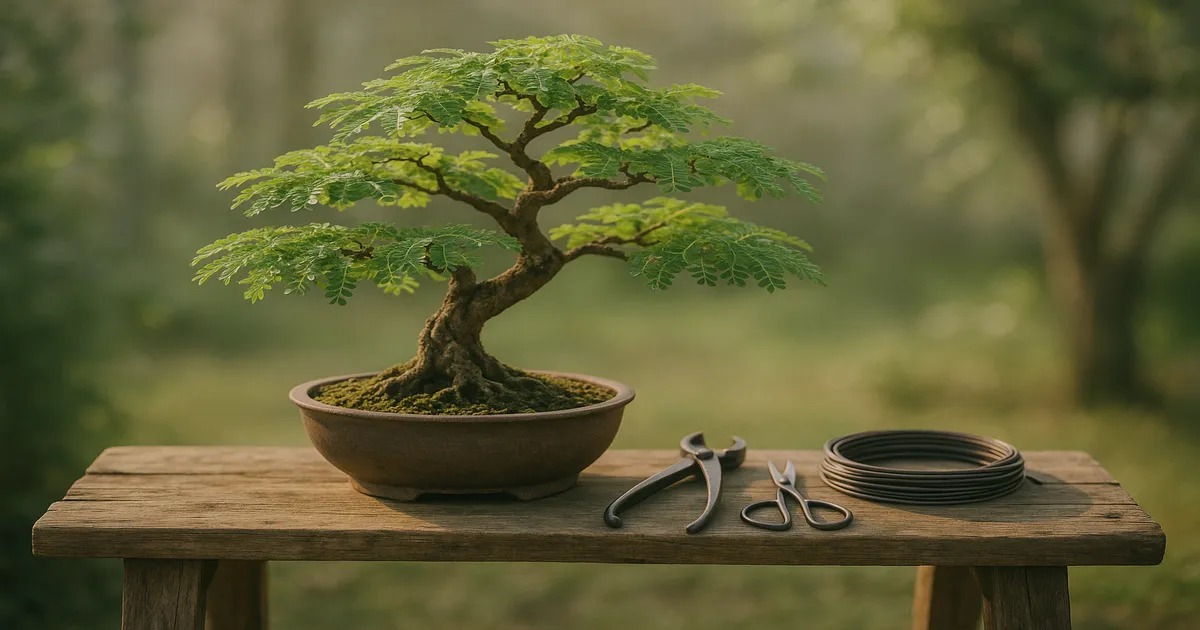
Quick Answer: Maintenance pruning on a Brazilian rain tree bonsai runs throughout the entire growing season — roughly May through September — every 3–6 weeks whenever new shoots extend 4–6 leaves beyond the desired silhouette. Structural pruning is best done in late spring to early summer (April–June) after the first growth flush hardens. Avoid pruning in late fall, winter, immediately after repotting, or during any period of heat or pest stress.
Knowing when to prune Brazilian rain tree bonsai makes the difference between a tree that refines steadily and one that stalls or scars. Chloroleucon tortum — the species almost universally sold as “Brazilian rain tree” or BRT in the bonsai hobby — is a vigorous, multi-flush grower that rewards frequent, well-timed cuts. Get the timing right and it practically builds ramification for you. Get it wrong and you’re fighting slow healing, poor back-budding, or a tree that spends the summer recovering instead of growing.
When to Prune Brazilian Rain Tree Bonsai: Maintenance vs. Structural Cuts
Understanding the difference between maintenance pruning and structural pruning is the first step. They have different goals, different timing, and different techniques. Conflating the two is one of the most common mistakes newer BRT growers make.
Maintenance Pruning: Timing and Technique
The maintenance pruning window runs from late spring through early fall — approximately May through September in the Northern Hemisphere. During this period the tree pushes new growth continuously, and your job is to stay just ahead of it. Because BRT can complete 3–5 flushes in a single season, you’ll likely be pruning every 3–6 weeks at peak.
The trigger is simple: when new shoots have extended 4–6 leaves beyond the desired silhouette, it’s time to cut. Don’t wait for those shoots to lignify. Cutting soft green growth is easier, heals faster, and generates a stronger back-budding response than cutting mature wood.
Step-by-step maintenance technique:
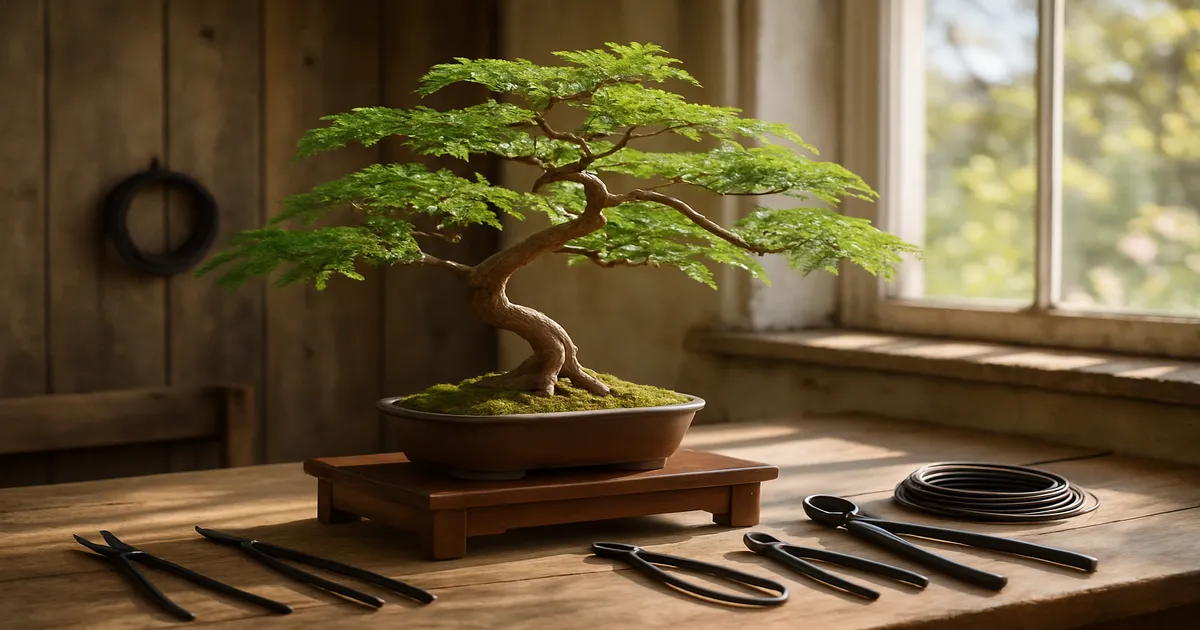
- Select your tool. Sharp bonsai scissors handle most shoot trimming — a quality pair like the Masakuni 8003 will last decades with proper care. Switch to concave cutters for anything thicker than a matchstick. (Kaneshin No. 2 175mm)
- Cut just above a node at a slight angle, leaving 1–2 leaf pairs beyond the last branch point you want to keep.
- Remove water shoots — the straight, vigorous vertical shoots that drain energy without contributing to the design.
- Clear the interior. Eliminate downward-growing branches, crossing branches, and any growth crowding the canopy center.
- Step back regularly and assess the silhouette. It’s easy to over-prune one side while ignoring the other.
Morning is the best time to prune. Cut surfaces dry slightly before evening humidity rises, which reduces the risk of fungal issues on exposed tissue. Skip pruning on days above 100°F (38°C) — the tree is already under physiological stress and healing will be compromised.
Structural Pruning: Building the Branch Framework
Structural pruning — removing or significantly shortening primary and secondary branches to establish the tree’s long-term framework — belongs in the April through June window. Specifically, wait until after the first spring growth flush has hardened: shoots have lignified, leaves have reached full size, and the tree is visibly energized.
High metabolic activity in late spring means the tree produces callus tissue at its fastest rate of the year. A ¼-inch cut made in May can fully seal in as little as 4–8 weeks. Make the same cut in November and you might still be looking at an open wound in February, with moisture and pathogens having months to cause trouble.
Avoid structural pruning during these conditions:
- Late fall and winter (cold slows callus formation dramatically)
- Immediately after repotting (roots need the canopy intact to fuel recovery)
- During pest or disease episodes
- During extreme heat above 100°F (38°C)
When deciding which branches to remove, prioritize:
- Bar branches — two branches at the same height on opposite sides of the trunk; remove one
- Crossing branches — especially those crossing the front of the trunk
- Front-facing branches — branches growing directly toward the viewer flatten the design
- Parallel branches — branches running in the same direction at the same level on the same side
One bonus with BRT: its wood is dense enough to take deadwood work well. Branches removed during structural pruning can be stripped and treated with lime sulfur to create jin, adding age and character to the design rather than going straight to the compost.
Back-Budding: What to Expect After Pruning
Back-budding is one of BRT’s most celebrated traits. Hard pruning into older wood reliably activates dormant buds along the trunk and major branches, giving you fresh growth in exactly the places you want it. Under good conditions, back-buds appear within 2–4 weeks of pruning.
To maximize the response, prune hard in late spring and then push the tree’s energy as high as possible:
- Light: Move the tree into its brightest outdoor position — 6–8 hours of direct sun drives the strongest response.
- Water: Maintain consistent moisture. Dry spells immediately after pruning stall bud break.
- Fertilizer: Keep up a balanced fertilization program. A nitrogen-depleted tree won’t invest energy in new buds.
This back-budding response, combined with consistent pruning, is the entire engine of ramification development in BRT. It’s what allows the species to build the dense, cloud-like foliage pads that define the best specimens in the hobby.
Wound Healing and Post-Pruning Care
BRT heals quickly by tropical bonsai standards. During peak growing season, a cut ¼ inch (6 mm) in diameter can callus over in 4–8 weeks. Larger cuts take proportionally longer, but the rate is still impressive compared to many species.
Apply wound sealant only to cuts larger than ¼ inch (6 mm). Smaller cuts heal cleanly on their own. For larger wounds, apply immediately after cutting to prevent desiccation and block pathogen entry. Kiyonal cut paste is the standard choice among serious practitioners; most bonsai-specific cut pastes work well. Petroleum jelly is a serviceable backup if nothing else is available.
One product to avoid on fresh cuts: lime sulfur. It’s a desiccant and will damage living tissue at the wound margins. Reserve it for deadwood work only.
Check large cuts every 2–3 weeks. If the sealant cracks or falls away before callus has formed, reapply. A tree that’s slightly stressed from drought or nutrient deficiency will heal noticeably slower, so maintain your regular watering and fertilization schedule throughout.
Wiring Brazilian Rain Tree Bonsai
When and How to Wire
Two windows work well for wiring. The first — and generally preferred — is late winter to early spring, before new growth emerges. Branches are fully visible, and you can position the tree to take advantage of the entire growing season ahead. The second window opens in early summer after the first flush hardens, when new growth is flexible but no longer actively extending.
Avoid wiring during active growth flushes — wire bites in almost immediately on soft, extending shoots. Never wire immediately after repotting.
Aluminum wire is the default choice for BRT. It’s softer and less likely to cut into this species’ relatively thin bark. Copper provides more holding power for heavy structural branches but demands more careful monitoring. Apply wire at a 45-degree angle, wrapping in the direction of the intended bend. For branches larger than ½ inch (12 mm) where significant bending is needed, wrap the branch in raffia before wiring to protect the bark.
Wire gauge guide:
- Fine shoots: 1.0–1.5 mm aluminum
- Small branches (up to ¼ inch / 6 mm): 2.0–2.5 mm aluminum
- Medium branches (¼–½ inch / 6–12 mm): 3.0–3.5 mm aluminum or 1.5–2.0 mm copper
- Heavy structural branches: 4.0–5.0 mm aluminum or 2.5–3.0 mm copper
Preventing Wire Scars
BRT grows fast during warm months, and wire can bite into bark in as little as 4–8 weeks during peak season. Check every wired branch every 2–3 weeks without fail. Remove wire by cutting it in sections rather than unwinding — unwinding risks snapping branches or tearing bark. If wire has already begun to bite, remove it immediately. Minor scarring will fade; deep wire scars are permanent.
Light, Temperature, and Conditions That Affect Pruning Timing
Six to eight hours of direct sun drives BRT’s vigorous multi-flush growth — and by extension, makes frequent pruning necessary. A tree getting only 4–5 hours will push slower, longer flushes with more stretched internodes. You’ll prune less often but get poorer ramification. Outdoor placement during the growing season isn’t just preferred; it’s the foundation of quality development.
The tree’s optimal growing range is 65–95°F (18–35°C). Once nighttime temperatures drop toward 45–50°F (7–10°C), leaf drop signals the end of the active growing season and the close of the pruning window. BRT has zero frost tolerance — a single light frost can cause serious dieback. In USDA Zones 10b–12 (South Florida, Hawaii), the tree can remain outdoors year-round. Zone 9b and below requires indoor overwintering before temperatures approach 50°F (10°C).
Indoor growers using high-output LED grow lights at 14–16 hours per day can extend the effective growing and pruning season. Even so, BRT benefits from a slight winter rest with reduced watering and fertilization. Don’t push year-round aggressive pruning just because the tree is under lights — let it slow down for 8–10 weeks in winter.
Frequently Asked Questions
Can I prune Brazilian rain tree bonsai in winter?
Avoid it. Cold temperatures slow callus formation dramatically, and open wounds in winter invite fungal infection and dieback. The one exception: remove clearly dead or diseased material at any time of year, since leaving it creates more risk than removing it does.
How often should I prune Brazilian rain tree bonsai?
During the growing season, every 3–6 weeks — triggered by new shoots extending 4–6 leaves beyond the silhouette. A tree in full sun during peak summer may need attention every 3 weeks. A tree in partial shade or during a cooler stretch might go 5–6 weeks between sessions.
Why is my Brazilian rain tree bonsai not back-budding after pruning?
The most common culprits are insufficient light and temperatures that are too low. BRT needs strong, direct sun and warm conditions to activate dormant buds. Less commonly, pruning into very old wood with no viable dormant buds will produce no response — focus cuts on areas where you can see old bud scars or existing back-buds. Consistent fertilization matters too; a nutrient-depleted tree simply won’t have the energy to push new growth.
Should I use wound sealant every time I prune Brazilian rain tree bonsai?
No — only for cuts larger than ¼ inch (6 mm). The small cuts made during routine maintenance pruning heal quickly without help. Applying sealant to every tiny cut is unnecessary and can trap moisture against the cut surface if applied carelessly.
Can I prune and repot Brazilian rain tree bonsai at the same time?
Strongly avoid it. Repotting stresses the root system significantly, and the tree depends on its canopy to photosynthesize and fuel root recovery. Removing a large portion of the canopy at the same time doubles the stress and can push the tree into serious decline. Space repotting and structural pruning at least 4–6 weeks apart — repot first in early spring, let the tree stabilize, then prune once it’s pushing vigorous new growth.