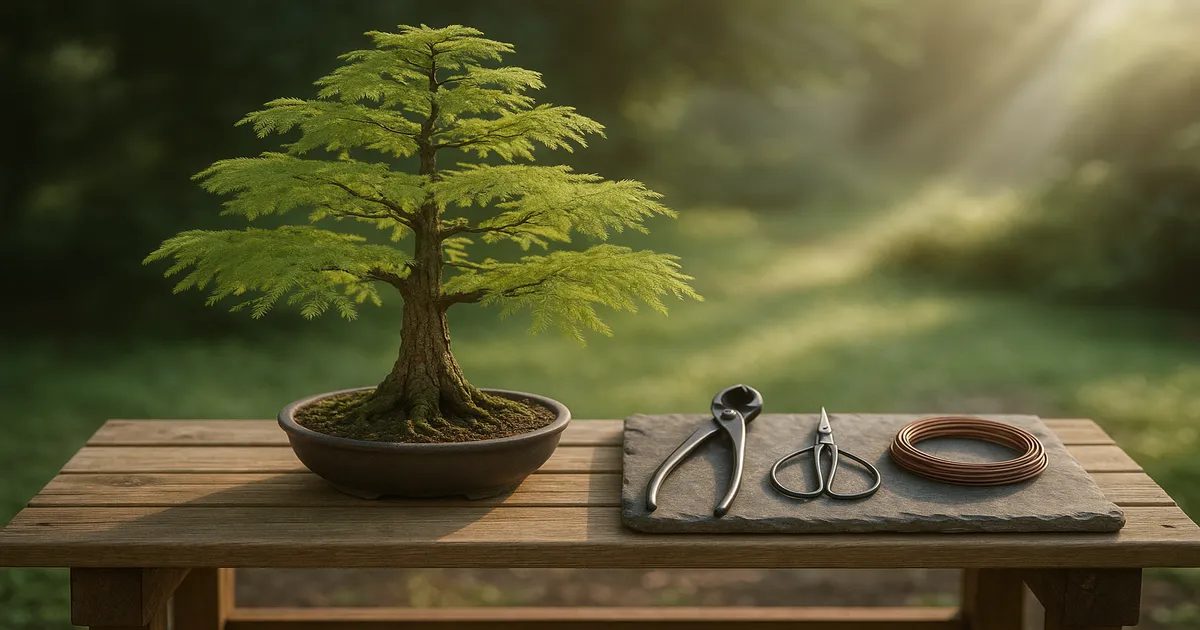
Quick Answer: The best time for structural pruning of bald cypress bonsai is late February through early March (Zones 6–7), when the tree is leafless but vascular activity is just beginning. Maintenance pruning runs from late spring through late August, timed to the two seasonal growth flushes. A full month-by-month calendar is below.
When to Prune Bald Cypress Bonsai: The Core Windows
Knowing when to prune bald cypress bonsai is the single biggest factor in getting clean wounds, strong back-budding, and fast recovery. Get the timing wrong and you risk frost damage to fresh cuts, weak regrowth, or losing lower branch structure entirely.
Structural Pruning: Late Winter to Early Spring
The primary structural window opens in late February and closes by mid-March in Zones 6–7. The tree is fully leafless — structure is completely visible — and the vascular system is just waking up. Wounds begin callusing before the spring growth rush, which is exactly what you want.
Maintenance Pruning: Late Spring Through Late Summer
Once the first growth flush extends to 3–5 nodes (roughly late April through May), maintenance pruning begins and continues through late August. A second window opens after the midsummer flush in late July to early August. After late August, put the scissors down — full stop.
Understanding Bald Cypress Growth: Why Timing Matters
Taxodium distichum is one of a tiny handful of deciduous conifers, and that single fact shapes everything about pruning timing. Unlike a juniper or pine, bald cypress drops all its feathery needles each autumn, leaving bare branches through winter — which is actually a gift for the bonsai artist.
Because the tree goes fully bare, you get a clear view of branch structure during dormancy that most conifers never offer. That visibility makes late-winter structural work far more precise. Pond cypress (T. distichum var. imbricarium) is worth noting here — its naturally smaller foliage and tighter internodal spacing make it an increasingly popular choice for refined work.
Two Growth Flushes Per Season
Bald cypress produces two distinct growth surges each year:
- First flush: April–May — vigorous extension of new shoots
- Second flush: July–August — typically less explosive but still significant
Both flushes create pruning opportunities. Miss them and shoots quickly become leggy, internodes stretch, and the silhouette loses definition.
The species also has strong apical dominance — upper branches will always outpace lower ones if left unchecked. Compensatory pruning (cutting upper branches harder than lower ones) is essential, not optional. The good news: bald cypress back-buds reliably after pruning, even on older wood, giving you real design flexibility.
Structural Pruning: Timing, Technique, and What to Remove
The Late-Winter Sweet Spot
Pruning in late February to early March hits a biological sweet spot. The tree is still leafless, so every branch junction is visible. At the same time, sap is beginning to move — wounds callus faster than they would in deep dormancy, and new buds push from below cuts within weeks.
Pruning in mid-winter (December–January) isn’t catastrophic, but wounds sit exposed longer before healing begins. Pruning after buds break wastes the tree’s energy on growth you immediately remove. The brief wait until late February makes a meaningful difference.
Secondary Structural Pruning in Midsummer
A second structural window opens in late June to mid-July after the first flush has hardened off. Seeing the tree in full leaf helps you spot design problems that were invisible in winter. Avoid heavy structural work on any tree already stressed from heat, drought, or recent repotting.
Which Branches to Remove
During structural sessions, target:
- Crossing branches — create visual clutter and eventual bark damage
- Bar branches — two branches at the same height on opposite sides of the trunk
- Whorls — three or more branches from a single point
- Reverse-taper branches — thicker at the tip than at the base
- Downward-growing branches (unless intentionally used in a cascade design)
- Water shoots and suckers from the base or trunk — remove these promptly whenever they appear
Wound Care and Healing Expectations
Use concave cutters on any branch thicker than ¼ inch (6 mm). The slightly hollowed wound they create calluses flush with the surrounding bark rather than leaving a raised knob. Apply cut paste to every cut larger than ⅜ inch (1 cm) in diameter.
Set realistic expectations: wounds under ½ inch typically close within one to two years under good growing conditions. Cuts over 1 inch (2.5 cm) can take three to seven years to fully callus. Bald cypress heals, but it’s no maple — patience is part of the deal.
Maintenance Pruning: Keeping Your Bald Cypress Refined
When to Start and Stop
Begin maintenance pruning once new shoots reach 3–5 nodes — usually late April to May depending on your climate. The second window runs late July through early August after the second flush. The hard cutoff is late August in Zones 6–7 (early September in Zone 5, mid-September in Zones 8–9). Pruning after this point stimulates soft new growth that cannot harden before the first frost.
How to Cut New Shoots
Cut or pinch new shoots back to 1–2 pairs of needles using clean, sharp bonsai scissors. Cut just above a node — never leave a stub. Work progressively over two to three weeks rather than removing everything in a single session, which can stress the tree and cause dieback on weaker branches.
Balancing Strong and Weak Branches
This is where most beginners go wrong. Prune strong upper branches harder; go lighter on weaker lower branches. Apical dominance means the top of the tree will always try to take over. Treat every branch equally and the lower branches slowly starve, leaving you with all crown and no base.
Partial Defoliation for Energy Redistribution
Full defoliation is not appropriate for bald cypress — it can’t regenerate needles from bare wood the way a maple can. However, partial defoliation of 30–50% on the strongest branches in midsummer is a legitimate tool for redirecting energy toward weaker areas. Do this only on healthy, well-established trees.
Month-by-Month Bald Cypress Pruning Calendar
January–February: Assessment and Preparation
The tree is dormant and leafless — ideal for studying branch structure, photographing the design, and planning your spring cuts. No pruning yet, except in the final days of February when bud swell signals the structural window is opening.
March–May: Structural and Early Maintenance Work
| Period | Activity |
|---|---|
| Late Feb – mid-March | Primary structural pruning — remove unwanted branches, make major cuts |
| Late March – April | Buds break; watch for back-budding; no pruning until shoots extend |
| Late April – May | First maintenance pruning — cut shoots back to 1–2 pairs of needles as they reach 3–5 nodes |
June–August: Active Refinement Season
| Period | Activity |
|---|---|
| June – mid-July | Secondary structural pruning if needed; ongoing maintenance pruning |
| Late July – early August | Second maintenance window after the second flush extends |
| Late August | Final light maintenance cuts; stop all pruning |
September–December: Hands-Off Period
Growth hardens off in September. Needles shift to their characteristic russet-to-cinnamon color in October, and the tree enters dormancy by November. No pruning during this entire period. Use the time to assess design, plan wire placement, and prepare tools for the late-winter structural session ahead.
Wiring Bald Cypress Bonsai: Timing and Technique
Wire during or just after structural pruning in late winter. Bare branches make precise placement easy, and a full growing season sets the branch in its new position. The midsummer window (after the first flush hardens) is the second option — branches are slightly stiffer but still workable.
Critical warning: Check wire every two to three weeks during spring. Bald cypress grows vigorously and wire bites into bark faster than you’d expect. Wire cuts leave scars that take years to fade.
For wire gauge, aluminum works well for most applications:
- 1.0–1.5 mm: Fine secondary and tertiary branches, ramification work
- 2.0–2.5 mm: Primary branches and medium secondaries
- 3.0–4.0 mm: Heavy primary branches on large specimens
Copper wire is roughly 1.5× stronger than aluminum — use one gauge thinner than you would in aluminum. It’s good for stubborn branches but apply carefully to avoid bark damage. Bald cypress bark, especially on younger trees, is relatively soft. Wrap wire at a consistent 45-degree angle and never cross wires under tension. On branches you’re uncertain about, wrap with raffia before wiring for added protection.
Soil, Watering, and Light: Supporting Pruning Recovery
Soil Mix
A well-draining substrate that stays consistently moist is the goal. A reliable mix:
- 40% akadama (medium grade, 3–6 mm)
- 30% pumice (3–6 mm)
- 20% lava rock (3–6 mm)
- 10% decomposed granite or coarse sand (optional)
In hot, dry climates where daily watering is difficult, bump akadama to 50% and drop the granite. Unlike most bonsai species, bald cypress genuinely tolerates — and benefits from — consistently moist roots.
Watering and Light
Keep the tree well-watered in the days before any pruning session. A hydrated tree calluses wounds faster and pushes new buds more readily. After structural pruning in late winter, water sparingly until bud break — the tree isn’t transpiring yet. Once growth begins, water daily. During peak summer heat, placing the pot in a shallow water tray (1–2 inches / 2.5–5 cm deep) is one of the few situations in bonsai where that technique is genuinely appropriate.
Post-pruning recovery is directly tied to light. Aim for 6–10 hours of full sun daily. Less than six hours produces weak, elongated internodes and sluggish back-budding. In climates with sustained temperatures above 100°F (38°C), 30–40% shade cloth in the afternoon prevents desiccation without sacrificing the light-driven growth you need.
Troubleshooting Common Pruning Mistakes
Pruning too late in the season. Any pruning after late August in Zones 6–7 pushes tender new growth that won’t harden before frost. If you miss the window, leave the tree alone and plan for next season.
Over-pruning weak or lower branches. Lower branches receive less light and are already fighting apical dominance. Prune them as hard as the vigorous upper branches and you starve them of the energy they need to survive. Always prune strong branches harder than weak ones — it feels counterintuitive until you understand the biology.
Skipping wound sealant on large cuts. Leaving cuts over ⅜ inch unsealed doesn’t just slow callusing — it can allow the wound to dry and die back further into the branch, widening the scar you’re trying to minimize. Apply cut paste immediately after every significant cut.
Confusing seasonal needle drop with pruning stress. Every autumn, bald cypress needles turn russet-orange to cinnamon-brown and drop. This is completely normal — it’s what “bald” in bald cypress means. If the color change happens in October–November and the bare branches look firm and healthy, your tree is fine.
Frequently Asked Questions About Pruning Bald Cypress Bonsai
Can you prune bald cypress bonsai in winter?
Light structural assessment is fine in January and February, but active pruning is best saved for late February to early March when vascular activity is just resuming. Pruning in mid-winter leaves wounds exposed for weeks without healing. The brief wait makes a meaningful difference in callus formation.
How often should I prune a bald cypress bonsai during the growing season?
On a vigorous tree, maintenance pruning every three to four weeks during the growing season is typical. Watch the shoots rather than the calendar — prune when they reach 3–5 nodes. Young trees in development can go longer between sessions to build ramification; mature refined trees need more frequent attention to hold their silhouette.
Will bald cypress bonsai back-bud after hard pruning?
Yes — back-budding is one of the species’ strongest bonsai traits. Bald cypress back-buds readily on old wood when pruned during the correct windows, especially after late-winter structural pruning when the tree’s energy is about to surge into spring growth. This reliable response is a big part of what makes the species so well-suited to bonsai development.
Should I use wound sealant when pruning bald cypress bonsai?
Apply cut paste to any cut larger than ⅜ inch (1 cm) in diameter. Bald cypress doesn’t callus as aggressively as broadleaf deciduous trees, so protecting larger wounds matters. Use concave cutters to create a hollowed wound profile that calluses flush with the surrounding bark rather than leaving a raised knob.
Why are my bald cypress bonsai needles turning brown after pruning?
If it’s autumn (October–November), this is completely normal seasonal needle drop — not a pruning response. If browning occurs in summer shortly after pruning, the most likely causes are underwatering, heat stress, or root disturbance. Brown needles that feel crispy and drop from the tips inward point to drought; yellowing needles that persist suggest overwatering or poor drainage.