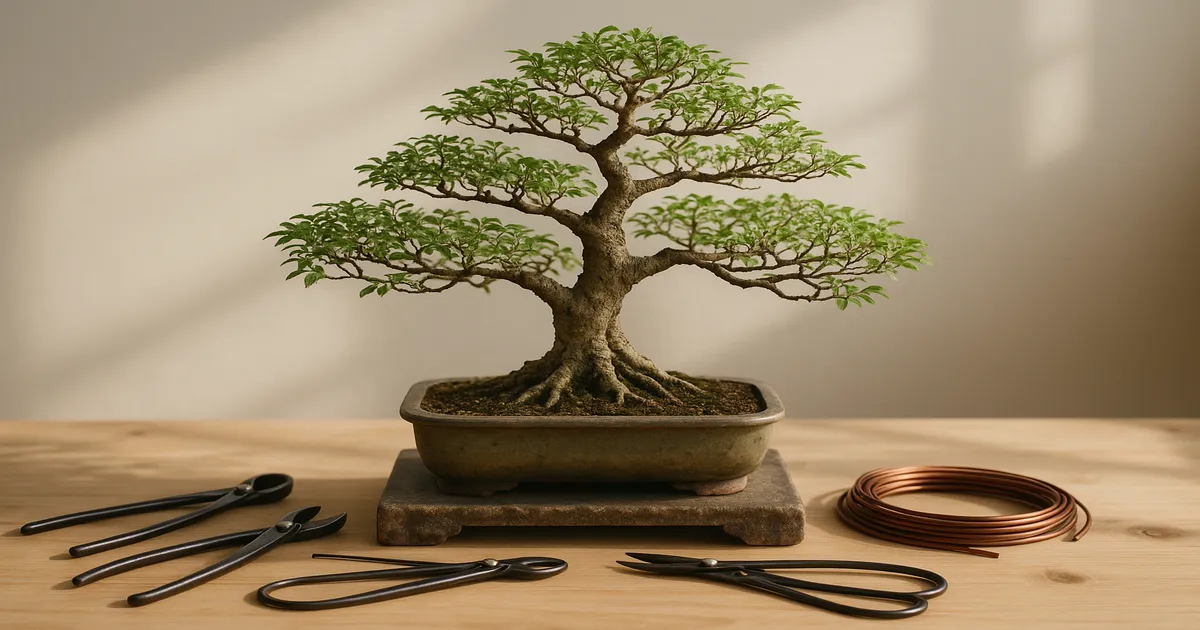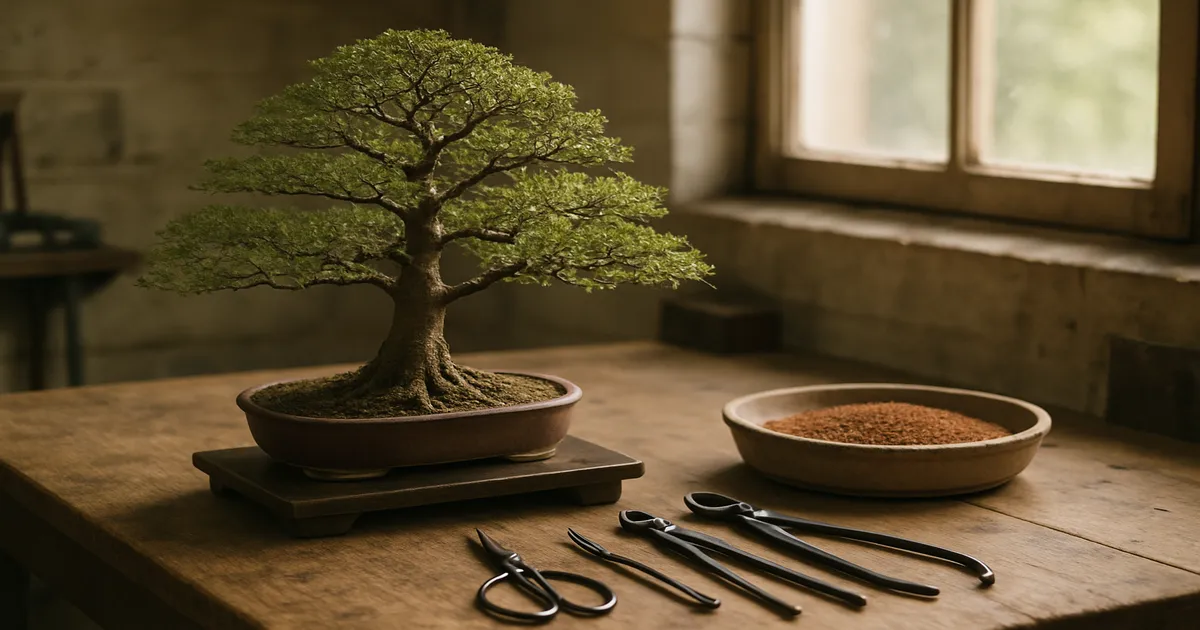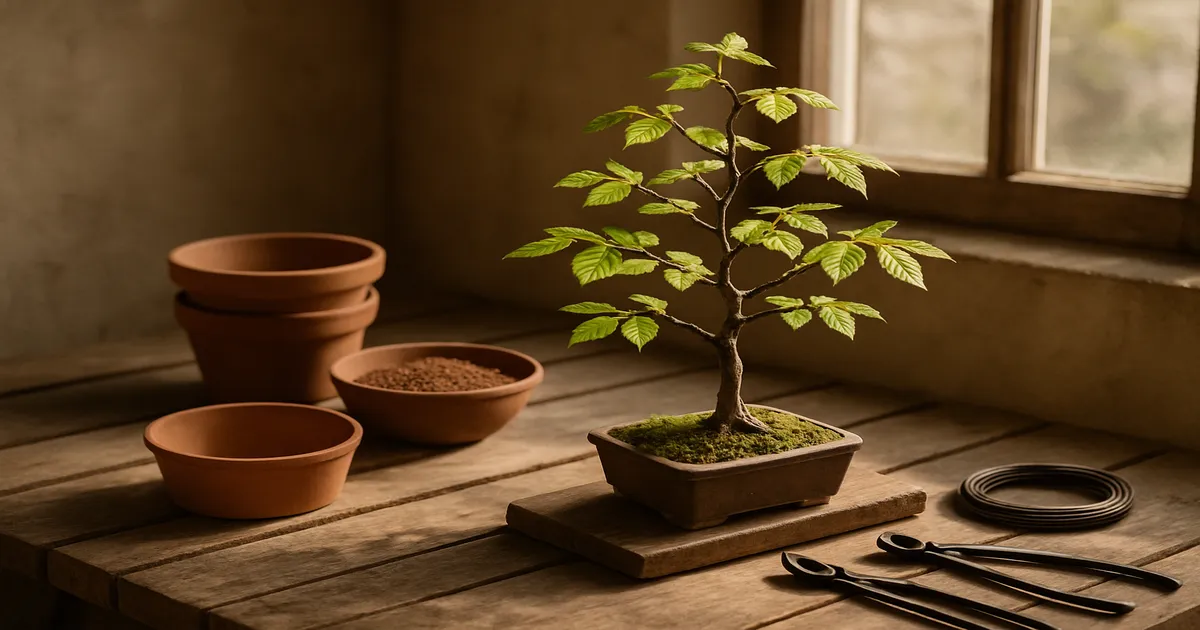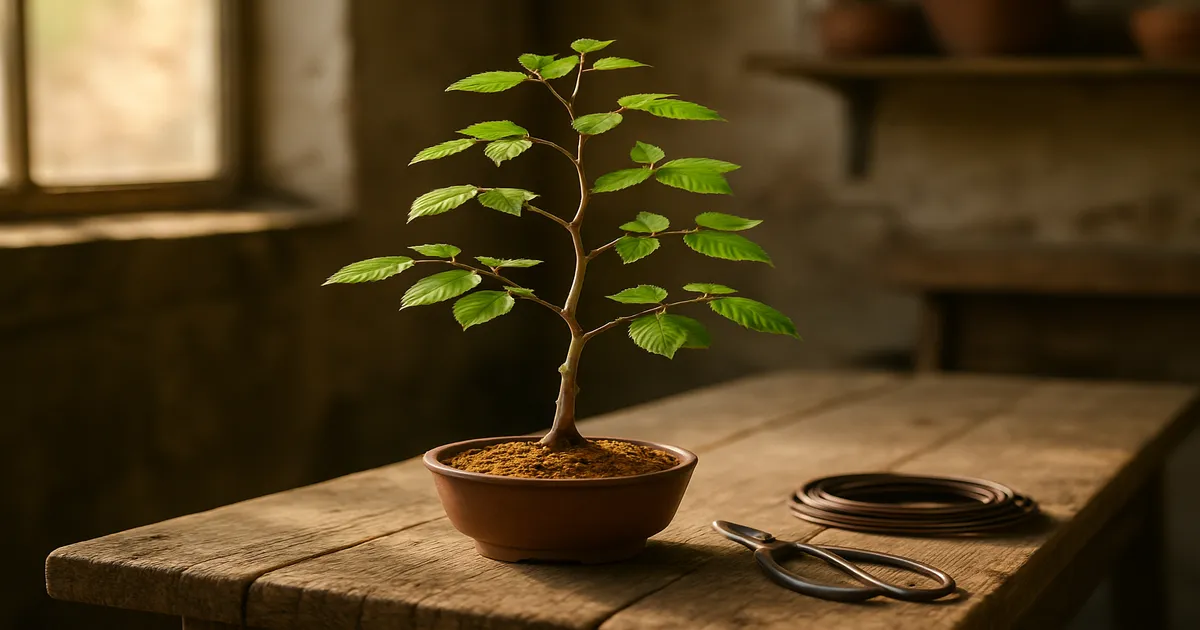
Quick Answer: Yes, you can absolutely bonsai a beech tree — and it’s worth serious consideration. Beech trees offer smooth silver-gray bark, exceptional fine-twig ramification, and a stunning winter display thanks to marcescence (the retention of dried leaves through winter). They’re strictly outdoor trees requiring genuine winter dormancy, but for temperate-climate growers, they rank among the finest deciduous bonsai subjects available.
If you’ve ever asked whether you can bonsai a beech tree, the answer is a confident yes. Beech (Fagus spp.) has been a cornerstone of European and Japanese bonsai traditions for good reason. The three species you’re most likely to work with are Fagus sylvatica (European Beech), Fagus crenata (Japanese Beech), and Fagus grandifolia (American Beech). All three share the qualities that make beech so rewarding: elegant bark, dense branching potential, and four distinct seasons of visual interest.
This guide covers species selection, soil mixes, pruning, wiring, and winter care.
Best Beech Species for Bonsai
Fagus sylvatica — European Beech
The most accessible choice for Western growers. F. sylvatica is widely available as nursery stock, reduces its leaves well with proper technique, and adapts readily to bonsai culture. Hardy in USDA Zones 4–7, it’s the natural starting point for growers in Europe or North America.
Fagus crenata — Japanese Beech
The traditional preference in Japanese bonsai. F. crenata naturally produces smaller leaves and more refined branching than its European cousin, which means less work to achieve a delicate, twiggy silhouette. Hardy in Zones 5–8, it can be harder to source outside Japan but is worth seeking out.
Fagus grandifolia — American Beech
The hardiest of the group (Zones 3–9), making it an excellent option for colder climates. Leaves are larger and take more effort to reduce, but the beautiful bark and strong structure make it a viable and underused bonsai subject.
Notable Cultivars Worth Growing
- ‘Purpurea’ (Copper/Purple Beech): Deep burgundy-red foliage through summer, fading to bronze in autumn.
- ‘Tortuosa’: Twisted, contorted branching with natural movement built in.
- ‘Dawyck’: Fastigiate (columnar) form that suits formal upright styling naturally.
Collected Specimens (Yamadori)
Wild-collected beech yamadori are among the most prized bonsai material available. Decades of natural growth produce nebari and trunk character that simply cannot be rushed in a pot. If you have the opportunity to collect legally — or purchase quality yamadori — it’s worth the investment.
Light, Temperature, and Hardiness for Beech Bonsai
Keeping Beech Outdoors Year-Round
Beech is a non-negotiable outdoor tree. Without genuine winter dormancy, a beech bonsai will gradually decline and typically die within one to three years of indoor cultivation. Brief indoor display during the growing season is fine for a day or two, but this tree needs the full seasonal cycle.
Sunlight Requirements
Aim for at least six hours of direct sunlight daily during the growing season. In Zones 4–6, full sun all day is well-tolerated and encourages leaf size reduction and compact growth. In Zones 7–8, morning sun with afternoon shade protects against leaf scorch and excessive soil drying. Avoid deep shade entirely — it produces elongated internodes, weak growth, and poor ramification.
USDA Hardiness Zones by Species
| Species | USDA Zones |
|---|---|
| F. sylvatica | 4–7 |
| F. crenata | 5–8 |
| F. grandifolia | 3–9 |
Winter Root Protection
The roots are your primary concern in winter, not the branches. Container roots are exposed to air temperatures on all sides — far more vulnerable than in-ground roots. Protect your tree when temperatures are forecast to drop below 23°F (-5°C) for extended periods.
The ideal dormancy temperature range is 28–40°F (-2–4°C). Good options include an unheated garage or shed with some ambient light, a cold frame with ventilation on mild days, or burying the pot to its rim in garden soil or deep mulch. Do not store beech in a heated space — breaking dormancy prematurely exhausts the tree’s energy reserves and sets it up for a difficult spring.
Soil Mix and Watering for Beech Bonsai
The Right Soil Mix
Beech needs excellent drainage with enough moisture retention to avoid drying out rapidly in summer. The standard base mix is 50% akadama, 25% pumice, and 25% lava rock. (Bonsai Jack Inorganic Bonsai Soil Mix) Target a slightly acidic pH of 5.5–6.5. Avoid peat-based mixes entirely — they compact over time, become hydrophobic when dry, and create the anaerobic root conditions that beech hates.
In hotter, drier climates (Zones 7–8), increase akadama to 60% and reduce lava rock to 15% to improve moisture retention. In cooler, wetter climates (Zones 4–5), drop akadama to 40% and increase pumice to 35% for better drainage.
Watering Through the Seasons
- Spring and early autumn: Water when the top ½ inch (1.3 cm) of soil begins to dry — typically once daily in warm weather.
- Summer peak: Small pots in full sun may need watering twice daily.
- Autumn: Gradually reduce frequency to harden growth before dormancy.
- Winter dormancy: Water sparingly — roughly once every one to two weeks, just enough to prevent complete desiccation.
Always water thoroughly until it flows freely from all drainage holes. Rainwater is preferred; alkaline tap water above pH 7.5 can cause chlorosis over time.
Overwatering signs: yellowing leaves dropping prematurely, soft dark malodorous roots, wilting despite wet soil.
Underwatering signs: leaf edges browning from the margins inward, leaves curling, soil shrinking away from pot edges.
Pruning Beech Bonsai for Ramification and Structure
Maintenance Pruning
The goal of maintenance pruning is ramification — encouraging the tree to divide its branches into finer and finer twigs. After the first growth flush hardens in late spring, prune back to one or two leaves on each new shoot, cutting to an outward-facing bud. Beech responds beautifully to the clip-and-grow technique, making it less reliant on heavy wiring for refinement than many other species. Avoid heavy pruning in late summer — new growth stimulated that late won’t harden before frost.
Structural Pruning
Major structural work is best done in late winter just before bud break, or right after leaf drop in autumn. Use concave branch cutters to create slightly hollow wounds that callus more flush with the trunk. Apply wound sealant (Kiyonal Cut Paste) to any cut over ¼ inch (6 mm) in diameter. Never remove more than 30% of the canopy in a single session on an established tree; on weaker specimens, limit yourself to one major branch per season.
When selecting branches, alternate placement along the trunk and avoid opposite branches at the same height. Lower branches should be the longest and heaviest, tapering in both length and thickness as you move upward.
Wiring Beech Bonsai
Wire Type, Gauge, and Timing
Wire diameter should be approximately one-third the diameter of the branch being wired. Aluminum wire is recommended for beech — it’s gentler on the smooth, thin bark and easier to apply cleanly than copper.
| Branch size | Wire gauge |
|---|---|
| Fine twigs (under ¼ inch / 6 mm) | 1.0–1.5 mm |
| Secondary branches (¼–½ inch / 6–12 mm) | 2.0–2.5 mm |
| Primary branches (½–1 inch / 12–25 mm) | 3.0–4.0 mm |
| Young trunk | 4.0–6.0 mm |
The best wiring window is late autumn through early spring while the tree is dormant. Branches are flexible, wire placement is clearly visible, and slow dormant growth reduces the risk of wire cutting in quickly. Never wire during the initial spring growth flush — bark is at its most tender and wire can bite into beech within days.
Monitoring and Removal
Check wire every two to three weeks during the growing season without exception. Always cut wire off in short segments — never unwind it from a set branch, which risks snapping brittle wood and twisting bark. If wire has already bitten in, remove it immediately and treat any damage with wound sealant.
Repotting Beech Bonsai
Frequency and Timing
Young developing trees (under 10 years in training) need repotting every two to three years. Mature refined specimens can go three to five years between repots. Repot regardless of schedule if roots are circling the pot, water drains very slowly, or the tree shows unexplained vigor decline.
The critical window is early spring as buds begin to swell but before they open — sometimes just one to two weeks. The tree’s energy is mobilized and ready to support root regeneration. Avoid repotting in summer, late autumn, or during full dormancy.
Root Pruning and Aftercare
Tease soil away from the root mass using a root hook or chopstick, working from the outside inward. Healthy beech roots are cream to light tan, firm, and slightly flexible. Remove dead, rotted, circling, or excessively long roots with clean cuts, retaining as much fine feeder root mass as possible.
After repotting, keep the tree in a sheltered, shaded spot for two to four weeks. Water carefully but don’t fertilize for the first month. A pot with roughly an inch (2.5 cm) of space around the root mass is ideal — oversized pots hold excess moisture and slow root development.
Styling and Aesthetics for Beech Bonsai
Beech’s natural growth habit — strong apical dominance, broad dome-shaped canopy, and fine branching — suits formal upright (chokkan) and informal upright (moyogi) styles particularly well. The species also excels in forest and group plantings, where multiple trunks create a woodland atmosphere and collective ramification becomes genuinely breathtaking over time.
Marcescence is one of beech’s most distinctive design assets. While most deciduous bonsai stand bare-branched from November to March, a beech bonsai glows with warm copper tones throughout the coldest months. Position the tree where it can be appreciated in winter light, and resist the urge to remove the retained leaves — they fall naturally as new buds push in spring.
For ‘Purpurea’ and similar colored-leaf cultivars, glazed pots in dark blue, gray, or slate work beautifully against the foliage. For green-leafed species, unglazed earth tones complement the silver bark far better.
Troubleshooting Common Beech Bonsai Problems
Leaf scorch and browning edges: Almost always caused by afternoon sun in hot climates, underwatering, or both. Move the tree to afternoon shade and review watering frequency before assuming disease.
Premature leaf drop: Usually points to overwatering and root rot. Check the roots — if they’re dark, soft, and smell unpleasant, remove damaged roots, repot into fresh well-draining mix, and reduce watering frequency.
Weak or leggy growth: Long internodes and pale growth indicate insufficient light. Move the tree to a sunnier position. Leggy growth also results from over-fertilizing with high-nitrogen feeds.
Pests and diseases: Aphids and scale are common on new spring growth; treat with insecticidal soap or neem oil. Powdery mildew appears as a white coating on leaves in humid, low-airflow conditions — improve air circulation and treat with a sulfur-based fungicide. Beech leaf disease, caused by the nematode Litylenchus crenatae, produces dark striping between leaf veins and is currently spreading in eastern North America; consult your local extension service if suspected.
Winter damage recovery: Scratch-test stems in early spring — green cambium means the branch is alive, brown means it’s dead. Prune dead wood back to living tissue, keep the tree sheltered, water carefully, and hold off fertilizing until new growth is clearly underway.
Frequently Asked Questions About Beech Bonsai
Can you bonsai a beech tree indoors?
No. Beech requires genuine outdoor winter dormancy to survive long-term. Indoor cultivation leads to gradual decline and usually death within one to three years. Brief indoor display during the growing season — a day or two at most — is acceptable, but beech is not a houseplant.
Is beech a good bonsai tree for beginners?
Beech is manageable for beginners who do their research, but it’s not the most forgiving starting point. It’s less tolerant of indoor placement and irregular watering than species like juniper or Chinese elm. That said, its strong response to pruning and beautiful seasonal character make it a rewarding choice once you understand its outdoor requirements.
How long does it take to develop a beech bonsai?
A collected yamadori can be display-ready within five to ten years of refinement work. Starting from nursery stock or a young seedling, expect fifteen to twenty-five years to develop genuine trunk girth, refined ramification, and mature bark character. Beech rewards patience more than almost any other deciduous species.
When should I fertilize a beech bonsai?
Begin fertilizing in spring once new growth is clearly underway. Use a balanced fertilizer through early summer, then switch to a low-nitrogen, high-phosphorus and potassium feed from midsummer onward to harden growth before dormancy. Stop fertilizing entirely by early autumn.
Why does my beech bonsai keep its leaves in winter?
That’s marcescence — a normal and desirable trait in beech. The dried, papery bronze leaves cling to the branches through winter and fall naturally as new buds push in spring. It’s one of the features that makes beech bonsai particularly attractive during the dormant season.