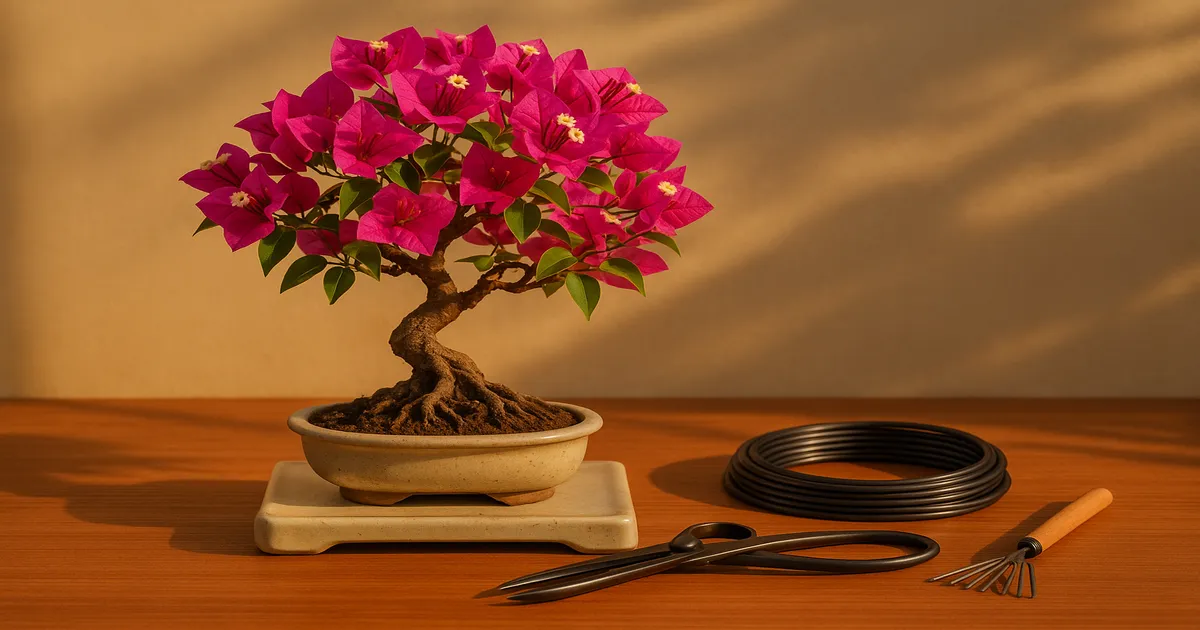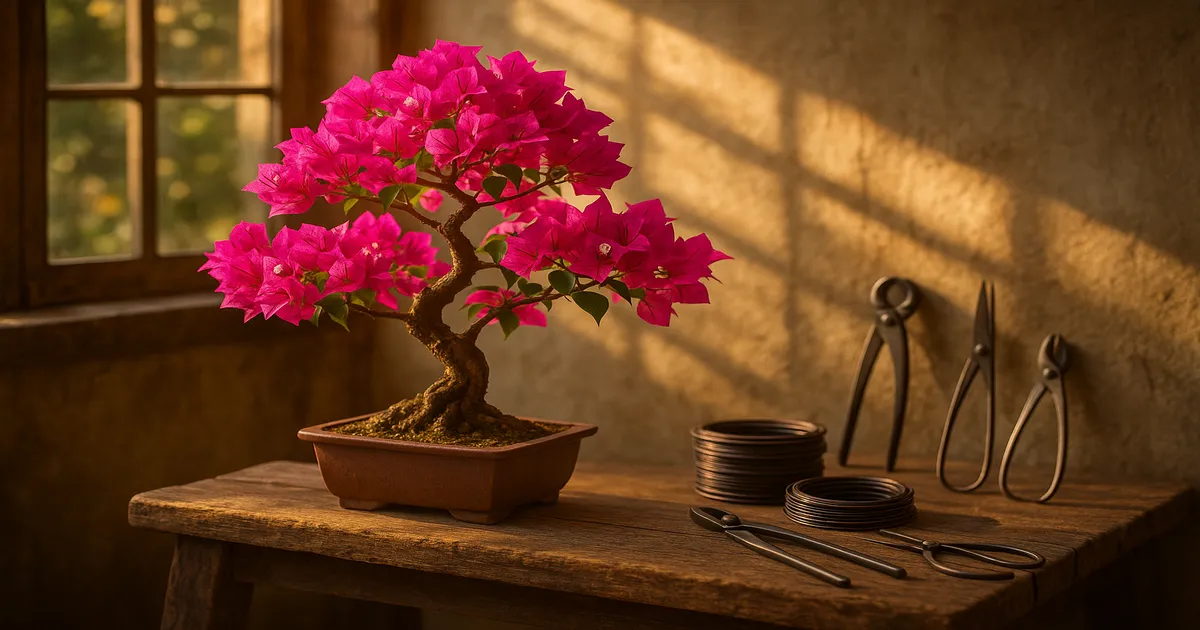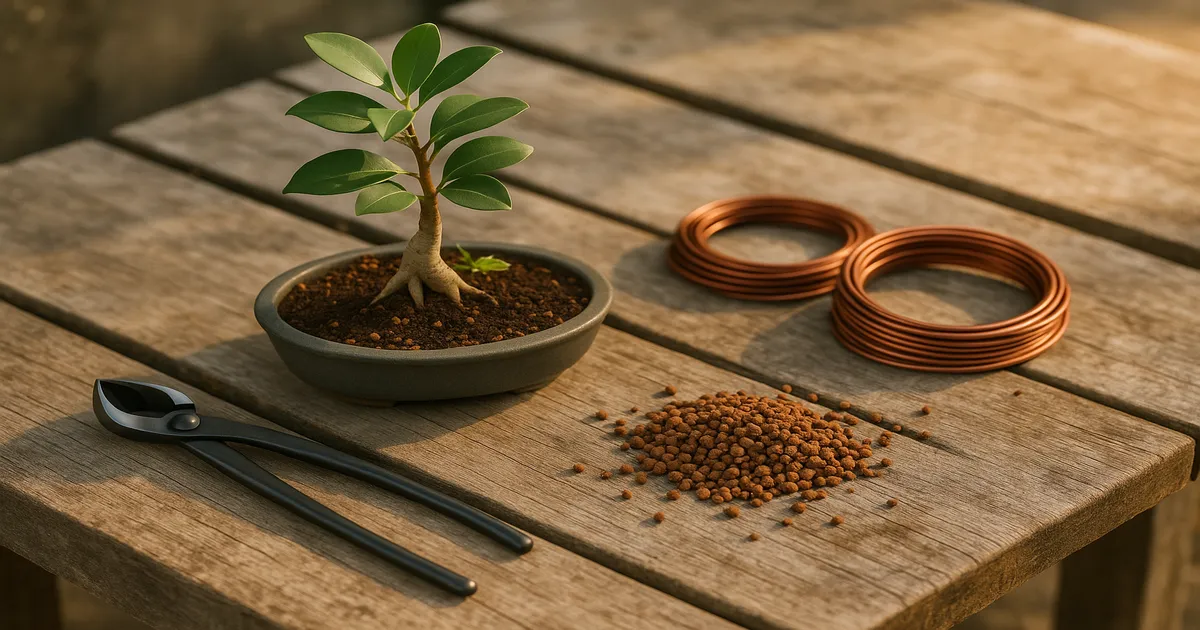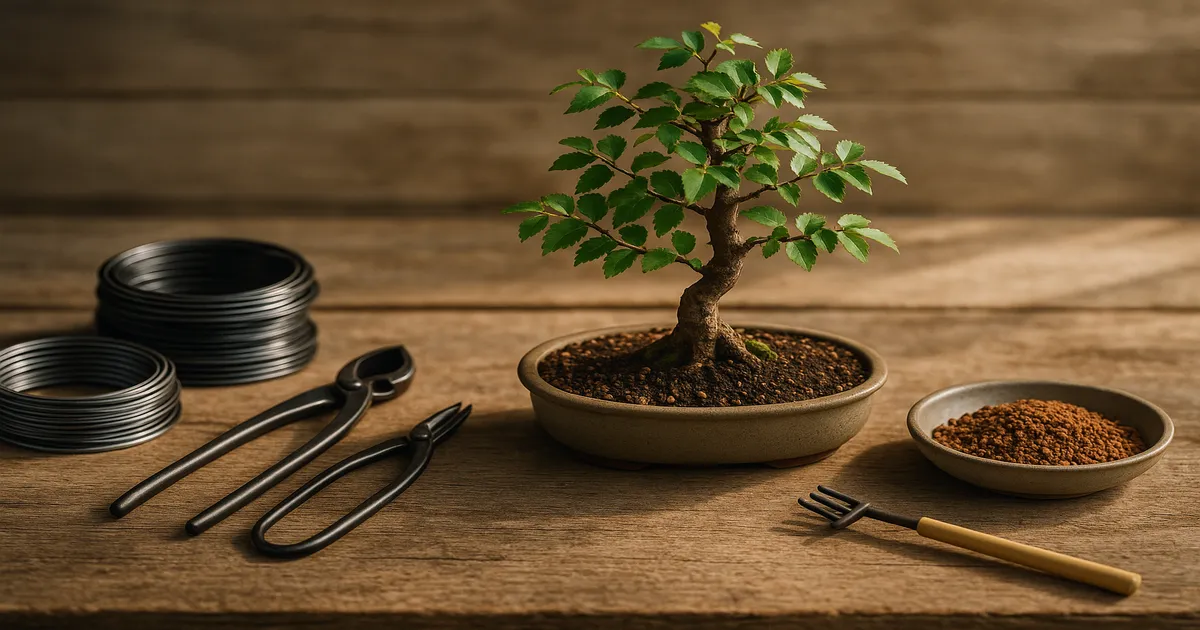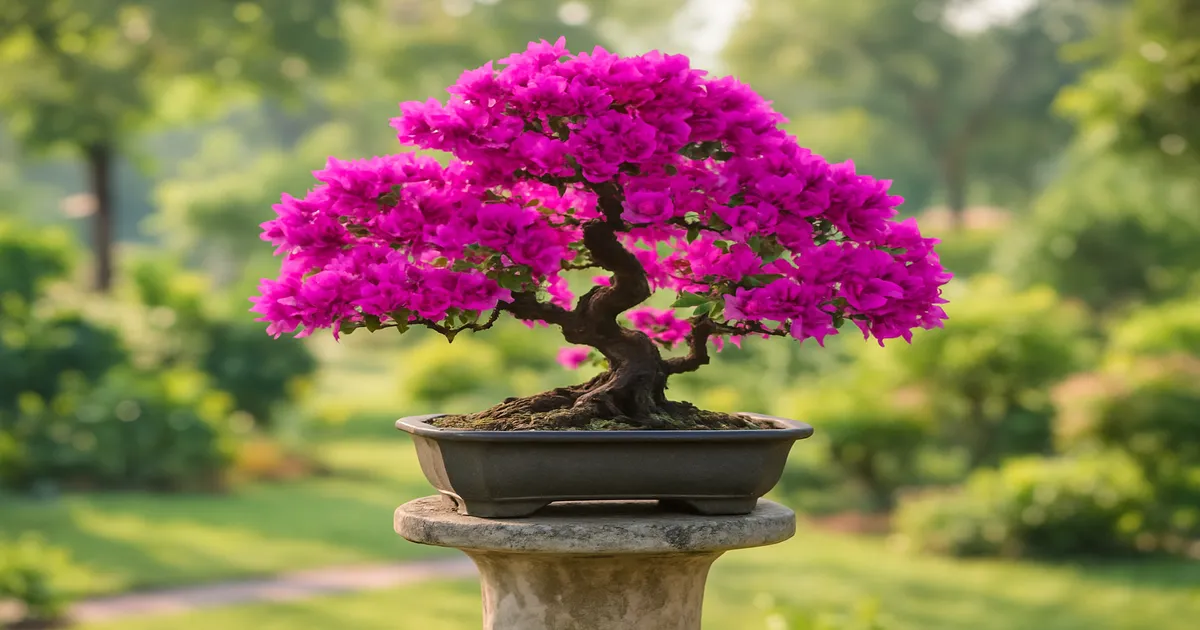
Quick Answer: Bougainvillea bonsai need full sun (6–8+ hours daily), fast-draining inorganic soil, drench-and-dry watering, pruning every 4–6 weeks, and frost protection below 32°F (0°C). Get those five things right and you’ll be rewarded with spectacular color and naturally dramatic trunk character.
Learning how to take care of bougainvillea bonsai starts with understanding where this plant comes from. It evolved on the rocky, sun-blasted coastal slopes of Brazil — nutrient-poor soil, intense light, and a hard dry season that triggers flowering. Mimic those conditions in miniature and your bonsai will thrive. Fight them and you’ll get a sulky, bloomless shrub.
Understanding Bougainvillea: Species and Best Varieties for Bonsai
Botanical Background and Native Habitat
Bougainvillea belongs to the family Nyctaginaceae and was first documented by botanist Philibert Commerçon in 1768. In the wild it’s a vigorous, scrambling liana that can reach 15–40 ft (4.5–12 m), using hooked thorns to clamber through other vegetation along Brazil’s coast. That coastal origin — rocky, free-draining, high-light, seasonally dry — is the single most useful piece of information for bonsai care. Every major decision about soil, water, and fertilizer flows from it.
Why the ‘Flowers’ Are Actually Bracts
The vivid color comes from bracts — modified leaves, three per cluster — not true flowers. The actual flowers are the tiny white or cream tubes nestled inside. This distinction matters practically: bract production is triggered by light intensity, drought stress, and low-nitrogen fertilizing in ways that differ from true flower production. You’re essentially convincing the plant it’s enduring a dry season.
Best Varieties for Bougainvillea Bonsai
| Cultivar / Species | Bract Color | Bonsai Notes |
|---|---|---|
| B. glabra | Magenta/purple | Most popular; smaller leaves, vigorous, great nebari |
| B. glabra ‘Sanderiana’ | Purple | Classic Asian bonsai tradition |
| B. spectabilis | Magenta, pink, red | Larger leaves; suits bigger styles |
| ’Barbara Karst’ | Bright red-magenta | Very vigorous; informal upright styles |
| ’Torch Glow’ | Deep pink-red | Compact, nearly thornless; good for beginners |
| ’Singapore Pink’ | Soft pink | Compact habit; suits smaller sizes |
| ’Helen Johnson’ | Brick red/orange | Excellent for shohin and mame |
| ’Raspberry Ice’ | Hot pink, variegated foliage | Slower growth; striking accent tree |
For most beginners, B. glabra or ‘Torch Glow’ are the safest starting points. B. glabra has naturally smaller leaves and responds well to bonsai techniques. ‘Torch Glow’ is compact and far more forgiving to handle without gloves.
The thorns deserve an honest mention. They’re modified stems fused firmly to the branch — they don’t snap off under pressure the way rose thorns do. Wear thick leather gloves for any structural work.
How to Care for Bougainvillea Bonsai: Light and Temperature
How Much Sun Does a Bougainvillea Bonsai Need?
Full sun, full stop. Aim for 6–8+ hours of direct, unfiltered sunlight daily. This is the single most critical factor in bougainvillea bonsai care — more important than soil, more important than fertilizer. Insufficient light is the number-one reason these trees fail to flower and produce weak, stretched growth.
Bougainvillea bonsai are outdoor trees. Keeping one permanently indoors leads to failure to bloom, elongated internodes, and increased spider mite pressure — usually within one or two seasons. If you must bring it inside for winter, use the brightest south- or west-facing window available. Full-spectrum LED grow lights running at 20,000–30,000 lux for 12–14 hours can help bridge the gap, but outdoor sun is always better.
Temperature Ranges and Cold Hardiness
| Growth Phase | Optimal Temperature |
|---|---|
| Active growing season | 70–95°F (21–35°C) |
| Nighttime minimum (growing) | 60–65°F (15–18°C) |
| Indoor winter holding | 50–60°F (10–15°C) |
| Damage threshold | Below 32°F (0°C) |
| Fatal (sustained exposure) | Below 25°F (-4°C) |
In USDA Zones 9–11, bougainvillea can stay outdoors year-round. Zone 8 growers can manage with heavy frost protection. Zone 7 and below means treating this as a container specimen that comes indoors every winter — no exceptions.
Winter Protection
The bonsai pot amplifies cold vulnerability dramatically. The entire root mass is exposed to air temperatures, unlike an in-ground plant insulated by surrounding soil. As temperatures drop, follow this protocol:
- Reduce watering in late autumn to harden off the tree gradually.
- Move to a frost-free location when nights consistently approach 40°F (4°C).
- Ideal storage: an unheated garage, cool greenhouse, or sunroom at 45–55°F (7–13°C).
- Water only once every 2–3 weeks — just enough to prevent the rootball from desiccating completely.
- Provide whatever light is available; some leaf drop is normal and expected.
- Do not store in total darkness for extended periods — bougainvillea is not truly dormant like a temperate deciduous tree.
A cool, dry rest at 45–55°F (7–13°C) for 6–8 weeks actually promotes more prolific spring flowering by mimicking the natural dry season. Think of winter storage as part of your flowering strategy, not just survival management.
Soil and Repotting
Why Drainage Is Everything
Bougainvillea roots evolved in rocky, fast-draining ground. They’re adapted to dry out between rains, not to sit in moisture. In a bonsai pot, a water-retentive mix is a slow death sentence — root rot sets in quickly, and by the time symptoms appear above ground, significant damage has already occurred.
Recommended Soil Mixes
Standard mix (general use): 2 parts akadama : 2 parts pumice : 1 part lava rock
Hot/dry climate (Zones 9–11 outdoor): 5 parts pumice : 3 parts lava rock : 2 parts akadama — reduces water retention in high-heat conditions.
Cool/humid climate (Zones 7–8 or indoor): 5 parts akadama : 3 parts pumice : 2 parts lava rock — slightly higher retention compensates for lower evaporation.
Budget alternative: 4 parts coarse perlite : 3 parts decomposed granite (not beach sand) : 3 parts screened pine bark fines (¼ inch/6 mm). This won’t perform quite as well long-term but is a solid starting point.
Aim for particle sizes of ⅛–⅜ inch (3–9 mm) and always screen out dust. Target a soil pH of 5.5–6.5 — anything above 7.0 will cause iron chlorosis.
When and How to Repot
Repot every 2–3 years, in early spring just before the first growth flush. This timing gives roots the entire growing season to recover. Unglazed terra cotta or classic bonsai pots with generous drainage holes work best — terra cotta’s breathability supports the fast-drying cycle bougainvillea prefers.
Remove no more than one-third of the root mass. Comb roots outward carefully, trim any circling roots, and repot into fresh mix. Afterward, keep the tree in shade for 2–3 weeks, water conservatively, and hold off on fertilizer for 4–6 weeks to avoid burning new feeder roots.
Watering: The Drench-and-Dry Method
When you water, water thoroughly — soak until water runs freely from every drainage hole. Then wait. Let the top ½–1 inch (1.3–2.5 cm) of soil dry out before watering again. The chopstick test works well: push a wooden skewer 1–2 inches into the soil, and if it comes out damp, wait another day.
Never let the pot sit in standing water, and use ambient-temperature water — cold tap water in summer can shock the roots.
Seasonal Watering Frequency
| Season | Frequency | Notes |
|---|---|---|
| Spring | Every 1–2 days | Increase as temperatures rise |
| Summer | Daily, sometimes twice in extreme heat | Check morning and evening above 90°F (32°C) |
| Autumn | Every 2–4 days | Reduce as growth slows |
| Winter (rest) | Every 10–21 days | Prevent desiccation only |
Using Drought Stress to Trigger Blooming
About 2–3 weeks before you want a bloom display, withhold water until you see the first signs of early leaf wilt — leaves just beginning to soften, not severe drooping. Hold at that level for two to three weeks, then resume normal watering. Bract production typically follows within a few weeks. Apply this technique only to healthy, well-established trees. Never stress a recently repotted tree, a pest-damaged tree, or anything in its first two years of training.
Signs of Overwatering vs. Underwatering
Overwatering: yellowing leaves starting with older lower foliage, soft or mushy stem base, soil staying wet for more than 3–4 days in warm weather, sudden leaf drop without preceding yellowing, foul smell from the soil.
Underwatering: brown crispy leaf edges (not soft), leaves curling inward, soil pulling away from pot edges, pot feels very light when lifted, bracts dropping before fully developing.
Fertilizing for Growth and Blooms
In spring, when the tree is pushing new vegetative growth, a balanced fertilizer like 20-20-20 feeds that flush effectively. But nitrogen is the enemy of flowering — too much and the plant puts all its energy into leaves. Switch to a low-nitrogen, high-phosphorus/potassium formula (such as 0-10-10 or a dedicated blossom booster) about 6–8 weeks before you want bracts to appear. This, combined with drought stress, is the most reliable way to trigger a spectacular display.
Seasonal Schedule
- Early spring: Begin balanced fertilizer (20-20-20 or similar) as growth resumes
- Late spring through summer: Continue balanced feed; switch to low-nitrogen 6–8 weeks before desired bloom period
- Post-bloom: Return briefly to balanced fertilizer to help the tree recover
- Autumn: Taper off as growth slows
- Winter rest: Stop fertilizing entirely
Iron Chlorosis
If you see yellowing between the leaf veins while the veins themselves stay green, that’s iron chlorosis — almost always caused by soil pH creeping above 7.0, which locks out iron uptake. Apply chelated iron as a foliar spray or soil drench, and correct the underlying pH issue at your next repot.
Over-fertilizing with nitrogen not only suppresses flowering — it also makes the tree more attractive to aphids and spider mites. Less is more.
Pruning: Shaping for Structure and Flowers
Bracts are produced on current-season lateral shoots growing from older wood — not on the long, arching whip shoots the tree throws out vigorously. Those whips are vegetative, and if you let them run, energy drains away from the inner branching that actually flowers. Regular pruning redirects that energy exactly where you want it.
Maintenance Pruning
Prune every 4–6 weeks during the growing season. After each growth flush, cut new shoots back to 2–4 leaves using sharp scissors or concave cutters. Remove any crossing, rubbing, or inward-growing growth as it appears. After a bloom cycle ends, prune spent bracts and shoot tips back by about one-third to encourage the next flush.
Structural Pruning
Do major structural work in late winter to early spring, just before the first growth flush. You can also prune immediately after a major bloom while the tree is still vigorous. Avoid heavy cuts in autumn — new growth stimulated late in the season will be cold-vulnerable.
Use concave branch cutters for anything over ¼ inch (6 mm) in diameter. Cut to a lateral branch or outward-facing bud, angle the cut slightly for water runoff, and remove no more than one-third of total foliage mass per session. If more reduction is needed, spread the work over 2–3 sessions across one season.
Apply cut paste to any wound larger than ¼ inch (6 mm). Bougainvillea heals moderately well but is prone to dieback from large cuts — monitor for any darkening that extends beyond the cut margin. Large wounds may take 2–4 years to fully callus over.
Partial defoliation (removing 50–75% of leaves) in early summer can reduce leaf size and improve light penetration on vigorous, healthy trees. Full defoliation is not recommended and should never be done on a recently repotted or stressed tree.
Wiring Bougainvillea Bonsai
Wire Gauge Guide
| Branch Diameter | Wire Gauge | Type |
|---|---|---|
| Up to ⅛ inch (3 mm) | 1.0–1.5 mm | Aluminum |
| ⅛–¼ inch (3–6 mm) | 2.0–2.5 mm | Aluminum |
| ¼–⅜ inch (6–9 mm) | 3.0–3.5 mm | Aluminum or copper |
| ⅜–½ inch (9–12 mm) | 4.0 mm | Copper preferred |
| Over ½ inch (12+ mm) | Guy wires + raffia | Copper with raffia protection |
Bougainvillea wood lignifies quickly, so wire young shoots early while they’re still flexible. Wrap at a 45° angle with consistent tension — tight enough to hold position, not so tight it bites immediately. During active growth, check every 2–3 weeks without fail. Wire that cuts into bark leaves permanent scars that are nearly impossible to hide on smooth-barked bougainvillea.
For larger branches (over ½ inch/12 mm), conventional wrapping creates too much pressure and risks bark damage. Anchor a copper wire with raffia wrapping at the bend point and run it to a stake in the soil or a lower branch. Bougainvillea also responds very well to clip-and-grow styling — using pruning alone to build structure over time — which is a practical alternative to heavy wiring on mature branches.
Troubleshooting Common Problems
Why Is My Bougainvillea Bonsai Not Flowering?
Insufficient light is the primary culprit — if the tree isn’t getting 6–8+ hours of direct sun, it simply won’t bloom. Beyond light, check your fertilizer: excess nitrogen pushes leafy growth at the expense of bracts. Also confirm you’re pruning correctly (you need lateral shoots from older wood, not long whips) and consider whether a deliberate drought-stress cycle would help trigger the next flush.
Yellowing Leaves
Yellow leaves with green veins point to iron chlorosis from high soil pH. Yellow leaves starting at the base of shoots, with no vein pattern, usually indicate overwatering or root rot. Check soil moisture and drainage first, then test pH before reaching for a fertilizer fix.
Pests: Spider Mites and Aphids
Spider mites thrive in hot, dry indoor conditions — another reason to keep bougainvillea outdoors. Look for fine webbing on the undersides of leaves and stippled, dull foliage. A strong water spray dislodges early infestations; neem oil or insecticidal soap handles heavier ones. Aphids cluster on new growth tips and are usually easy to spot. Both pests are more common on trees that are over-fertilized with nitrogen.
Sudden Leaf Drop
Bougainvillea drops leaves in response to cold drafts, overwatering, repotting shock, or a sudden change in light levels. It’s rarely fatal. Identify the cause, correct it, and the tree will typically push new growth within a few weeks.
Frequently Asked Questions
How often should I water my bougainvillea bonsai? During summer, check daily and water when the top ½–1 inch of soil is dry — in extreme heat that can mean watering twice a day. In winter rest, once every 10–21 days is usually sufficient. The drench-and-dry method is the key principle: water thoroughly, then wait.
Can bougainvillea bonsai be kept indoors permanently? No. Bougainvillea needs 6–8+ hours of direct sun to flower and stay healthy. Permanent indoor conditions lead to weak growth, no blooms, and pest problems within one or two seasons. Bring it indoors only to protect it from frost, and return it outside as soon as temperatures allow.
How do I get my bougainvillea bonsai to flower? Three things working together: maximum direct sun, a switch to low-nitrogen fertilizer (such as 0-10-10) 6–8 weeks before you want blooms, and a deliberate drought-stress period of 2–3 weeks. Regular pruning of long whip shoots to redirect energy to lateral branches also makes a significant difference.
When is the best time to repot a bougainvillea bonsai? Early spring, just before the first growth flush. This gives the root system the entire growing season to recover. Repot every 2–3 years and remove no more than one-third of the root mass at a time.
Are bougainvillea bonsai suitable for beginners? Yes, with caveats. The vigorous growth means mistakes are recoverable, and trunk character develops quickly. The main challenges are the seriously sharp thorns (wear thick leather gloves), cold sensitivity below 32°F (0°C), and the need for very high light. Go in prepared and it’s a deeply rewarding tree to grow.