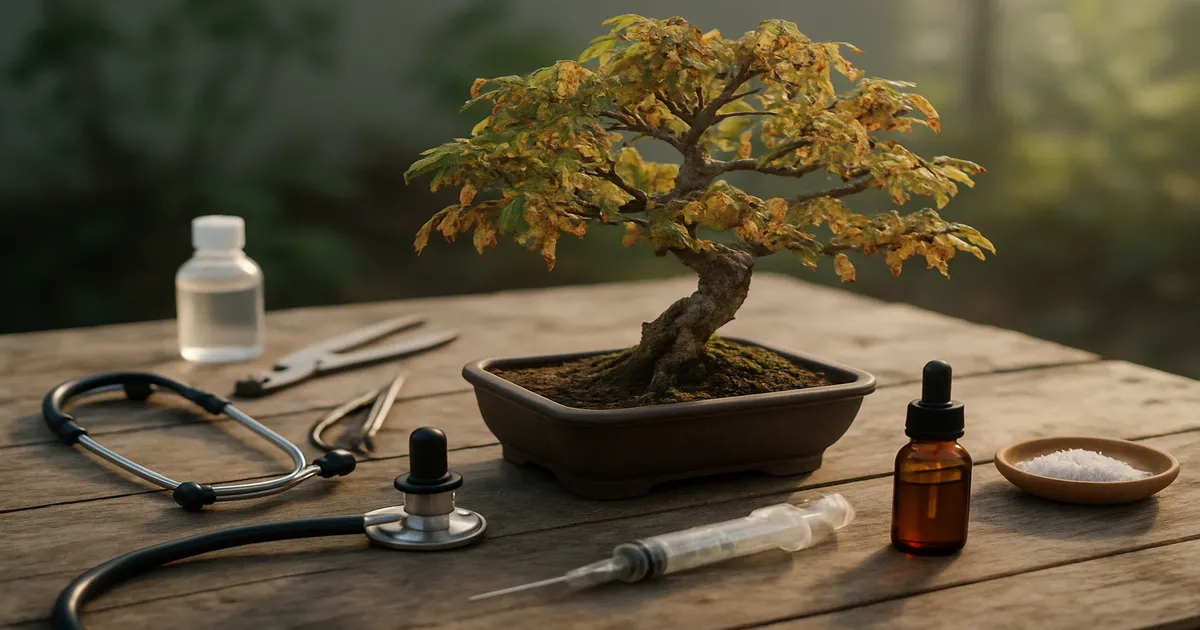
Quick Answer: Mystery bonsai pests almost always fall into one of five categories — sap-suckers, mites, soil dwellers, borers, or fungal pathogens. Inspect leaf undersides, bark crevices, the soil surface, and roots to narrow down the culprit. Once identified, treat with the least-toxic effective method first, then correct any environmental conditions driving the outbreak.
Figuring out how to get rid of these mystery pests on your bonsai is genuinely frustrating — especially when your tree looks sick but nothing obvious is crawling around. Bonsai are uniquely vulnerable: small soil volumes, confined roots, and the stress of containerized life mean damage escalates fast. Symptoms often appear weeks after an infestation is already well established. This guide walks you through identification, treatment, and prevention for every major pest category so you can stop guessing and start fixing the problem.
How to Identify Mystery Bonsai Pests Before You Treat
Why Bonsai Pest Identification Is So Difficult
Many bonsai pests are microscopic or near-invisible. Spider mites, root aphids, and scale crawlers can all cause serious damage before you ever see them. Nocturnal feeders like fungus gnats and some caterpillars simply aren’t present during daytime inspections. Worse, symptoms like yellowing leaves, curling, or wilting are shared by pest damage, fungal disease, overwatering, and nutrient deficiency alike. Misidentifying the problem leads to the wrong treatment — which wastes time while the tree declines further.
The Fast-Track Diagnosis Checklist
Before reaching for any spray, work through this inspection sequence:
- Leaf undersides — look for tiny moving dots (mites), cottony masses (mealybugs), soft clusters (aphids), or flat discs (scale)
- New growth tips — distortion and curling here almost always means aphids or mites
- Bark and branch crotches — check for waxy deposits, sooty mold, or fine webbing
- Soil surface — flying insects, white powder, or webbing at the soil line are all significant
- Roots — if the tree is declining with no visible above-ground cause, a root inspection is essential
What Could Be Attacking Your Bonsai? A Pest Category Overview
Sap-Sucking Insects: Aphids, Scale, Mealybugs, and Whitefly
These are the most common bonsai pests and the easiest to identify once you know the signs. They feed on plant sap, excrete sticky honeydew, and often trigger sooty mold — a black fungal coating that grows on the honeydew deposits.
| Pest | Where to Look | Visible Signs | Species Most Affected |
|---|---|---|---|
| Aphids | New growth, shoot tips | Soft clusters, curled leaves | Maple, elm, oak, fruit trees |
| Scale | Bark, branch crotches | Flat discs, sticky residue | Juniper, pine, ficus, maple |
| Mealybugs | Branch crotches, roots | White cottony masses | Ficus, jade, tropical species |
| Whitefly | Leaf undersides | Cloud of white insects when disturbed | Tropical and subtropical species |
Mites: Spider Mites, Rust Mites, and Eriophyid Mites
Mites thrive in hot, dry conditions — exactly what most indoor bonsai experience in winter. Spider mites produce fine webbing on leaf undersides and between stems. Rust mites and eriophyid mites are even smaller and cause bronzing, russeting, or distorted bud development without any visible webbing.
Soil-Dwelling Pests: Fungus Gnats, Root Aphids, and Vine Weevil
These are the pests most likely to cause “mystery” decline. The tree looks fine above ground until it suddenly doesn’t. Fungus gnat larvae chew feeder roots. Root aphids coat roots in white waxy powder and suck sap directly from the root system. Vine weevil grubs sever roots at the crown, causing sudden collapse.
Boring and Chewing Insects: Caterpillars, Beetles, and Borers
Caterpillars are usually visible but feed at night. Borers are the stealthy ones — they enter through pruning wounds or bark cracks and work from the inside out. Look for fine sawdust-like frass at the base of branches or around entry holes.
Fungal Pathogens Mistaken for Pests
Powdery mildew looks like white powder dusted on leaves — not mealybugs, which form cottony masses in crevices. Botrytis (gray mold) causes soft, collapsing tissue in humid conditions. Rust appears as orange or brown pustules on leaf undersides. None of these respond to insecticides, so correct identification matters.
Reading the Clues Your Bonsai Leaves Behind
Leaf Symptoms: Curling, Yellowing, Stippling, and Distortion
Stippling — tiny pale dots scattered across the leaf surface — is the classic signature of mite feeding. Uniform yellowing starting from older leaves suggests nutrient deficiency rather than pests. Curling and distortion concentrated at new growth tips almost always means aphids or eriophyid mites. Ragged holes in leaves point to caterpillars or beetles.
Bark, Stem, and Soil Surface Symptoms
Sticky residue (honeydew) on bark or leaves directly below means sap-suckers are active above. Sooty mold follows honeydew — it’s not the pest itself, but it tells you exactly where to look. Waxy or cottony deposits in bark crevices are mealybugs. Flat, hard discs that don’t move when prodded are scale. At soil level, small flies hovering when you water are fungus gnats; white powder near the trunk base can indicate root mealybugs or root aphids.
Root-Zone Symptoms: What to Look for at Repotting
Healthy roots are firm and white to tan. At repotting, watch for:
- White waxy powder on roots → root aphids (look for small pear-shaped insects clustered on roots)
- C-shaped cream-colored grubs up to 0.5 inches (1.3 cm) long → vine weevil larvae
- Translucent white larvae with black heads in the soil → fungus gnat larvae
- Brown, mushy roots → overwatering or root rot, not pests (though secondary pests often follow)
Distinguishing Pest Damage from Environmental Stress
| Symptom | Pests | Overwatering | Underwatering | Nutrient Deficiency |
|---|---|---|---|---|
| Yellowing leaves | Possible (sap-suckers) | Yes — leaves drop soft | No — edges brown first | Yes — often patterned |
| Leaf drop | Yes (severe infestation) | Yes — sudden, soft leaves | Yes — after wilting | Rarely |
| Curling leaves | Aphids, mites | Rare | Yes — inward curl | Rare |
| Wilting | Root pests | Yes — soil stays wet | Yes — soil bone dry | No |
| Sticky residue | Yes — honeydew | No | No | No |
How to Get Rid of These Mystery Pests: Complete Treatment Protocols
Aphids
For mild infestations, a strong blast of water knocks aphids off and disrupts colonies — repeat daily for a week. Moderate infestations respond well to insecticidal soap at 2 teaspoons per quart (1 liter) of water, applied every 3–5 days for three applications. Severe or recurring infestations may require neem oil at 2 tablespoons per gallon or a systemic imidacloprid soil drench. Never use systemics on flowering trees due to bee toxicity.
Scale Insects
For small infestations, scrub scale off with a soft toothbrush dipped in 70% isopropyl alcohol. Horticultural oil at 1–2% dilution (2–4 tablespoons per gallon) suffocates all life stages; coat every bark surface thoroughly. Apply dormant oil in late winter at 3–4% dilution to kill overwintering eggs before crawlers emerge. Never spray oils above 90°F (32°C) or below 40°F (4°C).
Mealybugs
Dab individual colonies with a cotton swab soaked in 70% isopropyl alcohol — this kills on contact without harming bark. Follow up with neem oil at 2 tablespoons per gallon every 7–10 days for three to four cycles. For root mealybugs, soak bare roots in the same neem solution for 10–15 minutes at repotting, then replant in fresh, sterile soil.
Spider Mites
Start by raising humidity — mites hate it. A humidity tray with pebbles and water beneath the pot can bring ambient humidity to 50–60%, which alone slows reproduction significantly. For active infestations, spray with neem oil or a dedicated miticide (Bonide Mite-X) every 5–7 days for three applications (mite eggs resist most sprays, so you need to catch hatchlings as they emerge). Above 55°F (13°C), predatory mites (Phytoseiulus persimilis) are a highly effective biological control for outdoor trees.
Fungus Gnats
Yellow sticky traps catch adults but don’t solve the root problem — larvae in the soil do the actual damage. Drench the soil with Bacillus thuringiensis var. israelensis (Bti) (Gnatrol WDG) solution; it kills larvae without harming roots, beneficial insects, or pets. Repeat every two weeks for two months. Letting the soil surface dry slightly between waterings dramatically reduces larval survival.
Vine Weevil
No spray reaches vine weevil grubs effectively. Beneficial nematodes are the real solution — apply Steinernema kraussei or Heterorhabditis bacteriophora to moist soil when soil temperature is above 50°F (10°C). If the tree is in serious decline, emergency repotting to manually remove grubs is justified even outside the normal repotting window.
Borers and Chewing Insects
Remove caterpillars by hand — check at night with a flashlight if you can’t find them during the day. For borers, probe entry holes with a fine wire to kill larvae mechanically, then seal wounds with cut paste within 30 minutes. Pyrethrin-based sprays applied to bark can deter adult borers from laying eggs in fresh wounds.
Environment and Care: Why Pests Keep Coming Back
Indoor Bonsai
Indoor bonsai face pest pressure year-round because there’s no winter die-off to reset populations. The comfortable 65–75°F (18–24°C) room temperature that suits you also suits most bonsai pests. Humidity below 40% triggers spider mite explosions; aim for 50–60% using a humidity tray or small room humidifier. Light below 2,000 lux weakens trees and increases susceptibility to everything — use a lux meter and supplement with grow lights if needed.
Outdoor Bonsai: Seasonal Pest Cycles
Outdoor trees follow predictable patterns. Aphid hatching and scale crawler emergence begin when soil temperatures reach 50–65°F (10–18°C) in spring. Spider mite populations explode above 85°F (29°C) in summer. Autumn brings vine weevil egg-laying and fungus gnat buildup as soils cool and moisten. Knowing these windows lets you inspect proactively rather than reactively.
Soil Mix and Watering
A fast-draining 1:1:1 mix of akadama, pumice, and lava rock dries between waterings and provides almost no organic matter for fungus gnat larvae to feed on. Peat-heavy or standard potting soil stays wet, compacts, and is essentially a pest incubator. Overwatering creates the anaerobic conditions that fungus gnats and root rot pathogens need; underwatered, stressed trees emit chemical signals that actively attract spider mites and aphids. Water thoroughly when the top 0.5–1 inch (1–2.5 cm) of soil begins to dry — never on a fixed schedule.
Prevention: Stopping Mystery Pests Before They Start
- Quarantine all new trees for 4–6 weeks away from your collection, inspecting weekly.
- Inspect weekly — two minutes covering new growth tips, leaf undersides, bark crevices, and the soil surface catches most problems while they’re still small.
- Seal pruning wounds larger than 0.5 inches (1.3 cm) with cut paste within 30 minutes of cutting.
- Check wired branches every 3–4 weeks during the growing season; wire left on too long creates a sheltered habitat for scale and mealybugs.
- Sterilize tools between trees using 70% isopropyl alcohol; wash reused pots with a 10% bleach solution before repotting.
- Use repotting as a diagnostic — remove all old soil, inspect the full root system, and treat root-zone pests directly at that session.
- Release beneficial insects (ladybugs, lacewings, predatory mites) early in the season before pest populations spike, not after an infestation is already severe.
Frequently Asked Questions About How to Get Rid of These Mystery Pests
What are the tiny white bugs in my bonsai soil?
Tiny white bugs in bonsai soil are most likely fungus gnat larvae, root mealybugs, or springtails. Fungus gnat larvae are translucent with a black head and damage feeder roots. Root mealybugs are oval, waxy, and cluster directly on roots. Springtails are harmless decomposers that jump when disturbed. Treat fungus gnats with Bti drenches and root mealybugs with a neem soak at repotting; springtails need no treatment.
Why does my bonsai keep getting pests even after treatment?
Recurring infestations usually mean one of three things: the environment is still ideal for pests (low humidity, overwatered soil, or insufficient light), eggs or crawlers survived the treatment cycle because applications weren’t repeated at the right intervals, or a new tree in your collection is reintroducing pests. Address the environmental driver, complete the full treatment cycle (typically three applications spaced 5–10 days apart), and quarantine any new acquisitions.
Can I use neem oil on all bonsai species?
Neem oil is safe for the vast majority of bonsai species when diluted correctly (2 tablespoons per gallon of water with a few drops of dish soap as an emulsifier). Avoid applying it to open flowers — it can harm pollinators — and never spray in direct sun or above 90°F (32°C), as leaf burn can result. Some junipers are sensitive to oil-based sprays; test on a single branch and wait 48 hours before treating the whole tree.
Are fungal problems treated the same way as insect pests?
No. Powdery mildew, botrytis, and rust are fungal diseases and do not respond to insecticides. Treat them with a copper-based fungicide or sulfur spray, improve air circulation, and reduce overhead watering. Identifying whether you’re dealing with a fungal pathogen or a true pest is one of the most important steps before any treatment.
How long does it take to get rid of a bonsai pest infestation?
Most infestations resolve in 3–6 weeks with consistent treatment. The key is completing the full treatment cycle — most sprays don’t kill eggs, so you need repeat applications timed to catch newly hatched nymphs. Soil-dwelling pests like vine weevil can take longer, especially if beneficial nematodes are used, since nematode populations need time to establish. Improvement should be visible within two weeks; if it isn’t, reconsider whether the diagnosis is correct.