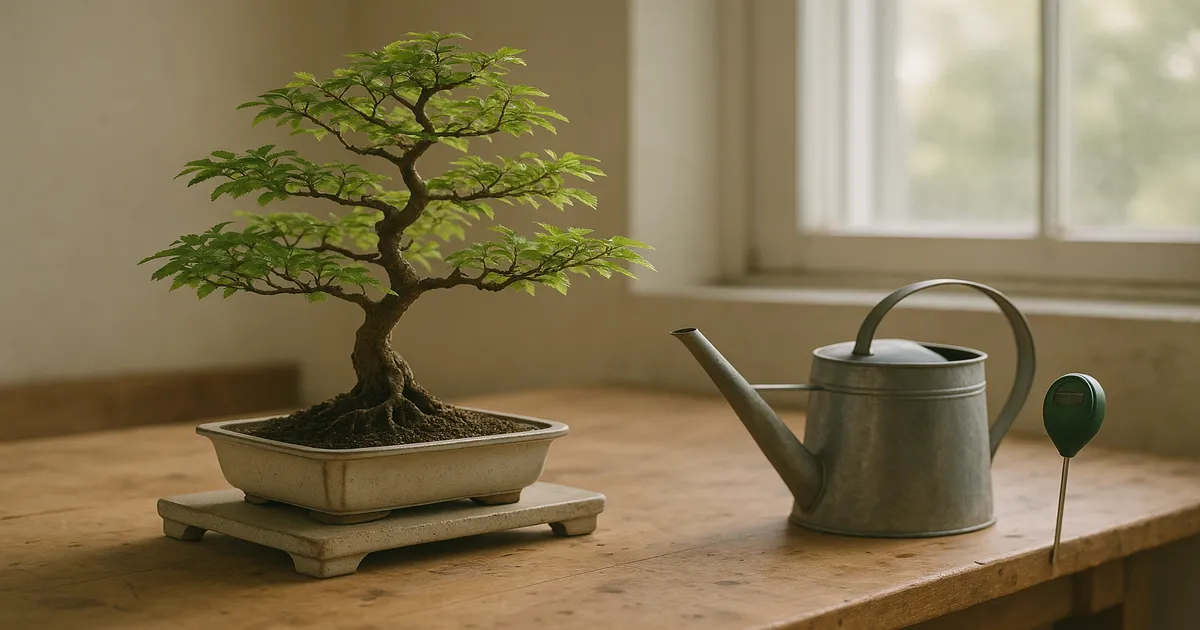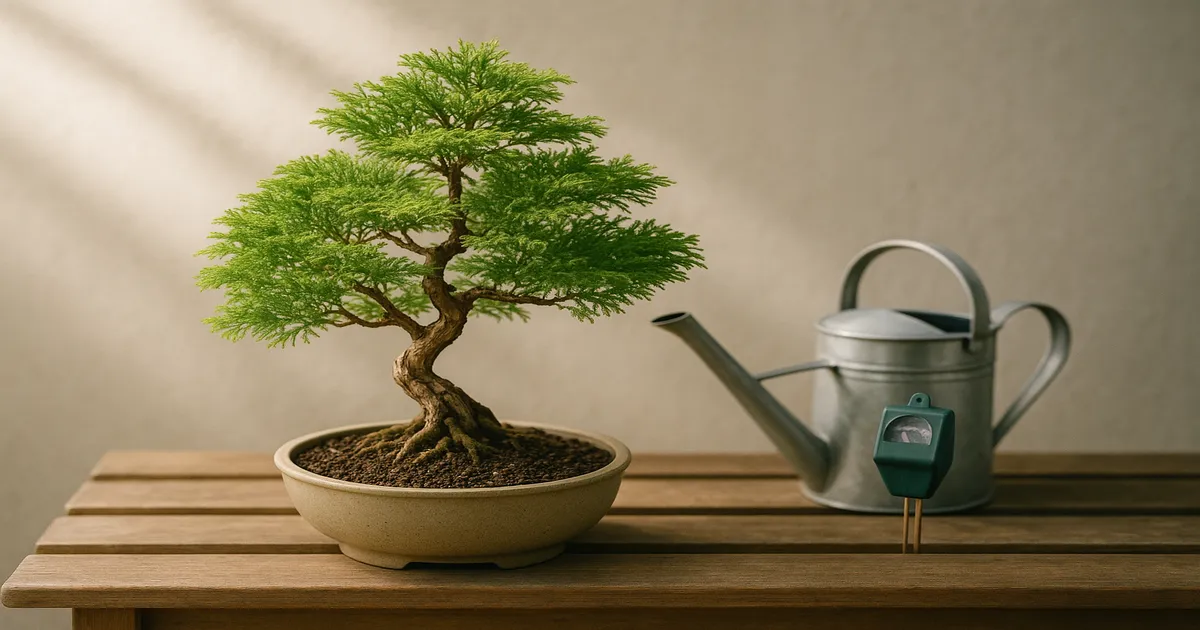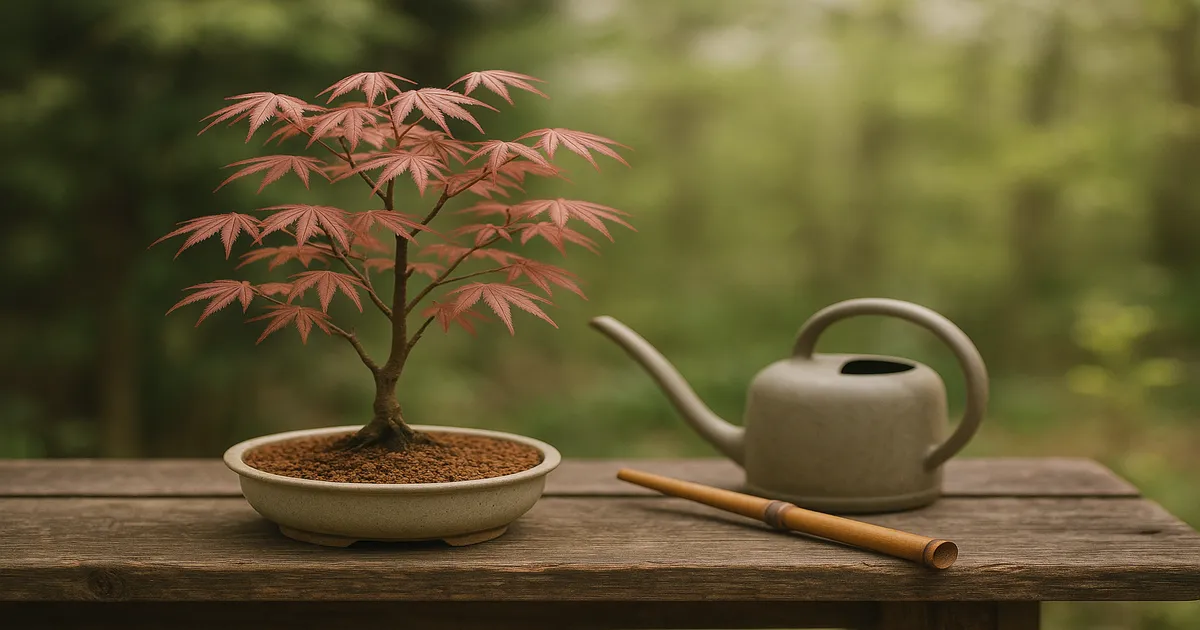
Quick Answer: How often to water Japanese maple bonsai depends on season, climate, pot size, and soil mix. As a rough guide: once to twice daily in summer, once daily in spring and early autumn, every one to two days in late autumn, and every three to seven days during winter dormancy. No fixed schedule works for every tree — this article teaches you to read your tree’s signals so you water at exactly the right time.
Figuring out how often to water Japanese maple bonsai is the question that trips up more beginners — and even some experienced growers — than almost any other aspect of care. The honest answer is that your tree will tell you when it’s thirsty, and your job is to learn its language. Season, pot material, soil composition, wind, and humidity all interact in ways that make a rigid timetable nearly useless. What follows is everything you need to build genuine watering intuition.
How Often to Water Japanese Maple Bonsai: Seasonal Guide
Watering Frequency at a Glance
| Season | Typical Frequency |
|---|---|
| Spring | Once daily, rising to twice daily as canopy fills |
| Summer | Once to twice daily; up to three times during heat waves above 95°F (35°C) |
| Early Autumn | Once daily |
| Late Autumn | Every 1–2 days as temperatures cool |
| Winter (dormancy) | Every 3–7 days |
Why There Is No Single Universal Schedule
A Japanese maple in a small, shallow terracotta pot in full sun in Phoenix and one in a large glazed pot in Seattle’s mild, overcast summer are two completely different watering problems. Soil mix, canopy size, humidity, and wind all compound on top of season and temperature. The table above gives you a starting framework; the sections below help you calibrate it to your actual setup.
Understanding the Japanese Maple as a Bonsai Subject
Native Habitat and What It Means for Watering
Acer palmatum is native to the temperate forests of Japan, Korea, and eastern China, where it grows as an understory tree on hillsides and stream banks. Its native soils are moisture-retentive but never waterlogged — they drain freely after rain while holding enough moisture to sustain the tree through dry spells. That context matters: this species evolved to appreciate consistent moisture, not drought tolerance. It sits toward the thirstier end of the bonsai spectrum.
One critical point: Japanese maple is an outdoor bonsai. It requires seasonal temperature swings, natural light cycles, and a genuine cold dormancy period. All care decisions — including watering — flow from that fact.
Cultivar Differences Worth Knowing
Most cultivars share the same basic watering needs, but leaf size and canopy density create subtle differences. Fine-leafed, compact cultivars like ‘Kiyohime’ and ‘Kashima’ transpire slightly less than large-leafed varieties like ‘Osakazuki’, so they may dry out a little more slowly. Densely foliaged cultivars like ‘Shishigashira’ can create a canopy umbrella effect that sheds rainfall — worth knowing if you rely on rain to supplement your watering.
The Factors That Determine Watering Frequency
Season is the biggest single variable, but it interacts with everything below.
| Factor | Increases Frequency | Decreases Frequency |
|---|---|---|
| Temperature | Above 90°F (32°C) | Below 60°F (15°C) |
| Pot size/material | Small, shallow, terracotta | Large, deep, glazed or plastic |
| Soil mix | Pumice/lava-heavy | Akadama-heavy |
| Humidity | Below 40% | Above 70% |
| Wind | Windy, exposed | Sheltered |
| Sun | Full sun all day | Morning sun, afternoon shade |
| Canopy | Large, dense | Recently pruned |
Pot material makes a bigger difference than most beginners expect. Unglazed terracotta loses moisture through its walls; glazed ceramic and plastic retain it longer. If you’re struggling with twice-daily watering in summer, moving to a slightly larger glazed pot can meaningfully reduce the burden.
Soil composition is the biggest lever you control directly. A fast-draining mix heavy in pumice and lava rock can dry out within hours on a hot day; an akadama-heavy mix holds moisture considerably longer. More on this below.
Canopy size matters too. A large, full canopy moves enormous amounts of water through transpiration on a hot day. A recently pruned or defoliated tree has dramatically reduced water demand — always recalibrate after significant pruning.
Seasonal Watering in Detail
Spring: Supporting Vigorous New Growth
Spring is a period of intense metabolic activity. As buds break and new leaves unfurl, water demand ramps up quickly. Start with once daily and increase to twice daily as the canopy fills out and temperatures climb. New growth is particularly vulnerable to drought stress — even a single missed watering on a warm spring day can set back young shoots noticeably.
Summer: Managing Peak Demand and Heat Stress
Summer is your highest-risk season for underwatering. Once to twice daily is the baseline for most climates, but during heat waves above 95°F (35°C), small pots may need water two or even three times a day. Always water in the morning. On hot days, check the soil again in early afternoon — if the top inch feels dry, water again regardless of what you did that morning.
Sustained temperatures above 95°F (35°C) stress the tree significantly. Combine increased watering with afternoon shade using a 50% shade cloth, which protects leaves from scorch and slows soil drying — a practical double benefit during the hottest weeks.
Autumn: Tapering Off as Leaves Turn
As temperatures drop and days shorten, ease back gradually — once daily in early autumn, reducing to every one to two days as the season progresses. Slightly drier (but never bone-dry) conditions combined with cool nights below 50°F (10°C) actually enhance autumn colour. Don’t keep watering heavily; the tree is preparing to slow down. Once leaves have dropped, water demand falls sharply.
Winter: Dormancy Watering Without Root Rot
Dormant trees still need water — roots must never fully desiccate — but the risk shifts from underwatering to overwatering. Cold, wet soil with poor drainage is the leading cause of root rot in winter. Water every three to seven days, checking the top inch of soil first. Water thoroughly when it’s dry; leave it alone when it’s still moist.
Never let the root ball freeze solid, and never store the tree in a heated space above 50°F (10°C), which would break dormancy prematurely. Japanese maples need eight to twelve weeks of temperatures consistently below 45°F (7°C) to complete dormancy — this is non-negotiable for long-term health. An unheated cold frame or garage is ideal.
Choosing the Right Soil Mix
The Standard Mix and Why It Works
Japanese maple bonsai need a soil that drains freely within seconds of watering, retains enough moisture to sustain the tree between waterings, and keeps the root zone well aerated. Standard potting compost fails on all three counts — it compacts, waterlogged, and suffocates roots in a bonsai pot.
The go-to mix for most climates is 50% akadama, 25% pumice, 25% lava rock (scoria).
- Akadama provides water retention and cation exchange capacity, feeding roots between waterings. It breaks down after two to three years, which is why regular repotting matters.
- Pumice improves drainage and aeration without breaking down over time.
- Lava rock adds structural stability and excellent drainage while resisting compaction.
Adjusting for Your Climate
- Hot/dry climates (Zones 8–9, arid regions): Increase akadama to 60%, reduce pumice and lava rock to 20% each. The extra akadama holds more moisture where drying is aggressive.
- Cool/humid climates (Pacific Northwest, UK): Reduce akadama to 40%, increase pumice and lava rock to 30% each. This prevents waterlogging in persistently wet conditions.
Soils to Avoid
Standard potting soil compacts within weeks and suffocates roots. Peat-based mixes become hydrophobic when dry — water runs straight through without penetrating. Builder’s sand is too fine, compacts badly, and actually drains worse than good bonsai soil. Avoid all of these.
How to Water Japanese Maple Bonsai Correctly
Check Before You Water
Before every watering, press your finger about one inch (2.5 cm) into the soil. If it feels barely moist to dry, water. If it still feels clearly damp, wait and check again later. This single habit prevents most overwatering and underwatering problems before they start.
What “Water Thoroughly” Actually Means
Apply water until it flows freely and continuously from all drainage holes — not just a trickle, but a steady flow. This ensures the entire root mass is hydrated and flushes accumulated mineral salts from the soil. For very dry soil, water once, wait two to three minutes, then water again. Dry akadama can briefly repel water; the second pass ensures full penetration.
A fine-rose watering can delivers a gentle shower that soaks in rather than blasting soil off roots — the Haws Slimline is a reliable choice used by many bonsai growers. A bonsai hose nozzle with a fine spray head works well for larger collections.
Water Quality
Rainwater is ideal — soft, slightly acidic, and free of additives. Tap water works fine for most growers; leave it in an open container overnight to allow chlorine to off-gas. Avoid softened water entirely — the sodium content damages roots over time. In summer, don’t use water that has been sitting in a sun-baked hose, which can reach temperatures that scorch roots.
Emergency Rehydration
If the soil has pulled away from the pot edges and water runs straight through without being absorbed, normal watering won’t work. Submerge the entire pot in a bucket of water for 10–15 minutes until air bubbles stop rising. Move the tree to shade while it recovers, then resume your normal routine once it has stabilised.
Recognising and Fixing Watering Problems
Signs of Overwatering
- Yellowing leaves on inner or lower branches without a seasonal explanation
- Soft, mushy roots (healthy roots are firm and white to tan)
- Soil that stays wet for more than two to three days in summer
- Wilting despite wet soil — this paradoxical symptom occurs when root rot prevents water uptake
- Fungal growth at the base of the trunk or on the soil surface
Signs of Underwatering
- Leaf curl or cupping — leaves roll inward to reduce transpiration; this is your earliest warning
- Brown, crispy leaf margins and tips
- Premature autumn colour appearing in summer — a sign of serious drought stress
- Soil visibly pulling away from the pot walls
- A noticeably lightweight pot when lifted
How to Tell Them Apart
Both conditions can cause wilting, which is what makes diagnosis tricky. The key is the soil moisture check: wet soil plus wilting points to root rot from overwatering; dry soil plus wilting points to underwatering. When in doubt, carefully remove the tree from its pot and inspect the roots. Firm, white-to-tan roots are healthy; brown, mushy roots indicate rot.
Overwatered tree: Stop watering and move to a shaded, well-ventilated spot. Allow the soil to partially dry before watering again. If root rot is confirmed, repot into fresh, well-draining soil after removing all mushy roots with sterile scissors.
Underwatered tree: Use the bucket submersion method for severely dry soil. Move to a shadier position while the tree recovers. Once leaves regain turgidity, resume regular watering and identify the root cause — pot too small, soil too fast-draining, placement too exposed — and adjust.
Placement and Environmental Factors
Aim for four to six hours of direct morning sun with protection from intense afternoon sun, especially in USDA Zones 7–9. Good air circulation matters for disease prevention, but exposed, windy positions dramatically increase watering frequency.
Japanese maples prefer 50–70% relative humidity. In dry climates, place the pot on a humidity tray filled with water and gravel, ensuring the pot sits above the waterline. Grouping several bonsai together also raises local humidity. Avoid misting the foliage — it’s largely ineffective as a humidity strategy and can encourage fungal disease.
Frequently Asked Questions
How do I know when my Japanese maple bonsai needs water?
Press your finger about one inch (2.5 cm) into the soil. If it feels barely moist to dry, water now. You can also lift the pot — a noticeably light pot usually means dry soil. Early visual cues like slight leaf curl or a subtle loss of leaf firmness also signal that watering is needed soon.
Can you overwater a Japanese maple bonsai?
Yes, and it’s more dangerous than underwatering because root rot can develop silently before symptoms appear. Always check the soil before watering rather than following a fixed schedule, and use a well-draining soil mix that doesn’t stay saturated for days at a time.
How often should I water my Japanese maple bonsai in summer?
Once to twice daily is typical for most climates. During heat waves above 95°F (35°C), small or shallow pots may need water two to three times a day. Water in the morning, then check again in early afternoon — if the top inch is dry, water again.
Do Japanese maple bonsai need water in winter?
Yes. Even dormant trees need occasional watering because roots must never completely desiccate. Every three to seven days is a reasonable guideline, but always check the soil first and water only when the top inch feels dry. Overwatering a dormant tree in cold conditions is a leading cause of root rot.
Why are my Japanese maple bonsai leaves turning brown and crispy?
Brown, crispy leaf margins are the classic sign of underwatering, leaf scorch from intense afternoon sun, or both. Check soil moisture immediately. If it’s dry, use the bucket submersion method to rehydrate thoroughly and move the tree to a shadier position while it recovers. If the soil is actually wet, the browning may indicate root rot — inspect the roots and repot if necessary.