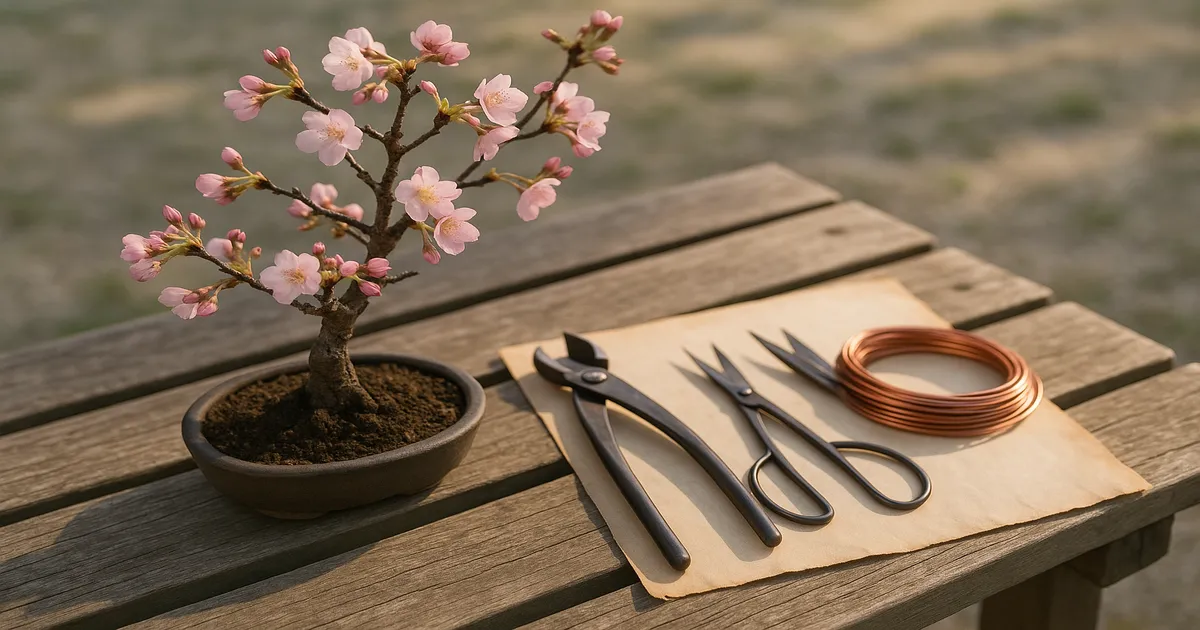
Quick Answer: The best time for cherry blossom bonsai pruning is within two to three weeks of petal drop in spring — this single window lets the tree set new flower buds over summer without interruption. A lighter thinning session after leaf drop in late autumn is acceptable for structural tidying, but avoid large cuts then. Never prune after midsummer: flower buds are already forming, and removing them is the most common reason cherry bonsai fail to bloom the following year.
Cherry blossom bonsai pruning is one of those topics where timing isn’t just important — it’s everything. Get it right and you’ll be rewarded with a breathtaking flush of spring flowers year after year. Get it wrong by even a few weeks and you’ll have a perfectly healthy tree that stubbornly refuses to bloom. This guide covers exactly when, how, and why to prune, so you can avoid the most common mistakes and keep your Prunus looking its best.
Understanding Cherry Blossom Flowering Biology
Before you pick up a pair of scissors, you need to understand one foundational fact about how cherries flower. Everything else follows from it.
How and When Flower Buds Form
Cherry blossoms don’t bloom on new spring growth. They bloom on short spurs and on wood that grew the previous season. The flower buds for next year’s display are set during mid-to-late summer on this year’s new shoots, then sit dormant all winter before bursting open in spring.
This means every cut you make after midsummer risks removing pre-formed flower buds. The tree will still leaf out, look healthy, and grow vigorously — it just won’t flower. That’s the frustrating trap beginners fall into repeatedly.
Why Timing Directly Affects Blooming
Prune too late in summer or in early autumn and you’re removing the very buds you’ve been waiting all year to see. Prune correctly — immediately after flowering — and you give the tree a full growing season to develop new shoots, set fresh buds by midsummer, and harden off before winter. The spring window is generous; it closes firmly around midsummer.
Best Cultivars for Bonsai
Cultivar choice affects how aggressively you’ll need to prune and how quickly fine ramification develops.
- Prunus incisa (Fuji cherry) — the top choice for bonsai. Naturally small leaves, short internodes, and fine twiggy growth mean less corrective pruning and faster ramification.
- Prunus × yedoensis (Yoshino cherry) — single pale-pink to white flowers, excellent ramification potential, widely available.
- Prunus serrulata ‘Kanzan’ — vigorous grower with dramatic double-pink flowers; needs more active management to prevent coarse growth.
- Prunus subhirtella ‘Autumnalis’ — blooms in mild spells from November through March, which shifts your pruning window slightly compared to spring-only bloomers.
- Prunus campanulata (Taiwan cherry) — vivid magenta flowers, earlier bloom time, better suited to warmer climates (USDA Zones 7–9).
Cherry Blossom Bonsai Pruning: The Two Key Windows
Primary Window — Pruning Immediately After Flowering
This is your main event. As soon as petals drop — ideally within two to three weeks — get to work while the tree is transitioning from flowering into vegetative growth.
Cut new shoots back to one to two nodes above the previous year’s wood. This controlled cutback encourages multiple new shoots from each pruned point, which is exactly how you build fine ramification over time. The tree still has the entire summer ahead to develop those shoots, set flower buds by midsummer, and prepare for dormancy.
Don’t delay. The longer you wait into spring, the more energy the tree invests in shoots you’re about to remove — and the shorter the remaining window before midsummer bud-set closes.
Secondary Window — Late Autumn Light Thinning
Once leaves fall, the branch structure is fully visible for the first time since spring. This is a valuable moment for assessment, but treat it primarily as an observation session with minimal cutting.
Appropriate now:
- Removing clearly dead wood
- Cutting out obvious crossing branches
- Tidying shoots that visibly disrupt the design
Avoid:
- Large structural cuts — wounds heal poorly in cold temperatures and stay open to fungal entry all winter
- Any cuts that could wait until post-flowering in spring
Think of the autumn session as editing, not sculpting.
Pruning Timing by Climate and USDA Zone
In temperate climates (USDA Zones 5–7), post-flowering pruning typically falls in late March to mid-April. In warmer zones (8–9), P. campanulata may flower as early as February, shifting your window accordingly. For late-winter structural work on dormant trees, aim for late February to mid-March before bud swell begins — sap flow is minimal and the bare structure is easy to read.
Maintenance Pruning: Refining Shape and Encouraging Ramification
What to Remove and What to Keep
Maintenance pruning preserves the canopy silhouette and encourages finer branching. At each session, remove:
- Water shoots — vigorous upright shoots from the trunk or main branches that dominate quickly if ignored
- Inward-growing shoots heading toward the trunk
- Crossing branches that create visual clutter or rub together
- Downward-growing branches that drag the silhouette down
- Any wood showing signs of dieback or disease
Keep shoots that extend existing branch lines outward and slightly upward, and any that are developing into useful secondary or tertiary branches.
Pinching Shoot Tips During the Growing Season
Between formal pruning sessions, pinching is your everyday refinement tool. During late spring through early summer, pinch new shoots back to two to three leaves using your fingernails or fine scissors — never tear. This maintains the canopy shape without formal cuts and encourages branching at the pinch point.
Stop pinching by midsummer. Anything after that risks removing developing flower buds or stimulating a late flush of soft growth that won’t harden before the first frost.
A Note on Defoliation
Unlike Japanese maple, cherry bonsai don’t reliably back-bud after full defoliation. The stress can significantly weaken the tree. If you have a vigorous, well-established specimen and want to improve light penetration into the interior canopy, cautious partial defoliation — removing only the largest, coarsest leaves while leaving smaller ones — can be used in midsummer. Attempt this only on trees in excellent health that have been in their current pot for at least one full growing season.
Structural Pruning: Building Branch Architecture
When to Do Structural Work
The ideal time for significant structural cuts is late winter, just before bud swell — typically late February to mid-March in temperate climates. The tree is dormant, sap flow is low, and the leafless structure makes design decisions straightforward. Lighter structural adjustments can also be made immediately post-flowering.
Avoid structural pruning in summer. Large wounds bleed sap heavily during peak growth and heal far more slowly than cuts made in late winter.
Branch Selection and the Rule of Thirds
When building or refining branch architecture, the rule of thirds provides a reliable framework:
- Position primary branches at roughly the lower, middle, and upper thirds of the trunk height
- The first (lowest) branch should be the thickest and longest, set at approximately one-third of the total tree height
- Primary branches should radiate outward and slightly downward, curving upward at the tips — mimicking the natural growth habit of mature cherry trees
- Include at least one back branch in the lower section to create depth and a sense of three-dimensionality
Avoiding Bar Branches and Wheel Branches
Two structural problems appear repeatedly in cherry bonsai.
Bar branches are two branches emerging at the same height on opposite sides of the trunk, creating a rigid, symmetrical look. Choose the better-positioned one and remove the other.
Wheel branches are three or more branches emerging from the same point. Retain the best two at most — the rest should go.
Wound Care and Tool Hygiene
Why Cherry Bonsai Need Wound Sealant
Prunus species are notoriously poor wound-healers. Unlike juniper or maple, which can callus over moderate cuts in a single season, cherry bonsai may take three to seven years to fully close a significant wound — and every open cut is an entry point for pathogens throughout that entire period.
Apply cut paste to all cuts larger than approximately 5mm in diameter immediately after pruning — not the next day, immediately. Traditional Japanese tōfunori (seaweed-based paste) works well, as does a modern synthetic wound sealant such as Kiyonal Cut Paste. Don’t skip this step on cherry trees.
Choosing the Right Cutting Tools
Concave branch cutters create a slightly hollowed wound profile that heals flush with the surrounding bark over time, minimising visible scarring. Standard scissors or knob cutters leave convex stubs that are slow to callus and visually awkward. A quality concave cutter such as the Kaneshin No. 2 Concave Branch Cutter is the right tool for removing branches of any meaningful size.
For shoot-level work, sharp bonsai scissors are ideal — the key word being sharp. Ragged cuts from blunt tools are an open invitation to disease. Scissors such as the Masakuni 8000 Trimming Scissors hold an edge well and are sized appropriately for fine ramification work.
Disinfecting Tools to Prevent Disease
Cherry trees are particularly susceptible to two serious pathogens:
- Bacterial canker (Pseudomonas syringae) — causes sunken, oozing lesions on branches and can girdle and kill entire limbs
- Silver leaf disease (Chondrostereum purpureum) — a fungal pathogen that enters through pruning wounds and causes a characteristic silvery sheen on foliage before killing branches
Wipe all cutting tools with 70% isopropyl alcohol between trees — and ideally between cuts on the same tree if you’re working near diseased wood. This single habit prevents you from acting as the vector for the diseases you’re trying to prevent.
Wiring Cherry Blossom Bonsai
Always Use Aluminum Wire
Always use aluminum wire on cherry bonsai. Prunus species have thin, sensitive bark, and copper wire — being stiffer — applies greater pressure and is far more likely to cause scarring. Aluminum wire is gentler, easier to work with, and entirely adequate for the flexibility of cherry branches. A reliable option is Renshoji Aluminum Bonsai Wire, available in a range of gauges.
Wire Gauge Guide by Branch Size
| Branch type | Recommended gauge |
|---|---|
| Fine ramification / tertiary branches | 1.0–1.5mm |
| Secondary branches | 2.0–2.5mm |
| Primary branches | 3.0–4.0mm |
For thick primary branches requiring significant repositioning, consider guy wires anchored to the pot rim or a lower branch rather than wrapping with heavy gauge wire. Guy wires distribute tension gradually and avoid the concentrated pressure that leads to bark scarring.
When to Wire and How to Avoid Scarring
The safest wiring window is late autumn through early spring during dormancy. Leaves are absent so you can see what you’re doing, and minimal growth means the wire won’t bite in quickly.
Avoid wiring in late spring and early summer — growth is at its most vigorous then, and wire can cut into bark within just a few weeks. Check wired branches every two to three weeks during the growing season and remove wire before it marks the bark. Once a scar forms on cherry bark, it’s essentially permanent.
Seasonal Care Calendar
Spring: Post-Flowering Pruning and New Growth
This is the most important season. Prune within two to three weeks of petal drop, cutting new shoots back to one to two nodes. As the season progresses, begin pinching to maintain the canopy outline. Resume regular feeding with a balanced fertilizer such as Biogold Original Bonsai Fertilizer as new leaves harden off.
Summer: Hands Off
Summer is largely a hands-off season for cherry blossom bonsai pruning. Pinch only until midsummer, then leave the tree alone to set flower buds undisturbed. Watering demands increase significantly — daily watering (sometimes twice daily) is normal when temperatures exceed 85°F (29°C). In climates regularly above 90°F (32°C), move the tree to morning sun with afternoon shade to prevent leaf scorch.
Autumn and Winter: Light Thinning and Dormancy
After leaf drop, do your light structural assessment and remove only what’s clearly necessary. Then shift focus to winter protection. Container-grown cherry bonsai should be treated as one to two USDA zones less hardy than published ground ratings — the roots are exposed on all sides and can freeze solid in a hard winter.
Provide six to ten weeks of dormancy at 28–45°F (-2–7°C). An unheated greenhouse or cold frame is ideal; a garage with some natural light works if temperatures stay above 15°F (-9°C). Keep the soil very slightly moist — never bone dry, never saturated — and protect from desiccating winds, which cause branch dieback even when temperatures are otherwise manageable.
Frequently Asked Questions About Cherry Blossom Bonsai Pruning
When is the best time to prune a cherry blossom bonsai?
The primary window is within two to three weeks of petal drop in spring. Cut new shoots back to one to two nodes, giving the tree a full season to develop new growth and set flower buds before midsummer. A lighter thinning session after leaf drop in late autumn is also appropriate, but avoid large cuts at that time.
Why is my cherry blossom bonsai not flowering after pruning?
The most likely cause is pruning too late in the season. Cherry flower buds form on the current year’s growth during mid-to-late summer; pruning after midsummer almost certainly removes those pre-formed buds. The tree leafs out and grows normally — it simply has no buds left to open. Return strictly to the post-flowering spring window and blooms should come back the following year.
Can you prune a cherry blossom bonsai in winter?
Light structural pruning on a fully dormant tree in late winter — just before bud swell, typically late February to mid-March — is acceptable and is actually the best time for significant structural work. Avoid large cuts in mid-winter when temperatures are at their coldest, as wounds heal poorly and remain vulnerable to fungal pathogens until spring. Always apply wound sealant immediately after any winter cuts.
How do you prune a cherry blossom bonsai to encourage more flowers?
Prune immediately after flowering, cutting new shoots back to one to two nodes. This maximises the growing season available for new shoot development and flower bud formation. Stop all pruning and pinching by midsummer so forming buds are left completely undisturbed, and ensure the tree receives at least six hours of direct sun through late summer to encourage strong bud set.
Should you use wound sealant on cherry bonsai after pruning?
Yes — always, on any cut larger than 5mm. Prunus species are poor wound-healers and highly susceptible to bacterial canker and silver leaf disease entering through open cuts. Apply cut paste such as Kiyonal immediately after making each cut, not hours later. Large wounds can take three to seven years to fully callus, so the sealant provides essential protection throughout that entire period.