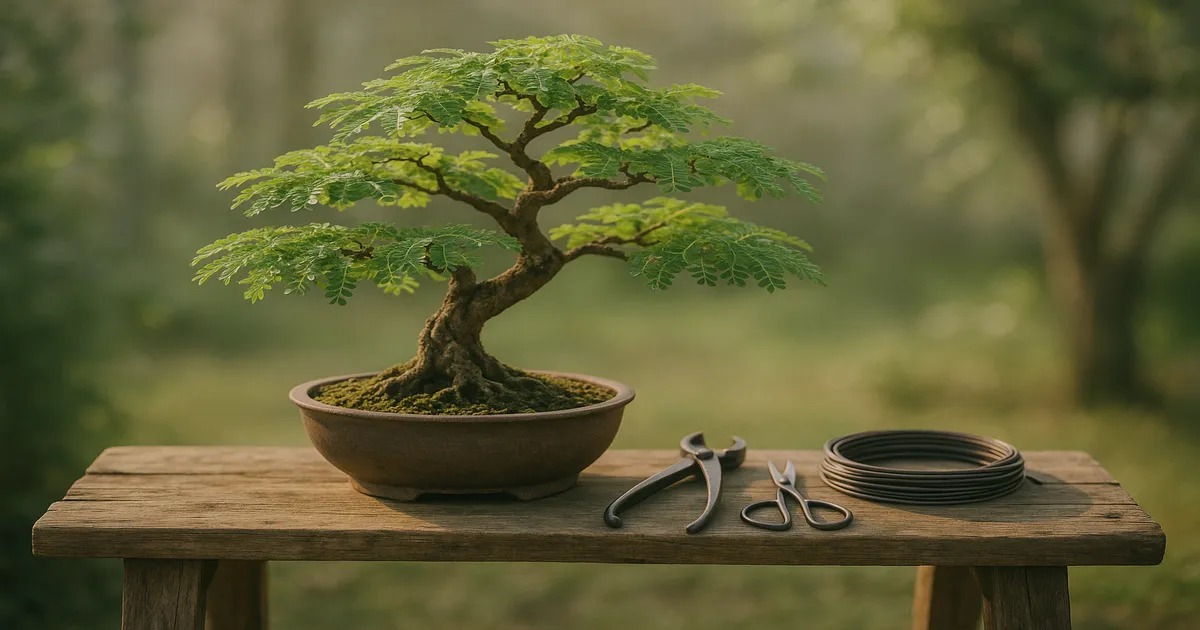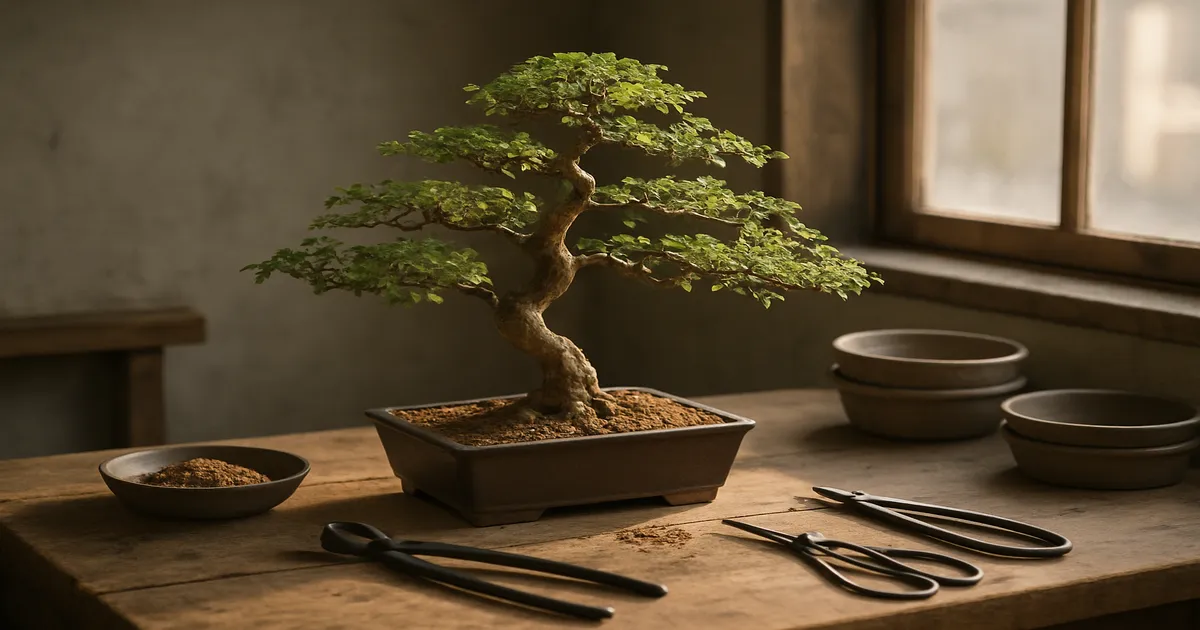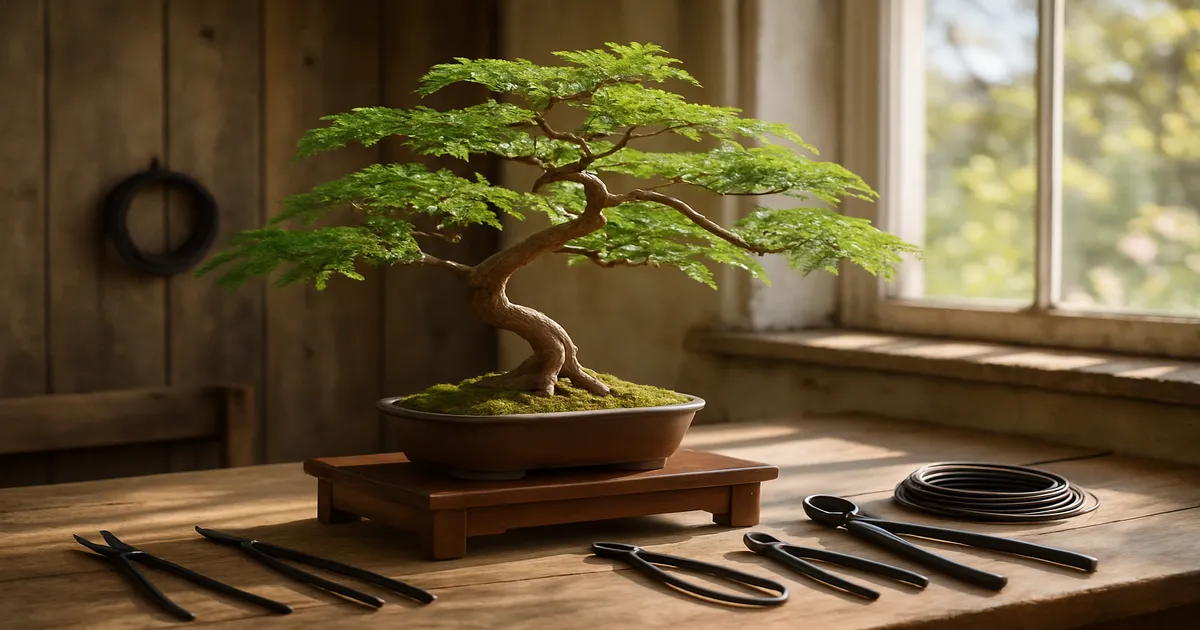
Quick Answer: Prune your Brazilian rain tree bonsai for maintenance every 2–4 weeks during the growing season, cutting new shoots back to 1–2 leaf pairs once they’ve extended 4–6. For structural work, target late winter to early spring (or just after summer defoliation) when branch architecture is easiest to assess and wounds heal fastest. Always use sharp, sterilized tools and apply bonsai-specific wound paste to any cut larger than ¼ inch (6 mm).
Brazilian rain tree bonsai pruning rewards growers who understand how this species actually grows. Chloroleucon tortum pushes hard, back-buds readily, and responds to the knife with enthusiasm — but it punishes sloppy cuts, ignored stubs, and wire left on too long. Get the timing and technique right and you’ll build a dense, refined canopy faster than almost any other tropical species.
Brazilian Rain Tree Bonsai Pruning: Key Facts at a Glance
- Two pruning modes: maintenance pruning (refinement, ramification) and structural pruning (branch architecture, design corrections)
- Strong back-budding means you can prune aggressively without losing branch zones
- Sterilize tools with 70%+ isopropyl alcohol between trees
- Apply wound sealant such as Kiyonal to any cut wider than ¼ inch (6 mm)
Seasonal Pruning Calendar
| Season | Activity |
|---|---|
| Late winter / early spring | Structural pruning — just before first growth flush |
| Spring through early summer | Maintenance pruning every 2–4 weeks; defoliation (late spring) |
| Summer | Continued maintenance pruning; structural pruning post-defoliation |
| Fall | Light maintenance only; taper off as growth slows |
| Winter | No pruning; protect from temperatures below 50 °F (10 °C) |
Understanding Growth Habits That Drive Pruning Decisions
Flush Growth Cycles
Brazilian rain tree doesn’t grow continuously — it grows in bursts. A new flush of shoots extends rapidly over several days, pushing out multiple internodes, then pauses before the next cycle begins. Pruning is most effective when timed to these flushes: let a shoot extend 4–6 leaf pairs, then cut it back. This keeps the tree compact and triggers the next flush from lower, more desirable nodes.
During peak season (late spring through summer), flushes can follow each other every two to three weeks. That’s your maintenance pruning rhythm.
Apical Dominance and Lower Branch Protection
C. tortum has strong apical dominance. Left unchecked, the upper and outer branches siphon energy from interior and lower growth, leaving bottom branches weak or dead. Regular pruning of the apex and outer pads is the primary tool for redirecting energy downward. Neglect the top and you’ll spend years trying to recover lower branches that a few timely snips would have kept healthy.
Nyctinasty, Thorns, and Other Quirks
The “rain tree” name comes from the leaves folding closed at night and in dim or rainy conditions — a behavior called nyctinasty. It’s completely normal. After a pruning session, leaves sometimes stay folded for a few hours or even a day; that’s not a sign of stress. (See the troubleshooting section for how to tell the difference.)
The paired stipular spines at each node are sharp and will catch wire, fingers, and tool handles alike. Work deliberately, use fine-tipped tweezers to navigate tight spots, and never force a tool past a thorn — you’ll strip bark.
Maintenance Pruning for Ramification
When to Start Each Session
Wait until a new shoot has produced 4–6 leaf pairs. Pruning too early — at just 1–2 pairs — produces weak cuts that don’t stimulate strong back-budding. Waiting too long lets internodes elongate and coarsen the texture you’re working to refine.
How to Cut for Maximum Ramification
Cut back to 1–2 leaf pairs, just above a node at a slight angle. The angle isn’t purely aesthetic — it discourages water from pooling on the cut surface, which reduces fungal risk. Each cut typically produces two or more new shoots from the node below. That branching response, repeated over multiple seasons, is how ramification builds.
While you’re in there, remove any shoots growing straight up (water shoots), straight down, or crossing other branches. They redirect energy and clutter the canopy without contributing to the design.
Pinching vs. Cutting
Pinching — removing the growing tip with fingernails or tweezers — works for the very softest new growth. But scissors produce a cleaner wound that heals faster and carries less infection risk. Use sharp bonsai scissors for almost everything; reserve pinching for the finest shoot tips where scissors are too awkward.
How Often to Prune
Every 2–4 weeks during spring and early summer when growth is fastest. As late summer and fall arrive, flushes slow and you can extend the interval. Consistent maintenance pruning does more than keep the tree tidy — it actively counteracts apical dominance by repeatedly cutting the strongest growth, which forces energy into weaker interior and lower branches.
Structural Pruning: Building and Correcting Branch Architecture
Best Time of Year for Structural Pruning
Late winter to very early spring is the primary window. Growth is at its slowest (though C. tortum is never truly dormant in tropical climates), the coming spring flush quickly covers wounds, and the semi-bare canopy makes branch selection straightforward. A second option: prune immediately after summer defoliation, when structure is fully visible and the tree still has months of growing season to recover.
Branch Selection: Primary, Secondary, and Sacrifice Branches
Good structure starts with primary branches spaced roughly 120° apart when viewed from above, so no two branches compete for the same visual space. Lower branches should be the longest and heaviest; branches progressively shorten toward the apex to create natural taper.
Sacrifice branches — branches you allow to grow freely and unpruned — are a legitimate tool for thickening the trunk or a specific section. Once the desired girth is reached, remove them.
Identifying Problem Branches
- Bar branches: Two branches at the same height on opposite sides of the trunk. Remove or reposition one.
- Crossing branches: Keep the one with better placement; remove the other.
- Water shoots: Fast, vertical growth with long internodes. Remove entirely unless you need a new branch in that zone.
- Parallel branches: Two branches running the same direction at similar heights. Thin to one.
Flush Cuts, Concave Cuts, and Avoiding Stubs
Brazilian rain tree does not tolerate stubs. A leftover stub dies back, creates a dead zone in the bark, and can introduce fungal disease. Always cut flush to the trunk or parent branch. Better yet, use concave branch cutters to create a slightly hollowed wound surface — this encourages even callus roll and produces a smoother long-term scar.
For branches over ¾ inch (2 cm) in diameter, start with a sharp pruning saw, then clean and shape the wound edges with a concave cutter. Forcing a concave cutter through a large branch in one pass damages both the tool and the cut surface.
Defoliation: Timing and Technique
When and Why to Defoliate
Full defoliation stimulates back-budding from older wood (including the trunk), triggers a new set of smaller leaves, and clears the canopy so you can make accurate structural decisions. Done correctly once per season, it’s one of the most powerful refinement tools available for this species.
Defoliate after the tree has fully leafed out in late spring but before peak summer heat. This gives the tree maximum growing season to recover and push a new flush. Defoliating in late summer leaves insufficient time to recover before cooler temperatures slow growth — a reliable way to weaken the tree heading into winter.
Step-by-Step Process
- Confirm the tree is healthy, vigorous, and free of other stress.
- Using sharp scissors, remove each leaf at the petiole — leave the petiole stub attached; it drops on its own within a week or two.
- Work systematically from one side of the canopy to the other.
- Move the tree to bright indirect light for 3–5 days, then return to full sun.
- New growth typically appears within 2–4 weeks.
Skip defoliation entirely if the tree was repotted in the same season, shows pest or disease stress, has suffered cold damage, or is otherwise weakened. Defoliation taxes energy reserves a struggling tree can’t spare.
Wound Care After Pruning
Cuts under ¼ inch (6 mm) on a healthy, actively growing tree will close without intervention. Apply wound paste to anything larger. Use a bonsai-specific product such as Kiyonal — avoid petroleum-based products like Vaseline or tar-based sealants, which can damage cambium tissue and impede healing.
For cuts larger than 1 inch (2.5 cm), carve the wound into a slightly concave shape with a rotary tool before applying sealant. This encourages callus tissue to roll evenly from all edges toward the center, producing a flatter, less prominent scar. Check large wounds monthly during the growing season and reapply sealant if it cracks or peels.
Small cuts typically callus over within a single growing season. Medium cuts (¼–1 inch) may take one to two seasons. Large wounds take longer but are relatively inconspicuous — the light gray to silvery-white bark makes scars blend in naturally when cuts are made correctly.
Wiring Alongside Brazilian Rain Tree Bonsai Pruning
Wire Type, Gauge, and Thorn Management
Aluminum wire is the right choice. The species has soft, fast-growing wood that copper wire can damage more easily, and aluminum is simpler to navigate around thorns.
- 1.0–1.5 mm: Fine twigs and young shoots
- 2.0–2.5 mm: Small to medium secondary branches
- 3.0–4.0 mm: Primary branches on medium-sized trees
Always anchor wire to the trunk or a substantial branch before coiling — unanchored wire spins and strips bark. Wrap at a 45° angle to the branch axis. Use tweezers to hold the wire in place as you work past each pair of spines.
When to Remove Wire
This is the most common wiring mistake with Brazilian rain tree: forgetting how fast it grows. During spring and summer, wire can bite into bark in as little as one to two weeks. Check every wired branch weekly during active growth, every three to four weeks when growth slows. Wire scars show clearly against the light bark and take years to fade — prevention is far easier than repair.
Supporting Conditions for Post-Pruning Recovery
Back-budding and wound callusing are powered by photosynthesis, so light matters. Aim for 6–8 hours of direct sun daily after any significant pruning. The exception: give the tree 3–5 days of bright indirect light immediately after defoliation before returning it to full sun.
For bonsai soil, a well-draining mix is non-negotiable. A ratio of 2:2:1 akadama, pumice, and lava rock supports the vigorous root activity that drives canopy regrowth. In humid climates or indoors, shift to 30% akadama / 50% pumice / 20% lava rock to improve drainage and reduce root rot risk.
After heavy structural pruning or defoliation, water demand drops temporarily — less foliage means less transpiration. Reduce watering frequency slightly until new growth confirms the root system is actively supporting recovery, then return to your normal schedule.
Troubleshooting Common Pruning Problems
No back-budding after pruning. The two most common culprits are insufficient light and pruning outside the active growing season. Move the tree to a sunnier spot and confirm you’re pruning during spring or summer. Healthy trees typically show new buds within 2–4 weeks.
Dieback after structural cuts. Almost always caused by leaving a stub or using a dull or dirty tool. Re-cut the affected area flush to the parent branch with a sharp, sterilized concave cutter, apply wound paste, and monitor. Continued dieback suggests fungal infection — investigate and treat accordingly.
Weak lower branches despite regular pruning. Apical dominance is winning. Prune the upper and outer branches more aggressively and more frequently. Temporarily let the lower branches extend longer than usual while cutting the top hard — this forces energy redistribution downward.
Leaves not reopening after a pruning session. If leaves folded during or after pruning and haven’t reopened after a day or two in normal light and warmth, it’s likely stress rather than nyctinasty. Check soil moisture, look for pest activity, and confirm the tree isn’t in a cold draft. True nyctinasty resolves within hours once conditions improve; stress-related folding persists and is usually accompanied by other symptoms.
Frequently Asked Questions
When is the best time to prune a Brazilian rain tree bonsai?
Maintenance pruning works anytime during the active growing season — specifically after new shoots have extended 4–6 leaf pairs. Structural pruning is best in late winter to early spring just before the first growth flush, or immediately after summer defoliation. Avoid heavy pruning in winter or when the tree is under stress.
How do I get my Brazilian rain tree bonsai to back-bud after pruning?
Ensure the tree gets at least 6–8 hours of direct sun daily and prune during active growth. Brazilian rain tree is one of the most reliable back-budders in bonsai — if it’s not responding, insufficient light or wrong-season pruning is almost always the cause. Expect new buds within 2–4 weeks on a healthy tree.
Should I use wound sealant after pruning?
Yes, for any cut larger than ¼ inch (6 mm). Use a bonsai-specific cut paste such as Kiyonal. Avoid petroleum-based products, which can damage cambium tissue. Small cuts on a healthy, actively growing tree will close on their own.
Can I defoliate a Brazilian rain tree bonsai to reduce leaf size?
Yes — full defoliation is effective for this species and also stimulates back-budding and improves ramification. Time it to late spring or early summer after the tree has fully leafed out. Never defoliate a recently repotted, pest-stressed, cold-damaged, or otherwise weakened tree.
Why are my Brazilian rain tree bonsai leaves folding closed after pruning?
Almost certainly nyctinasty — the species’ normal leaf-folding response to changes in light, temperature, or handling. It typically resolves within a few hours once conditions stabilize. If leaves remain folded for more than a day or two in good light and warmth, investigate other stressors: soil moisture, pests, cold drafts, or root health.