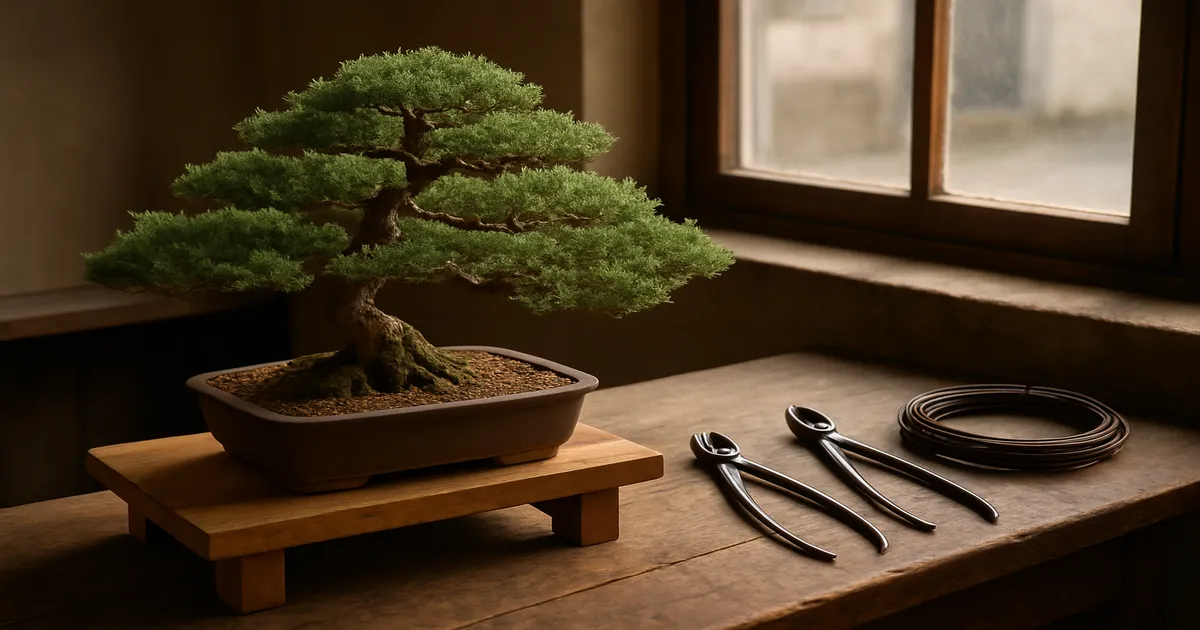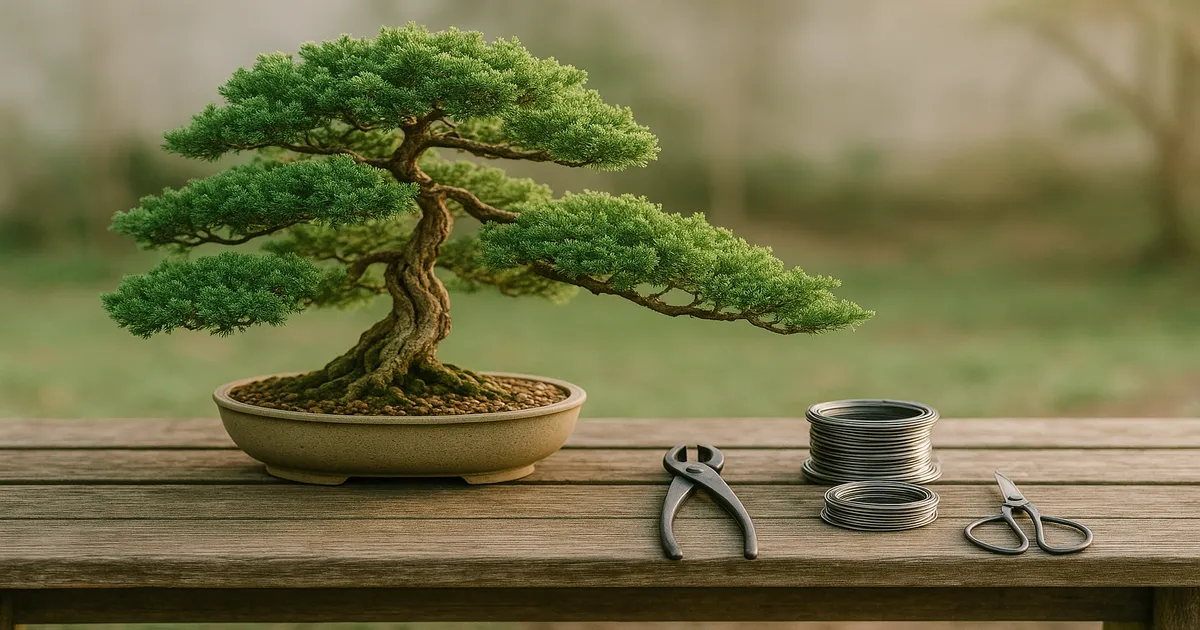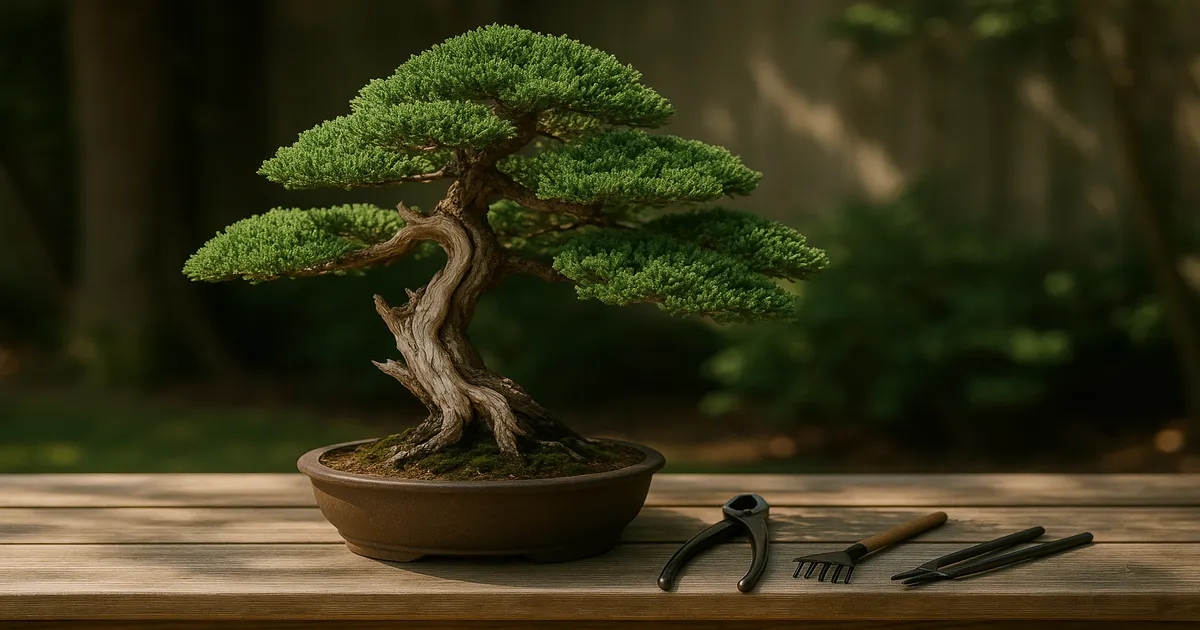
Quick Answer: Bonsai pruning juniper falls into two categories — maintenance pruning (pinching and tip trimming throughout the growing season) and structural pruning (removing or repositioning branches in late winter or late summer). The single most important rule: never cut back to bare wood. Junipers cannot bud from branchless stubs. Keep at least some foliage on every branch you touch, and your tree will respond well.
Bonsai pruning juniper is one of the most rewarding skills you can develop — and one of the easiest to get wrong. Junipers are forgiving in many ways, but they have hard limits that, once crossed, cost you a branch or worse. This guide covers everything: maintenance pinching, structural cuts, deadwood work, wiring, and the aftercare that makes pruning actually stick.
Juniper Species Commonly Used in Bonsai
Foliage type — scale versus needle — directly affects how you prune, so it’s worth knowing what you’re working with before picking up your scissors.
Scale-foliage varieties: Juniperus chinensis ‘Shimpaku’ is the gold standard in Japanese bonsai. Its soft, scale-like foliage forms dense pads and responds beautifully to pinching. Standard Chinese juniper (J. chinensis) is equally popular and well-suited to fine ramification work.
Needle-foliage varieties: Juniperus rigida (Needle Juniper) carries sharp individual needles and has dramatic deadwood potential. J. procumbens ‘Nana’ is the classic beginner’s juniper — low-spreading, tough, and widely available. Both require scissors rather than finger-pinching to avoid crushing the foliage tissue.
Wild-collected junipers: Juniperus californica and J. occidentalis are prized for thick, ancient-looking trunks and natural deadwood. Collected from the wild (yamadori), they need careful management during their first few years in a pot.
One rule applies to every species: junipers are outdoor trees. They need genuine winter dormancy and high-intensity natural sunlight. Keeping one permanently indoors leads to decline within a season — no exceptions.
Understanding How Junipers Grow
Apical Dominance and Energy Distribution
Junipers are strongly apically dominant. The top and outermost branches receive the most energy and grow fastest. Left unpruned, the apex and outer tips shade out lower and inner branches, which weaken and eventually die. Regular pruning redirects energy back toward the interior and lower portions of the tree, keeping the design balanced.
Live Veins: The Vascular System You Must Protect
Junipers carry their living vascular tissue in narrow strips of bark called live veins. Each live vein connects a foliage pad above to the root system below. Cut across a live vein — or strip all foliage from a branch — and that entire section dies. This is exactly why the “never cut to bare wood” rule exists. Before any significant cut, trace the live vein running from the foliage you plan to keep down to the roots.
Scale Foliage vs. Juvenile Needle Foliage
Junipers can produce two distinct foliage types. Adult scale foliage is soft, fine, and compact — what you want. Juvenile needle foliage is coarser and stiffer, and it appears when the tree is stressed, under-lit, or over-pruned. Consistent tip pruning in good light encourages the tree to maintain fine adult foliage. If you’re seeing a lot of prickly juvenile growth, check your light levels before blaming your pruning technique.
Maintenance Pruning: Pinching and Tip Pruning for Dense Foliage Pads
When and How to Prune Juniper Bonsai for Maintenance
Maintenance pruning runs from April through September in temperate climates. The sweet spot is late spring to early summer, when new shoots have extended but haven’t yet hardened off. You can continue light trimming through summer, but ease off by early fall to let the tree harden before winter.
For scale-foliage junipers (Shimpaku, Chinese juniper), use your fingers or sharp scissors to remove extending tips, cutting back by one-third to one-half of the new growth. The key is to cut, never tear — tearing crushes vascular tissue and leaves brown, ragged stubs. Always cut back to a side shoot or bud pointing in the direction you want growth to continue.
For needle-foliage junipers (Needle Juniper, Procumbens), trim the extending shoot as a unit with sharp scissors. Don’t try to cut individual needles — the cut stubs turn brown and look terrible. Cut back to a healthy side shoot, leaving enough foliage to sustain the branch. A good pair of dedicated bonsai scissors makes a real difference here.
What to Remove Within Each Foliage Pad
Within each pad, remove:
- Upward water shoots — vigorous vertical growth that disrupts pad shape and drains energy from finer ramification
- Downward-growing branches — unnatural-looking and difficult to style into flat pads
- Crossing branches — shoots that grow through or over each other, creating visual clutter and eventual bark damage
Tweezers are useful for pulling dead needles and debris from within pads without disturbing live foliage.
Structural Pruning: Building and Refining Branch Structure
When to Do Structural Pruning on Juniper Bonsai
The two windows are late winter to very early spring (February–March), just before the growth surge begins, or late summer after the main flush has hardened. Avoid structural cuts during the peak spring growth push — you’re fighting the tree’s energy rather than working with it.
Branch Selection Principles
A well-designed juniper follows a simple hierarchy:
- First branch — the lowest, longest, and thickest; positioned to one side for visual balance
- Second branch — on the opposite side, slightly higher
- Back branch — angled toward the viewer’s rear, creating the illusion of depth
This three-branch foundation repeats as you move up the trunk, with branches getting shorter and thinner toward the apex.
Remove bar branches (two branches at the same height on opposite sides of the trunk), wheel-spoke branching (multiple branches radiating from a single point — keep only the two or three best-positioned), branches growing directly toward the viewer, and any branch that is thicker further from the trunk than at its origin.
Cutting Technique and Wound Care
Use sharp concave cutters for branches up to ½ inch (12mm) in diameter. (Kaneshin 175mm concave branch cutter) The concave cut creates a slight hollow that heals flatter and more naturally than a flush cut. For larger stubs, a knob cutter removes the remaining nub cleanly.
Apply wound sealant to any cut larger than ¼ inch (6mm). (Kiyonal cut paste) This prevents desiccation and keeps pathogens out while the wound begins to callus. Junipers heal slowly — a 1-inch (2.5cm) wound can take 3–7 years to fully close. Reapply wound paste annually until it does, and keep the tree well-fed: a vigorous juniper heals measurably faster than a struggling one.
Deadwood Styling: Jin and Shari on Juniper Bonsai
Juniper wood is naturally resinous and rot-resistant, which means deadwood features last for decades. This is why the genus has been the go-to choice for jin and shari styling throughout bonsai history.
To create jin (deadwood branch stubs): score the bark at the base with a knife, then use jin pliers to grip and strip the bark in sections, pulling with the grain. Carve the exposed wood with a knife or rotary tool to create natural texture — splits, cracks, and tapered points look far more convincing than smooth, blunt ends. Treat with diluted lime sulfur (1:10 with water) to bleach and preserve.
To create shari (deadwood trunk stripes): remove a strip of bark from the trunk, working along the natural boundaries of the live vein — never cut across it. Carve the edges to soften them, then treat with lime sulfur as above.
Apply lime sulfur 2–3 times per year during the growing season. Wear gloves and eye protection, apply on a calm day, and keep it off live foliage — it will bleach anything it contacts.
Wiring Juniper Bonsai After Pruning
Aluminum wire is softer on bark and easier to work with — the right choice for most practitioners. (Renshape aluminum bonsai wire) Copper wire is stronger and preferred for thick, stiff branches, but it hardens as you work it and is less forgiving.
For gauge, follow the one-third rule: wire diameter should be roughly one-third the thickness of the branch. Wire two branches with one piece whenever possible, apply at a 45-degree angle, wrap in the direction of the intended bend, and leave a hair’s breadth of space between wire and bark — snug, not tight.
Check wired branches every 2–4 weeks during the growing season. Remove wire before it cuts in — wire scars on juniper can be permanent. Always cut wire off in short segments; never unwind it, as this risks snapping branches and tearing bark. Most bends set within 3–6 months on younger branches; thicker wood may need a year or more.
Care That Supports Healthy Pruning
A tree in poor health responds badly to pruning and heals slowly. Get the basics right, and every cut becomes more effective.
Light: Junipers need 6–8+ hours of direct sun daily. In climates where summer temperatures exceed 95°F (35°C), some dappled afternoon shade prevents foliage scorch — but don’t compensate by moving the tree fully into shade. Insufficient light is the leading cause of juvenile foliage reversion and poor back-budding.
Watering: Water when the top ½ inch (1.3cm) of soil begins to dry — not on a fixed schedule. In peak summer that may mean daily or twice daily; in winter dormancy, once every 1–2 weeks is usually enough. Always water thoroughly until it drains freely from the bottom.
Soil: The standard mix is a 1:1:1 ratio of akadama, pumice, and lava rock, with particle size of 3–6mm. (Bonsai Jack Juniper Gritty Mix) In hot, dry climates, shift toward 60–70% pumice and lava rock to prevent waterlogging. In cooler, wetter climates, a 1:1 akadama-pumice mix often works well.
Winter protection: Protect the tree when temperatures drop below 15°F (-9°C) for extended periods. An unheated greenhouse, cold garage, or cold frame holding 25–40°F (-4 to 4°C) is ideal. Do not bring junipers into a heated home — this breaks dormancy and exhausts the tree.
Troubleshooting Common Juniper Pruning Problems
Branch died after pruning. The most common cause is cutting back to bare wood — removing all foliage so the branch has no photosynthetic capacity. The second cause is accidentally severing a live vein. Before major cuts, always trace the live vein and confirm foliage remains beyond the cut point.
Foliage turning brown after cutting. Usually caused by tearing rather than cutting cleanly, or by cutting individual needles on needle-foliage varieties. Use sharp scissors, cut whole shoots, and browning will be minimal and temporary.
Juvenile needle foliage appearing. Reversion to coarse juvenile foliage signals stress — usually insufficient light, over-pruning, or both. Move the tree to a sunnier position and ease off pruning for a season. Adult scale foliage typically returns with better light and recovery time.
Wire scars. Minor scars may fade over several years; deep scars often remain. Prevention is the only real solution — monitor frequently and remove wire before it cuts in.
Slow or no back-budding. Usually comes down to insufficient light, poor tree health, or over-pruning that left too little foliage to sustain the tree. Maximize sunlight, fertilize through the growing season, and avoid removing more than one-third of the foliage mass in a single session.
Frequently Asked Questions About Bonsai Pruning Juniper
When is the best time to prune a juniper bonsai?
Maintenance pruning can happen throughout the growing season, April to September. Structural pruning is best done in late winter to early spring (February–March) just before the growth surge, or in late summer after the main flush has hardened off.
Can you cut juniper bonsai back to bare wood?
No. Junipers cannot produce new buds from bare wood the way many deciduous trees can. If you remove all foliage from a branch, that branch will die. Always leave at least some healthy foliage beyond any cut, and trace the live vein before removing significant sections.
How do you encourage back-budding on a juniper bonsai?
Maximize direct sunlight (6–8+ hours daily), maintain consistent tip pruning to redirect energy inward, and keep the tree well-fed through the growing season. Back-budding is directly linked to tree vigor — a healthy, well-lit juniper back-buds far more readily than a stressed or shaded one.
How often should you prune a juniper bonsai?
During the growing season, light maintenance pruning every 3–6 weeks keeps foliage pads compact and well-defined. Structural pruning is typically done once or twice a year during the transitional seasons. There’s no rigid schedule — prune when new growth is extending beyond the desired silhouette.
What tools do you need to prune a juniper bonsai?
For maintenance pruning: sharp bonsai scissors and your fingers. For structural pruning: concave cutters for branches up to ½ inch (12mm), knob cutters for larger stubs, wound sealant for any cut over ¼ inch (6mm), and jin pliers if you’re working on deadwood. Keep all blades clean and sharp — dull tools crush tissue rather than cutting it cleanly.