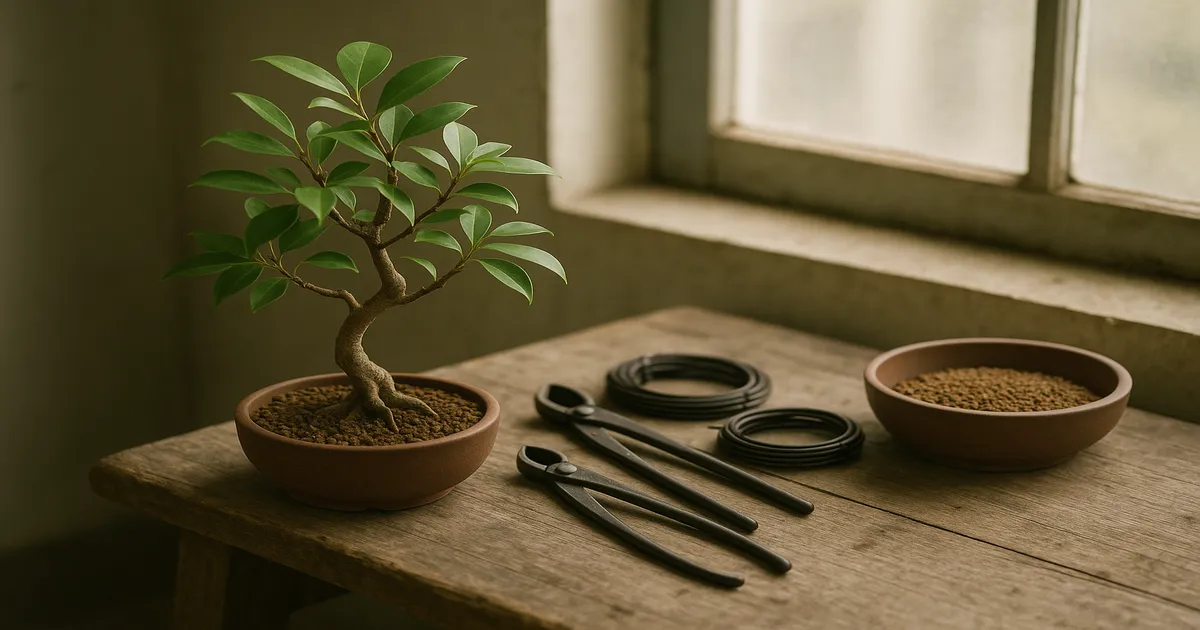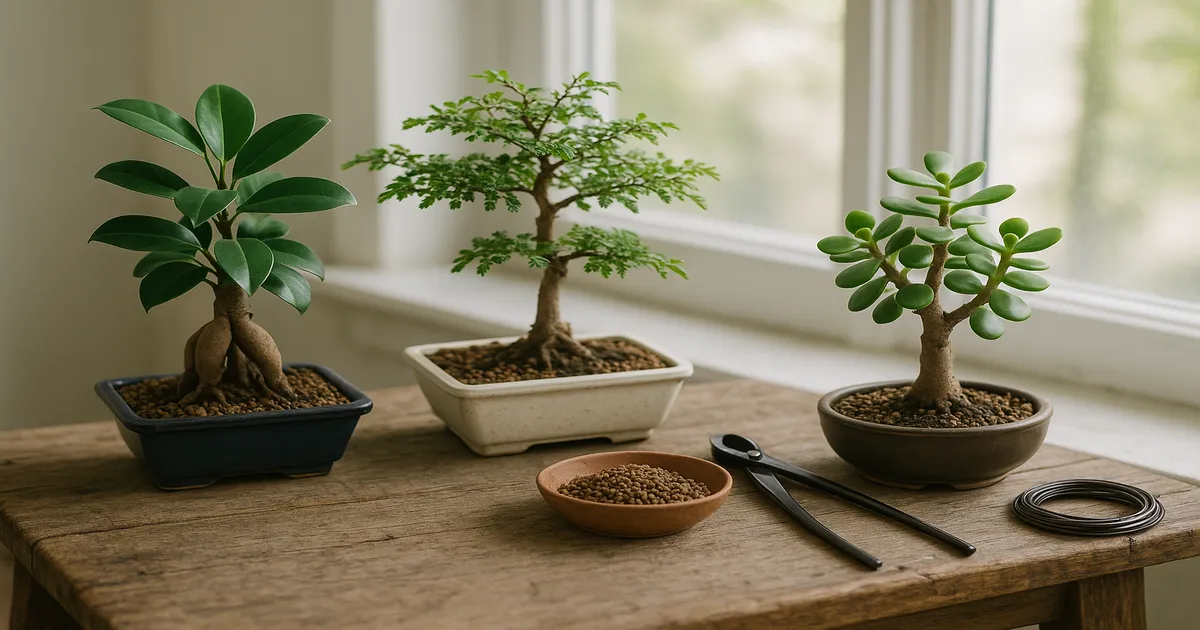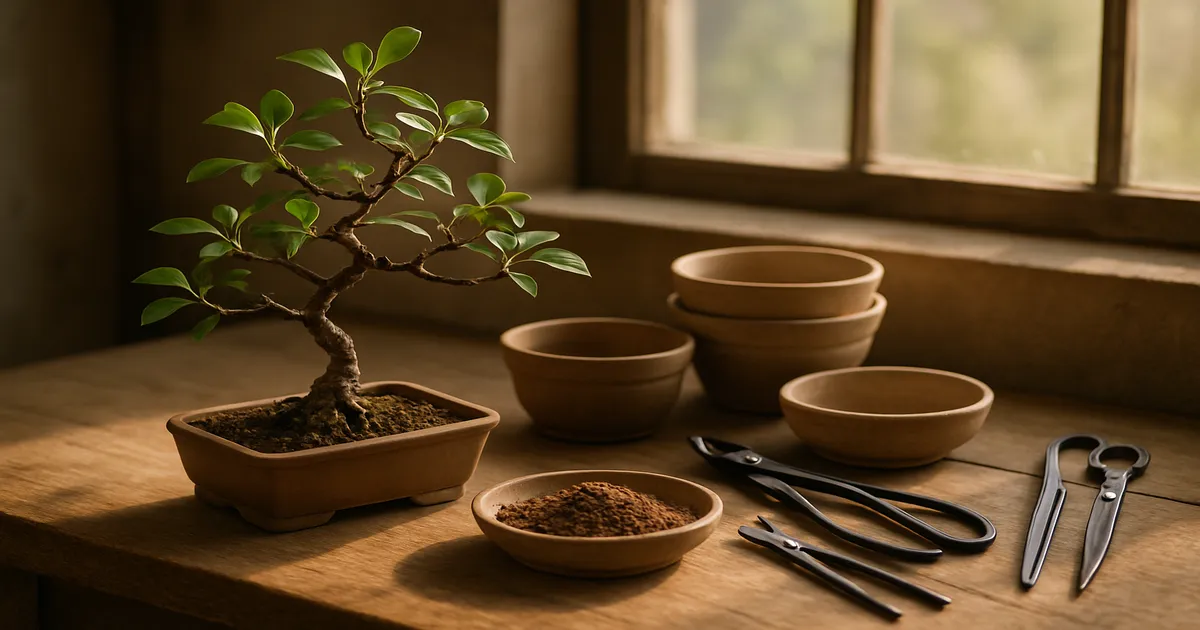
Quick Answer: Yes, you can add bonsai to your indoor garden — but success depends almost entirely on choosing the right species. Tropical and subtropical trees like Ficus and Fukien Tea thrive indoors year-round, while classic species like juniper and Japanese maple will decline and die without outdoor winter dormancy. Pick the right tree, give it enough light, and indoor bonsai is genuinely rewarding.
Can You Really Add Bonsai to Your Indoor Garden?
Yes — With the Right Species
If you’ve been wondering whether you can add bonsai to your indoor garden, the answer is a confident yes. The catch is that “bonsai” isn’t a single plant species — it’s a horticultural art form applied to woody trees and shrubs. The Japanese term 盆栽 (bonsai) literally means “planted in a tray.” Any tree can technically be trained as bonsai; the question is whether that tree can survive your living room.
Why Most Classic Bonsai Species Will Die Indoors
Walk into any bonsai nursery and you’ll see junipers, Japanese maples, and pines — the iconic species of traditional bonsai art. These are temperate trees that evolved with distinct seasons. They need a cold winter dormancy period, and without it they gradually weaken and die. Keeping a juniper indoors year-round is essentially a slow death sentence for the tree.
The Golden Rule: Choose Tropical and Subtropical Species
True indoor bonsai are tropical and subtropical trees — species that evolved in climates without hard freezes and are perfectly adapted to the stable, warm conditions of a typical home. Master this one principle and you’re already ahead of most beginners.
The Best Bonsai Species for an Indoor Garden
Ficus (Ficus retusa, F. benjamina, F. salicifolia) — Top Pick for Beginners
Ficus is the undisputed champion of indoor bonsai. Native to tropical Asia, these trees are vigorous, forgiving, and back-bud readily after pruning — meaning they bounce back from mistakes that would kill more sensitive species. Ficus retusa ‘Tiger Bark’ is a standout cultivar with striking mottled gray-and-orange bark that looks genuinely ancient even on young trees. The main caveat: Ficus hate being moved and will drop leaves in protest, but they recover quickly once settled.
Fukien Tea (Carmona retusa) — Flowers and Berries Year-Round
Fukien Tea produces tiny white flowers and red-to-black berries simultaneously throughout the year, making it one of the most visually interesting indoor bonsai. Native to subtropical southern China and Southeast Asia, it suits indoor temperatures well. It’s widely sold as a beginner tree, but it’s honestly more demanding than Ficus — sensitive to low humidity and intolerant of drafts. A beautiful choice once you have some experience.
Chinese Elm (Ulmus parvifolia) — Semi-Indoor Workhorse
Chinese Elm develops fine branch ramification quickly, its small serrated leaves reduce beautifully, and it responds excellently to pruning. It’s a middle-ground species: it can live indoors in consistently warm conditions, but it performs significantly better with a cool winter rest at 40–55°F (4–13°C) — an unheated garage or cool spare room works perfectly. If you can give it that seasonal shift, it’s one of the most rewarding bonsai you can grow. Cultivars like ‘Seiju’ and ‘Catlin’ are especially compact and attractive.
Jade Plant (Crassula ovata) and Elephant Bush (Portulacaria afra) — Succulent Options
Both of these South African succulents develop genuinely tree-like trunks and gnarled nebari (surface roots) over time, and they’re extraordinarily forgiving. Drought-tolerant by nature, they suit anyone who tends to forget to water. Portulacaria afra is often called “Dwarf Jade” and is arguably the most beginner-friendly bonsai species in existence. Neither is a traditional bonsai subject, but both are widely practiced and produce impressive results.
Dwarf Umbrella / Schefflera (Schefflera arboricola) — Dramatic Aerial Roots
Schefflera is the species to choose if you want a dramatic, banyan-style bonsai with fused trunks and cascading aerial roots. Native to the tropical forests of Taiwan and Hainan, it tolerates indoor conditions well and responds to hard pruning with vigorous regrowth. With consistently high humidity, it develops the kind of aerial root formations that make visitors stop and stare. Leaves reduce significantly under bonsai training.
Indoor Bonsai Species at a Glance
| Species | Difficulty | Key Trait | Light Need |
|---|---|---|---|
| Ficus retusa | ★☆☆ Easy | Forgiving, fast-growing | 4–6 hrs bright |
| Portulacaria afra | ★☆☆ Easy | Drought-tolerant | 6+ hrs direct |
| Chinese Elm | ★★☆ Moderate | Fine ramification | 6+ hrs bright |
| Fukien Tea | ★★☆ Moderate | Flowers & berries | 4–6 hrs bright indirect |
| Schefflera | ★★☆ Moderate | Aerial roots | 4–6 hrs bright indirect |
| Serissa | ★★★ Hard | Tiny white flowers | 6+ hrs; grow lights recommended |
Light: The Biggest Challenge When You Add Bonsai to Your Indoor Garden
Why Indoor Light Levels Are Lower Than You Think
This is where most indoor bonsai fail. Outside on a clear day, light intensity reaches 32,000–100,000+ lux. Even a bright, unobstructed south-facing window delivers only 5,000–10,000 lux — and typical indoor ambient light is a mere 200–500 lux. Most tropical bonsai need at least 2,000–3,000 lux as an absolute minimum, with 5,000+ lux being genuinely healthy. The gap between “looks bright to me” and “enough for a tree” is enormous.
A south-facing window is the gold standard in the Northern Hemisphere, followed by west-facing. East-facing windows provide gentler morning light that suits Fukien Tea and Schefflera well. North-facing windows are simply not sufficient for any bonsai species.
How and When to Use Supplemental Grow Lights
For anyone living above roughly 40°N latitude, supplemental lighting during winter months isn’t optional — it’s necessary. Full-spectrum LED grow lights running at 5,000–6,500K color temperature are the current best practice. Aim for 5,000–10,000 lux at canopy level, running 12–16 hours per day on a timer. T5 fluorescent fixtures are a budget-friendly alternative; position them 4–6 inches (10–15 cm) above the canopy. (Sunblaster 24W T5 HO Nano Reflector) Avoid incandescent bulbs entirely — wrong spectrum, too much heat, too little usable light.
Taking Your Bonsai Outdoors for Summer
Moving your indoor bonsai outside during frost-free months is one of the best things you can do for them. Real sunlight, natural humidity, and air circulation produce noticeably stronger growth and finer ramification. Acclimatize gradually over 1–2 weeks — start with an hour or two in a shaded spot and increase daily to prevent leaf scorch. Bring trees back inside before nighttime temperatures drop below 55°F (13°C) for tropical species.
Temperature, Humidity, and Soil
Ideal Temperature Ranges
Most tropical indoor species — Ficus, Fukien Tea, Schefflera — are happiest at 65–85°F (18–29°C) during the day and no cooler than 60°F (16°C) at night. Chinese Elm benefits from a cool winter rest at 40–55°F (4–13°C). Succulents like Jade and Portulacaria are comfortable between 65–80°F (18–27°C) and can tolerate 50–60°F (10–16°C) in winter with reduced watering.
Keep bonsai away from exterior doors, heating vents, and air conditioning units. A drop from 75°F (24°C) to 60°F (16°C) — easily caused by a cold draft — can trigger significant leaf drop in Ficus even without reaching technically damaging temperatures.
Raising Humidity Indoors
Most tropical species evolved in environments with 60–80% relative humidity. A typical heated or air-conditioned home sits at 30–50% RH — manageable, but below ideal. Serissa and Fukien Tea are the most sensitive; below 40% RH both can develop leaf drop and tip dieback.
Three practical solutions, roughly in order of effectiveness:
- Room humidifier — an ultrasonic cool-mist humidifier targeting 50–60% RH makes a genuine difference for sensitive species (Levoit Classic 300S ultrasonic humidifier)
- Humidity tray — place your bonsai on a tray filled with gravel and water, with the pot resting above the waterline; evaporation raises local humidity by 5–15%
- Grouping plants — clustering bonsai and other houseplants together raises local humidity through transpiration
Misting is often recommended online but isn’t worth relying on — it raises humidity for only minutes and can promote fungal disease if foliage stays wet.
Bonsai Soil: Why Standard Compost Will Kill Your Tree
Standard potting compost retains too much moisture, compacts over time, and restricts oxygen to the roots — a combination that leads directly to root rot. Good bonsai soil must deliver three things simultaneously: fast drainage, root aeration, and enough water retention to sustain the tree. All components should be particle-sized at 3–6mm (⅛–¼ inch).
The three core ingredients are akadama (fired Japanese clay granules with excellent water retention), pumice (volcanic glass that promotes fine root development), and lava rock/scoria (provides drainage, aeration, and useful ballast in shallow pots).
Recommended mixes:
- Tropical broadleaf species (Ficus, Fukien Tea, Schefflera): 50% akadama : 25% pumice : 25% lava rock
- Succulents (Jade, Portulacaria): 30% akadama : 40% pumice : 30% lava rock — faster drainage is critical
- Chinese Elm: standard 50:25:25 mix; a 10–15% addition of pine bark fines is acceptable if the tree spends summer outdoors in a hot, dry climate
On a budget, non-clumping 100% fired clay cat litter (such as Oil-Dri or Turface MVP) performs similarly to akadama at a fraction of the cost. Avoid peat moss, garden soil, and standard potting mix entirely.
Watering Your Indoor Bonsai
Water by Soil Moisture, Not by Schedule
Fixed-schedule watering — “every Tuesday and Saturday” — is one of the most common reasons indoor bonsai die. Watering frequency changes with the season, pot size, species, temperature, and humidity. The only reliable rule: check the soil first, then decide.
Three simple methods: push your finger about 1 inch (2.5 cm) into the soil and water when it feels barely moist to dry; insert a wooden chopstick 2 inches (5 cm) deep and check whether soil particles cling to it; or simply lift the pot — a dry bonsai feels noticeably lighter than a freshly watered one.
How to Water Thoroughly
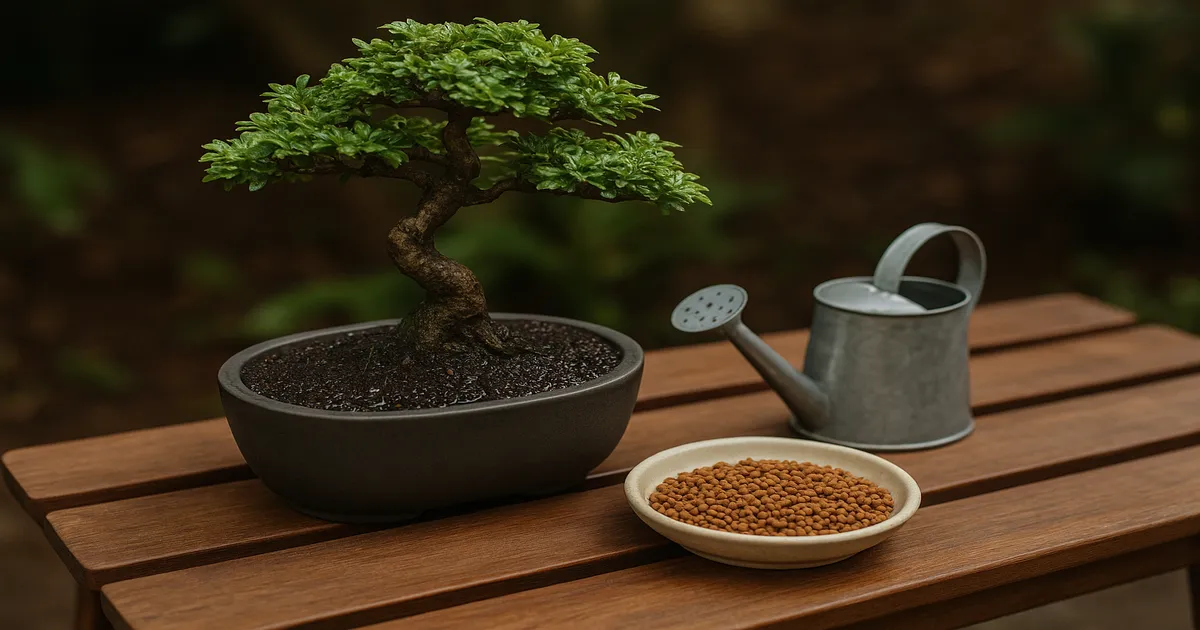
Water until it flows freely from the drainage holes — this ensures the entire root mass is moistened and flushes accumulated mineral salts. Let the pot drain completely and never leave it sitting in standing water. A fine-rose watering can prevents soil disturbance and protects fine feeder roots. Use room-temperature water; cold water below 50°F (10°C) can shock tropical roots.
Rainwater is ideal. Tap water works fine for most species — leave it in an open container overnight to off-gas chlorine. Avoid softened water, as the high sodium content harms roots over time.
Seasonal Watering Guide
| Season | Tropical Species | Succulent Species |
|---|---|---|
| Summer (active growth) | Every 1–3 days | Every 5–10 days |
| Winter (reduced growth) | Every 3–7 days | Every 10–21 days |
Always check soil moisture before watering — these are guidelines, not a schedule.
Basic Pruning and Shaping
Maintenance pruning means removing new shoots to maintain the tree’s established shape — done regularly throughout the growing season. Structural pruning involves removing entire branches to establish or redesign the primary silhouette — done less frequently and with more deliberation. As a beginner, start with maintenance pruning and resist dramatic structural changes until you understand how your tree grows.
Tropical species like Ficus and Schefflera can be pruned year-round, though spring and early summer are the most vigorous periods for recovery. Use sharp, clean concave cutters for clean cuts that heal quickly. Always cut back to a leaf node or side branch rather than leaving a stub.
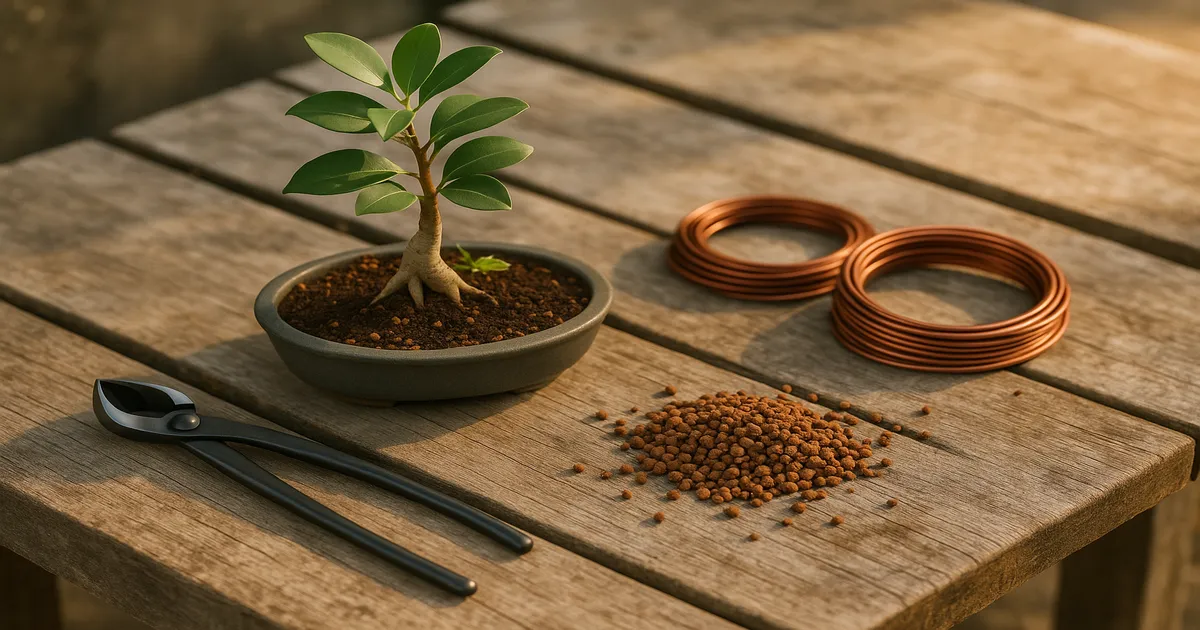
For shaping, wrap aluminium wire around branches at a 45-degree angle, then gently bend them into position. Use aluminium rather than copper for tropical species — it’s softer and less likely to damage bark. Check wired branches every few weeks and remove wire before it cuts into the bark — wire scars take years to fade.
Troubleshooting Common Indoor Bonsai Problems
Yellowing or dropping leaves is usually caused by one of four things: normal adjustment after being moved, cold shock from a draft, overwatering, or underwatering. Check soil moisture and temperature first. If the tree recently moved location, give it 2–3 weeks to settle before panicking — Ficus in particular will shed leaves then re-flush once acclimatized.
Root rot announces itself through mushy brown-black roots, a foul smell from the soil, and sudden wilting despite moist soil. If you suspect it, unpot the tree, rinse the roots, and cut away all soft or discolored root tissue with sterile scissors. Repot into fresh, fast-draining bonsai soil and reduce watering frequency going forward.
Leggy, weak growth with long internodes and pale leaves almost always signals insufficient light. Move the tree closer to your brightest window or add a grow light before assuming a watering or fertilizer problem.
Pests — scale, spider mites, and fungus gnats are the most common indoor bonsai pests. Scale and mites are often a sign of low humidity; fungus gnats indicate overwatering. Treat scale and mites with neem oil or insecticidal soap; allow the soil surface to dry between waterings to break the fungus gnat lifecycle.
Frequently Asked Questions
Can I add any bonsai to my indoor garden, or only certain types? Only tropical and subtropical species — such as Ficus, Fukien Tea, Schefflera, and Portulacaria — are suited to indoor conditions year-round. Temperate species like juniper, pine, and Japanese maple require outdoor winter dormancy and will decline indoors.
How much light does an indoor bonsai actually need? Most tropical bonsai need 5,000+ lux for healthy growth. A bright south-facing window delivers 5,000–10,000 lux; typical indoor ambient light is only 200–500 lux. If your windows are limited, a full-spectrum LED grow light running 12–14 hours per day is a practical solution.
How often should I water my indoor bonsai? There is no fixed schedule. Check the soil daily — water when the top inch feels barely moist to dry. In summer, tropical species may need water every 1–3 days; in winter, every 3–7 days. Succulents need far less.
When should I repot my indoor bonsai? Repot when roots begin circling the pot or emerging from drainage holes — typically every 2–3 years for fast-growing species like Ficus, and every 3–5 years for slower species. Spring, just before the growing season begins, is the best time. Always repot into fresh bonsai soil, not standard potting compost.
Do indoor bonsai need fertilizer? Yes. Bonsai are grown in small volumes of nutrient-poor soil and need regular feeding during the growing season (spring through early autumn). Use a balanced fertilizer (such as 10-10-10 or a dedicated bonsai fertilizer) at half strength every two to four weeks. Reduce or stop feeding in winter when growth slows.