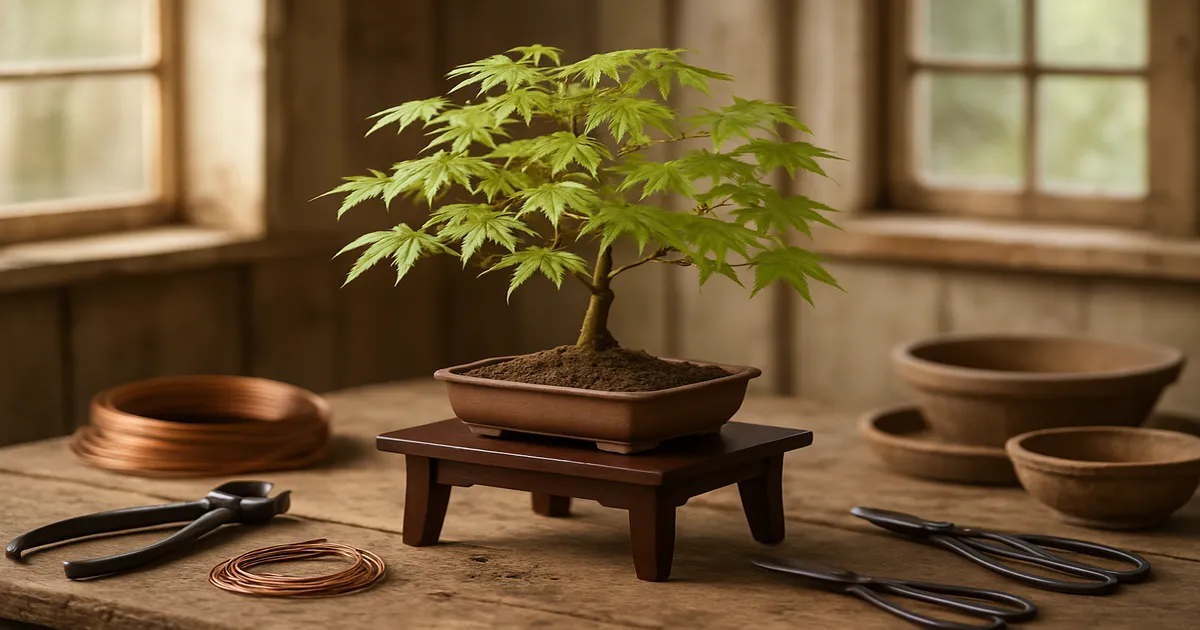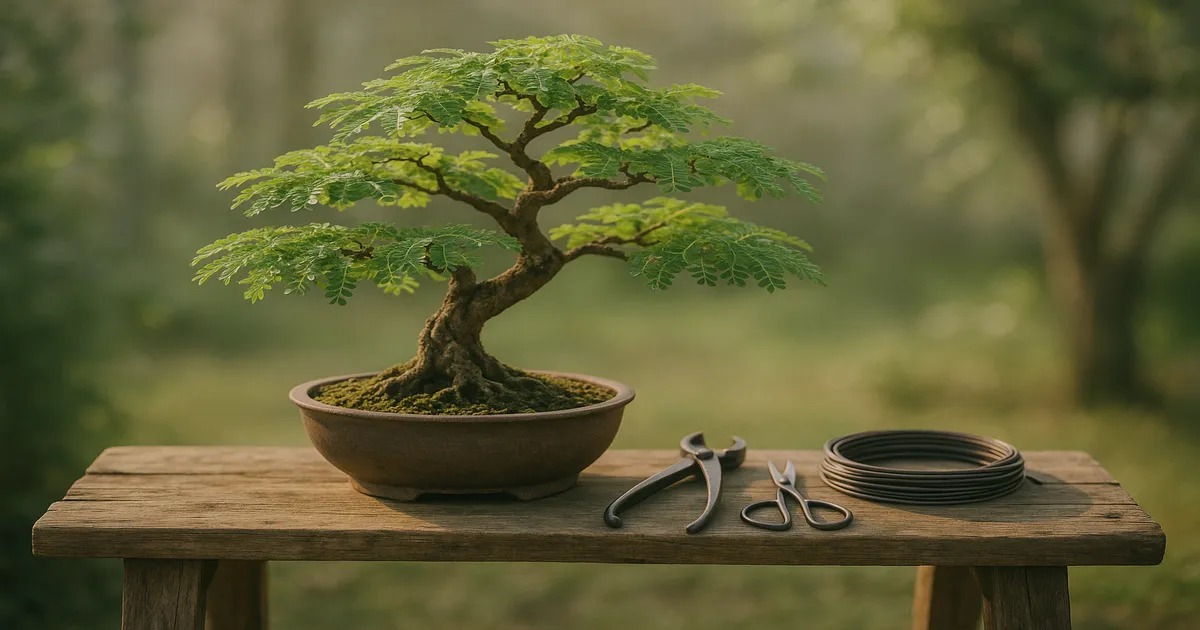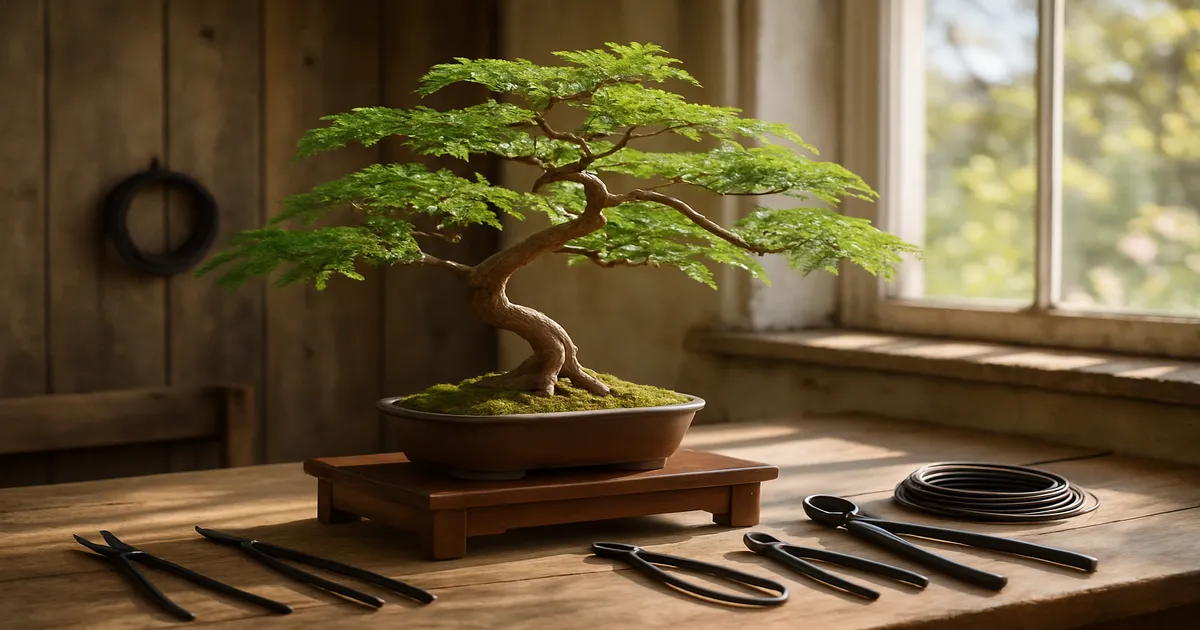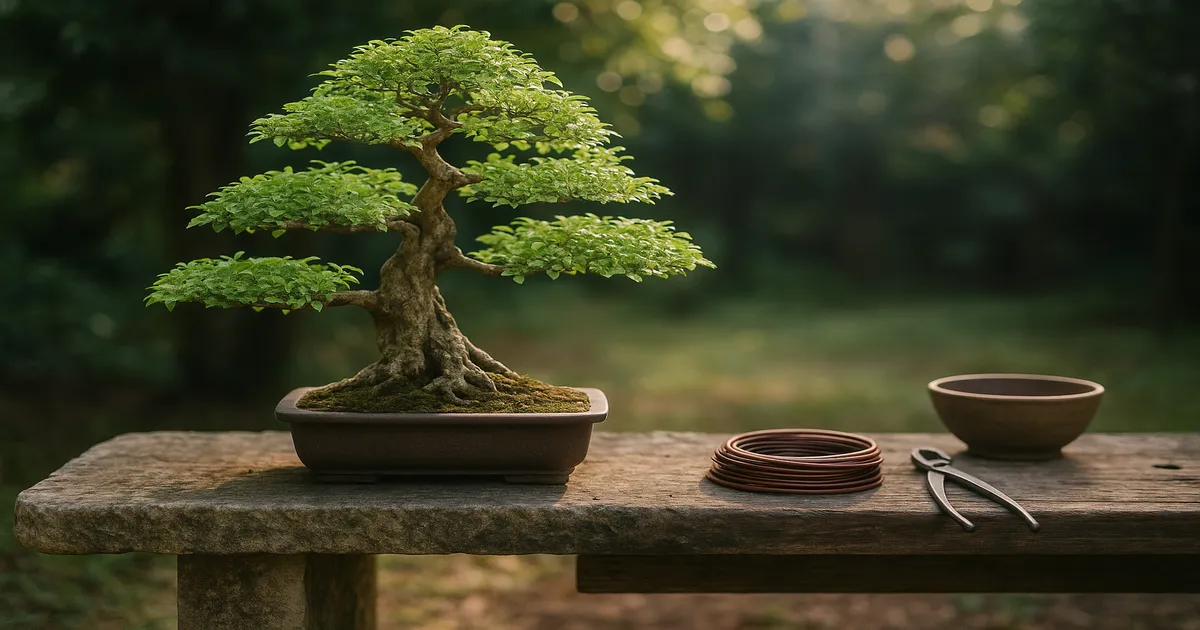
Quick Answer: Styling a Premna bonsai means working with one of the most rewarding tropical subjects available — vigorous back-budding, naturally gnarled bark, and excellent nebari make it highly responsive to bonsai techniques. The core workflow combines structural pruning in late winter or early spring, consistent maintenance pinching throughout the growing season, aluminum wire applied to bare or defoliated branches, and repotting every one to three years. Get the fundamentals right and Premna rewards you quickly.
Figuring out how to work with styling this Premna bonsai is one of the better problems to have. Premna is fast-growing, forgiving of hard cuts, and capable of developing thick, deeply furrowed trunk character that takes other species decades to achieve. This guide covers everything you need — species selection, light and soil requirements, pruning and wiring techniques, repotting, and common problems — so you can make confident decisions at every stage of development.
Understanding Premna: Species, Growth Habit, and Bonsai Potential
Which Premna Species Are Best for Bonsai?
The genus Premna contains roughly 200 species in the family Lamiaceae, but only a handful appear regularly in bonsai collections.
- Premna obtusifolia — the most widely grown for bonsai; broad, glossy leaves (3–4 in / 7.5–10 cm), highly adaptable, excellent for beginners and experienced growers alike
- Premna microphylla — prized for naturally small leaves (around 0.5 in / 1.3 cm); the go-to choice for refined, detailed work in Chinese and Japanese traditions
- Premna japonica — tolerates cooler temperatures than most species; a good option for growers in marginal climates
- Premna corymbosa — vigorous grower popular in Southeast Asian collections; develops good trunk character quickly
Natural Growth Habit and What It Means for Styling
Premna is native to coastal scrublands, tropical forests, and rocky hillsides across East Africa, South Asia, Southeast Asia, and the Pacific Islands. It grows naturally in well-drained, often rocky or sandy soils with high light exposure and seasonal wet/dry cycles. That origin tells you exactly what this tree wants: excellent drainage, plenty of sun, and occasional stress rather than constant coddling.
Growth rate is moderate to vigorous — up to 12–24 in (30–60 cm) of new growth per season under good conditions. That speed is your biggest styling asset, but it also means wire can bite in fast and structural mistakes compound quickly.
Trunk, Bark, and Nebari Development
Premna develops deeply furrowed, gnarled bark with age — exactly the character that makes a bonsai look ancient. Nebari forms naturally and dramatically, often creating buttressed bases without much intervention. Back-budding from old wood is strong, so you can make hard cuts confidently and expect a solid response. Leaf size reduces well with consistent pruning, making even the larger-leafed species like P. obtusifolia viable for refined styling over time.
Light, Temperature, and Placement for Healthy Styling Progress
Outdoor vs. Indoor Growing
Premna is fundamentally an outdoor species suited to USDA Zones 9–12. It can survive indoors for a week or two as a display piece, but without serious supplemental lighting it will decline — elongated internodes, weak branching, and eventual leaf drop follow. If you’re in Zones 7–8, plan on outdoor growing during warm months and a frost-free greenhouse or sunroom for winter.
Aim for a minimum of 6 hours of direct sun daily; 8–10 hours is better. Insufficient light is the single most common reason Premna styling stalls. Internodes stretch, leaves stay large, and branching weakens. In climates where summer temperatures push consistently above 100°F (37.8°C), 30–40% afternoon shade prevents leaf scorch without sacrificing growth quality.
For indoor overwintering, standard household lighting won’t cut it. You need high-output LED grow lights delivering 30,000–50,000 lux for 12–14 hours daily. (Mars Hydro TS 600)
Cold Hardiness and Winter Protection by Species
- P. microphylla and P. obtusifolia: Protect from any frost; move indoors when nighttime temperatures approach 35–38°F (1.7–3.3°C)
- P. japonica: Can briefly tolerate 20–25°F (-6.7 to -3.9°C) with root protection
- Cold greenhouse at 45–55°F (7.2–12.8°C): Ideal for all species — cool enough for partial rest, warm enough to prevent freeze damage
P. microphylla will drop its leaves naturally in cooler winter conditions. This is normal behavior, not a crisis.
Soil Mix and Watering: The Foundation of a Healthy Premna Bonsai
Best Soil Mix for Premna Bonsai
Premna is highly susceptible to root rot in poorly draining media. The right mix depends on your climate.
Tropical/subtropical climates (outdoor year-round): Akadama 40%, pumice 30%, lava rock 30%
Temperate climates (container, seasonal outdoor): Akadama 30%, pumice 40%, lava rock 30%
The higher pumice ratio in the temperate mix compensates for slower drying in cooler, cloudier conditions. Use 3–6 mm particle size for medium to large trees, 1–3 mm for mame and shohin. Avoid peat-based mixes entirely — they compact over time and suffocate roots. A pre-blended inorganic mix can save time if you don’t want to source components separately. Target a soil pH of 6.0–7.0.
Watering Through the Seasons
In the active growing season, water when the top 0.5–1 in (1.3–2.5 cm) of soil begins to dry — in hot, sunny conditions that can mean daily or even twice daily. Always water thoroughly until water flows freely from the drainage holes. In winter rest, drop to every 3–7 days and allow the soil to dry more completely between waterings. Rainwater or filtered water is preferable to hard tap water over the long term.
Premna prefers 50–80% relative humidity. In dry climates or heated indoor spaces (often 20–30% RH), use humidity trays with water and gravel, group plants together to create a shared microclimate, or run a room humidifier near the collection. Low humidity combined with dry soil is the most common cause of leaf drop in indoor-kept specimens.
Overwatering signs: older leaves yellowing first, soft or mushy roots, fungal gnats in the soil, persistent algae on the soil surface.
Underwatering signs: leaf curl and wilting, crispy edges progressing inward, leaves dropping while still green, pot feels unusually light when lifted.
Pruning Premna Bonsai: Structural Cuts to Maintenance Pinching
Structural Pruning: Timing and Branch Selection
Structural pruning establishes the primary, secondary, and tertiary branch framework. Do this in late winter to early spring, just before bud break, when wounds will callus quickly once growth begins. In true tropical climates without dormancy, spring is still preferred even though pruning is technically possible year-round.
Key branch selection principles:
- Position the first branch at approximately one-third of total tree height
- Remove branches with inverse taper (thicker at the tip than at the base)
- Eliminate parallel branches at the same height on the same side of the trunk
- Remove crossing branches and anything that clutters the interior
Premna tolerates hard cuts well and back-buds vigorously from old wood — don’t be timid. Sharp concave cutters produce clean wounds that heal flush with the trunk.
Maintenance Pruning and Pinching for Ramification
Once the framework is set, maintenance pruning runs continuously through the growing season. The technique is simple: once a shoot reaches 3–5 leaf pairs, pinch or cut it back to 1–2 leaf pairs. Do this consistently and ramification increases while leaf size decreases progressively over seasons. Always cut just above a bud or node pointing in the direction you want the next branch to grow.
Defoliation: When, Why, and How
Full defoliation — removing every leaf — can be done once per season on healthy, vigorous trees, typically in early to mid-summer. The payoff is real: back-budding is stimulated, leaf size decreases, ramification improves, and you get a clear view of the branch structure for wiring. Partial defoliation (removing leaves from stronger areas while leaving weaker zones intact) is a more conservative approach that helps balance vigor across the tree.
Never defoliate a stressed, recently repotted, or unhealthy tree. After defoliation, reduce watering slightly until new leaves emerge — usually 2–4 weeks.
Apply cut paste to any wound larger than 0.25 in (6 mm) in diameter to prevent desiccation and disease entry. Large wounds may take 2–5 years to fully callus depending on tree vigor. Jin and shari deadwood features are possible on Premna — treat finished deadwood with lime sulfur to preserve and whiten it.
Wiring Premna Bonsai: How to Style This Premna Bonsai’s Branches Effectively
Wire Type, Gauge, and Technique
Aluminum wire is the right choice for Premna. It’s softer than copper, which protects the relatively thin bark of younger branches. Wire diameter should be approximately one-third the diameter of the branch being wired.
- Primary structural branches: 3.0–4.0 mm aluminum
- Secondary branches: 1.5–2.5 mm aluminum
- Fine tertiary branches: 0.8–1.5 mm aluminum
Use the double-wiring technique when possible — anchor one length of wire at the trunk and wire two branches of similar thickness with it. Apply wire at approximately 45° to the branch axis for maximum holding power without pressure points.
Timing and How Long to Leave Wire On
The best time to wire is late winter or early spring on bare branches before leaf emergence. The other good window is after summer defoliation, again when branches are clearly visible. Avoid wiring immediately after repotting — wait 4–6 weeks for the tree to stabilize first.
Premna grows fast. During peak growing season, check wired branches every 2–3 weeks without fail. The safe window is typically 4–8 weeks before wire begins to bite. In winter or slow-growth periods, wire can remain safely for 2–4 months. Always cut wire off in short segments rather than unwinding it — unwinding drags against the bark and causes unnecessary damage.
The six most common wiring mistakes:
- Leaving wire on too long — the most damaging error with fast-growing tropicals
- Wrong angle — less than 45° means poor holding power; more means pressure damage
- Crossing wire over itself — creates pressure points that scar bark
- Wiring too tightly — you should be able to slide a fingernail under the wire
- Failing to anchor the wire — unanchored wire rotates and damages bark
- Using wire that is too thin — the branch springs back; two thin wires don’t equal one correct gauge
Repotting Premna Bonsai: Roots, Timing, and Soil Refresh
How Often and When to Repot
- Young trees in development: Every 1–2 years
- Mature, refined specimens: Every 2–3 years
Check the root mass annually. If roots are circling the pot interior, emerging from drainage holes, or lifting the soil surface, repot regardless of how long it’s been. Early spring — just as buds begin to swell but before significant leaf emergence — is the optimal window. The tree is waking up and will push new roots quickly to replace what was pruned.
Step-by-Step Repotting Process
- Remove the tree from its pot and comb out the root mass with a root hook
- Prune roots back, removing up to one-third of the root mass on a healthy tree; remove any circling, dead, or mushy roots
- Prepare the pot with drainage mesh and anchor wire
- Add a layer of fresh soil mix
- Position the tree, secure it with anchor wire through the drainage holes, and work fresh soil into the root mass
- Water thoroughly to settle the soil
After repotting, place the tree in a sheltered, bright location — not full blazing sun — for 2–4 weeks. Reduce watering until new growth confirms root recovery. Hold off on fertilizing for 4–6 weeks.
Troubleshooting Common Premna Bonsai Problems
Leggy Growth and Large Leaves
Long internodes and oversized leaves almost always point to insufficient light or excess nitrogen. Move the tree to a sunnier position first — this alone often resolves the problem within a few weeks. If light is adequate, reduce nitrogen and shift toward a more balanced or phosphorus/potassium-forward fertilizer as the tree matures.
Leaf Drop and Tip Dieback
Not all leaf drop is a problem. P. microphylla drops its leaves naturally in cooler winter conditions. Stress-induced drop is different and typically linked to low humidity, underwatering, or cold damage. Tip dieback can indicate overwatering and root rot, cold damage, or pest activity — work through those causes systematically.
Wire Scars
Wire marks can take 1–3 years to fade on Premna, and if wire was left on too long, the scarring may be permanent. Prevention is the only real solution. Check wired branches every 2–3 weeks during the growing season and remove wire the moment it begins to cut into the bark.
Slow Ramification
Slow ramification almost always comes down to three things: insufficient light, inconsistent pruning, and imbalanced fertilization. Ensure 8–10 hours of direct sun, pinch back new growth consistently throughout the season, and perform a full defoliation once per year on healthy trees. As the tree matures, shift fertilizer ratios toward higher phosphorus and potassium relative to nitrogen to encourage refined growth over raw bulk.
Frequently Asked Questions About Styling a Premna Bonsai
When is the best time to prune a Premna bonsai?
Structural pruning is best done in late winter to early spring, just before bud break. Maintenance pinching can continue throughout the entire growing season — Premna responds well to consistent work from spring through early fall. In tropical climates without true dormancy, structural pruning can happen any time the tree is actively growing, though spring is still preferred.
Can Premna bonsai be grown indoors?
Premna can survive indoors for short display periods of one to two weeks, but it will decline without high-intensity supplemental lighting. If you overwinter indoors, use high-output LED grow lights delivering 30,000–50,000 lux for 12–14 hours daily. Standard household lighting is completely inadequate. Premna performs best with full outdoor exposure in USDA Zones 9–12.
How do I reduce leaf size on a Premna bonsai?
Consistent maintenance pruning is the foundation — pinching shoots back to 1–2 leaf pairs throughout the growing season progressively reduces leaf size over multiple seasons. Full defoliation once per year on a healthy tree accelerates the process by stimulating back-budding and forcing smaller replacement leaves. Adequate sunlight (8–10 hours daily) is equally important; shaded trees maintain or increase leaf size regardless of pruning effort.
How often should I repot a Premna bonsai?
Young trees in active development typically need repotting every one to two years. Mature specimens can go two to three years between repottings. Check the root mass annually — if roots are circling the pot, emerging from drainage holes, or lifting the soil surface, it’s time regardless of the last repotting date.
Why is my Premna bonsai dropping leaves?
Leaf drop has several possible causes. P. microphylla drops leaves naturally in cooler winter conditions — this is normal. Outside of winter, the most common culprits are low humidity, underwatering, cold damage, or root rot from overwatering. Check soil moisture first, then humidity levels, then inspect the roots for softness or discoloration. Address the underlying cause rather than treating the symptom.