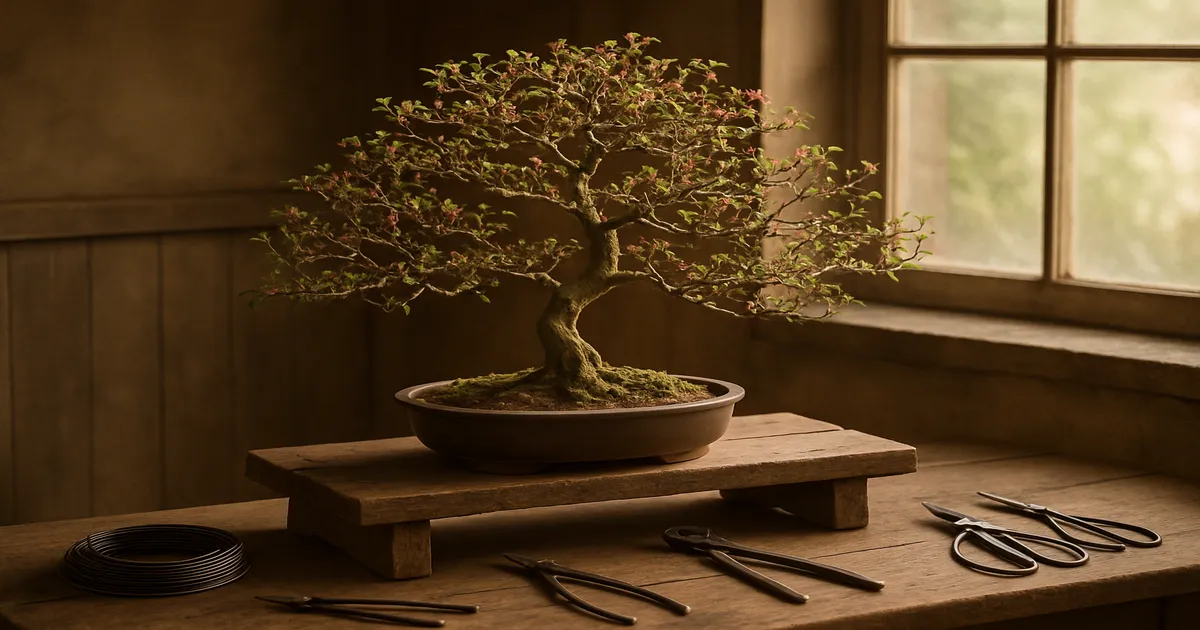
Quick Answer: The best time to hard prune cotoneaster is late winter to very early spring — typically late February through mid-March in USDA Zones 6–7 — just as buds begin to swell but before leaves emerge. Two secondary windows exist: late autumn/early winter (acceptable) and midsummer after the spring flush hardens (use with caution). Avoid pruning during the active spring flush, late summer, or in consistently freezing mid-winter temperatures.
Knowing when to hard prune cotoneaster is just as important as knowing how. Get the timing right and you’ll trigger strong back-budding, rapid wound closure, and a healthier, more refined tree. Get it wrong and you risk sap bleeding, frost-damaged new shoots, or a tree that simply refuses to respond. This guide covers every timing window — and the ones to avoid entirely.
Understanding Cotoneaster Before You Hard Prune
Growth Habit and Natural Branching
Cotoneaster is naturally shrubby and multi-stemmed, with dense, twiggy branching and short internodes. That compact habit is one reason it suits bonsai so well — ramification develops relatively easily compared to many other species. The two most popular bonsai species are C. horizontalis (rockspray cotoneaster), prized for its distinctive herringbone branching, and C. microphyllus (littleleaf cotoneaster), favored for shohin work thanks to its proportionally tiny leaves.
Flowers, Berries, and What That Means for Timing
Most vigorous extension growth happens in a single spring flush, roughly April through June in temperate climates, followed by a weaker secondary flush in late summer. Flowers and berries form on short spurs on second-year and older wood — not on new growth. This matters enormously for timing: hard pruning in late winter removes that flowering wood and sacrifices the current year’s display. For structural work, that trade-off is worth making. For a tree you want in full berry for an autumn show, it isn’t.
Why Cotoneaster Responds Well to Hard Pruning
Cotoneaster back-buds readily on old wood. Cut hard into a thick branch and dormant buds along the bark will activate and push new growth — few temperate bonsai species do this as reliably. Apical dominance is moderate, meaning upper branches grow more vigorously than lower ones, which affects both timing and technique decisions throughout the season.
When to Hard Prune Cotoneaster: The Four Windows
Primary Window — Late Winter to Early Spring (Best)
Calendar timing: Late February through mid-March in USDA Zones 6–7, roughly three to four weeks before your last expected frost date.
This is the optimal window for several reasons. The tree is coming out of dormancy with maximum stored energy, the growing season begins almost immediately after you cut, wounds callus fastest, and the back-budding response is strongest. You also have full structural visibility before leaves obscure the branch work. The only real trade-off is sacrificing that year’s flowers and berries — an accepted compromise for meaningful structural work.
Look for buds that are visibly swelling and showing color but haven’t yet opened. That’s your signal to act.
Secondary Window — Late Autumn and Early Winter (Acceptable)
Calendar timing: After leaf drop on deciduous species, or after growth has fully hardened on semi-evergreen species — typically November through December in most temperate zones.
The main advantage here is structural clarity: bare branches reveal crossing limbs, competing leaders, and proportion problems that foliage hides. The downside is that wounds remain open through the entire dormant period without callusing, which increases desiccation and pathogen risk. This window works best when you genuinely need to see bare structure to make good decisions — for example, on a tree with a congested apex that’s difficult to read in leaf. Late winter pruning is still preferable when you have the choice.
Tertiary Window — Midsummer (Use With Caution)
Calendar timing: Mid-June through mid-July, after the spring flush has fully hardened off.
Midsummer hard pruning is useful for reducing excessive vigor in a dominant branch or for emergency structural correction. The tree has enough energy reserves to respond, but the remaining growing season is shorter, leaving less time to recover before dormancy. Never hard prune in midsummer when temperatures are consistently above 90°F (32°C) or when the tree shows any drought stress. Heat, water stress, and significant pruning together are a reliable path to dieback.
Timing Periods to Avoid Entirely
| Period | Why to Avoid |
|---|---|
| Active spring flush (April–May) | Excessive sap bleeding; energy diverted from new growth; high disease risk |
| Late summer (August–September) | New growth won’t harden before frost; fresh shoots likely to be frost-damaged |
| Mid-winter in freezing climates (Dec–Jan) | Open wounds in temperatures consistently below 28°F (−2°C) cause dieback beyond the cut |
Hard Pruning Technique: Step-by-Step
Tools for Hard Pruning Cotoneaster
- Concave cutters for any branch over ¼ inch (6 mm) in diameter — the concave wound heals more flush with the trunk than a straight cut
- Bonsai scissors for fine work and shoots under ¼ inch
- Cut paste or wound sealant for larger wounds
- Clean, sharp blades — dull tools crush tissue and slow healing
How Much Can You Safely Remove?
On a healthy tree, limit removal to 30–40% of total foliage mass in a single session. On a weak, stressed, or recently repotted tree, drop that to 20–25%. Exceeding these thresholds doesn’t just slow recovery — it can trigger progressive dieback or, in severe cases, kill the tree outright. If a neglected tree needs more work than that, split the pruning across two seasons.
Where to Make Your Cuts
Always cut to a visible bud pointing in the direction you want future growth, or to a lateral branch that continues the line. Never leave stubs — they die back, and that dieback can extend into healthy wood. On larger branches, angle your cut at approximately 45° to shed water and reduce rot risk. Work top-down and outside-in: reduce the apex first, then address primary branches, then secondary structure.
Applying Wound Sealant
Apply wound sealant to any cut larger than ⅜ inch (10 mm) in diameter. This matters most for late winter pruning, when the tree isn’t yet actively growing and wounds are more vulnerable to desiccation. Apply a thin, even layer immediately after cutting — don’t wait. On smaller cuts, the tree’s own callus response is generally sufficient.
Maintenance Pruning vs. Hard Pruning
What Counts as Maintenance Pruning?
Maintenance pruning is the routine work done throughout the growing season: pinching or cutting new shoots back to one or two leaves once they’ve extended to four to six leaves, repeated every four to six weeks during active growth. Stop maintenance pruning six to eight weeks before your expected first frost to allow new growth to harden off. This refines silhouette and encourages ramification without removing significant structure.
When Your Tree Needs Hard Pruning Instead
Switch from maintenance to hard pruning when you see any of the following:
- The silhouette has grown well beyond the intended design
- Branches have lost taper — thick throughout rather than tapering toward the tip
- Crossing or parallel branches can’t be resolved with light trimming
- The tree has been neglected for a season or more and needs a structural reset
- You want to reduce overall size significantly
If any of those apply, maintenance pruning won’t solve the problem.
Branch Selection: What to Keep and What to Remove
Keep branches that show good taper and a slight downward movement at their tips — both convey age and maturity. Remove parallel branches at the same height on the same side of the trunk, crossing branches that create visual confusion, and any shoots growing inward toward the trunk.
For C. horizontalis specifically, the herringbone lateral branching is the species’ defining characteristic. Every pruning decision should work with that pattern, not against it. Preserve the alternating, flat lateral arrangement and remove only branches that disrupt the layered pad structure. Cutting randomly into this pattern destroys what makes the species special.
Upper branches are naturally more vigorous and need harder pruning to stay in proportion with the lower structure. Lower branches should be pruned more conservatively — they need every leaf they have to maintain strength. This principle applies across bonsai generally, but the vigor differential in cotoneaster is pronounced enough that ignoring it leads to a weak, sparse lower structure within a season or two.
Aftercare Following Hard Pruning
Watering and Feeding
Maintain consistent soil moisture throughout the recovery period. The tree needs water to push new growth, but waterlogged roots will compound the stress. Check the top ¼ inch of soil daily and water when it approaches dryness. Hold off on high-nitrogen fertilizer immediately after hard pruning. Once new buds begin to break and extend, resume feeding with a balanced fertilizer to support the recovery flush.
Light and Positioning
Return the tree to its normal outdoor position with at least six hours of direct sunlight daily. Putting a recently hard-pruned tree in deep shade is a common mistake — reduced light means reduced photosynthesis at exactly the moment the tree needs energy to push new buds. Some afternoon shade is fine in very hot climates, but don’t overdo it.
What to Expect from Back-Budding
After spring hard pruning, expect small, rounded buds to emerge from old bark within two to six weeks. They’ll often appear at nodes along cut-back branches, sometimes in clusters. Once they’ve extended to a few leaves, assess which shoots are in useful positions for future branch development and remove the rest. Don’t let multiple shoots from the same node compete — select one and pinch the others early.
Common Hard Pruning Mistakes
Pruning at the wrong time. Pruning during the active spring flush causes excessive sap bleeding and diverts energy from new growth. Pruning in late summer stimulates soft new growth that won’t harden before frost. Both mistakes are easy to make under time pressure — wait for the right window.
Removing too much in one session. Exceeding the 30–40% foliage removal limit stresses the tree’s vascular system and can cause progressive dieback. When in doubt, do less. You can always take more off next season; you can’t put it back.
Leaving stubs and poor cut angles. A stub left beyond a bud or lateral branch will die back, and that dieback sometimes extends into healthy wood. Always cut clean to a node. The 45° angle on larger branches genuinely reduces standing water and slows rot — it’s not just aesthetic.
Neglecting wound sealant on large cuts. Large cuts made in late winter are particularly vulnerable because the tree can’t yet push callus tissue quickly. Leaving a large wound unsealed in cool, dry conditions risks both desiccation of the exposed cambium and pathogen entry. Apply cut paste immediately after every significant cut over ⅜ inch (10 mm) in diameter.
Frequently Asked Questions
Can I hard prune cotoneaster in autumn?
Yes. Late autumn to early winter is an acceptable secondary window — after leaves have dropped on deciduous species or after growth has fully hardened on semi-evergreen types. The main drawback is that wounds remain open and uncallused through the entire dormant period. It’s a viable choice when you need to see bare branch structure to make good decisions, but late winter pruning is generally preferable.
Will cotoneaster back-bud after hard pruning?
Yes, reliably. Cotoneaster back-buds readily on old wood, which is one of the characteristics that makes it such a good bonsai subject for hard pruning. Back-buds typically emerge within two to six weeks of spring pruning, and the response is strongest when you prune during the late winter primary window.
How much can I cut back a cotoneaster bonsai at once?
On a healthy tree, remove no more than 30–40% of total foliage mass in a single session. For weak, stressed, or recently repotted trees, limit removal to 20–25%. If a neglected tree needs more work than that threshold allows, spread the pruning across two consecutive late-winter sessions a year apart.
Does hard pruning cotoneaster stop it from flowering that year?
Hard pruning in late winter will sacrifice most or all of that year’s flowers and berries, since cotoneaster blooms on second-year and older wood. This is an accepted trade-off for structural work. If you want a full berry display for a specific season, either skip hard pruning that year or limit yourself to light maintenance pruning only.
Can I hard prune a neglected or overgrown cotoneaster bonsai?
Yes, but work in stages if the tree is severely overgrown. Cotoneaster responds well to hard pruning even after years of neglect, thanks to its strong back-budding ability. If restoring the tree requires removing more than 40% of the foliage mass, split the work across two late-winter pruning sessions a year apart, allowing the tree to rebuild energy reserves between cuts.