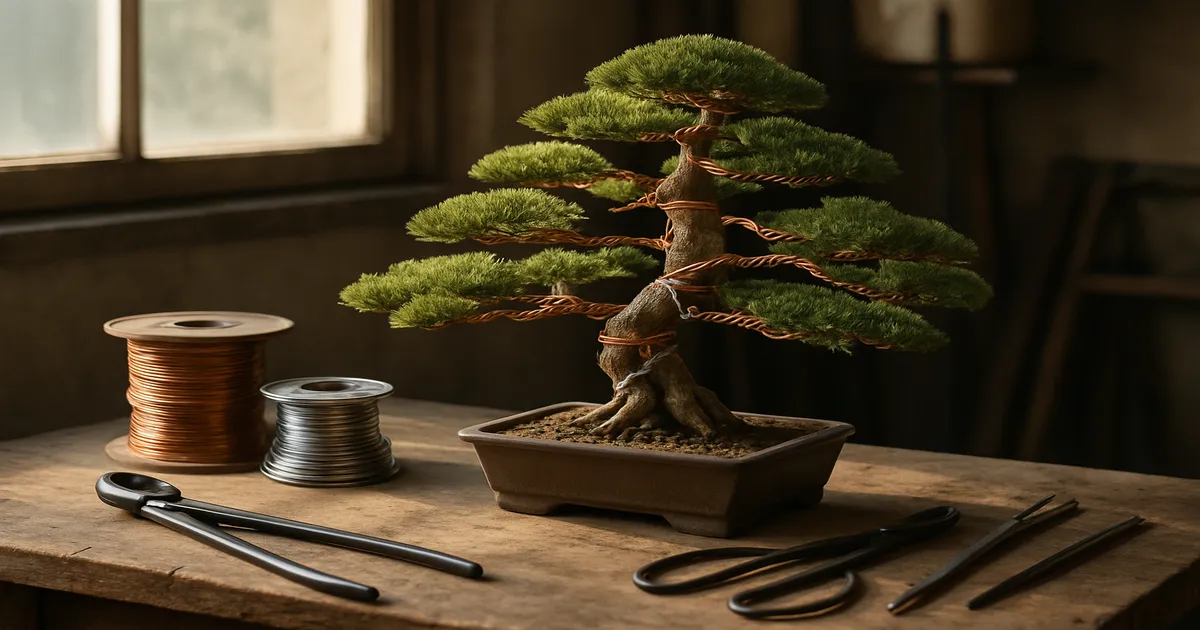
Quick Answer: To wire a bonsai tree, select wire that’s roughly 1/3 the diameter of the branch, anchor it securely around the trunk or a thicker branch (never mid-air), wrap at a consistent 45-degree angle, then bend the branch slowly from the base outward. Remove the wire before it cuts into the bark — check weekly during active growth, every few weeks for slower-growing species.
Learning how to put wire on a bonsai tree is the single most transformative skill in bonsai. Pruning shapes what’s removed; wiring shapes what stays. Done well, it lets you reposition branches with precision and hold them long enough for the wood to harden permanently into a new form. Done carelessly, it leaves spiral scars that take years to fade — or never fade at all on smooth-barked species. This guide covers everything: wire selection, species timing, step-by-step technique, and the most common mistakes to avoid.
What You Need Before You Start
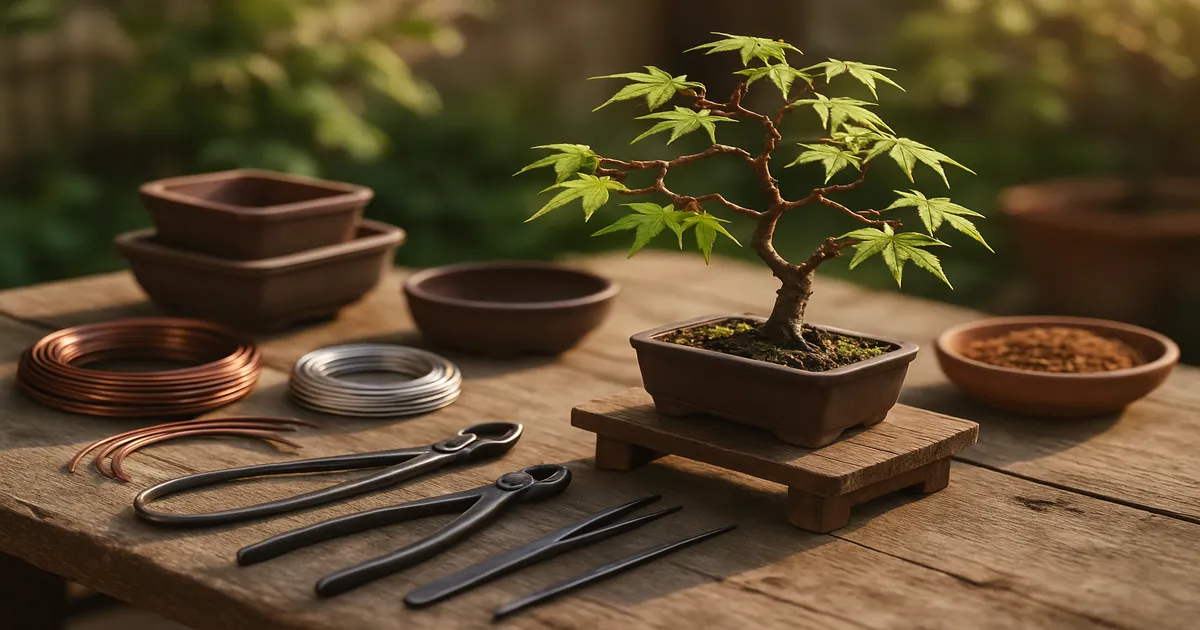
Gather these before you begin:
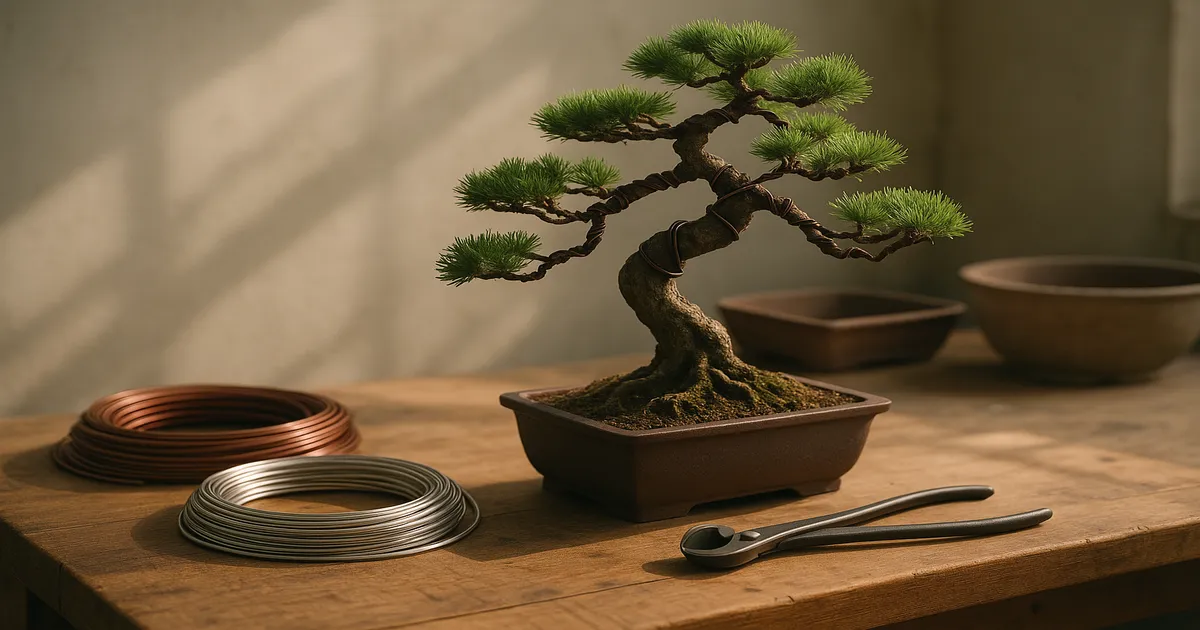
- Annealed copper wire in multiple gauges (1.0mm–3.5mm) — best for conifers and thick branches
- Annealed aluminum wire in multiple gauges (1.0mm–4.0mm) — better for deciduous trees, tropicals, and beginners
- Wire cutters — dedicated bonsai cutters, not household scissors
- Bonsai pliers for bending stubborn wire ends
- Raffia or foam padding for delicate-barked species like Japanese Maple or Hinoki Cypress
Wire typically stays on anywhere from four weeks (fast-growing deciduous species in summer) to twelve months (dormant conifers). During peak growing season, plan to check your trees weekly.
How Wiring Works: The Science Behind Branch Repositioning
When you bend a branch and hold it in place, the wood cells — primarily xylem — gradually harden and lignify in the new position over three to twelve months. Once set, the branch stays where you put it even after the wire comes off. This is why wiring is temporary but the resulting shape is permanent, provided the wire stays on long enough.
Think of wire as a cast on a broken bone. The cast comes off; the healed bone stays. Remove wire too early and the branch springs back. Leave it too long and it cuts into the bark, creating scars that can take years to fade.
Species knowledge matters more than any other factor. Bark texture, branch flexibility, and growth rate vary enormously. A Shimpaku Juniper branch stays flexible and forgiving for months. A Japanese Maple branch in summer can be scarred within two weeks. Knowing your species determines which wire to use, when to apply it, and how urgently you need to monitor it.
Copper Wire vs Aluminum Wire: Which Should You Use?
Copper wire is stiffer and stronger. It also work-hardens slightly after application, increasing its holding power over time — ideal for conifers like pine and juniper, and for thick branches that need maximum force to hold a bend. The trade-off is that it’s less forgiving; applied incorrectly, it damages bark faster than aluminum.
Aluminum is softer, easier to manipulate, and much more beginner-friendly. It’s the right choice for deciduous trees, tropical species, and any branch with thin or delicate bark. You’ll need a slightly thicker gauge to match copper’s holding strength, but that’s a small price for the added control.
Quick reference by species:
- Conifers (pine, juniper, spruce): Copper wire preferred
- Deciduous (maple, elm, beech): Aluminum wire
- Tropical and indoor (ficus, fukien tea): Aluminum wire
- Succulents (jade plant): Thin aluminum, used gently
Wire Gauge Selection: The One-Third Rule
The foundational rule: wire diameter should be approximately 1/3 the diameter of the branch. A 6mm branch needs roughly 2mm wire. When in doubt, go slightly heavier — wire that’s too thin spins freely and accomplishes nothing.
| Branch Diameter | Copper Wire | Aluminum Wire |
|---|---|---|
| Very fine (under 2mm) | 1.0mm | 1.0–1.5mm |
| Fine (2–4mm) | 1.0–1.5mm | 1.5–2.0mm |
| Medium (4–8mm) | 1.5–2.5mm | 2.5–3.5mm |
| Thick (8–15mm) | 2.5–3.5mm | 3.5–4.0mm |
| Very thick (15mm+) | 3.5–5.0mm (or double wire) | 4.0–5.0mm (or double wire) |
When to Wire: Timing by Species and Season
Conifers: Wire Japanese Black Pine and Japanese White Pine in late autumn through winter during dormancy. Foliage is less obstructive, branches are slightly more pliable, and the structure is easy to read. Junipers are more forgiving year-round, but autumn and winter remain ideal.
Deciduous trees: Wire Japanese Maple, Trident Maple, Chinese Elm, and Beech while leafless in late winter. You can see every branch clearly, which makes structural decisions far easier. Avoid wiring Japanese Maple in midsummer — thin bark, rapid growth, and heat stress make scarring almost inevitable.
Tropical and indoor species: Ficus, Fukien Tea, and Serissa can be wired any time of year since they don’t go dormant. The catch is fast growth — Ficus in active growth can have wire biting in within two to three weeks. Year-round access means year-round responsibility to monitor.
Trees in full sun grow significantly faster than those in shade, so wire tightens against the bark sooner. During peak growing season (late spring through summer), check fast-growing species weekly. Slower-growing conifers in winter may need checking only once a month.
How to Put Wire on a Bonsai Tree: Step-by-Step
Step 1 — Assess the Branch and Select Your Wire
Hold the branch gently and feel its thickness and resistance. Estimate the diameter, apply the one-third rule, and choose your wire type based on species. Have two or three gauges ready — you’ll often need different gauges on the same tree.
Step 2 — Cut the Correct Wire Length
Cut a length approximately 1/3 longer than the branch you’re wiring. For a 30cm branch, cut roughly 40cm. It’s better to have a little extra than to run short mid-wrap.
Step 3 — Anchor the Wire at the Base
Never start wire in mid-air — it will spin and slip the moment you try to bend the branch. Instead, loop the wire once or twice around the trunk or a thicker anchor branch, position the anchor so the wire runs naturally toward the target branch, then begin wrapping only once the anchor is secure.
Step 4 — Wrap at a 45-Degree Angle
Wrap consistently at 45 degrees to the branch. Too steep (closer to 90°) risks restricting sap flow. Too shallow (closer to 0°) gives the wire almost no holding power. Keep coils evenly spaced — roughly one wire-width apart — and maintain light, consistent contact with the bark. The wire should rest against the bark, not press into it.
Step 5 — Bend the Branch Slowly and Deliberately
Place both thumbs on the outside of the bend point and apply gradual, even pressure from the base of the branch outward. Never force a sharp bend in one motion — work the curve progressively. If you feel sharp resistance or hear any cracking, stop immediately and back off slightly.
Step 6 — Double-Wiring for Efficiency
When two adjacent branches need wiring, use a single piece of wire to cover both. Anchor it between the two branches on the trunk, then wire outward along each branch simultaneously. This is more efficient, distributes holding force better, and is standard practice in Japanese bonsai technique.
Step 7 — Protect Delicate Bark with Raffia or Padding
For Japanese Maple, Hinoki Cypress, Fukien Tea, and other thin-barked species, wrap the branch in dampened raffia before applying wire. The raffia acts as a cushion, reducing the risk of bark scarring. This step isn’t optional for delicate species — it’s the difference between a clean result and a permanent spiral scar.
Species-Specific Wiring Notes
Japanese Black Pine and White Pine: Copper wire, applied during dormancy. Black Pine tolerates aggressive bending — young branches are highly flexible. White Pine is slower-growing with more delicate branching; use a slightly lighter gauge and bend more conservatively.
Juniper (Shimpaku and Procumbens Nana): Copper preferred, though aluminum works on finer branches. Shimpaku branches remain flexible for extended periods, making them genuinely forgiving for beginners.
Japanese Maple and Trident Maple: Aluminum wire only for Japanese Maple — copper is too aggressive on thin bark. Monitor weekly during the growing season without exception. Trident Maple is more forgiving: its bark is tougher, it grows more vigorously, and it tolerates wire for longer periods. Wire both species in late winter while bare.
Chinese Elm and Beech: Chinese Elm is beginner-friendly — aluminum wire, moderate difficulty, tolerates wiring throughout most of the year. Beech branches become increasingly brittle with age; wire in late winter and handle older branches with extra care. Smooth beech bark scars visibly, so don’t leave wire on longer than necessary.
Ficus and Tropical Indoor Species: Aluminum wire, any season. During active growth, wire can bite in within two to three weeks — check every seven to ten days during warm months. Fukien Tea has brittle branches; wire carefully and never force a bend.
Jade Plant: Wire when the plant is slightly dry. A well-watered jade has fully turgid, rigid branches that snap under pressure. Allow the soil to dry for a day or two before wiring to reduce turgidity and increase flexibility. Use thin aluminum wire, bend very gradually, and accept that some branch loss is possible on older, woodier specimens.
Monitoring Wire and Knowing When to Remove It
Check for the first sign of an impression — a slight indentation where the wire coil meets the bark. The moment you see this, the wire needs to come off. Don’t wait until tomorrow.
To remove wire safely: Never unwind it from a set branch. Unwinding reverses the bend and risks snapping wood that has partially lignified. Instead, use wire cutters to cut the wire into short sections every two to three coils, then lift each section away without twisting. Work slowly near buds and delicate growth points.
If wire does cut into the bark, remove it immediately. Apply a thin layer of cut paste to any areas where bark has been broken. Keep the tree healthy with good light, appropriate watering, and balanced fertilizer. On rough-barked species like pine, spiral scars often become invisible within a few years. On smooth-barked species like Japanese Maple or Beech, the scar may be permanent.
| Species Group | Typical Wire Duration |
|---|---|
| Fast deciduous (maple, elm) — summer | 4–8 weeks |
| Fast deciduous — winter/dormancy | 2–4 months |
| Conifers (pine, juniper) | 3–12 months |
| Tropical (ficus, fukien tea) | 2–6 weeks during active growth |
| Succulents (jade) | 4–8 weeks |
Common Wiring Mistakes to Avoid
Wrapping too tightly or too loosely. Too tight and the wire immediately restricts vascular flow — you’ll see an impression forming within days. Too loose and the wire spins freely, accomplishing nothing. The wire should hold the branch snugly without pressing into it.
Skipping the anchor. Wire without an anchor slips the moment you apply bending pressure. Always loop around the trunk or an adjacent branch first.
Wrong gauge. Undersized wire cannot hold the bend — the branch gradually pushes back. Oversized wire is clumsy and creates unnecessary pressure on the bark. When uncertain between two gauges, go one step heavier.
Wrong timing. Wiring Japanese Maple in midsummer heat is a reliable way to scar the bark. Wiring a conifer in spring during peak sap flow can leave resin marks and stress the tree. Match your timing to the species guidelines above.
Forgetting to monitor. This is the single most common cause of wire scars. Set a phone reminder. Weekly checks during peak growing season are not excessive — they’re necessary.
Crossing wires. Two wires crossing create a concentrated pressure point that cuts into bark far faster than either wire alone. Keep wires parallel and spaced. If crossing is unavoidable in complex styling, cross at an acute angle and check that spot more frequently.
Frequently Asked Questions
How long do you leave wire on a bonsai tree?
It depends on the species and season. Fast-growing deciduous trees like Japanese Maple may need wire removed in as little as four to eight weeks during summer. Conifers like pine and juniper can hold wire for three to twelve months during dormancy. The rule is always the same: remove the wire before it leaves an impression in the bark, regardless of how long it’s been on.
Can you use regular wire to wire a bonsai tree?
Technically yes, but it’s not recommended. Regular galvanized or hardware-store wire is often too stiff, too springy, or coated with materials that can harm the bark. Purpose-made annealed copper or aluminum bonsai wire is specifically designed to be soft enough to wrap without kinking and stiff enough to hold a bend. The investment is small and the difference in results is significant.
What angle should bonsai wire be wrapped at?
Always 45 degrees to the branch. This angle provides the optimal balance between holding power and sap-flow safety. Steeper than 45° risks restricting water and nutrient movement through the branch. Shallower than 45° gives the wire almost no mechanical advantage and the branch will simply push back.
How do I know what gauge wire to use on my bonsai?
Use the one-third rule: wire diameter should be approximately one-third the diameter of the branch. For a 6mm branch, use roughly 2mm wire. If you’re using aluminum instead of copper, go one gauge heavier since aluminum is softer and provides less holding strength at the same diameter. When in doubt between two gauges, choose the heavier one.
What do I do if bonsai wire cuts into the bark?
Remove it immediately by cutting it into small sections with wire cutters — never unwind it. Apply cut paste to any areas where the bark has been broken, keep the tree in good health with appropriate light and watering, and give it time. On rough-barked species the scar often fades within a few years; on smooth-barked species like Japanese Maple, it may be permanent.