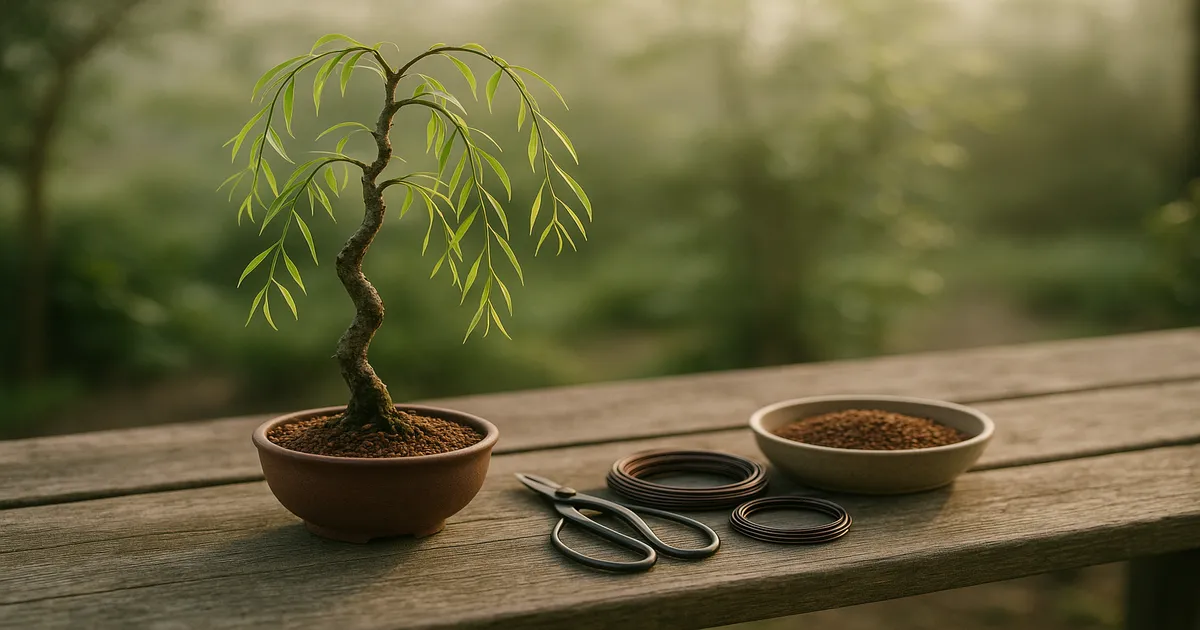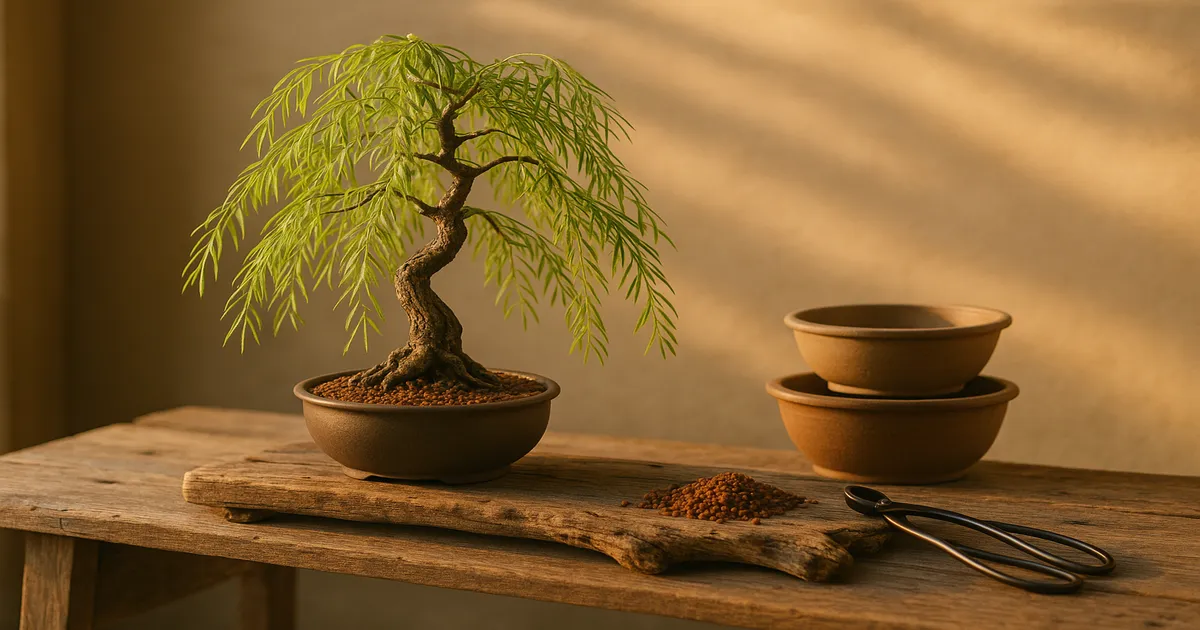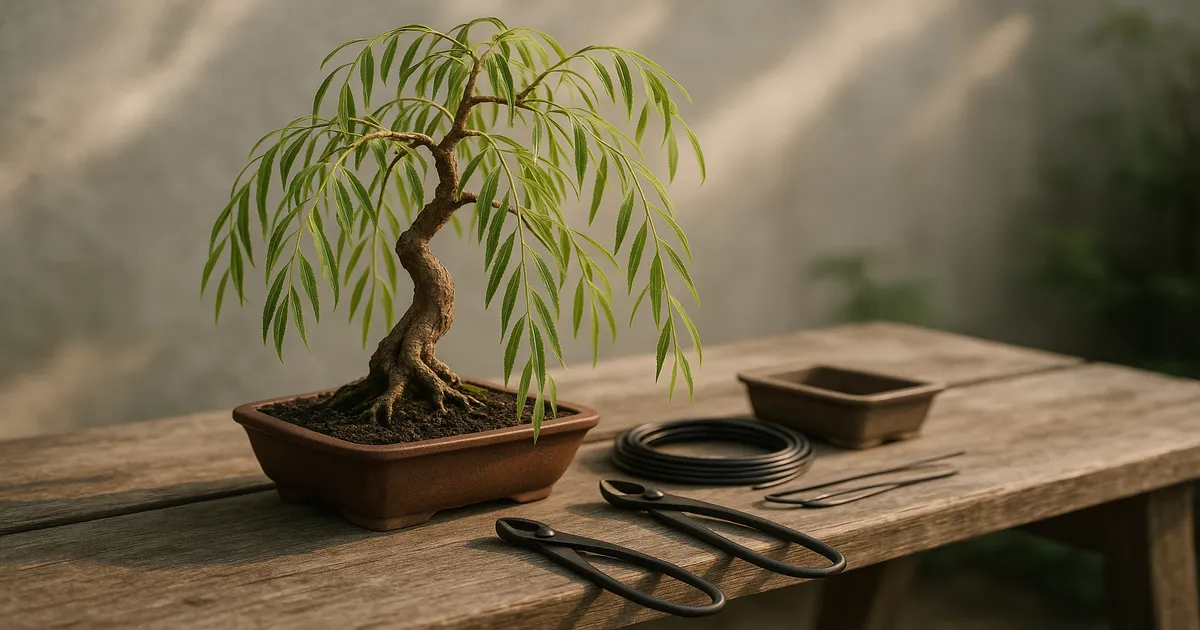
Quick Answer: Weeping willow bonsai (Salix babylonica and relatives) are fast-growing, deciduous outdoor trees that thrive in USDA Zones 6–9 with full sun, consistently moist soil, and pruning every 2–4 weeks during the growing season. Their vigorous growth means you can develop a stunning specimen quickly — but that same energy demands regular attention. Keep them outdoors year-round, never miss a watering, and they’ll reward you with one of the most graceful silhouettes in bonsai.
How to Grow a Weeping Willow Bonsai Tree: Quick-Reference Care Guide
Is Weeping Willow a Good Bonsai Tree?
Absolutely — with the right expectations. Weeping willows offer some of the most visually dramatic silhouettes in bonsai: long cascading branches, fine-textured foliage, and bark that develops character quickly. The trade-off is that they rank among the highest-maintenance species you’ll encounter. They grow fast, drink a lot, and won’t tolerate neglect for long.
That rapid growth is genuinely useful for beginners building trunk girth and branch structure. A willow can achieve in two seasons what takes a juniper five years. But you’ll be pruning every few weeks, checking wire every couple of weeks, and watering daily in summer — sometimes twice.
Key Care Requirements at a Glance
| Factor | Requirement |
|---|---|
| Light | 6–10 hours of direct sun daily; outdoors only |
| Water | Once or twice daily in summer; never let soil dry completely |
| Soil | 50% akadama, 30% pumice, 20% lava rock |
| Pruning | Every 2–4 weeks during the growing season |
| Repotting | Every 1–2 years in early spring |
| Hardiness | USDA Zones 6–9 (S. babylonica); winter dormancy required |
Choosing the Right Willow Species for Bonsai
Salix babylonica: The Classic Weeping Willow
Salix babylonica is the species most people picture — long, arching branches cascading downward in sweeping curtains of narrow green leaves. Despite the name “Babylon weeping willow,” it actually originates in northern China. The misnomer stuck after early botanists associated the tree with biblical imagery.
For bonsai, S. babylonica delivers the most iconic weeping silhouette. Its bark develops attractive gray-brown furrowing with age, and the fine, lanceolate leaves reduce well with consistent pruning. It’s hardy to USDA Zone 6 (roughly 10–20°F / -12 to -7°C).
One important caveat: many nursery plants sold as S. babylonica are actually hybrids with S. alba or S. fragilis. For serious bonsai work, source from a reputable bonsai supplier who can confirm the species.
Best Alternative Willow Species for Bonsai
| Species | Key Appeal | Cold Hardiness |
|---|---|---|
| S. babylonica | Classic weeping silhouette | Zone 6 |
| S. matsudana ‘Tortuosa’ | Twisted, sculptural branches | Zone 4 |
| S. integra ‘Hakuro-nishiki’ | Pink/white/green variegated foliage | Zone 5 |
| S. caprea | Spring catkins; fuzzy buds | Zone 4 |
| S. repens | Compact habit; great for shohin | Zone 5 |
Accuracy note — S. matsudana ‘Tortuosa’ hardiness: This cultivar is widely reported as hardy to Zone 4 (down to -30°F / -34°C) in practice, not Zone 5 as sometimes listed.
S. matsudana ‘Tortuosa’ — the corkscrew or dragon willow — is arguably the most structurally interesting choice. Its naturally contorted branches create visual drama even in winter when the tree is bare. S. integra ‘Hakuro-nishiki’ brings something unusual to the bonsai bench: tricolor foliage in pink, white, and green that’s especially vivid on new growth. For small-scale work, S. repens suits mame and shohin sizes without constant heavy pruning.
Which Species Is Right for Your Climate?
Zone 6 growers wanting the classic look should choose S. babylonica. Zone 4–5 growers will have better results with S. matsudana ‘Tortuosa’ or S. caprea. In Zone 9, be aware that S. babylonica may struggle to achieve adequate dormancy — a genuine limitation worth considering before you invest years of training.
Light and Temperature for Weeping Willow Bonsai
Why Weeping Willow Bonsai Must Stay Outdoors
This is the single most important thing to understand before you start: weeping willows are not indoor bonsai. They require genuine winter dormancy with cold temperatures to complete their annual cycle. Keeping one in a warm house year-round leads to progressive decline as the tree exhausts its energy reserves without the seasonal rest it needs.
Brief indoor display — one to three days maximum — is fine during the growing season. Beyond that, get it back outside.
Sunlight and Temperature Requirements
Willows want full sun: at least 6 hours of direct sunlight daily, with 8–10 hours being ideal. Insufficient light causes elongated internodes, weak branching, and pale foliage. In USDA Zones 9–10, intense afternoon sun can scorch leaves; a 30–40% shade cloth in the afternoon, or a placement with morning sun and some afternoon shelter, solves this without sacrificing vigor.
During the growing season, willows thrive between 65–80°F (18–27°C) and can handle up to 95°F (35°C) as long as you keep up with watering.
Winter Protection During Dormancy
The roots in a bonsai pot are far more freeze-vulnerable than roots in the ground — there’s no insulating soil mass around them. Protect the pot once temperatures drop below 20°F (-7°C).
Good options:
- Unheated garage or cold frame where temperatures stay between 25–40°F (-4 to 4°C)
- Mulching the pot or sinking it to the rim in garden soil for insulation
- Sheltered south-facing wall in Zone 7 and warmer
Do not bring the tree into a heated space during dormancy. Temperatures above 50°F (10°C) will break dormancy prematurely and drain the tree’s energy reserves before spring arrives.
Soil, Potting, and Repotting Your Weeping Willow Bonsai
The Best Soil Mix for Weeping Willow Bonsai
Standard bonsai advice prioritizes drainage above all else. Willows shift that balance. They come from riverbanks and floodplains, so they need a mix that holds more moisture than typical bonsai soil — while still draining well enough to prevent anaerobic conditions.
The sweet spot: 50% akadama, 30% pumice, 20% lava rock, with a particle size of 3–6 mm and a target pH of 6.0–7.0. Akadama’s higher proportion keeps moisture available between waterings. Pumice provides aeration and prevents compaction. Lava rock adds long-lasting drainage structure. (Bonsai Jack Inorganic Bonsai Soil Mix)
Avoid peat-based mixes (poor aeration, goes hydrophobic when dry) and garden soil entirely.
Adjusting for your climate:
- Hot, dry climates: Increase akadama to 60%, drop pumice to 25%, lava rock to 15%
- Humid, cool climates: Reduce akadama to 40%, increase pumice to 35%, lava rock to 25%
When and How to Repot
Repot every 1–2 years in early spring, just before bud break. The tree has energy reserves from the previous season but hasn’t yet committed them to new growth, so it recovers quickly from root disturbance.
Remove up to one-third of the root mass, cutting back the thickest and most circling roots first. Refresh all the old soil and replant into a clean pot with fresh mix. Water thoroughly and keep in a sheltered spot for two to three weeks while roots re-establish.
Willow roots are relentless — they grow fast, seek moisture aggressively, and will escape drainage holes if you let them. Check the root zone regularly between repottings and trim any escaping roots promptly. For pot shape, wider and shallower containers suit the weeping form and give the lateral root system room to spread.
Watering Your Weeping Willow Bonsai
How Often to Water
Watering is the single most critical care factor for this species. In summer, plan on watering once or twice daily — the soil should never fully dry out. Use the chopstick test: push a wooden chopstick about 1 inch (2.5 cm) into the soil. If it comes out barely damp, water immediately. If it comes out with soil clinging to it, you can wait a few hours.
Most bonsai should never sit in standing water. Willows are the exception. During peak summer heat, placing the pot in a shallow tray with 0.5–1 inch (1–2.5 cm) of water gives the roots a moisture reservoir and significantly cuts down how often you need to water. In a well-draining mix, this won’t cause root rot — for willows, it’s actually beneficial.
Seasonal Watering Schedule
- Spring: Once daily as growth accelerates; increase to twice daily as temperatures rise
- Summer: Once or twice daily; use the tray method during heat waves
- Autumn: Reduce gradually as temperatures drop and growth slows; let the surface dry slightly between waterings
- Winter: Every 7–14 days — just enough to prevent the roots from desiccating completely; soil should be barely moist, not wet
Overwatering vs. Underwatering: How to Tell the Difference
Overwatering symptoms: Yellowing leaves (especially on lower branches), mushy roots, a sour smell from the soil, persistent soggy soil, or white mold on the surface. The culprit is almost always poor drainage rather than too much water — fix the soil mix, not your watering schedule.
Underwatering symptoms: Leaf edges browning and crisping from the tips inward, leaves curling and wilting. Willows collapse fast when water-stressed. For emergency recovery, submerge the entire pot in a bucket of water for 20–30 minutes; this fully rehydrates the root ball and usually brings a wilted tree back within hours.
How to Grow a Weeping Willow Bonsai Tree: Pruning and Wiring
Maintenance Pruning
During the growing season, prune every 2–4 weeks. Once a shoot has extended 4–6 leaves, cut it back to 1–2 leaves. This redirects energy into back-budding, thickens existing branches, and keeps the silhouette tight. Use sharp bonsai scissors and sterilize between trees.
Structural Pruning
Do major structural work in late winter, just before buds begin to swell. The tree is dormant, every branch is visible, and the coming spring flush will heal wounds quickly.
Key principles:
- Remove shoots growing straight upward — they fight the weeping design
- Remove branches crossing the center or crossing each other
- Eliminate reverse-tapered branches (thicker at the tip than the base)
- Keep branches with natural downward movement
- Aim for odd numbers of primary branches for a naturalistic feel
Willows respond vigorously to trunk chops. A hard reduction stimulates multiple new shoots, giving you fresh options for branch selection. Seal all large cuts immediately with cut paste.
Developing the Weeping Cascade
Allow weeping shoots to elongate to your desired length, then tip-trim to encourage lateral branching within the cascade. Avoid cutting so hard that you lose the flowing, pendulous character. The goal is a layered curtain of fine branches — not a blunt hedge.
On healthy, vigorous trees, partial or full defoliation in midsummer (late June to July in the Northern Hemisphere) reduces leaf size, improves light penetration to inner branches, and encourages finer ramification. Never defoliate a stressed tree, a newly repotted tree, or any willow in its first year of training.
Wiring Weeping Willow Bonsai
Always use aluminum wire on willows — never copper. Willow bark is soft and delicate; aluminum’s gentler grip reduces scarring. Copper’s extra rigidity is unnecessary given how pliable willow wood is.
Gauge guide:
- Trunk and primary branches: 3.0–4.0 mm aluminum
- Secondary branches: 1.5–2.5 mm aluminum
- Fine tertiary branches: 1.0–1.5 mm aluminum
For significant bends on larger branches, wrap with moistened raffia before applying wire to protect the bark and reduce splitting risk.
Critical warning: During the growing season, wire can bite into bark within 4–8 weeks — much faster than most species. Check every 2–3 weeks without exception. In dormancy, wire can safely stay on for 3–4 months.
Always cut wire off rather than unwinding it. Unwinding risks snapping branches and causes additional bark damage. Cut the wire into short segments at every bend and lift each piece away carefully.
Troubleshooting Common Problems
Yellowing or Dropping Leaves
In summer, yellowing usually points to overwatering/root rot, underwatering, or a nutrient deficiency. Check the roots: mushy and dark means root rot (improve drainage); dry and brittle means drought stress (water more). In autumn, yellowing and leaf drop is completely normal seasonal senescence.
Leggy Growth and Weak Branching
Long internodes and floppy growth almost always mean insufficient light. Move the tree to a sunnier position and increase pruning frequency. More sun plus more frequent pinching transforms leggy growth into compact, well-ramified branching within a single season.
Root Rot
Root rot happens when soil becomes anaerobic — even in a moisture-loving species. The fix is always the soil mix, not reducing water. Repot into a better-draining mix (increase pumice and lava rock proportions) and cut away all affected roots.
Pests and Diseases
Common pests:
- Aphids — check new growth tips; treat with insecticidal soap
- Willow scale — waxy bumps on branches; treat with horticultural oil
- Caterpillars — hand-pick or use Bt (Bacillus thuringiensis)
- Spider mites — appear in hot, dry conditions; increase humidity and use miticide if needed
Common diseases:
- Willow scab (Venturia saliciperda) — brown spots on leaves in wet spring weather; improve airflow
- Powdery mildew — white coating on leaves; reduce humidity around the canopy
- Crown gall — rough galls at the root collar; remove affected tissue and avoid wounding roots during repotting
Frequently Asked Questions
Can you grow a weeping willow bonsai indoors? No. Weeping willows require genuine winter dormancy with cold temperatures. Keeping one indoors year-round causes progressive decline — sparse foliage, dieback, and eventual death. Brief indoor display (1–3 days) is fine during the growing season, but the tree must live outdoors.
How fast does a weeping willow bonsai grow? Very fast — one of the fastest species in bonsai. In a single growing season, shoots can extend 12–24 inches (30–60 cm) or more. This is useful for developing trunk girth and branch structure quickly, but it means you’ll be pruning every 2–4 weeks to maintain the design.
How do I make my weeping willow bonsai weep more? Select and keep branches that already have natural downward movement. Remove upward-growing shoots promptly. You can also use guy wires or weights to encourage borderline branches to hang lower over time. Avoid hard pruning the cascade tips — tip-trim instead to build layered, pendulous branching.
What pot size and style suits a weeping willow bonsai? Wide, shallow oval or rectangular pots work best. They complement the horizontal spread of the weeping form and give the lateral root system room to develop. Earthy glazes — browns, grays, unglazed stoneware — suit the naturalistic character of the tree better than bright colors.
How long does it take to develop a weeping willow bonsai? A basic, presentable tree can be developed in 3–5 years from a young nursery stock plant or cutting. A refined, exhibition-quality specimen takes 10–15 years. The good news: willows develop trunk girth and bark character faster than almost any other bonsai species, so early results are rewarding.