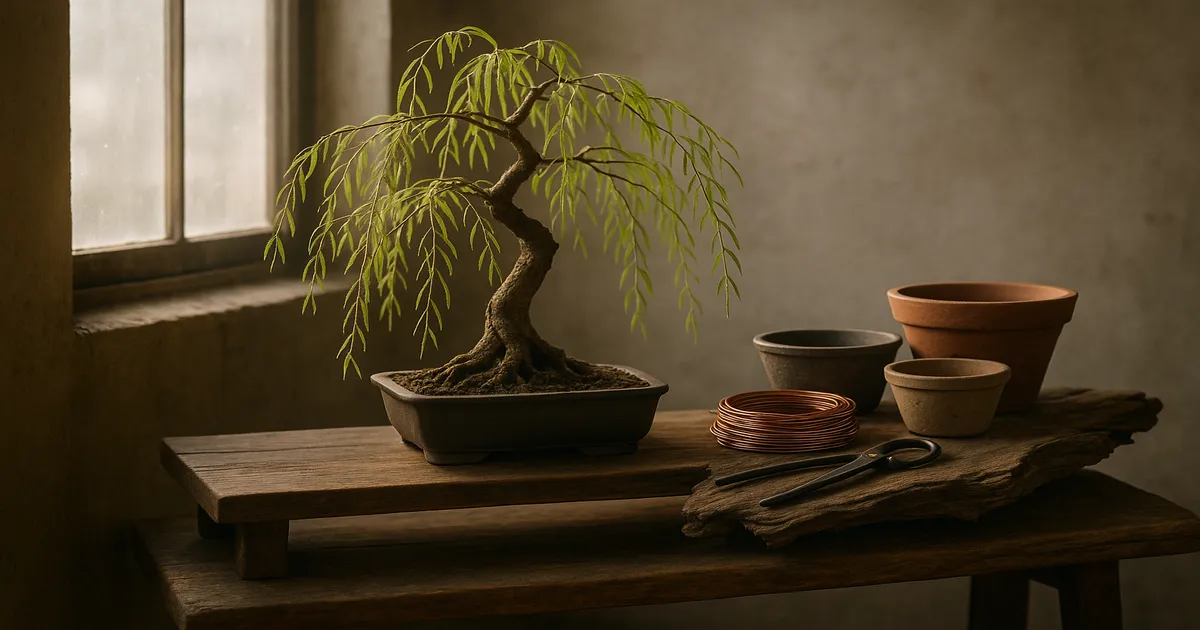
Quick Answer: You can grow a willow tree indoors as bonsai, but only with significant compromises. Willows are fundamentally outdoor, temperate trees that need full sun, high humidity, and a genuine cold dormancy period each winter. The most realistic approach is outdoor culture through spring and fall, cold overwintering, and brief indoor display periods of no more than 2–3 weeks at a time.
If you’ve ever asked whether you can grow a willow tree indoors, the honest answer is: sort of — and only if you understand what you’re signing up for. Willows are among the most vigorous and visually dramatic bonsai subjects available, but they evolved in open riparian environments with blazing sun and seasonal cold. A living room simply cannot replicate those conditions year-round. This guide covers everything you need to make an informed decision and, if you proceed, to keep your willow bonsai genuinely healthy.
Can You Grow a Willow Tree Indoors? The Core Challenges
Why Willows Struggle Inside
Three problems make permanent indoor culture unrealistic:
- Light demand: Willows need 30,000–50,000+ lux of full sun. The brightest south-facing window delivers roughly 5,000–10,000 lux — less than a third of what they need.
- Dormancy requirement: Most Salix species need 6–12 weeks at 28–45°F (-2–7°C) each winter. A heated home at 68–72°F (20–22°C) prevents this entirely, leading to slow but inevitable decline over 2–4 years.
- Moisture demands: Willows want consistently moist soil and 50–70% relative humidity — well above the 20–30% typical of a heated indoor space in winter.
The practical compromise that actually works: keep your willow outdoors from spring through fall, overwinter it in an unheated garage or cold frame, and bring it inside for short display periods during the growing season only.
Willow Species: Which Varieties Work Best for Bonsai?
Native Habitat and Growth Habit
The genus Salix contains approximately 400–500 species, nearly all native to temperate regions of the Northern Hemisphere. In the wild, willows colonize riverbanks, floodplains, and wetlands — places with abundant water, full sun, and cold winters. They’re deciduous, fast-growing, and equipped with famously aggressive root systems. Most large species live 30–80 years in nature, though careful bonsai culture can extend their productive vigor considerably.
Best Willow Species for Bonsai
| Species | Common Name | Bonsai Notes |
|---|---|---|
| Salix babylonica | Weeping Willow | Classic cascading form; best for large bonsai; vigorous grower |
| Salix integra ‘Hakuro-nishiki’ | Dappled / Flamingo Willow | Variegated pink-white-green foliage; excellent for small to medium bonsai |
| Salix matsudana ‘Tortuosa’ | Corkscrew / Dragon Claw Willow | Twisted, contorted branches; outstanding structural interest |
| Salix caprea | Pussy Willow | Prized for spring catkins; compact growth habit |
| Salix gracilistyla | Rose-Gold Pussy Willow | Silvery catkins with pink-gold anthers; striking seasonal display |
| Salix repens | Creeping Willow | Dwarf habit; ideal for shohin and mame scales |
| Salix helvetica | Swiss Willow | Compact alpine species; silvery leaves; cold-hardy |
| Salix alba | White Willow | Silver-green foliage; best suited to large-scale bonsai |
Which Species Tolerates Indoor Conditions Best?
Salix integra ‘Hakuro-nishiki’ is the clear front-runner for indoor attempts. Its variegated foliage is genuinely ornamental, it handles container culture well, and it’s widely available at nurseries. Salix matsudana ‘Tortuosa’ is a strong second choice — its contorted branching provides year-round visual interest even when leafless. Neither is a true houseplant, but these two are your best starting points.
Light, Temperature, and the Dormancy Problem
Why Indoor Light Falls Short
Willows want 6–8 hours of direct sun daily during the growing season. Even the best south-facing window in North America or northern Europe tops out around 5,000–10,000 lux. The result is etiolation: long, weak internodes, pale foliage, and leaves that grow disproportionately large as the tree reaches for more light.
Supplemental lighting can bridge part of the gap. If you’re setting up an indoor display station, aim for a full-spectrum LED grow light positioned 12–18 inches above the canopy, delivering at least 200–400 µmol/m²/s PPFD and running 14–16 hours per day. Even a well-designed grow light rig won’t replace outdoor sun entirely, but it can sustain a willow through a 2–3 week indoor display period without significant setback.
The Non-Negotiable Dormancy Requirement
This is the part you cannot work around. Willows need 6–12 weeks of cold dormancy at 28–45°F (-2–7°C) every winter. Skip this and the tree slowly exhausts its carbohydrate reserves — it may look acceptable for a year or two, then abruptly collapse. A standard heated home makes proper dormancy impossible.
The solution is an unheated garage, shed, or cold frame where temperatures stay between 25–40°F (-4–4°C). The tree needs cold; it just can’t endure a prolonged hard freeze that penetrates the pot to the root ball. In Zone 6 and colder, move the tree into a frost-moderated space once temperatures consistently drop below 25°F (-4°C).
Hardiness zones for common bonsai willows:
- Salix babylonica: USDA Zones 6–9
- Salix integra ‘Hakuro-nishiki’: USDA Zones 4–9
- Salix matsudana ‘Tortuosa’: USDA Zones 4–8
- Salix caprea: USDA Zones 4–8
- Salix repens: USDA Zones 4–7
Soil, Watering, and Humidity
Ideal Soil Mix for Willow Bonsai
Willows break the standard bonsai rule of “fast-draining, lean soil.” They need a mix that retains more moisture than typical bonsai substrates while still preventing stagnant, anaerobic conditions. A reliable starting point:
- 40–50% akadama (moisture retention and cation exchange)
- 20–30% pumice (drainage and aeration)
- 20–30% lava rock (structural drainage)
- Optional: 5–10% composted pine bark for extra moisture retention in hot climates
Target a pH of 6.0–7.0 and use particles in the 3–9mm range (finer for shohin and mame sizes). Avoid standard potting soil — it compacts quickly and suffocates roots.
Watering Through the Seasons
- Spring and summer: Water daily, or even twice daily in hot weather. Soil should stay consistently moist — never fully dry.
- Autumn: Ease off as growth slows. Allow the top half-inch to dry slightly between waterings.
- Dormancy: Water every 7–14 days, just enough to prevent the root ball from desiccating completely.
Always water thoroughly until it flows freely from the drainage holes, then let the pot drain fully. Never leave a willow sitting in a saucer of standing water — despite their love of moisture, stagnant water around roots leads straight to rot.
Raising Humidity Indoors
Willows prefer 50–70% relative humidity. Indoor heating in winter routinely drops that to 20–30%, which stresses foliage even during brief display periods. Practical fixes include a pebble-and-water humidity tray (pot sitting above the waterline, never in it), a cool-mist humidifier nearby, and morning-only misting of the foliage. Avoid evening misting, which raises fungal disease risk.
Pruning and Wiring
Pruning: Managing a Fast-Growing Species
New shoots can extend 6–12 inches (15–30cm) in a single growing season. That vigor is an advantage when building ramification, but it means willows demand more frequent attention than slower species like juniper or pine.
Maintenance pruning: Every 2–4 weeks throughout the active growing season. Once a shoot has extended 4–6 leaves, cut it back to 1–2 leaves using sharp, clean scissors. Consistent trimming builds the fine twig structure that makes willow bonsai so elegant.
Structural pruning: Best done in late winter, just before bud break, when wounds begin healing rapidly once growth starts. Mid-to-late summer after the first flush hardens is a viable secondary window. Apply cut paste to any cut larger than 6mm in diameter — willows heal fast, but the soft wood desiccates quickly at cut surfaces.
Defoliation: Full or partial defoliation in midsummer (June–July in the Northern Hemisphere) can reduce leaf size and encourage a second flush of finer foliage. Only defoliate trees in vigorous health, and ensure at least 6–8 weeks of growing season remain afterward for recovery.
Wiring: Techniques for Soft, Fast-Growing Wood
Always use aluminum wire for willows — never copper. Willow wood is soft and sets position quickly; copper’s greater rigidity is unnecessary and risks cutting into bark.
- 1.0–1.5mm: Fine ramification and small shoots
- 2.0–2.5mm: Medium branches
- 3.0–4.0mm: Primary branches and trunk work on younger material
Wire in late winter before bud break, when branches are bare and clearly visible. A secondary window opens in midsummer after the first growth flush hardens. Willows set position in just 4–8 weeks during summer — check wire every 3–4 weeks and remove it the moment it begins cutting into bark. Always cut wire off in small sections; never unwind it, which risks snapping set branches or tearing bark.
Repotting Willow Bonsai
Willows are aggressive rooters. Young trees typically need repotting every 1–2 years; mature specimens every 2–3 years. Repot in late winter to very early spring, just before bud break, when root resilience is at its peak.
Remove up to one-third of the total root mass. Trim circling and downward-growing roots; preserve fine feeder roots as much as possible. Work quickly to prevent roots from drying out.
Choose a wider, shallower pot with generous drainage holes — a pot that drains slowly will cause rot fast. Unglazed ceramic is preferred; it breathes slightly and helps regulate moisture. After repotting, keep the tree in shade for 2–3 weeks, maintain consistent moisture, and hold off on fertilizing for 4–6 weeks to let the root system stabilize.
Troubleshooting Common Problems
Yellowing or dropping leaves has three distinct causes. Overwatering produces soft, limp yellow leaves and a foul-smelling soil. Low humidity causes yellowing with dry, crispy margins — especially common when willows are brought indoors. Insufficient light produces pale, generalized yellowing with elongated new growth. Identify which pattern you’re seeing before reaching for a solution.
Etiolation (long internodes, pale foliage, oversized leaves) is a classic sign of inadequate light. Move the tree outdoors as soon as possible, or supplement aggressively with grow lights.
Root rot develops when soil becomes anaerobic from stagnant water. Symptoms include a foul smell, black mushy root tips, and sudden foliage collapse despite moist soil. Remove the tree from the pot, trim all affected roots back to healthy tissue, treat with a dilute fungicide, repot into fresh soil, and reduce watering frequency.
Pests: Aphids are particularly fond of willow’s soft new growth — check branch tips regularly during spring flush. Scale insects appear as small brown or grey bumps on bark and respond well to horticultural oil. Leaf-eating caterpillars can defoliate a willow quickly; hand-pick them or apply Bacillus thuringiensis (Bt) as a targeted biological control.
Failure to leaf out in spring usually points to insufficient cold dormancy or root rot that destroyed feeder roots during winter. Inspect the roots first. If they look healthy but the tree isn’t budging, move it to a warm, bright location and be patient — willows that received inadequate dormancy sometimes break bud late.
Frequently Asked Questions
Can you grow a willow tree indoors permanently?
No — not sustainably. Willows need 6–8 hours of full sun, genuine cold dormancy, and humidity levels that no standard indoor environment can provide year-round. Without dormancy, the tree will decline progressively and typically fail within 2–4 years.
How long can I keep my willow bonsai indoors before it suffers?
Limit indoor stays to 2–3 weeks at a time during the growing season. After each indoor period, return the tree to full outdoor sun for at least 4–6 weeks before bringing it back inside.
What is the easiest willow species to grow as bonsai indoors?
Salix integra ‘Hakuro-nishiki’ (Dappled Willow) is the most forgiving choice. Its compact growth habit and ornamental variegated foliage make it well-suited to container culture, and it tolerates brief indoor stints better than larger species like Salix babylonica.
Do willow bonsai need fertilizer?
Yes. During the growing season (spring through late summer), feed every 2–3 weeks with a balanced fertilizer, transitioning to a low-nitrogen, high-phosphorus formula in late summer to harden growth before dormancy. Withhold fertilizer entirely during dormancy.
Can I grow a willow bonsai from a cutting?
Absolutely — willows root from cuttings with remarkable ease. Take hardwood cuttings in late winter or softwood cuttings in early summer, place them in moist soil or even a glass of water, and expect roots within 1–3 weeks. This is one of the fastest and most reliable ways to start a willow bonsai.