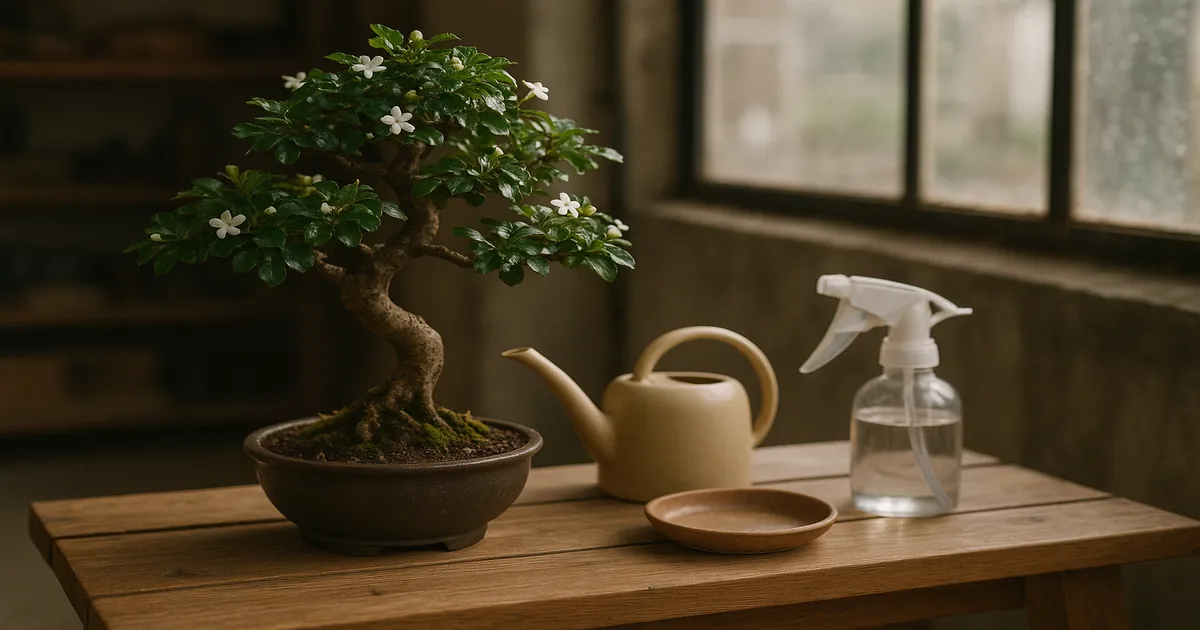
Quick Answer: There’s no fixed schedule for watering a Fukien Tea bonsai — how often to water fukien tea bonsai depends on your pot size, soil mix, season, and indoor conditions. Check the soil daily and water when the top 0.5–1 inch begins to dry. In summer that typically means every 1–2 days; in winter, every 3–5 days.
How Often to Water Fukien Tea Bonsai: The Core Rule
Check Daily, Water When Needed
Forget fixed schedules. A Fukien Tea in a small clay pot on a sunny windowsill in July might need water every day. The same tree in a larger pot during a cool, cloudy January week might go five days between waterings. The only reliable habit is a daily check.
Push your finger about half an inch into the soil. If it feels barely moist or dry, water now. If it still feels clearly damp, leave it and check again tomorrow.
Watering Frequency at a Glance
| Season / Condition | Typical Frequency |
|---|---|
| Summer (warm, active growth) | Every 1–2 days |
| Spring / Fall (moderate) | Every 2–3 days |
| Winter (cool, slow growth) | Every 3–5 days |
| High-humidity environment | Every 2–4 days |
| Small pot (under 6 inches) | Possibly daily in summer |
| Large pot (over 10 inches) | Every 2–4 days in summer |
These are starting points. Your specific conditions will shift the numbers, sometimes significantly.
Species Overview: Why Fukien Tea Has Specific Water Needs
Botanical Name, Origin, and Native Habitat
Fukien Tea is Carmona retusa (formerly Ehretia microphylla), a member of the Boraginaceae family. It originates from southern China’s Fujian province — “Fukien” is an older romanization of Fujian — as well as Southeast Asia, Taiwan, India, and northern Australia.
In the wild it grows in tropical and subtropical lowland forests and coastal scrublands, typically below 1,600 ft (490 m). Annual rainfall in its native range runs 60–100 inches (1,500–2,500 mm). That’s a consistently warm, wet, humid environment with very little seasonal swing — and it explains almost everything about how this tree wants to be cared for.
Growth Habit, Leaves, Flowers, and Fruit
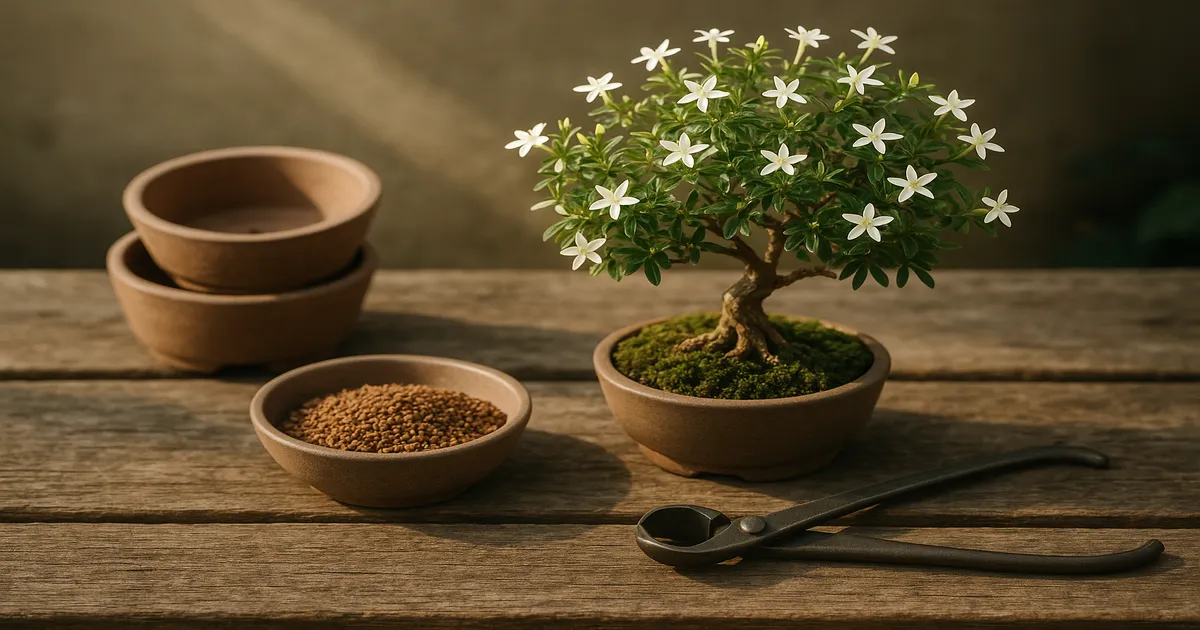
Carmona retusa is an evergreen shrub or small tree reaching 10–20 ft (3–6 m) in nature. As a bonsai it develops attractive grayish-brown bark with appealing fissuring as it matures. Leaves are small — roughly 0.5–1.5 inches (1.3–3.8 cm) — dark glossy green with a slightly rough, hairy texture and a notched tip. One of its best features is near-continuous flowering indoors: tiny white five-petaled blooms, mildly fragrant, followed by small drupes that ripen from green to red to black.
Because it evolved in a high-rainfall environment, Fukien Tea is genuinely less drought-tolerant than popular bonsai species like juniper or Chinese elm. The goal is always consistent, moderate moisture — never bone dry and never waterlogged.
Soil Mix: The Foundation of Correct Watering
Soil composition and watering frequency are inseparable. A fast-draining inorganic mix dries out in one to two days; a peat-heavy potting soil can stay wet for a week. If the soil is wrong, no watering advice will save your tree.
Recommended Soil Ratios for Fukien Tea
| Component | Ratio | Purpose |
|---|---|---|
| Akadama (medium grade, 3–6 mm) | 40–50% | Water retention, cation exchange, root anchoring |
| Pumice (3–6 mm) | 25–30% | Drainage, aeration, root ramification |
| Lava rock / scoria (3–6 mm) | 20–30% | Long-term structure, prevents compaction |
A simpler 50/50 akadama-to-pumice blend is a reliable beginner alternative — more forgiving if your watering habits aren’t perfectly dialed in yet. Either way, sift out any particles below 1/8 inch (3 mm) before use; dust clogs air pockets and causes compaction over time. Aim for a soil pH of 6.0–7.0.
Good-quality akadama makes a noticeable difference in how evenly the soil dries between waterings.
Soils to Avoid
Standard potting soil and peat-heavy mixes retain far too much moisture and compact over time, cutting off oxygen to the roots. Garden soil is worse — too dense and a reliable source of pests. Neither belongs in a bonsai pot.
How to Water Fukien Tea Bonsai Correctly
Four Ways to Check Soil Moisture
- Finger test — Push your finger 0.5–1 inch into the soil. Water when it feels barely moist to dry.
- Chopstick test — Insert a wooden chopstick for a few seconds. Moisture clinging to the wood means wait; a clean, dry stick means water now.
- Weight method — Lift the pot right after watering and note how it feels. A noticeably lighter pot a day or two later is a reliable signal.
- Moisture meter — Useful for beginners. Water when the reading drops to 3–4 on a 1–10 scale.
Step-by-Step Watering Technique
- Use a watering can with a fine rose head or a gentle hose attachment.
- Water slowly and evenly across the entire soil surface.
- Continue until water flows freely and steadily from every drainage hole.
- Let the pot drain completely — never leave it sitting in standing water for more than 30 minutes.
- Occasionally use the submersion method (setting the pot in a basin of water until bubbles stop) to ensure complete saturation, especially if the soil has dried out more than usual.
Water Quality and Temperature
Rainwater is ideal; filtered water is a close second. If you use tap water, let it sit in an open container for 24 hours to off-gas chlorine. Never use softened water — the sodium content damages roots over time. Always use room-temperature water; cold water straight from the tap can shock the root system of a tropical species.
Humidity: The Often-Overlooked Partner to Watering
Fukien Tea thrives at 50–70% relative humidity. Most heated or air-conditioned homes sit at 20–35% in winter — well below what this tree wants. Low humidity accelerates soil drying and stresses the foliage even when watering is technically correct.
Practical ways to raise indoor humidity:
- Pebble tray — Fill a tray with pebbles and water; set the pot on top so it sits above, not in, the water.
- Room humidifier — The most effective solution, especially in winter.
- Group plants together — Plants transpire moisture, creating a more humid microclimate around all of them.
- Misting — Provides a brief boost but evaporates quickly. Mist in the morning so foliage dries before evening, reducing fungal risk.
Troubleshooting: Overwatering vs. Underwatering
Signs Your Fukien Tea Is Overwatered
- Yellowing leaves, starting with the older lower leaves first
- Green leaves dropping suddenly — a classic overwatering signal
- Soft or mushy stems near the base
- Soil staying wet for more than 5–7 days without drying
- Fungus gnats hovering around the soil (their larvae feed on wet organic matter)
- Brown, soft, foul-smelling roots visible at repotting time
Signs Your Fukien Tea Is Underwatered
- Leaves curling or folding inward along the midrib
- Crispy brown edges on the leaves
- Dry, papery leaves dropping
- Soil visibly pulling away from the pot edges
- A noticeably light pot
How to Recover a Stressed Tree
Overwatered: Stop watering and move the tree to a brighter, airier spot to accelerate drying. At the next repotting opportunity, remove any brown or mushy roots with clean scissors and repot into fresh, well-draining mix. Adjust your trigger point so the soil dries a little more between sessions.
Underwatered: Submerge the entire pot in a basin of room-temperature water for 10–15 minutes until air bubbles stop rising, then drain fully. A single severe drying event can damage roots significantly — the tree may drop leaves and look rough for several weeks. Be patient and resist the urge to overcompensate with excess water.
Light, Temperature, and Seasonal Watering Adjustments
Indoor Light Requirements
Fukien Tea needs the brightest spot you can give it indoors — a south- or west-facing window with at least 4–6 hours of direct or bright indirect light daily. The optimal light level is 5,000–10,000 lux. Below 2,000 lux the tree weakens, drops leaves, and becomes vulnerable to pests.
In winter or in homes without strong natural light, a full-spectrum LED grow light at 5,000–6,500K, positioned 6–12 inches above the canopy and running 12–14 hours per day, makes a significant difference.
Temperature Range
The sweet spot is 65–85°F (18–29°C). Growth slows noticeably below 50°F (10°C), and even a brief frost can cause severe dieback or kill the tree outright. Keep it away from cold drafts near exterior windows, air conditioning vents, and heating registers — all cause rapid temperature swings that trigger stress and leaf drop. Try to avoid fluctuations greater than 15–20°F (8–11°C) within a single day.
How Seasons Change Your Watering Frequency for Fukien Tea Bonsai
During spring and summer, your Fukien Tea is photosynthesizing hard, transpiring moisture through its leaves, and pushing new growth. Soil dries faster, and small pots may genuinely need daily water in peak heat.
In winter, growth slows considerably. Lower light, cooler temperatures, and reduced transpiration all mean the soil holds moisture longer. Reduce watering frequency by roughly 25–30% compared to summer — but keep checking daily. The tree still needs consistent moisture, just less of it.
Repotting and Its Effect on Watering
When and How Often to Repot
Young trees (under five years) generally need repotting every 1–2 years. Mature trees can go 2–3 years between repots. The clearest signs it’s time: roots circling the bottom of the pot or emerging from drainage holes, or the soil drying out suspiciously fast after watering.
Early spring — just as new growth begins to emerge — is the ideal window. Avoid repotting in winter or when the tree is already stressed.
Root Pruning and Aftercare
Work the root ball free gently using a root hook or chopstick, combing out the roots from the outer edges. Remove any circling, dead, or rotted roots with sharp, clean scissors. Remove no more than 25–33% of the total root mass in one session, and keep exposed roots moist with a spray bottle throughout — they dry out quickly.
After repotting, water thoroughly and place the tree somewhere bright but sheltered from intense direct sun for two to three weeks.
How Repotting Affects Your Watering Routine
A freshly repotted tree has a reduced, disturbed root system that’s temporarily less efficient at taking up water. Both overwatering and underwatering risk are elevated during this window. Check the soil daily, water carefully, and hold off on fertilizing for at least four to six weeks — let the roots re-establish first.
Frequently Asked Questions
How do I know when my Fukien Tea bonsai needs water?
Push your finger or a wooden chopstick about half an inch into the soil. Water when it feels barely moist to dry — don’t wait until the soil is completely bone dry, but don’t water if it still feels clearly damp. Lifting the pot is a quick secondary check: a noticeably light pot almost always means it’s time.
Why are the leaves falling off my Fukien Tea bonsai?
Leaf drop is most commonly triggered by sudden environmental changes — moving the tree, a cold draft, a nearby heating vent, or a significant shift in light levels. Overwatering (green leaves dropping suddenly) and underwatering (dry, papery leaves dropping) are also common culprits. Stabilizing temperature, light, and watering consistency usually stops the drop within a few weeks.
Can Fukien Tea bonsai be kept outdoors?
Yes, but only in warm climates. It can live outdoors year-round in USDA Hardiness Zones 10–12. In Zones 7–9, it can go outside during summer when nighttime temperatures stay consistently above 55°F (13°C), but must come indoors before fall temperatures drop. In colder zones, treat it as a strictly indoor tree.
What is the best soil mix for Fukien Tea bonsai?
A mix of 40–50% akadama, 25–30% pumice, and 20–30% lava rock balances moisture retention with the fast drainage Fukien Tea needs. Beginners can start with a simpler 50/50 akadama-and-pumice blend. Avoid standard potting soil or peat-based mixes — they stay too wet and compact over time.
How do I increase humidity for my Fukien Tea bonsai indoors?
The most effective method is a small room humidifier placed nearby, especially during winter when indoor heating drops humidity well below the 50–70% this species prefers. A pebble tray filled with water — with the pot sitting above, not in, the water — also helps. Grouping multiple plants together creates a more humid microclimate around all of them.