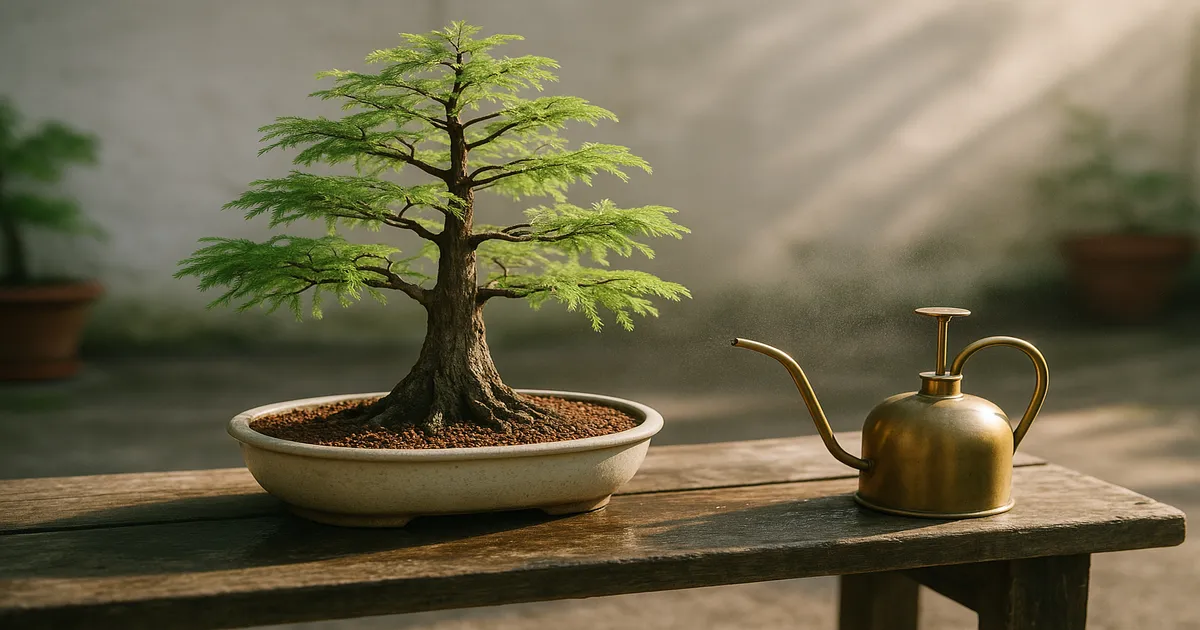
Quick Answer: Water bald cypress bonsai once to twice daily in summer, every one to two days in autumn, and every three to seven days during winter dormancy. These are starting points, not fixed rules — always check soil moisture first using the chopstick test, and water only when the top inch or two of soil is approaching dryness.
Figuring out how often to water bald cypress bonsai is the single most common challenge new owners face. The tree’s swampy native habitat makes people assume it wants to sit wet, but that instinct leads to root rot faster than almost anything else. Get the watering rhythm right, and bald cypress is one of the most rewarding bonsai species you can grow.
How Often to Water Bald Cypress Bonsai: Seasonal Guide
Watering Frequency at a Glance
| Season | Typical Frequency | Notes |
|---|---|---|
| Spring | Once to twice daily | Warm, sunny, or windy days |
| Summer | Once to twice daily | Add afternoon water above 95°F (35°C) |
| Late Summer / Early Fall | Once daily | Growth beginning to slow |
| Autumn | Every 1–2 days | Cooling temps, tapering off |
| Winter Dormancy | Every 3–7 days | Roots must never fully dry out |
The Golden Rule: Always Check Before You Water
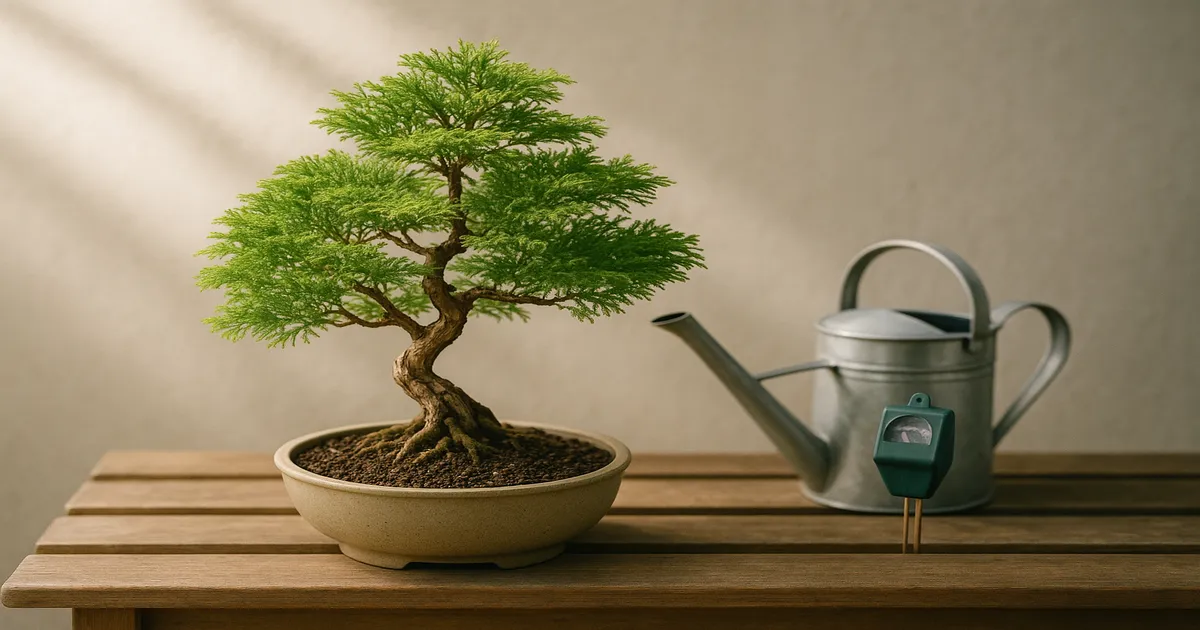
A schedule is a reminder, not an instruction. Before you pick up the watering can, insert a wooden chopstick about 1–2 inches (2.5–5 cm) into the soil. If it comes out with moist particles clinging to it, wait. If it comes out clean and dry, water thoroughly right now. That thirty-second check will save your tree more reliably than any calendar.
Understanding Bald Cypress Water Needs
Native Habitat and What It Means for Bonsai
Taxodium distichum — bald cypress — is a deciduous conifer native to the swamps, bayous, and river floodplains of the southeastern United States, from Delaware south through Florida and west to Texas. Wild trees regularly live 500 to 1,000 years, and some specimens exceed 3,000 years. In their natural environment they experience periodic flooding, high humidity, and long, hot summers — conditions that shape exactly what this tree expects.
The feathery needles flush lime-green in spring, deepen through summer, then turn a spectacular russet-copper before dropping in late autumn. That seasonal drama is a big part of why bald cypress makes such a compelling bonsai subject.
The Drainage Paradox: Swamp Tree in a Bonsai Pot
Here is the core contradiction every grower needs to understand: in the wild, bald cypress tolerates flooded roots because flowing water is oxygenated. A bonsai pot with poor drainage creates stagnant, anaerobic conditions — and that kills roots fast. The goal is a mix that stays consistently moist but never waterlogged, with enough air pockets to keep roots healthy.
The tree wants moisture, not mud.
Key Varieties and Water Demand
The standard species (T. distichum var. distichum) is the most common in bonsai and has the highest moisture demand. Pond cypress (T. distichum var. imbricarium) features smaller, scale-like leaves, more upright branching, and is modestly more drought-tolerant — useful if your climate runs hot and dry. Dwarf cultivars like ‘Peve Minaret’ are grown in smaller pots and dry out faster, so check them more frequently than you would a standard-sized tree.
Choosing the Right Soil Mix
Recommended Bonsai Soil Compositions
Your soil mix is the single biggest lever you have over watering frequency. Three recipes cover most situations:
- Standard mix: 50% akadama, 30% pumice, 20% lava rock — suitable for most climates and growing stages. A pre-blended option worth considering is Boon’s Bonsai Soil Mix Akadama Blend.
- High-moisture variant: 60% akadama, 25% pumice, 15% lava rock — better for hot, arid climates or during aggressive summer growth
- Refinement mix: 40% akadama, 35% pumice, 25% lava rock — for mature, styled trees where slightly faster drying discourages excessive vigor
Use particle sizes of 1/8–3/16 inch (3–5 mm) for standard bonsai; drop to 1/16–1/8 inch (2–3 mm) for smaller mame and shohin sizes.
Pot Type and Particle Size
Finer particles hold more water and dry more slowly; coarser particles drain faster. Your pot matters just as much as your mix. Unglazed terracotta pots lose moisture through their walls and require more frequent watering than glazed ceramic or plastic containers of the same size. Smaller pots dry out faster than larger ones — obvious in theory, easy to underestimate on a hot July afternoon.
What to Avoid
Peat-based potting mixes and standard garden soil are the two big ones to skip. Peat compacts over time, becomes nearly hydrophobic when it dries, and creates exactly the anaerobic conditions that rot bald cypress roots. Garden soil introduces unpredictable drainage behavior and can harbor pathogens. Stick to inorganic or semi-inorganic bonsai components.
How to Water Bald Cypress Bonsai Correctly
Watering Technique: Tools and Thoroughness
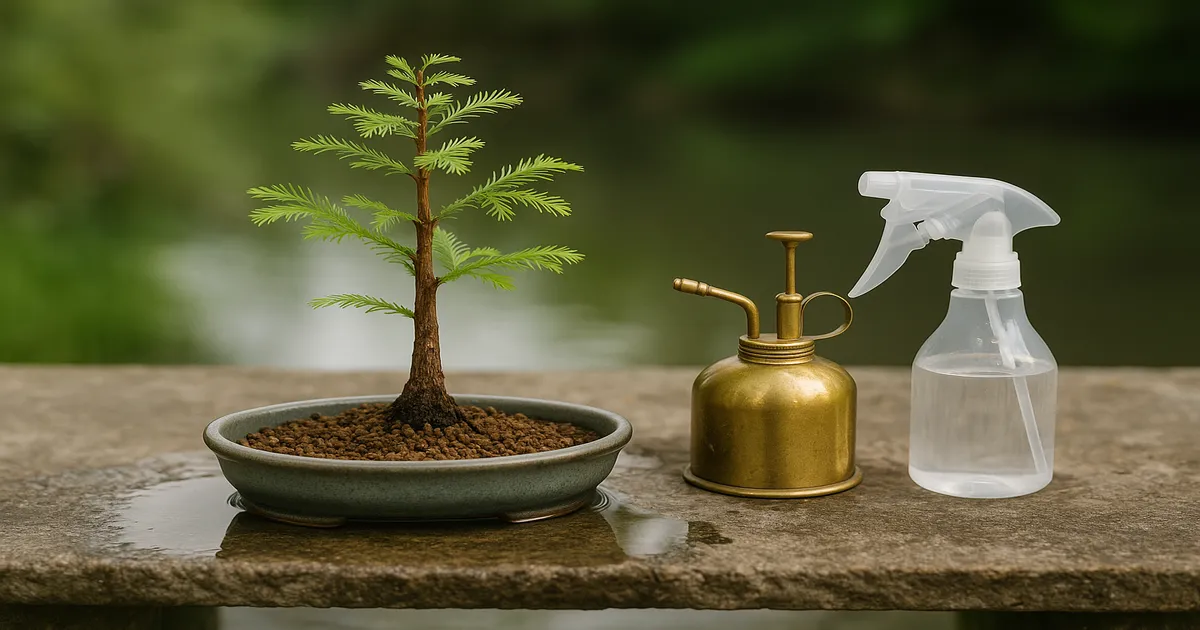
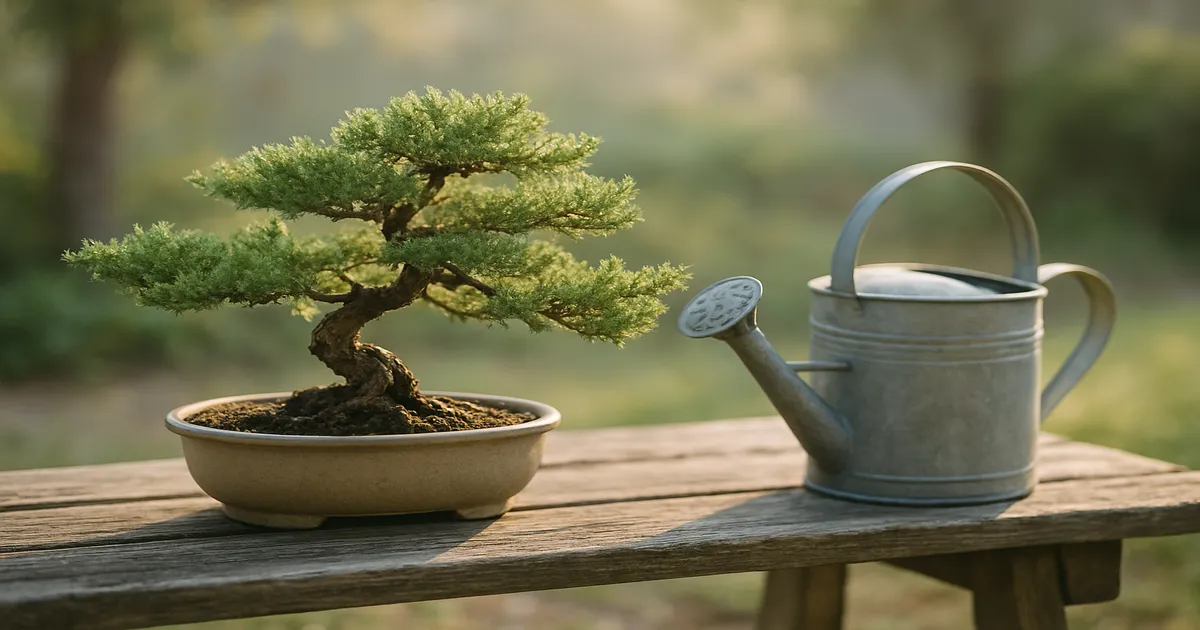
Use a fine-rose watering can or a hose fitted with a gentle breaker head — harsh jets displace soil and disturb surface roots. A long-necked brass rose can like the Haws 1-Liter Slimline gives you precise control without disturbing the soil surface. Water slowly and thoroughly. The goal is to wet every cubic inch of the root mass, not just the top layer. Keep watering until water flows freely from every drainage hole, then stop. That full flush also prevents fertilizer salt buildup over time.
Morning vs. Evening Watering
Morning is the best time to water. Foliage dries quickly in the day’s warmth, which significantly reduces fungal disease risk. Evening watering leaves moisture sitting on the needles overnight — not catastrophic, but an unnecessary risk. If your tree desperately needs water on a hot afternoon, water the soil carefully and avoid soaking the foliage.
When to Use a Water Tray
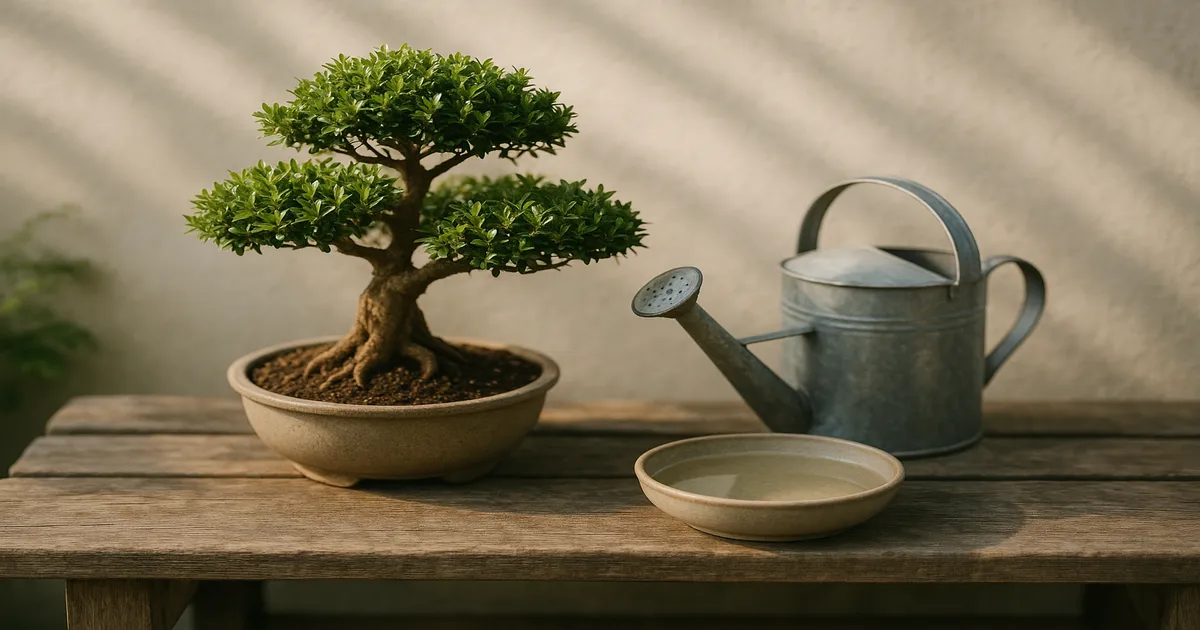
During peak summer heat above 95°F (35°C), placing your pot on a shallow tray with no more than 1/4 inch (6 mm) of water can slow soil drying and raise local humidity slightly. This is acceptable for short periods. What you must never do is leave the pot sitting in a deep saucer of standing water day after day — that recreates the anaerobic conditions you’re trying to avoid.
If your soil has dried out so severely that water runs straight through without being absorbed, submerge the entire pot in a bucket of water for 10–15 minutes. This fully rehydrates compacted soil and is the fastest recovery method available.
Factors That Change How Often You Need to Water Bald Cypress
Conditions That Increase Watering Frequency
- Temperatures above 85°F (29°C)
- Low humidity below 40% RH
- Strong or persistent wind
- Full, unobstructed sun all day
- Small pot relative to tree size
- Unglazed terracotta pot
- Active spring growth flush or post-pruning budding
- Recently repotted tree (reduced root efficiency)
Conditions That Decrease Watering Frequency
- Cooler temperatures and overcast skies
- High ambient humidity
- Partial shade placement
- Larger pot size
- Glazed ceramic or plastic containers
- Full winter dormancy
Adjusting for Your Local Climate
A grower in Phoenix, Arizona (USDA Zone 9b) might water twice daily through July and August. A grower in coastal Oregon (Zone 8b) with cool summers and high humidity might water once every two days during the same period. Neither schedule is wrong — they’re calibrated to different environments. Use the seasonal table as a starting framework, then adjust based on how quickly your specific pot dries out in your specific location.
Season-by-Season Watering for Bald Cypress Bonsai
Spring: Managing the Active Growth Flush
As temperatures climb above 55°F (13°C) and buds begin to break, bald cypress wakes up fast. Water demand ramps up quickly — once daily on warm, sunny days is typical, twice daily when it’s warm and windy. The roots need consistent moisture to support the growth flush. Don’t let the soil dry out completely during this period.
Summer: Peak Demand and Heat Stress Prevention
Summer is the most demanding season. Once to twice daily is the norm. Check the pot in the morning and again in the late afternoon on days above 90°F (32°C). Above 95°F (35°C), a second light watering in the late afternoon — directed at the soil, not the foliage — helps prevent heat stress and keeps fine roots functional. This is also when the shallow water tray is most justified.
Autumn: Tapering Off as Dormancy Approaches
As days shorten and temperatures drop below 70°F (21°C), growth slows and water demand follows. Shift to watering every one to two days and keep using the chopstick test. The foliage will begin its color change — that russet-orange is perfectly normal, not a sign of stress. By the time leaves drop, you should be watering every two to three days at most.
Winter Dormancy: Keeping Roots Alive Without Overwatering
Once the tree is fully defoliated and dormant, watering every three to seven days is sufficient. The goal is simple: roots must never completely dry out, but they should not sit wet either. Check the soil every few days and water lightly when the top layer is dry.
In Zones 5–6, trees stored in an unheated garage or cold frame are especially vulnerable. If the soil freezes solid, roots can’t absorb any moisture at all, and desiccation damage occurs even though the pot feels heavy. Keep storage temperatures between 25–45°F (-4–7°C) and check periodically through winter.
Diagnosing Watering Problems
Signs of Overwatering
- Yellowing foliage starting at branch tips and moving inward
- Wilting despite wet soil — a classic sign of root rot
- Foul or sour smell from the soil
- Algae or persistent moss on the soil surface
- Soft, dark, mushy roots at repotting (healthy roots are firm and white to tan)
- Premature summer leaf drop
Signs of Underwatering
- Crispy brown needle tips beginning at branch ends
- Soil visibly pulling away from the pot edges
- Pot feels noticeably light when lifted
- Foliage turning russet-brown in summer, not autumn
- Bark cracking or shriveling on young growth
How to Recover from Each Problem
For underwatering: Submerge the pot in a bucket of water for 10–15 minutes, then move the tree to partial shade for a few days to reduce transpiration demand. Hold off on fertilizing until the tree shows signs of recovery. Most bald cypress bounce back well from a single drought event if caught in time.
For overwatering: Stop watering immediately and allow the soil to partially dry out. If you suspect root rot, unpot the tree, trim away any soft or discolored roots with sterile scissors — a fine-tipped pair like the Masakuni No. 8002 Bud Scissors works well for precise root work — and repot into fresh, well-draining soil. Ensure your drainage holes are clear before you put the tree back in its spot.
Frequently Asked Questions
Can bald cypress bonsai sit in water?
Briefly and shallowly — yes. During peak summer heat, a tray with no more than 1/4 inch (6 mm) of water under the pot is acceptable to slow soil drying and raise local humidity. Long-term submersion, however, creates anaerobic conditions and causes root rot. Still, stagnant water in a container is not the same as the oxygenated floodwaters of the tree’s native habitat.
How do I know when my bald cypress bonsai needs water?
Insert a wooden chopstick 1–2 inches (2.5–5 cm) into the soil. If it comes out dry and clean, water immediately and thoroughly. You can also lift the pot — a noticeably light pot almost always means dry soil. During summer, check morning and afternoon; during winter dormancy, every two to three days is sufficient.
Why are my bald cypress bonsai needles turning brown?
Brown needle tips that start at the branch ends and feel crispy usually mean underwatering or low humidity. If the browning starts further inward and the soil is staying wet, overwatering and root rot are more likely. Browning in late autumn is completely normal — bald cypress is deciduous and drops all its needles before winter.
How often should I water bald cypress bonsai in winter?
Every three to seven days during full dormancy, depending on storage conditions. The soil should never dry out completely, but it should not stay wet either. If stored in a cold garage or cold frame, check every few days and water lightly when the top layer is dry. Prevent the pot from freezing solid in Zones 5–6, as frozen soil cannot deliver moisture to roots.
Does bald cypress bonsai need more water than other species?
Yes, generally more than most other bonsai species. Its native swamp habitat means it has a high moisture requirement during the growing season — once to twice daily in summer is not unusual. Compared to junipers or pines, which prefer to dry out more between waterings, bald cypress wants consistent moisture without the soil ever going completely dry during active growth.