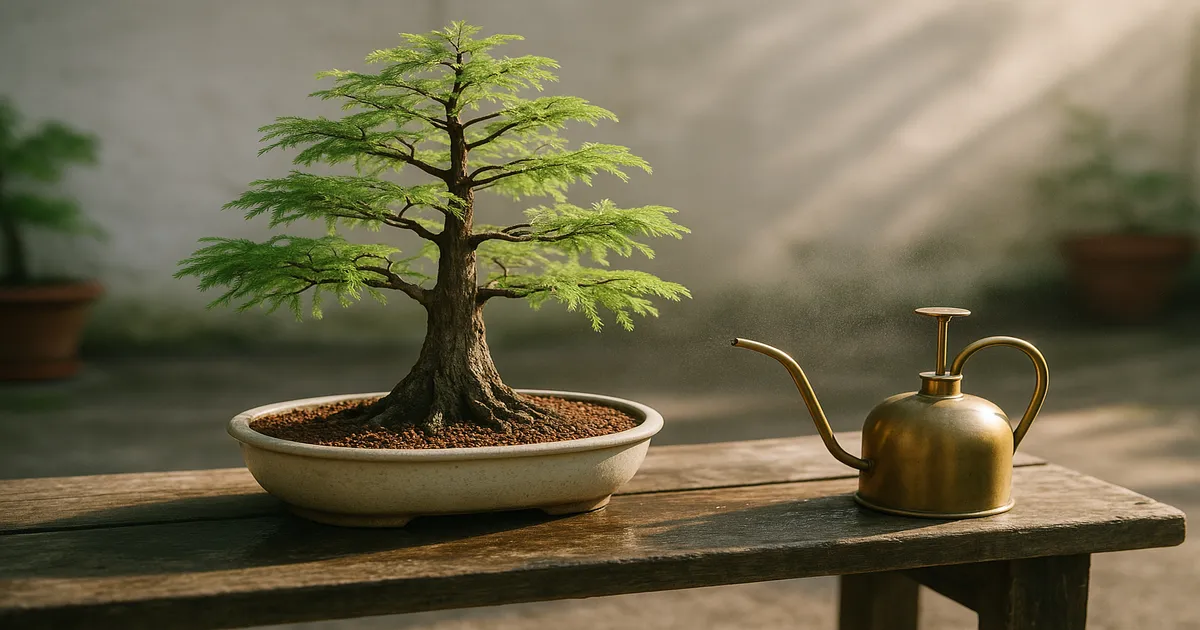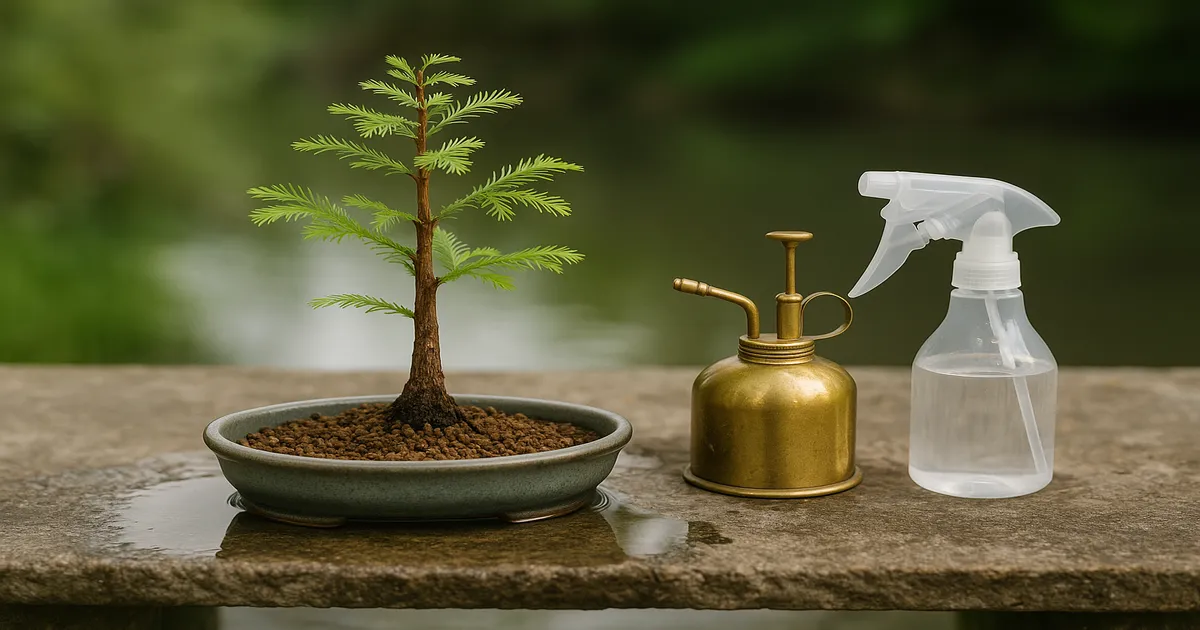
Quick Answer: Bald cypress (Taxodium distichum) is one of the very few trees — and bonsai subjects — that genuinely thrives in standing water. Sit the pot in a tray with 1–3 inches of water during the growing season, use a well-aerated soil mix, and give it full sun. That’s the core of how to plant bald cypress trees in water.
Few trees blur the line between terrestrial and aquatic growing quite like the bald cypress. Learning how to plant bald cypress trees in water is less about fighting the tree’s instincts and more about working with them — this species evolved in southeastern US swamps where roots spend weeks or months fully submerged. The right technique is surprisingly simple once you understand why it works.
Key Facts at a Glance
| Parameter | Recommendation |
|---|---|
| Light | 6+ hours direct sun; 50,000–80,000 lux |
| Hardiness Zones | USDA 5–10 |
| Water Tray Depth | 1–3 inches (2.5–7.5 cm) |
| Soil Mix (Standard) | Akadama 40–50%, pumice 25–30%, lava rock 20–25% |
| Soil Mix (Aquatic) | Coarse sand 50%, akadama 30%, organic matter 20% |
| Optimal Temp (Growing) | 65–95°F (18–35°C) |
| Dormancy Temp | 25–45°F (-4–7°C) |
| Repotting Frequency | Every 1–2 years (young); 3–5 years (mature) |
Species Overview: Why Bald Cypress Loves Water
Native Habitat and Wetland Adaptations
Taxodium distichum is native to swamps, floodplains, and coastal wetlands stretching from Delaware down to Florida and west to Texas. In these environments, standing water isn’t a stress — it’s the baseline. Wild trees tolerate flooding for weeks or months at a time, and their root systems handle oxygen-poor, saturated soil far better than almost any other tree species.
That adaptability is exactly what makes bald cypress so rewarding to grow in or near water. You’re not coaxing the tree to survive unusual conditions; you’re giving it something close to home.
Cypress Knees Explained
Those strange woody projections emerging from the roots of wild bald cypress are called pneumatophores — or more commonly, cypress knees. Their exact function is still debated, but the most widely accepted theory is that they help roots access oxygen in waterlogged, anaerobic soil. In a bonsai pot or water tray, dramatic knee development is unlikely, but small knees can and do appear — and they add tremendous character to the nebari.
Growth Habit, Foliage, and Bark
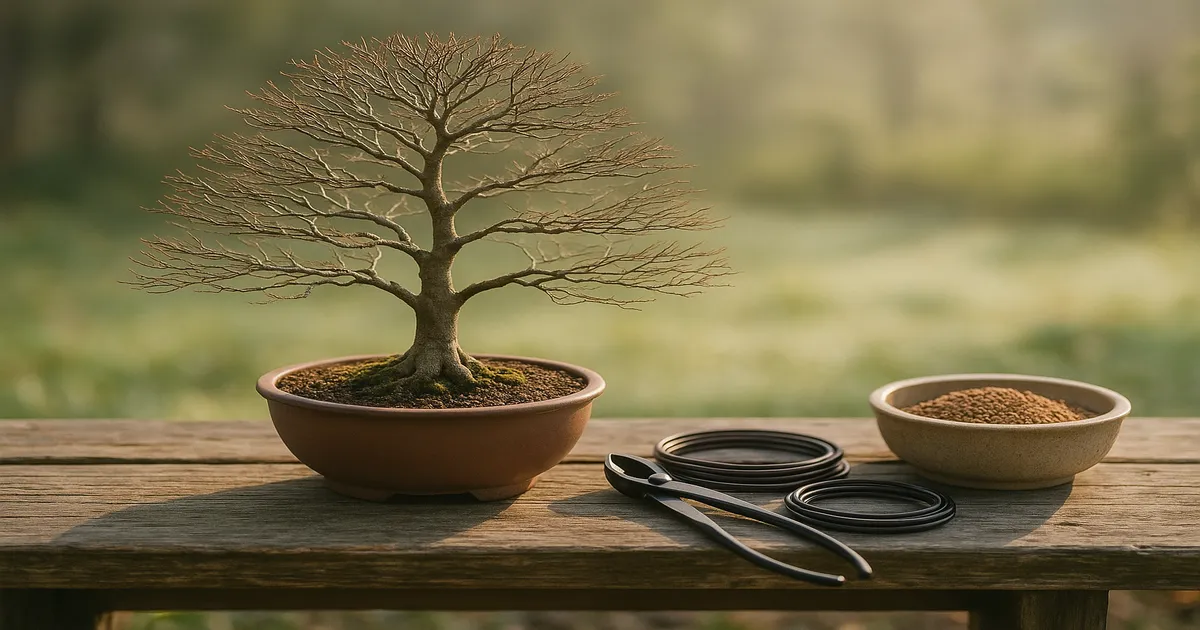
Bald cypress is a deciduous conifer, which surprises many growers. In spring it pushes out soft, feathery, bright green foliage arranged in two ranks along its branchlets — almost fern-like in appearance. By autumn that foliage turns a rich russet-orange before dropping entirely, leaving a clean silhouette through winter.
The bark is another standout feature: reddish-brown to gray, fibrous, and deeply furrowed. It develops genuine aged character faster than most bonsai subjects, which partly explains why collected specimens are so prized.
Best Varieties for Aquatic Bonsai
- Species form (T. distichum): The most commonly trained variety — vigorous, adaptable, and widely available.
- ‘Peve Minaret’: Dwarf and columnar; slower growth suits smaller bonsai formats.
- ‘Shawnee Brave’: Narrow, pyramidal habit; works well for formal upright styles.
- T. distichum var. imbricarium (Pond cypress): Slightly smaller with more upright foliage — excellent for refined bonsai work.
- Taxodium mucronatum (Montezuma cypress): Semi-evergreen in mild climates; less cold-hardy but beautiful.
- Yamadori specimens: Wild-collected bald cypress from the American Southeast are among the most prized bonsai material available — naturally aged trunks, dramatic root flare, and decades of character you can’t rush.
How to Plant Bald Cypress Trees in Water: Step-by-Step Methods
Method 1: The Standing Water Tray Technique
This is the go-to approach for bonsai growers and the most practical for most situations. It directly mimics the tree’s native swamp conditions without requiring a pond.
- Place your bonsai pot (with drainage holes) inside a waterproof tray or saucer.
- Fill the tray with water to a depth of 1–3 inches (2.5–7.5 cm).
- Replenish water as it evaporates or is absorbed — daily checks in summer heat are wise.
- Change the tray water every 5–7 days to prevent stagnation and algae buildup.
- Reduce tray depth or remove the tray entirely as temperatures drop in autumn.
The detail most growers miss: stagnant, oxygen-depleted water causes root rot even in bald cypress. Refreshing the tray regularly keeps water oxygenated and prevents anaerobic conditions from developing.
A wide, shallow unglazed bonsai pot works perfectly for this method — drainage holes allow water to wick upward by capillary action while preventing the root zone from becoming fully anaerobic.
Method 2: Semi-Aquatic Container Planting
For a more committed aquatic setup, plant directly into a waterproof container using an aquatic soil mix (detailed below). The container holds water rather than draining it, keeping the root zone permanently saturated. This suits larger display containers or decorative planters where a traditional bonsai pot isn’t the goal.
Ensure at least 2–3 inches of soil sits above the waterline so the upper root zone retains some access to atmospheric oxygen.
Method 3: Pond or Water Feature Planting
Bald cypress planted at the margin of a garden pond — with roots in saturated soil or the pot sitting directly in shallow water — makes a stunning landscape feature. Keep the pot or planting zone in 6–12 inches (15–30 cm) of water at most. Moving water from a gentle pump or waterfall dramatically improves oxygen levels and reduces root rot risk compared to a completely still pond.
Soil Mixes for Wet and Aquatic Growing Conditions
Standard Bonsai Soil Mix for High-Moisture Growing
Even when using the standing water tray method, soil structure matters enormously. The goal is a mix that stays moist without becoming a waterlogged, airless mass.
Standard high-moisture bonsai mix (by volume):
- Akadama: 40–50%
- Pumice: 25–30%
- Lava rock: 20–25%
Akadama retains moisture and provides cation exchange capacity for nutrient uptake. Pumice and lava rock keep the structure open, ensuring roots can still access oxygen even when the lower pot sits in water. (Bonsai Jack Inorganic Bonsai Soil Mix)
Aquatic and Semi-Aquatic Soil Mix
For trees grown standing in water or in fully waterproof containers:
- Coarse sand or horticultural grit: 50%
- Akadama: 30%
- Decomposed organic matter or bonsai compost: 20%
This mix allows water to penetrate freely while holding enough nutrients to support vigorous growth. It’s intentionally looser and more open than a standard bonsai mix.
What to Avoid
Peat moss is the main one to avoid. It becomes hydrophobic when it dries out, creating pockets of dry soil even when the surrounding mix is wet. Also note that akadama breaks down over 2–3 years, gradually increasing water retention — when your mix starts holding too much water, it’s time for fresh soil.
Use 3–6 mm particle size for most bonsai containers. For larger pots over 15 inches, particles up to 8 mm improve drainage and prevent compaction at depth. Consistent particle size matters more than the exact components — irregular sizing lets fine particles fill the gaps between coarse ones, reducing drainage dramatically.
Watering, Light, and Climate
Watering During the Growing Season
Bald cypress is among the most water-demanding bonsai species. In warm weather, daily watering is standard. During summer heat waves — anything consistently above 90°F (32°C) — twice-daily watering may be necessary for trees not using the tray method. The standing water tray essentially automates this, which is one of its biggest practical advantages.
During dormancy, check moisture every 10–14 days. The root ball should stay slightly moist but never bone dry.
Aim for a water pH of 5.5–7.0. Long-term use of highly alkaline tap water (above pH 7.5) can interfere with nutrient uptake, causing gradual yellowing. If your tap water is alkaline, occasional watering with collected rainwater helps. Test your water pH once — it’s a five-minute task that can save months of troubleshooting.
Sunlight and Placement
Full sun is non-negotiable. Aim for a minimum of 6 hours of direct sunlight daily, ideally in a south- or east-facing position with unobstructed morning sun. Unlike many bonsai subjects that struggle in summer heat, bald cypress actively thrives in it — 85–95°F (29–35°C) days with high humidity are close to ideal. Light levels below 20,000 lux result in weak, elongated shoots and muted autumn color.
Hardiness Zones and Winter Dormancy
Bald cypress is reliably hardy across USDA zones 5–10. (Zone 4 hardiness is sometimes cited for in-ground trees, but container roots are significantly more vulnerable to freezing and the zone 4 rating should not be applied to potted specimens.) The critical point is that the tree needs genuine winter dormancy at 25–45°F (-4–7°C). Without a proper cold rest, it gradually weakens over multiple seasons.
- Zones 6–10: Sheltered outdoor storage — an unheated garage, cold greenhouse, or against a south-facing wall — is usually sufficient.
- Zones 5: Move containers to an unheated but frost-protected structure. Container roots can be damaged below 20°F (-7°C).
- Critical rule: Never bring bald cypress into a heated living space for winter. The warmth breaks dormancy prematurely, burning through energy reserves the tree needs for spring.
Needle drop in autumn is completely normal. A bare tree is a dormant, healthy tree.
Pruning for Shape and Vigour
Maintenance Pruning
The main maintenance window runs from late spring through midsummer. Once new shoots have extended to 4–6 pairs of needles, cut them back to 2–3 pairs using sharp bonsai shears. Cutting rather than pinching is important — fingers crush soft tissue and leave ragged wounds that heal slowly. Remove water shoots (those growing straight up) and any shoots heading downward from branches, cutting to an outward-facing bud to encourage horizontal spread.
Structural Pruning
Do major structural work in late winter to early spring, just before bud break, or in late autumn after foliage drops. Use concave cutters to create slightly hollow wounds that callus flush with the bark. Apply cut paste to any wound larger than ¼ inch (6 mm) in diameter, and don’t remove more than 30% of the canopy mass in a single session.
Branch selection principles:
- Branches should radiate at roughly 120° intervals when viewed from above.
- Lower branches should be longest and thickest, tapering upward progressively.
- Remove bar branches (two branches directly opposite each other at the same node).
- Eliminate crossing or competing branches that obscure the primary structure.
One of bald cypress’s great strengths is its willingness to back-bud on old wood. Hard pruning almost always stimulates new growth from dormant buds along the trunk and older branches — making canopy reduction far more forgiving than with, say, a juniper.
Wiring Bald Cypress Bonsai
Wire Selection and Timing
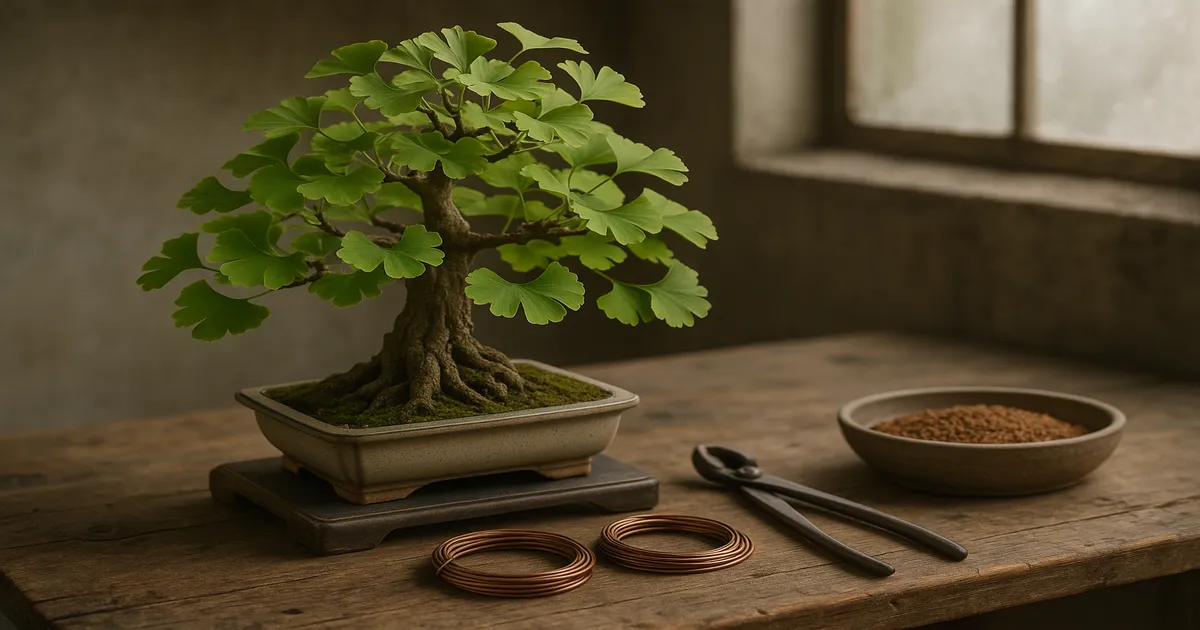
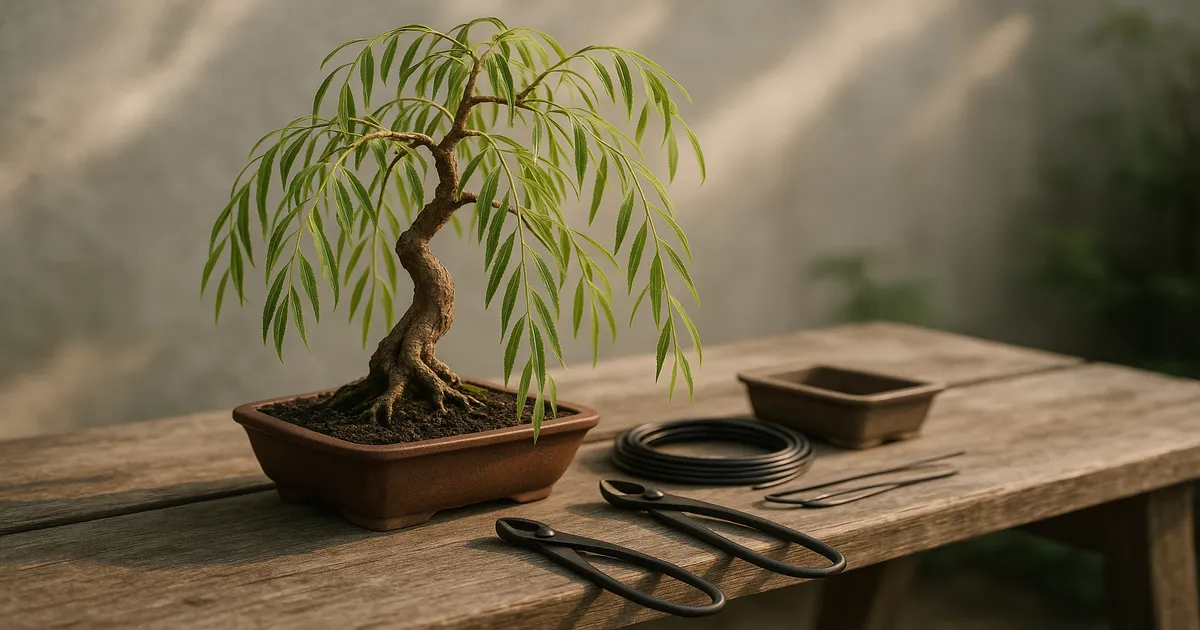
Wire diameter should be roughly one-third the diameter of the branch. Anodized aluminum wire suits most bald cypress work — it’s forgiving, easy to apply, and the species’ relatively fast branch-setting means you don’t always need copper’s extra holding power. Use copper for thick, vigorous primary branches where maximum strength is needed.
Late winter through early spring, before bud break, is the optimal wiring window. Bare branches are easier to visualize and work with. A secondary window opens after the first flush of growth hardens off in early summer. Avoid wiring during the active spring flush — new growth is soft and crushes easily.
How Long to Leave Wire On
Bald cypress grows fast. Wire can bite into bark in as little as 6–8 weeks during peak summer growth. Check every 3–4 weeks without exception during the growing season. When bark begins to swell around the wire, remove it immediately — wire scars on bald cypress are slow to disappear and can become permanent.
Always cut wire off in short sections using wire cutters. Never unwind wire from a set branch — the torque can snap brittle wood or damage bark that has already begun to conform to the wire’s path.
Repotting: Schedule, Technique, and Root Care
How Often to Repot
- Young trees (under 10 years in training): Every 1–2 years.
- Mature, refined bonsai: Every 3–5 years.
Beyond the calendar, watch for roots circling the pot interior or emerging from drainage holes in significant numbers. Akadama degradation — it breaks down over 2–3 years, holding progressively more water — is another practical trigger: when drainage slows noticeably, fresh soil is overdue.
The Repotting Window and Technique
Early spring — as buds begin to swell but before they open — is the ideal window. The tree’s energy reserves are at their peak after winter dormancy, and the imminent growth flush will regenerate pruned roots quickly. Repotting even a week or two too late, after buds have opened and new growth is extending, significantly increases recovery time and stress.
Remove the tree from its pot, shake off old soil, and trim circling roots back to healthy, firm tissue. Healthy roots are white to tan and firm; mushy, dark, or foul-smelling roots should be cut back to clean wood. Refresh with your chosen soil mix and repot into the same pot or one slightly larger if the tree’s development calls for it.
Post-Repotting Care for Aquatic Growers
After repotting, hold off on returning the pot to the standing water tray for 2–3 weeks. Let the root zone settle and allow any cut root ends to callus slightly before reintroducing constant moisture. Water normally from above during this period — keeping the soil moist but not saturated. Once new buds are actively extending, the tray method can resume as normal.
Frequently Asked Questions
Can bald cypress really grow with its roots submerged in water? Yes — it’s one of the few trees that genuinely tolerates prolonged root submersion. In the wild, roots can remain underwater for weeks or months. For bonsai, 1–3 inches of standing water in a tray during the growing season closely mimics this and causes no harm, provided the water is refreshed every 5–7 days to prevent stagnation.
How do I plant bald cypress trees in water without causing root rot? The key is oxygenation. Change the tray water weekly, use a well-draining, open-particle soil mix, and avoid sealing the root zone in a completely airless environment. Root rot in bald cypress is almost always caused by stagnant, anaerobic water — not by water itself.
Should I use the water tray method year-round? No. Reduce tray depth as temperatures drop in autumn and remove the tray entirely during winter dormancy. Cold, standing water around dormant roots can encourage fungal issues and provides no benefit when the tree isn’t actively growing.
When is the best time to repot a bald cypress bonsai? Early spring, just as the buds begin to swell but before they open. This gives the tree maximum energy reserves to recover from root pruning and takes advantage of the imminent spring growth flush to regenerate new roots quickly.
Can I grow bald cypress bonsai indoors? Not successfully as a permanent arrangement. Bald cypress needs full outdoor sun, genuine winter dormancy, and good air circulation. Brief indoor display periods of a few days are fine, but permanent indoor growing leads to weak growth, pest problems, and eventual decline.