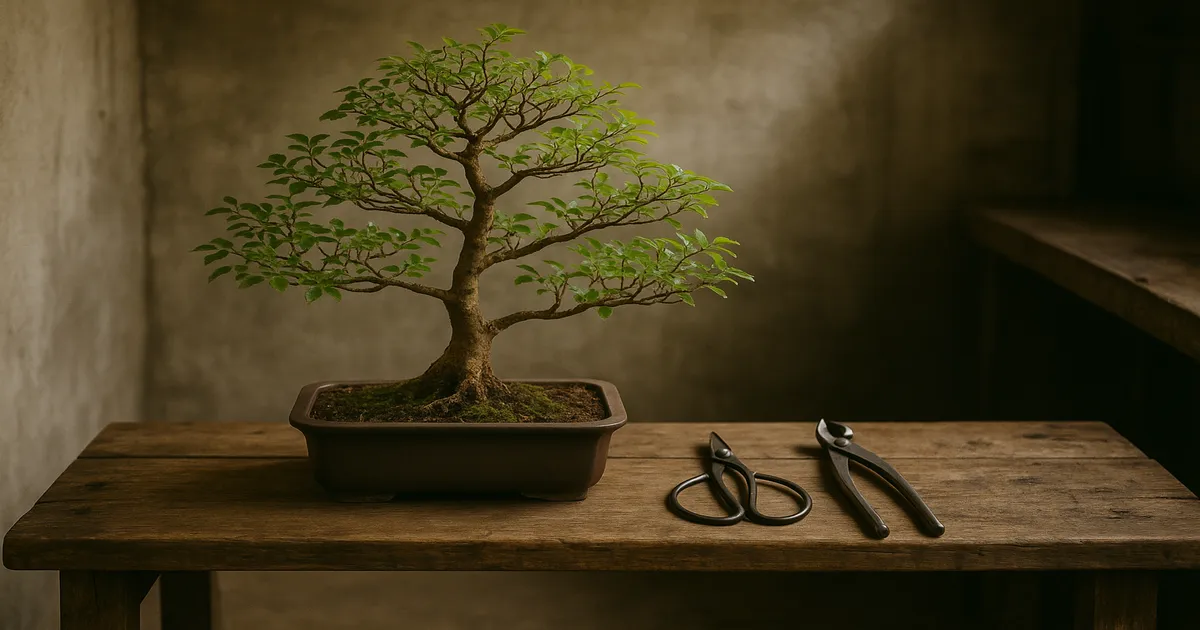
Quick Answer: Yes, you can almost certainly cut your elm there. Elms are among the most pruning-tolerant bonsai species — they backbud readily, heal efficiently, and respond to cuts with vigorous new growth. The only times to pause are when your tree is stressed, recently repotted, or you’re about to remove a major structural branch with no backup.
Standing in front of your elm with pruning shears in hand, asking “can I cut my elm here?” — that’s exactly the right instinct. Elms are extraordinarily forgiving, and the answer is almost always yes. This guide gives you a reliable decision framework so you’re not just guessing. By the end, you’ll know which cuts to make, when to make them, and how to handle the aftermath.
Can You Cut Your Elm There? The Short Answer
Elms are the golden retrievers of the bonsai world — resilient, enthusiastic, and hard to permanently damage with a well-intentioned cut. Two conditions make any cut safe: the tree is healthy, and the timing is reasonable. Meet those two criteria and you’re almost always fine to proceed.
When to Pause Before Cutting
A handful of situations genuinely warrant caution:
- The tree is stressed, pest-ridden, or recovering from a recent repot
- You’re removing a primary structural branch with no backup growth to take over
- It’s late autumn or winter and you’re planning heavy structural removal
- You’d be taking more than 30% of the foliage mass in a single session on a weak tree
Light trimming back to a node? Almost never a problem. Removing a major branch on a struggling tree in November? That’s worth thinking through first.
Know Your Elm: Species That Affect Pruning
Chinese Elm (Ulmus parvifolia): The Benchmark Species
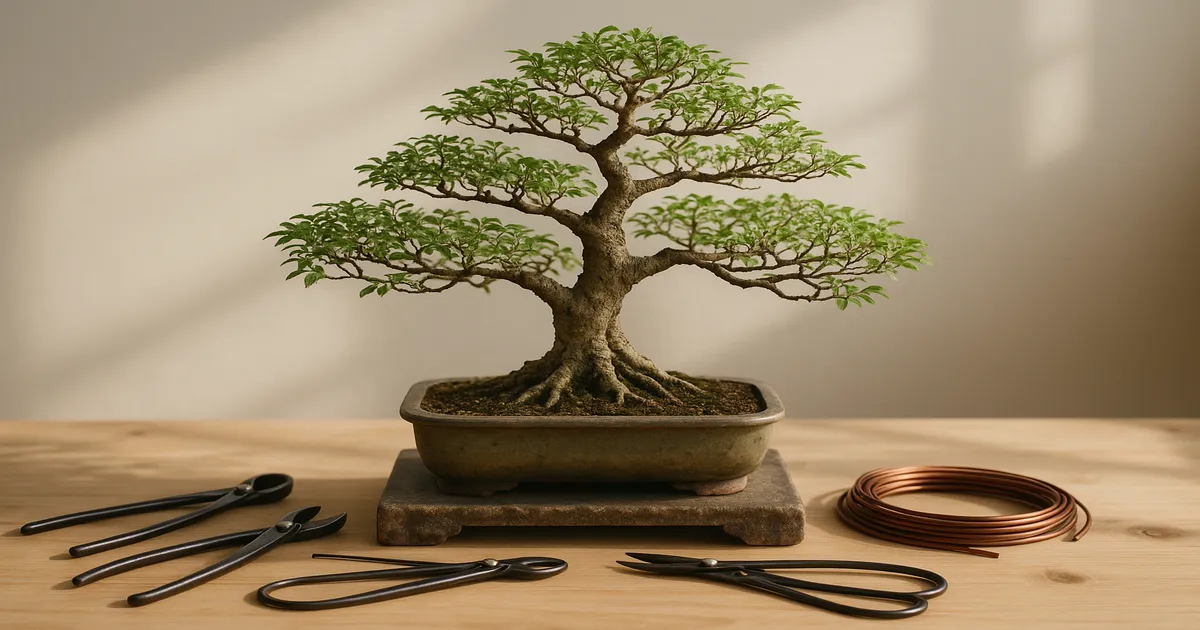
Chinese Elm is the reference point for virtually everything in this article. It’s semi-evergreen, produces small leaves naturally, backbuds with impressive reliability, and tolerates both indoor and outdoor culture. When bonsai growers ask “can I cut my elm here?” they’re usually holding a U. parvifolia.
A few compact cultivars are worth knowing. Seiju and Catlin both have extremely small leaves and dense growth — their tight internodes mean you can prune more conservatively and still get excellent ramification. Hokkaido is the go-to for mame and shohin work, with miniature foliage and almost no internode length to speak of.
Other Elm Varieties and How Their Pruning Differs
Japanese Elm (U. davidiana var. japonica) and Siberian Elm (U. pumila) are fully deciduous, so seasonal timing matters more strictly. Structural pruning must align with dormancy and bud break rather than the flexible year-round schedule Chinese Elm allows. Zelkova serrata, closely related and often grouped with elms in bonsai discussion, is an excellent broom-style candidate with similar pruning principles but slightly less tolerance for heavy defoliation.
In the wild, elms develop naturally fine, twiggy branching that becomes increasingly ramified with age. That tendency carries over directly into bonsai culture — every cut you make is met with multiple new buds pushing from nearby nodes. This backbudding vigor is exactly why you can prune with confidence.
The Branch-by-Branch Decision Framework
This is the core of the question. Here’s how to evaluate any branch on your elm.
Cut It: Branches You Should Remove
- ✅ Bar branches — growing straight toward or directly away from the viewer
- ✅ Crossing branches — visually confusing, competing with cleaner lines
- ✅ Branches thicker than one-third the trunk diameter at their point of origin
- ✅ Downward-growing branches from the underside of a parent branch (unless intentional)
- ✅ Dead, diseased, or damaged wood — remove cleanly and treat the wound
- ✅ Completed sacrifice branches — once they’ve thickened the trunk, they go
Keep It: Branches Worth Preserving
- ⚠️ Primary structural branches with no backup — if this branch defines a key movement and nothing else fills that space, wait until you have a replacement
- ⚠️ Branches on a weak or recently repotted tree — foliage is the engine; don’t reduce it when the tree needs every leaf
- ⚠️ Branches that fill a genuine gap in the silhouette — even an imperfect branch beats empty space while you’re developing the design
Redirect It: Cut Back Rather Than Remove
Not every problem branch needs to disappear entirely. Cutting back to a node or outward-facing bud redirects energy in a better direction while keeping foliage mass intact. This works especially well for branches that are too long or growing at a slightly wrong angle — a partial cut solves the problem without leaving a large wound where a whole branch used to be.
Pruning Timing: When Your Cuts Will Heal Best
Late Winter to Early Spring: The Primary Window
This is the best time for structural decisions. Just before bud break, the tree’s energy is surging upward, wounds heal at their fastest rate, and the leafless silhouette is fully visible so you can see exactly what you’re working with. Cuts made now also trigger the most vigorous backbudding response.
Midsummer: The Second Structural Opportunity
After the first growth flush hardens off — typically June to July in the Northern Hemisphere — the tree has built up energy reserves and still has a full season ahead to heal. This is the second-best window for structural work and the ideal time for defoliation if you’re pursuing refinement.
Maintenance Pruning Throughout the Growing Season
Light trimming on Chinese Elm can happen almost continuously from spring through early fall. Cut new shoots back to 1–2 leaves every 2–4 weeks during active growth. This consistent rhythm prevents shoots from extending too far and steadily builds finer branching over time.
When Not to Make Heavy Cuts
Late autumn and winter are not the time for major structural removal. Wounds made in cold weather stay open through dormancy with minimal callusing, increasing the risk of dieback and pathogen entry. Light tidying is fine; removing a significant branch is not.
Maintenance Pruning for Ramification
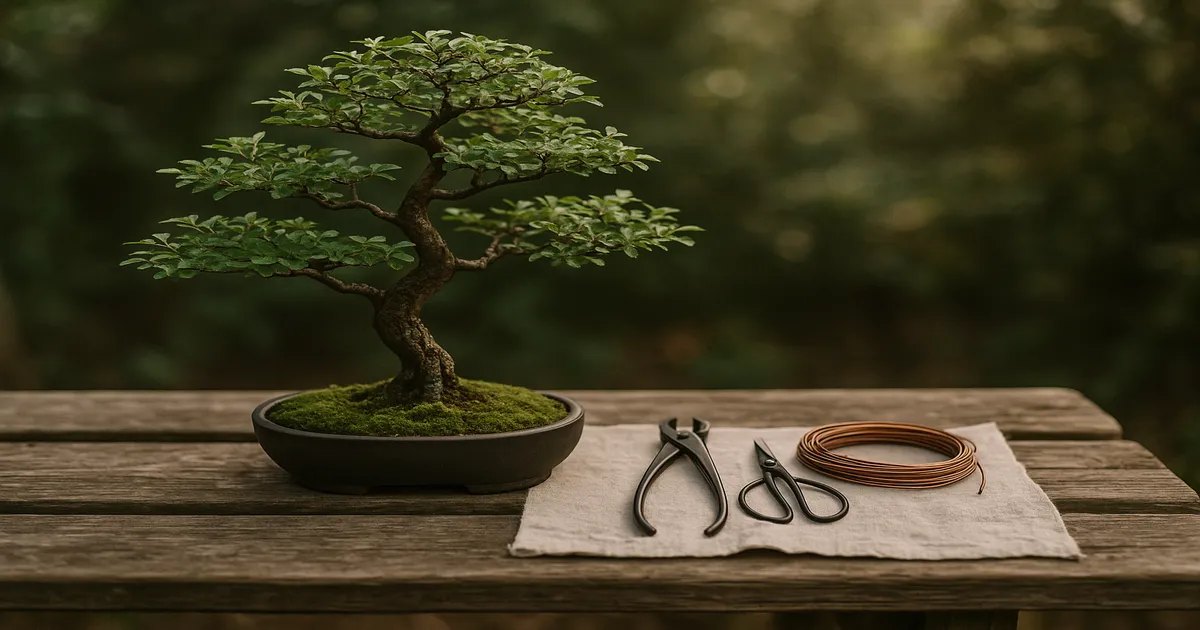
The technique is simple but requires consistency. Once a new shoot has extended to 4–6 leaves, cut it back to 1–2 leaves using sharp bonsai scissors . This forces the tree to backbud lower on the shoot rather than continuing to extend. Over multiple growing seasons, those repeated cuts produce the dense, fine twig structure that defines a refined elm.
Pinching soft new growth with your fingernails is acceptable in a pinch, but it tends to crush tissue rather than cut cleanly. Sharp scissors produce a cleaner wound that heals faster and with less browning at the cut site. For anything beyond the softest new tip growth, always use scissors.
Defoliation: When and How
Full defoliation is an advanced technique that rewards healthy, vigorous trees with significantly smaller new leaves — typically 30–50% smaller than the originals. The window is early summer (late May to early June in the Northern Hemisphere), after the first flush has hardened but while the season still has enough warmth for a full second flush to develop.
The rules are strict: only defoliate genuinely healthy trees, never in the same year as a repot, and never on a tree showing any signs of stress. After defoliation, move the tree to bright shade for 1–2 weeks before returning it to full sun. New leaves typically emerge within 2–4 weeks.
Wound Care After Cutting Your Elm
Why Concave Cutters Matter
A standard bypass cut leaves a convex stub that heals slowly and creates a visible raised knob. Concave cutters remove that material and create a slightly hollowed wound that heals flush with the surrounding wood. On any branch visible in the final design, this is the difference between a clean scar and a permanent bump.
When to Use Cut Paste
Apply cut paste immediately on any wound larger than about 6mm (roughly a quarter inch) in diameter. It prevents exposed wood from drying out and blocks pathogen entry before callus begins to form. Kiyonal and Lac Balsam are both reliable choices — apply a thin, even layer right after cutting. Small maintenance cuts generally don’t need sealing; the tree closes them quickly on its own.
Small cuts on healthy elms typically close within a single growing season. Larger wounds — anything over 2.5cm (one inch) across — are a multi-year project, realistically taking 3–7 years to fully callus over. Monitor annually and reapply cut paste if the wound is drying or cracking.
Wiring After Pruning
Aluminum wire is the right choice for elm’s relatively thin bark — softer than copper and far less likely to cause damage on a tree you’re checking every week or two. Use wire roughly one-third the diameter of the branch you’re working with: 1.0–1.5mm for fine tertiary branches, 2.0–2.5mm for secondary branches, and 3.0–4.0mm for primary branches. A good starter set covers all three ranges .
Always wire two branches with a single piece of wire to anchor it and prevent rotation. Apply at a 45-degree angle from base to tip, leaving just a hair of space between wire and bark. Wire bite is the main hazard with elms — during active spring growth, a branch can engulf wire in days. Check wired branches every 1–2 weeks in spring without exception.
Elm Care Essentials: Light, Soil, and Water
A well-cared-for tree responds to cuts far better than a stressed one.
Light: Aim for 6+ hours of direct sun daily during the growing season. In climates where summer temperatures regularly exceed 35°C (95°F), morning sun with afternoon shade prevents leaf scorch. Indoor trees need a south- or west-facing window at minimum; a full-spectrum LED grow light at 5000–6500K running 12–16 hours per day makes a meaningful difference.
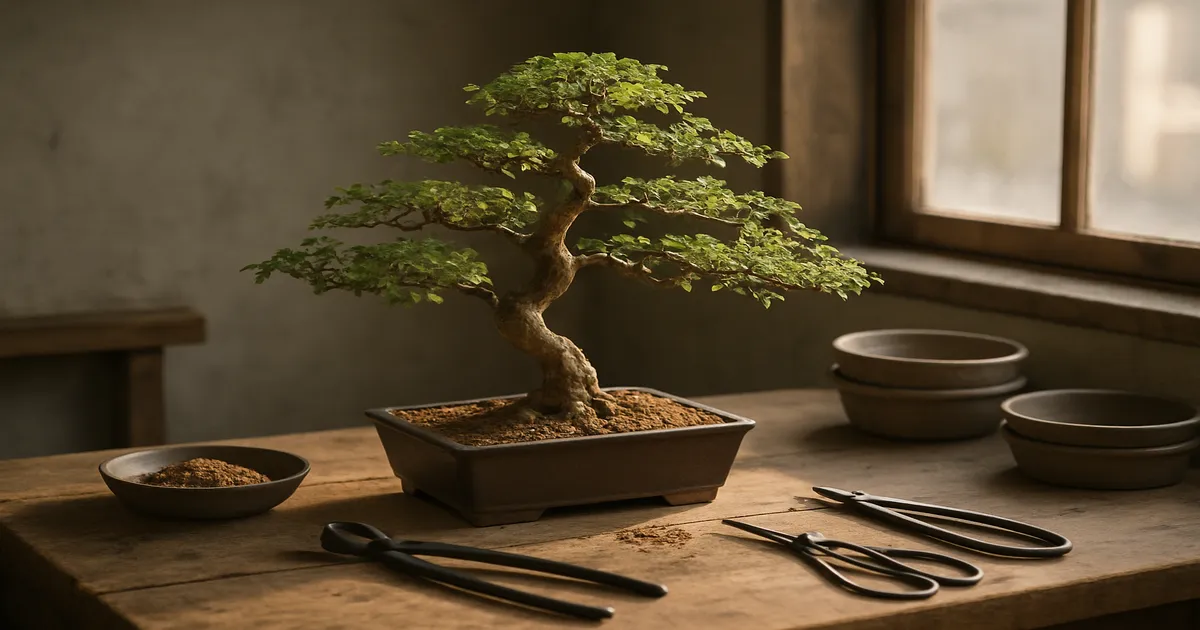
Soil: The standard mix is akadama 40–50%, pumice 25–30%, lava rock 20–30% . Fast-draining but moisture-retentive enough to support vigorous growth. Avoid standard potting soil entirely — it compacts, retains too much water, and suffocates the fine root system healthy elms develop. Target a slightly acidic to neutral pH of 6.0–7.0.
Water: During the growing season, water when the top 1–2cm of soil begins to dry — often once daily in summer, sometimes twice in hot or windy weather for small pots. Water thoroughly until it flows freely from the drainage holes. In winter, reduce to every 5–14 days depending on temperature and pot size. Yellowing inner leaves and soggy soil signal overwatering; curling leaves with crispy brown edges signal underwatering.
Frequently Asked Questions About Cutting Elm Bonsai
Can I cut my elm bonsai in winter?
Light trimming is fine, but avoid heavy structural cuts. Wounds made during cold months heal very slowly and stay open and vulnerable to pathogens through dormancy. Save major branch removal for late winter just before bud break, when healing is fastest.
How far back can I cut an elm branch?
You can cut back to any node or bud on a healthy elm and expect new growth. Even cutting back to a stub near the trunk will often produce backbuds, though cutting to a visible bud gives a more predictable result. Avoid cutting into completely bare, budless wood unless you’re comfortable with the possibility that section won’t push new growth.
Will my elm grow back after heavy pruning?
Yes — elms are among the most vigorous backbudders in bonsai. A healthy tree pruned heavily in late winter will typically push new buds from multiple points within a few weeks as temperatures rise. The key qualifier is tree health: a stressed or weakened elm will recover much more slowly and may experience dieback.
How often should I trim my Chinese elm?
During active growth in spring and summer, trim new shoots back to 1–2 leaves every 2–4 weeks. This consistent maintenance builds the fine ramification that makes Chinese Elm so visually striking. Outside the growing season, trimming frequency drops naturally as growth slows.
Should I seal pruning wounds on my elm?
Yes, on any cut larger than about 6mm (a quarter inch) in diameter. Apply cut paste like Kiyonal or Lac Balsam immediately after cutting to prevent the wound from drying out and to block pathogen entry. Routine maintenance cuts don’t need sealing — the tree closes them quickly on its own.