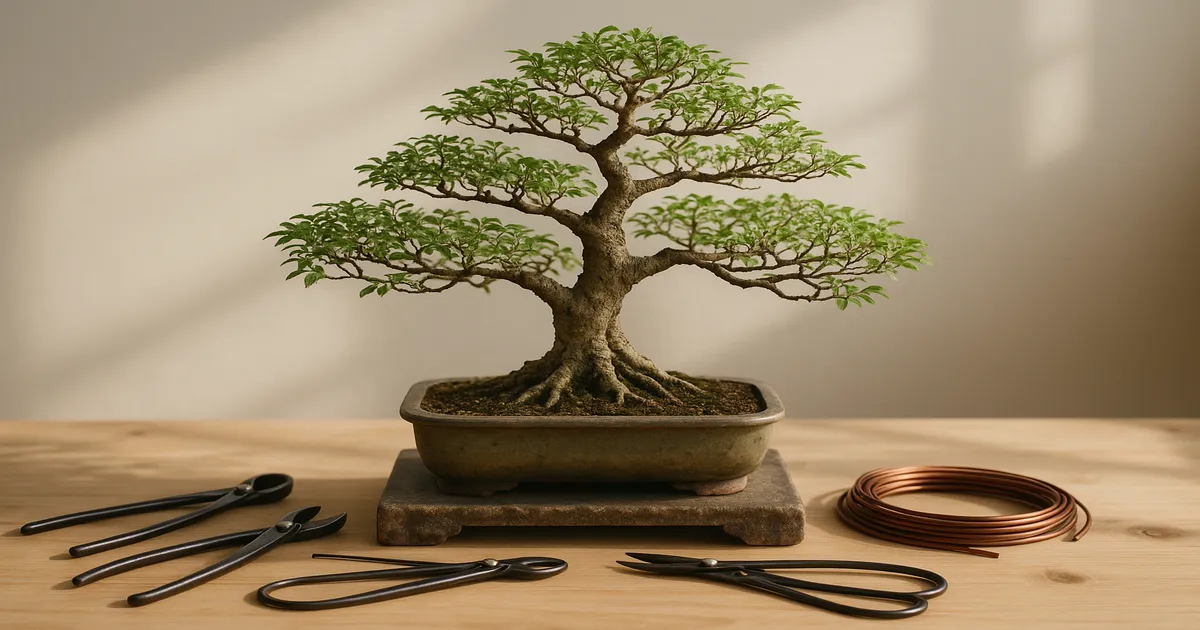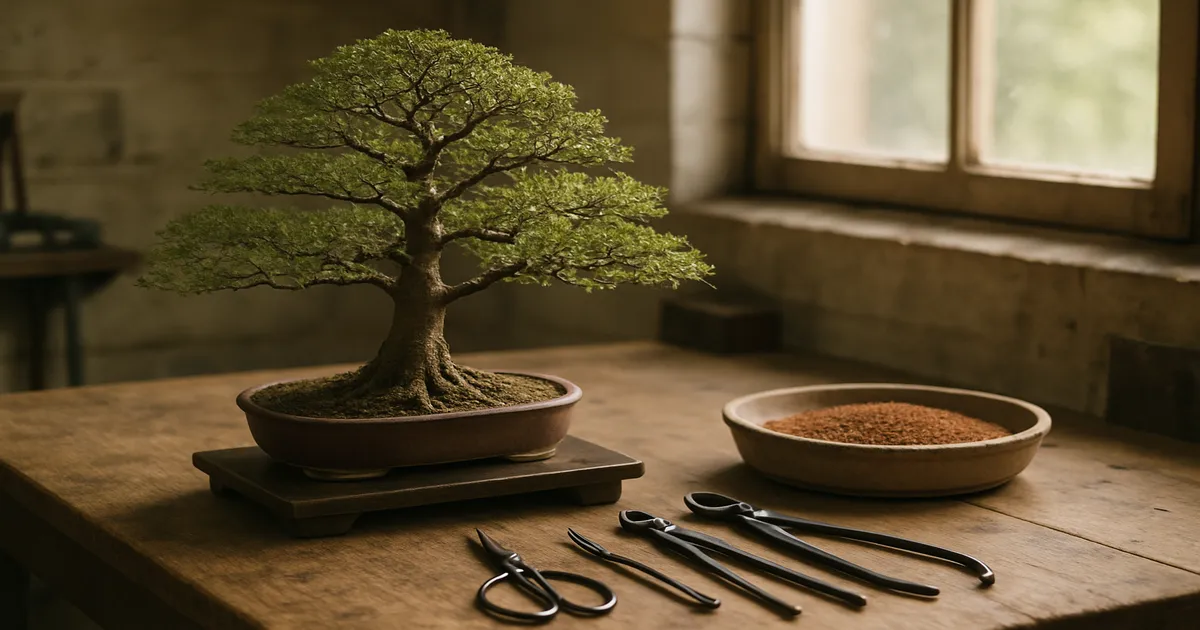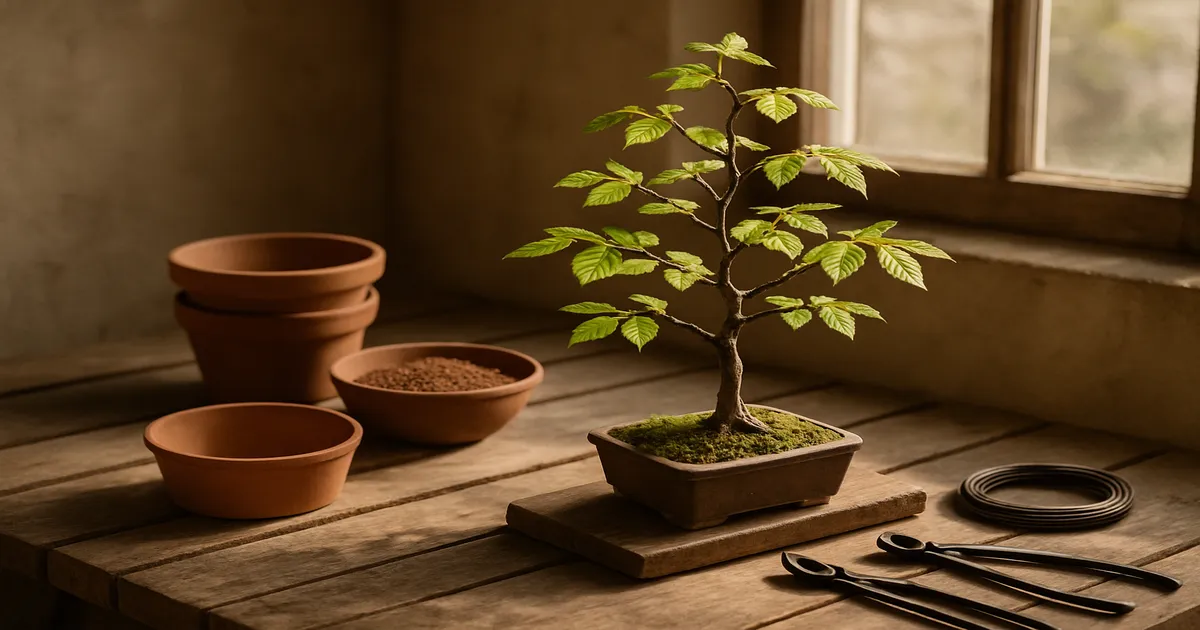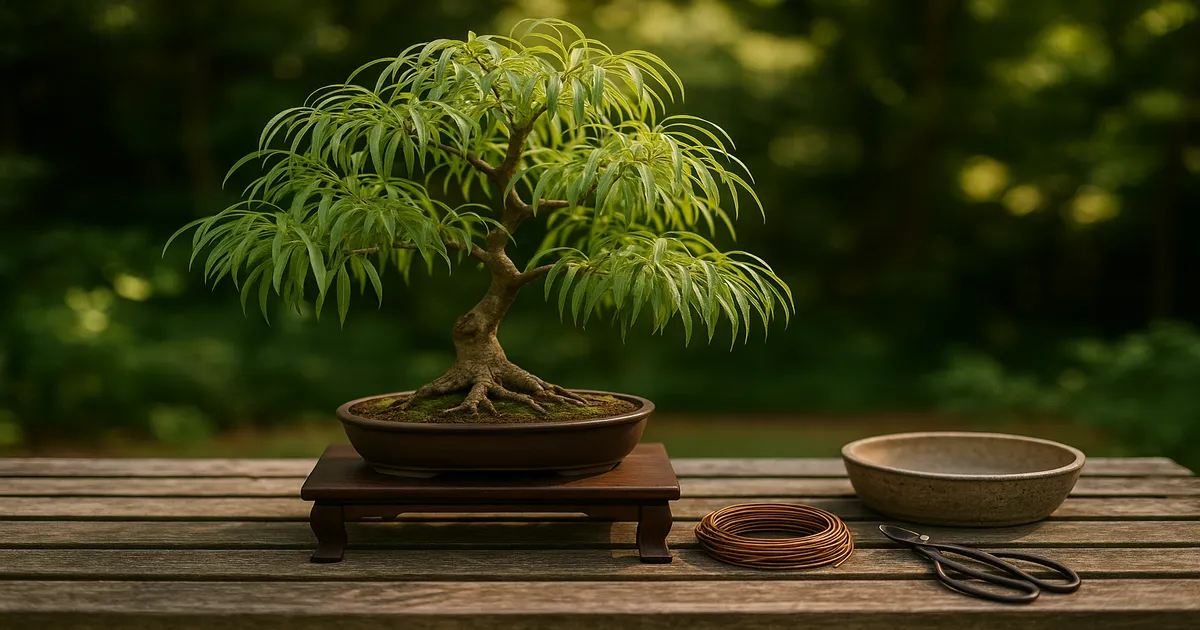
Quick Answer: A cutting-grown Willow Leaf Ficus (Ficus salicaria) at seven years typically carries a trunk caliper of 0.5–1.5 inches, a consolidated root system, and is well past the fragile establishment phase — making it ideal for focused structural refinement. It responds vigorously to clip-and-grow pruning, wiring, and nebari correction work. This guide covers everything you need to develop your willow leaf ficus, cutting grown ~7 years, confidently from here.
What to Expect From a Willow Leaf Ficus, Cutting Grown ~7 Years
Where This Tree Sits in Its Development Timeline
Seven years in, a cutting-grown Ficus salicaria has cleared the awkward early stages and entered what many growers consider the most rewarding phase. Real structure exists, the tree heals quickly, and it responds predictably to training. Primary branch placement should already be decided. Your focus now shifts to secondary and tertiary branching, ramification, and gradually improving the nebari.
Key Characteristics at the 7-Year Mark
- Trunk caliper: 0.5–1.5 inches (1.3–3.8 cm), depending on whether the tree spent time in the ground or a large grow container
- Root system: Consolidated and capable of tolerating moderate root pruning
- Nebari: The main weakness of cutting-grown material — less dramatic than seed-grown trees, but corrective surface-root training is well underway by now
- Genetic consistency: Cutting-grown trees are genetically identical to the parent, which matters when selecting known cultivars like ‘Too Little’
Species Overview: What Is Willow Leaf Ficus?
Scientific Name and Nomenclature
The accepted scientific name is Ficus salicaria, but you’ll regularly encounter it sold as Ficus salicifolia, Ficus nerifolia, or Ficus neriifolia var. regularis. These are synonyms — the nursery trade has never fully standardized. When in doubt, the leaf shape is your best identifier: narrow, lance-like, and gracefully weeping.
Native Habitat and What It Tells Us About Care
Ficus salicaria originates from tropical South America, particularly Brazil and Colombia, where it grows along riverbanks and moist lowland forest margins. That riparian background is directly useful. This tree wants consistent moisture, high humidity, and warmth. It is not drought-tolerant and will punish neglect with dramatic leaf drop.
Leaf, Bark, and Growth Habit
Leaves are narrow and lanceolate, 1–3 inches (2.5–7.5 cm) long, deep glossy green with a gentle draping quality. Compared to Ficus benjamina, the leaves are smaller and more refined — one of the main reasons F. salicaria is so prized for bonsai. Bark is smooth and light gray-tan when young, developing attractive fissuring as the tree matures. In nature it can reach 30–50 feet; in a pot, that energy becomes excellent ramification potential.
Cultivars and Lookalikes
The ‘Too Little’ cultivar produces notably smaller leaves and a more compact growth habit, making it excellent for shohin and mame work. Be cautious: Ficus microcarpa and Ficus retusa are frequently mislabeled as willow leaf ficus in some markets. Always confirm the narrow, willow-like leaf shape before buying.
Light and Temperature for Willow Leaf Ficus
Optimal Light Levels Indoors and Outdoors
Outdoors, Ficus salicaria thrives at 2,000–5,000 foot-candles and can handle up to 8,000 fc once gradually acclimated. In climates where summer temperatures regularly exceed 95°F (35°C), morning sun with afternoon shade is the sweet spot. Indoors, aim for the brightest south- or west-facing window available — and supplement it.
For indoor growing, target 6,000–8,000 lux for 12–14 hours per day using full-spectrum LED or T5 fluorescent fixtures positioned 6–12 inches (15–30 cm) above the canopy. A quality grow light makes a measurable difference here. Below roughly 800–1,000 lux, expect elongated internodes, interior leaf drop, and a generally unhappy tree. A light meter removes the guesswork entirely.
Temperature Range and Cold Damage Thresholds
| Condition | Temperature |
|---|---|
| Optimal growing range | 65–95°F (18–35°C) |
| Indoor comfort zone | 65–80°F (18–27°C) |
| Growth slows noticeably | Below 60°F (15.5°C) |
| Minimum safe temperature | 50°F (10°C) |
| Frost | Lethal — can kill the tree outright |
| Year-round outdoor cultivation | USDA Zones 10b–12; Zones 9b–10a with frost protection |
Managing Leaf Drop During Transitions
Leaf drop is the number-one complaint from new Ficus salicaria owners, and it’s almost always caused by an abrupt environmental change — moving from a greenhouse to a windowsill, from outdoors to indoors, or from a bright room to a darker one. Transition the tree gradually over 2–3 weeks, shifting it incrementally. The tree almost always rebounds once conditions stabilize. Don’t panic and overwater.
Soil Mix and Watering for a 7-Year Specimen
Recommended Bonsai Soil Composition
| Component | Proportion | Function |
|---|---|---|
| Akadama (3–6 mm) | 40% | Moisture retention, cation exchange, root anchoring |
| Pumice (3–6 mm) | 30% | Drainage, aeration, root oxygenation |
| Lava rock / scoria (3–6 mm) | 30% | Drainage, structural stability, long-term particle integrity |
This 40/30/30 mix reflects the tree’s riparian roots — it wants consistent moisture but cannot sit in waterlogged soil. A reliable source of quality akadama makes a real difference in long-term root health.
Adjusting the Mix for Your Climate
In humid climates, pull akadama back to 30% and bump pumice to 40% to prevent waterlogging. In dry indoor environments, increase akadama to 50% and reduce pumice to 20% to hold a little more moisture between waterings. For shohin-sized pots, use 2–4 mm particles for better capillary action; larger training pots can handle particles up to 8 mm.
Watering Through the Seasons
During the growing season, water when the top ¼–½ inch of soil begins to dry. In hot outdoor conditions, small pots may need water daily or even twice daily. In winter indoors, let the top ½–1 inch dry before watering — typically every 2–4 days. Always water thoroughly until water drains freely from every drainage hole, and never let the pot sit in standing water for more than 30 minutes.
Rainwater is ideal. If you use tap water, let it sit 24 hours to off-gas chlorine. High-fluoride tap water can cause leaf tip burn over time.
Humidity and How to Meet It
Target 50–70% relative humidity. Below 30–40%, expect tip browning and reduced aerial root development. Practical solutions, in rough order of effectiveness:
- Room humidifier — the most reliable method
- Grouping plants together — creates a localized humid microclimate
- Humidity tray with pebbles — keep the pot above the water line, not sitting in it
- Misting — helpful in the morning but not a substitute for ambient humidity
Overwatering vs. Underwatering: Reading the Signs
Overwatering: yellowing interior leaves, soil that stays wet for 3+ days, fungus gnats, mushy roots at repotting, foul-smelling soil.
Underwatering: leaves curling inward along the midrib, sudden leaf drop, soil pulling away from pot edges, crispy leaf edges, a pot that feels surprisingly light when lifted.
Experienced growers gauge moisture by pot weight — it becomes second nature quickly.
Pruning and Shaping a Willow Leaf Ficus, Cutting Grown ~7 Years
Clip-and-Grow: The Primary Development Method
The core ramification technique is straightforward: let a new shoot extend 4–6 leaves, then prune it back to 1–2 leaves. Repeat. This cycle drives back-budding, tightens internode spacing, and gradually builds the fine branch structure that defines a refined bonsai. Ficus salicaria responds to this more enthusiastically than most species — don’t be shy about it during the growing season.
Structural Pruning at Year 7
Primary structure should already be established. Structural pruning now targets secondary and tertiary branch selection. Do major cuts in early spring just before the growth flush, when the surge of energy accelerates callus formation. When selecting branches:
- Remove branches growing directly toward or away from the viewer
- Eliminate crossing branches and bar branches (opposite pairs at the same height)
- Favor branches with slight downward movement — it reads as age and naturalness
- Keep branches with good taper and interesting movement
Defoliation: When, Why, and How
Full or partial defoliation reduces leaf size, improves light penetration into the interior, and stimulates back-budding. Only defoliate vigorous, healthy trees in late spring to early summer — never a recently repotted tree or one showing any signs of stress. Allow at least a full growing season between defoliations.
Managing Latex and Wound Healing
Cuts will bleed milky latex — let it dry naturally or dab gently with a clean cloth. Don’t smear it across foliage. If you have latex sensitivity, wear gloves. Use concave cutters on every branch removal to create a slightly hollowed wound that heals flush with the trunk. Apply cut paste to any cut larger than ¼ inch (6 mm). Small cuts callus in 3–6 months during active growth; larger wounds may take 1–3 years. A vigorous, well-fed tree heals dramatically faster than a stressed one.
Wiring Willow Leaf Ficus
Aluminum vs. Copper Wire
Aluminum is the default for Ficus salicaria. It’s softer, easier on the relatively thin bark, and forgiving to work with. Copper holds a set more firmly and is worth using on thicker branches, but it requires more care to avoid marking the bark. When in doubt, reach for aluminum.
Wire Gauge by Branch Diameter
| Branch Diameter | Aluminum Gauge | Copper Gauge |
|---|---|---|
| Under 0.1 inch (2.5 mm) | 1.0–1.5 mm | 0.8–1.0 mm |
| 0.1–0.25 inch (2.5–6 mm) | 2.0–2.5 mm | 1.5–2.0 mm |
| 0.25–0.5 inch (6–12 mm) | 3.0–3.5 mm | 2.0–2.5 mm |
| Over 0.5 inch (12 mm) | 4.0–5.0 mm | 3.0–3.5 mm |
A useful rule of thumb: wire diameter should be roughly one-third the diameter of the branch.
Application and the 45-Degree Rule
The best windows for wiring are late winter to early spring before the growth flush, or immediately after defoliation when branches are clearly visible. Always anchor the wire at the trunk or a larger branch before wrapping, then spiral at a 45-degree angle to the branch axis. Double-wire two branches of similar diameter with a single piece of wire whenever possible — it’s more efficient and anchors better.
After applying, slide a fingernail under the wire. If you can’t, it’s too tight.
How Often to Check Wire
Check every 2–4 weeks during the growing season without exception. Ficus salicaria bites wire into bark faster than almost any other common bonsai species. Typical wire duration is 4–12 weeks in active growth — much less than beginners expect. Remove wire the moment it begins cutting in, not after. Always cut the wire in multiple places and carefully unwrap it. Never unwind wire from a set branch — you risk snapping it.
Repotting a 7-Year Cutting-Grown Willow Leaf Ficus
How Often to Repot
A 7-year specimen sits at the transition between annual and biennial repotting. Rather than following a fixed schedule, check the root mass every spring. Signs that repotting is due: roots circling the pot bottom, roots emerging from drainage holes, water running off the surface instead of absorbing, or dramatically faster drying between waterings.
Timing: Spring Is Best
Repot in early spring as buds begin to swell but before significant leaf extension. The impending growth flush provides maximum energy for root recovery. Midsummer — after the first flush has hardened off — works as a secondary window with careful aftercare. Avoid fall and winter repotting entirely; root regeneration is minimal and recovery is slow.
Root Pruning: How Much Is Safe
Remove no more than 25–30% of the root mass in a single session for a healthy tree. A stressed specimen should have even less taken off. Use a root hook to gently tease apart the outer root ball, then trim with sharp root scissors — clean cuts heal faster than torn roots.
Pot Selection and Nebari Development
The cutting-grown nebari deficit is real but correctable. At each repotting, use these techniques:
- Radial root combing — spread surface roots outward before settling the tree into the mix
- Growing over a flat stone or tile — encourages roots to splay laterally
- Tourniquet technique — a copper wire loop around the base of problem roots encourages thickening above the tie point
For a 7-year development tree, a training pot (deeper, wider) still makes sense if trunk thickening is a priority. Move to a shallower display pot once the trunk and nebari meet your standards.
Aftercare Following Repotting
- Keep the tree in shade for 2–4 weeks — no direct sun on freshly pruned roots
- No fertilizer for 4–6 weeks — let the root system stabilize first
- Maintain high humidity around the canopy
- Monitor for wilting; light misting of foliage can help, but don’t overwater the soil
Troubleshooting Common Problems
Sudden Leaf Drop
The most common cause is an abrupt environmental change — a move, a temperature shift, a cold draft, or a sudden reduction in light. If you identify and correct the cause, the tree almost always rebounds with a flush of new growth. Resist the urge to overwater while it’s leafless.
Yellowing Leaves and Root Rot
Yellow leaves with persistently damp soil point to overwatering and possible root rot. Check the roots — soft, brown, mushy roots confirm it. Repot into fresh, well-draining mix, trim the affected roots, and adjust your watering habits. Yellowing on a tree with appropriate soil moisture more often signals a nutrient deficiency; a balanced fertilizer will address it.
Leggy Growth and Poor Ramification
Long internodes and sparse branching almost always trace back to insufficient light. Move the tree to a brighter location or add supplemental lighting, then implement a consistent clip-and-grow routine. The combination of good light and regular pruning produces tight, refined branching relatively quickly in this species.
Pests: Scale, Spider Mites, and Fungus Gnats
- Scale: Look for sticky residue (honeydew) and small brown bumps on bark and stems. Treat with horticultural oil or remove manually with a soft brush and isopropyl alcohol.
- Spider mites: Fine webbing on leaf undersides, stippled or pale foliage. Increase humidity — mites hate it — and spray with insecticidal soap or neem oil.
- Fungus gnats: Larvae damage roots in overly wet soil. Let the soil dry more between waterings, use yellow sticky traps for adults, and apply Bacillus thuringiensis var. israelensis (Bti) as a soil drench for larvae.
Bark Cracking and Wire Scars
Some bark fissuring is completely normal as the tree matures — it’s a sign of character, not damage. Wire scars are a different matter. Shallow marks will callus over in time; deep scars may take years and benefit from cut paste applied to exposed cambium. The lesson, as always: check your wire every two weeks.
Frequently Asked Questions
How fast does a Willow Leaf Ficus grow as a bonsai?
Ficus salicaria is one of the faster-growing bonsai species. In active development conditions — good light, consistent feeding, and warm temperatures — expect 12–24 inches of new growth per season in a training pot. In a refined bonsai pot with regular pruning, growth is more controlled but still vigorous. That speed is an asset: it means faster healing, quicker ramification, and more opportunities to correct mistakes.
Can a cutting-grown Willow Leaf Ficus develop good nebari?
Yes, though it takes deliberate effort. Cutting-grown trees lack the natural radial root spread that seed-grown trees develop from germination. The gap is real but closeable. Consistent radial root combing at each repotting, growing the tree over a flat tile, and selective surface-root training will produce a presentable nebari within another 5–10 years of focused work. Patience and consistency matter more than any single technique.
Is Willow Leaf Ficus a good indoor bonsai?
It’s one of the better choices for indoor growing, provided you can meet its light and humidity requirements. Most windowsills fall short on light — supplemental grow lighting is often necessary for long-term health indoors. Get those two factors right and Ficus salicaria is a forgiving, fast-responding species that suits indoor cultivation well.
When is the best time to wire a Willow Leaf Ficus?
Late winter to early spring, before the growth flush, is ideal — branches are visible and the tree is about to push energy into recovery. Immediately after defoliation is the other prime window. The critical habit to build is checking wire every two to four weeks; this species can embed wire in as little as six weeks during peak growth.
How do I know if my 7-year Willow Leaf Ficus is ready for display?
A tree is display-ready when the primary and secondary branch structure is convincing from the front, the nebari reads clearly at soil level, and the overall silhouette holds together without obvious gaps or awkward branches. At seven years, cutting-grown material is rarely at that point — but it’s close enough that you should be selecting a front, refining the apex, and thinking seriously about pot choice. Another two to four years of focused refinement typically gets a well-grown specimen to display quality.