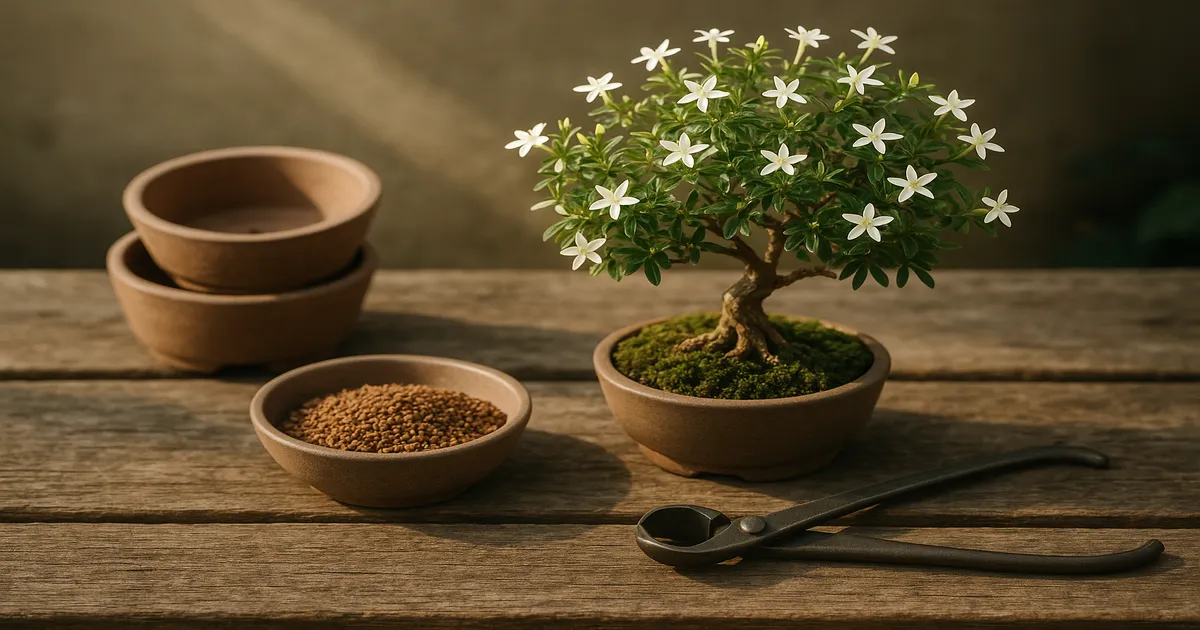
Quick Answer: Serissa bonsai thrive in bright indirect light, consistent moisture in a well-draining akadama-based soil, and temperatures of 65–75°F (18–24°C) with high humidity. They’re sensitive to sudden environmental changes — leaf drop is the most common stress response but is usually reversible once conditions stabilize. Attentive, consistent care is rewarded with prolific blooms and beautifully refined branching.
Serissa bonsai has a reputation that precedes it — some growers call it “the tree of a thousand stars,” others call it “the tree that drops leaves every time you look at it wrong.” Both descriptions have merit. Learning how to care for serissa bonsai is genuinely rewarding, but it demands consistency above all else. Get the basics right and this species will flower multiple times a year, develop fine twiggy ramification, and age into a beautifully characterful tree.
Serissa Bonsai: Species Background and Cultivars
Scientific Name, Common Names, and Native Habitat
Serissa japonica (syn. Serissa foetida) belongs to the Rubiaceae family — the same family as coffee. Common names include Tree of a Thousand Stars, Snowrose, and Snow Rose Bonsai. It’s native to the open woodlands and humid subtropical margins of Southeast Asia, southern China, Japan, and India, where it grows in warm, well-drained soils with reliable moisture.
The species epithet foetida means “foul-smelling,” which is exactly what you’ll notice when you cut into the bark or roots during repotting. It’s not harmful — just pungent. Knowing this in advance saves a lot of alarm on repotting day.
Growth Habit and Why Serissa Suits Bonsai
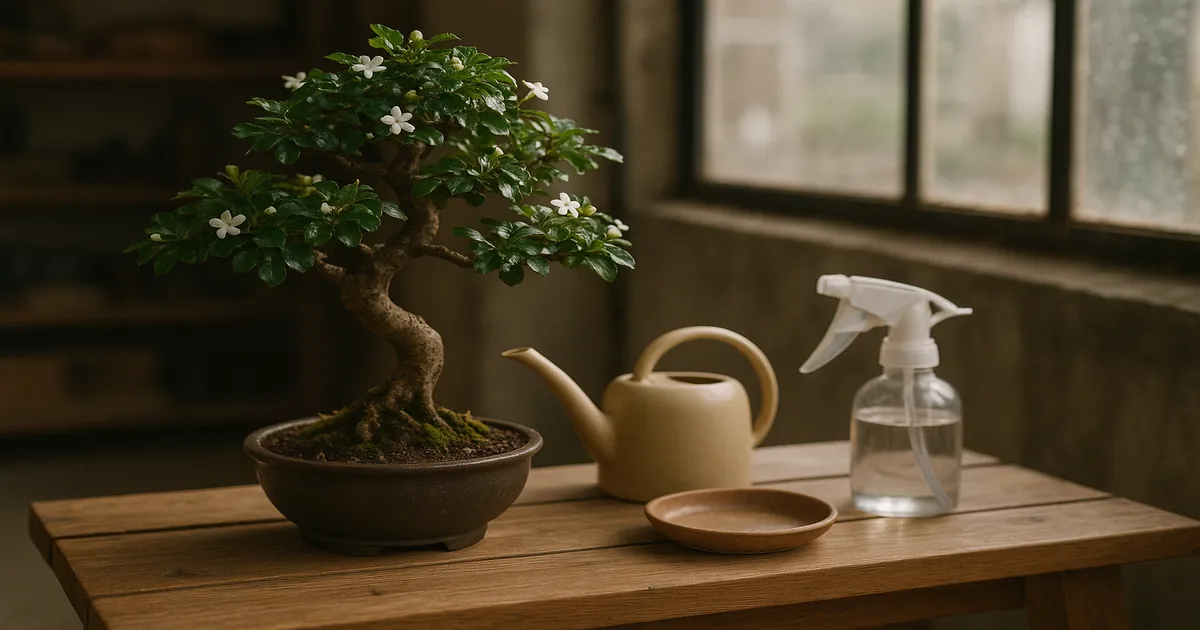
Serissa is a small, multi-branching evergreen shrub that grows 2–5 feet (0.6–1.5 m) in the wild. Its naturally fine, twiggy branching structure, small leaves (just 0.25–0.75 inches / 6–19 mm), and grayish-brown bark that fissures attractively with age all make it an excellent bonsai candidate. The prolific white or pink tubular flowers — which can appear multiple times a year under good conditions — are the showstopper.
Popular Cultivars
| Cultivar | Key Characteristics |
|---|---|
| S. japonica (straight species) | Single white flowers; most vigorous and forgiving — best for beginners |
| ’Mt. Fuji’ | Heavily white-edged leaves; compact growth; very popular in Western bonsai |
| ’Variegata’ | Creamy-white leaf margins; slightly less vigorous than the species |
| ’Pink Snow Rose’ | Pale to medium pink flowers; otherwise similar to the species |
| ’Kyoto’ | Double white flowers; dense, compact habit |
| ’Flore Pleno’ | Double white flowers; slightly coarser branching |
One important note: variegated cultivars like ‘Mt. Fuji’ and ‘Variegata’ are more sensitive to environmental stress than the straight species. If you’re new to serissa, start with the species before moving to variegated forms.
How to Care for Serissa Bonsai: Light and Temperature
Indoor Placement: Finding the Brightest Spot
Serissa is primarily an indoor bonsai in temperate climates (USDA zones below 10). Indoors, it needs at least 4–6 hours of bright light daily. A south- or west-facing window is ideal in the Northern Hemisphere; east-facing windows can work but often produce leggy, weak growth over time.
The single most important rule: never move serissa abruptly between light levels. A sudden shift from a dim corner to a sunny windowsill — or vice versa — will trigger significant leaf drop. Always transition gradually over 1–2 weeks.
Using Grow Lights to Supplement Natural Light
In winter or low-light homes, a full-spectrum LED grow light positioned 6–12 inches (15–30 cm) above the canopy for 12–14 hours per day works excellently. A good option here is the Barrina T5 Full Spectrum LED Grow Light, which provides even coverage without excessive heat. Aim for approximately 2,000–3,000 foot-candles (21,500–32,000 lux) at canopy level. This is one of the most effective interventions for keeping serissa healthy through a northern winter.
Outdoor Growing: When and Where
Outdoors, serissa grows more vigorously and flowers more prolifically than it does inside. In climates with intense summer heat above 95°F (35°C), afternoon shade prevents leaf scorch. Always bring the tree back indoors before nighttime temperatures approach 45°F (7°C).
- Zones 10–11: Outdoors year-round with minimal protection
- Zone 9: Move indoors or into a frost-free greenhouse when temperatures drop below 45°F (7°C)
- Zones 8 and below: Treat as an indoor bonsai; move outside after last frost, return before first autumn frost
Temperature Range and Winter Protection
The optimal range is 65–75°F (18–24°C). Serissa tolerates 50–95°F (10–35°C) with careful management, but the minimum safe temperature is 45°F (7°C). Indoors in winter, keep it well away from cold drafts near windows and doors — and equally far from heating vents and radiators. Both extremes trigger stress-related leaf drop.
Soil, Watering, and Humidity for Serissa Bonsai
The Ideal Soil Mix
Excellent drainage is non-negotiable. Serissa is highly susceptible to root rot in any mix that stays wet for more than 24–48 hours. The standard baseline is a 50% akadama / 30% pumice / 20% lava rock ratio by volume. Quality akadama is the foundation of this mix — Bonsai Jack Akadama is a reliable, consistently sized option widely available online.
Adjust based on your environment:
- Drier indoor conditions: 60% akadama / 25% pumice / 15% lava rock to retain slightly more moisture
- Humid climates or wet outdoor seasons: 40% akadama / 35% pumice / 25% lava rock for extra drainage
Target a soil pH of 5.5–6.5. Serissa is sensitive to alkaline soils, so avoid standard potting soil, peat-heavy mixes, or anything that compacts with use. A particle size of 3–6 mm suits most serissa bonsai.
How Often to Water Serissa Bonsai
Water thoroughly when the top 0.5–1 inch (1–2.5 cm) of soil begins to dry — never let the root ball dry out completely, but never leave it waterlogged either. Seasonal guidelines:
- Spring/Summer (outdoors): Every 1–2 days in warm weather
- Spring/Summer (indoors): Every 2–3 days
- Autumn: Every 2–4 days as growth slows
- Winter (indoors): Every 3–5 days — but check daily, since heating systems dry soil faster than you’d expect
Always water until it drains freely from the drainage holes, then let it drain completely before returning the tree to its display position. Never leave serissa sitting in a water-filled saucer.
Water Quality and Temperature
Use rainwater, distilled, or filtered water when possible. Serissa is sensitive to chlorine, fluoride, and high mineral content in tap water. If tap water is your only option, let it sit uncovered overnight to off-gas chlorine, and periodically flush the soil with rainwater to prevent mineral buildup. Always use room-temperature water — cold water below 50°F (10°C) can shock the roots and trigger leaf drop.
Managing Humidity Indoors
Serissa prefers 50–70% relative humidity. Most heated indoor environments in winter drop to 20–40% RH, which is a significant stress factor. Practical solutions:
- Place the pot on a humidity tray filled with pebbles and water, ensuring the pot sits above the waterline
- Use a room humidifier near the display area
- Group multiple plants together to create a more humid microclimate
- Light morning misting can help, but avoid misting in the evening to reduce fungal risk — and note that misting alone won’t meaningfully raise humidity around the roots
Signs of Overwatering vs. Underwatering
| Overwatering | Underwatering |
|---|---|
| Yellowing inner/older leaves | Leaf curl and wilting in new growth |
| Soil wet for 3–4+ days after watering | Dry, powdery soil pulling from pot edges |
| Mold on soil surface | Crispy leaf edges or tips |
| Wilting despite wet soil (root rot) | Very lightweight pot |
| Foul smell beyond normal root odor | Premature leaf drop |
Pruning Serissa Bonsai for Shape and Health
Maintenance Pruning
Maintenance pruning can be done year-round, with the heaviest work during the spring and early summer growth flush. Once a shoot extends 3–4 leaf pairs beyond the silhouette, cut it back to 1–2 leaf pairs using sharp bonsai scissors at a slight angle just above a node. Serissa back-buds readily even on older wood, so don’t hesitate to cut back into 2–3 year-old growth when needed. Deadhead spent flowers promptly — this redirects energy into new growth and encourages continued blooming.
Structural Pruning
Structural work is best done in late winter to early spring (February–March in the Northern Hemisphere), just before the main growth flush. Wounds heal rapidly as growth accelerates, minimizing stress on the tree.
When selecting and removing branches:
- Aim for primary branches that alternate left, right, and back as they ascend the trunk
- Lower branches should be the longest; branches taper in length toward the apex
- Remove bar branches (two branches at the same height on opposite sides), crossing branches, and any branch with reverse taper
- Use concave cutters for flush cuts that heal cleanly — the Kaneshin No.8 Concave Branch Cutter is a well-regarded choice that holds its edge well on serissa’s soft wood
Wound Care After Pruning
Apply cut paste to any cut larger than 3–4 mm to protect against desiccation and fungal entry. Smaller cuts heal quickly on their own. Always make structural cuts on a healthy, actively growing tree — a stressed serissa heals poorly and is vulnerable to dieback.
Wiring Serissa Bonsai
Wire Type, Gauge, and Timing
Serissa’s wood is soft and pliable — it wires easily but scars quickly. Always use aluminum wire rather than copper; it’s softer and far more forgiving on serissa’s thin bark. A multi-gauge aluminum wire set covers most situations well.
Gauge guide:
- Primary branches: 1.5–2.5 mm aluminum
- Secondary branches: 1.0–1.5 mm aluminum
- Fine tertiary twigs: 0.8–1.0 mm aluminum
The best time to wire is late winter to early spring, before the growth flush, when branches are most flexible. Avoid wiring immediately after repotting (wait 4–6 weeks), during pest or disease stress, or in midsummer heat.
Applying Wire Correctly
Use the double-branch technique — one piece of wire anchored at a 45-degree angle across the trunk or parent branch, then spiraling along two branches of similar thickness. Keep the spiral at a consistent 45-degree angle to the branch axis. Wire should be snug but never biting into the bark.
Monitoring and Removing Wire
Check wired branches every 2–3 weeks during active growth — in spring, wire can bite into bark within 4–6 weeks. Wire scars on serissa are slow to fade and can become permanent if left too long. When removing wire, always cut it off rather than unwinding it. Use wire cutters to snip at every bend, then lift the sections away. Unwinding risks snapping branches and disturbing roots.
Repotting Serissa Bonsai
When and How Often
Young, fast-growing serissa typically needs repotting every 1–2 years; mature specimens every 2–3 years. The best timing is early spring as buds begin to swell, before the main growth flush — this gives the tree its full growing season to recover.
Signs it’s time to repot:
- Roots circling the inside of the pot
- Water draining very slowly after watering
- The root ball lifting out as a single solid mass
Step-by-Step Repotting Process
- Remove the tree from its pot and gently comb out the roots with a root hook
- Prune up to one-third of the total root mass using clean, sharp scissors
- Prepare the new pot with drainage mesh secured over the holes and a layer of fresh soil mix
- Position the tree and secure it with tie-down wire threaded through the drainage holes
- Work fresh soil into the root mass, eliminating air pockets by working a chopstick around the roots
- Water thoroughly until water runs clear from the drainage holes
The roots will smell unpleasant when cut — that’s the foetida trait. Perfectly normal.
Aftercare Following Repotting
Keep the repotted tree in a sheltered, semi-shaded location for 4–6 weeks. Water carefully — the reduced root system can’t handle the same volume as before — but don’t let the soil dry completely. Hold off on fertilizing for 4–6 weeks, and don’t wire during this recovery period.
Troubleshooting Common Serissa Bonsai Problems
Why Is My Serissa Dropping Leaves?
Leaf drop is serissa’s default stress response, and it’s almost always triggered by a sudden change rather than a terminal problem. Common triggers include:
- Moving the tree to a new location (even a better one)
- Seasonal transitions, especially moving indoors in autumn
- Cold drafts or proximity to heating vents
- Low humidity
- Inconsistent watering
- Cold tap water applied to roots
- Temperature fluctuations near windows in winter
The fix is usually stabilization: identify the most likely trigger, correct it, and give the tree 2–4 weeks to respond. Leaf drop alone is rarely a death sentence.
Yellowing Leaves
Yellow leaves most commonly indicate overwatering, alkaline water causing pH imbalance, nutrient deficiency, or insufficient light. Check watering frequency and soil drainage first — these are the most common culprits. If drainage and watering are sound, switch to rainwater or filtered water and reassess light levels.
Pests: Spider Mites, Scale, and Whitefly
Low indoor humidity creates ideal conditions for spider mites — look for fine webbing and stippled, dull foliage. Scale insects appear as small brown or white bumps on stems and branches. Whitefly are most common on outdoor trees and scatter visibly when foliage is disturbed.
Treatment:
- Mild infestations: Neem oil solution or insecticidal soap, applied thoroughly to all leaf surfaces and stems, repeated every 7–10 days for 3–4 treatments
- Severe infestations: A systemic insecticide may be needed — consult product guidance for bonsai use
- Prevention: Maintain good humidity, ensure adequate air circulation, and inspect regularly
Root Rot: Prevention and Recovery
Root rot is the most serious threat to serissa and is almost always caused by poor drainage or overwatering. Signs include wilting despite wet soil, yellowing leaves, a foul smell from the soil, and blackened, mushy root tips visible during repotting.
To treat: unpot the tree, remove all affected (black, soft) roots with clean scissors, repot into fresh well-draining soil, and significantly reduce watering frequency during recovery. Prevention is straightforward — use the correct soil mix, never leave the tree in standing water, and check drainage regularly.
Frequently Asked Questions About How to Care for Serissa Bonsai
Why is my serissa bonsai dropping leaves?
Leaf drop is serissa’s most common stress response and is almost always triggered by a sudden environmental change — moving the tree, temperature fluctuations, cold drafts, low humidity, or inconsistent watering. Identify the most likely trigger, stabilize conditions, and give the tree 2–4 weeks to recover. It looks alarming but is usually reversible.
Can serissa bonsai be kept indoors year-round?
Yes, serissa is one of the most widely grown indoor bonsai species. It does best with a bright window (south- or west-facing) or supplemental grow lighting, good humidity, and stable temperatures between 65–75°F (18–24°C). Moving it outdoors during frost-free months will improve vigor and flowering, but it can remain indoors permanently with attentive care.
How often should I water a serissa bonsai?
Watering frequency depends on season, pot size, and environment. As a general guide: every 1–2 days outdoors in summer, every 2–3 days indoors in spring and summer, and every 3–5 days indoors in winter. Always check the top inch of soil before watering rather than following a fixed schedule — conditions vary too much for a single rule to apply.
When should I fertilize serissa bonsai?
Fertilize from early spring through early autumn, when the tree is actively growing. Use a balanced fertilizer (such as a 10-10-10 NPK) at half strength every two weeks in spring and summer, tapering to once a month in early autumn. Switch to a low-nitrogen fertilizer in late summer to encourage flowering and harden growth before winter. Do not fertilize for 4–6 weeks after repotting.
How do I get my serissa bonsai to flower more?
Consistent care is the most reliable trigger for repeat flowering. Adequate bright light, stable temperatures, good humidity, and regular fertilizing through the growing season all encourage blooming. Deadheading spent flowers promptly redirects energy into new buds. A brief period outdoors in spring and summer — with the associated increase in light intensity and natural temperature variation — often dramatically increases flower production compared to year-round indoor growing.