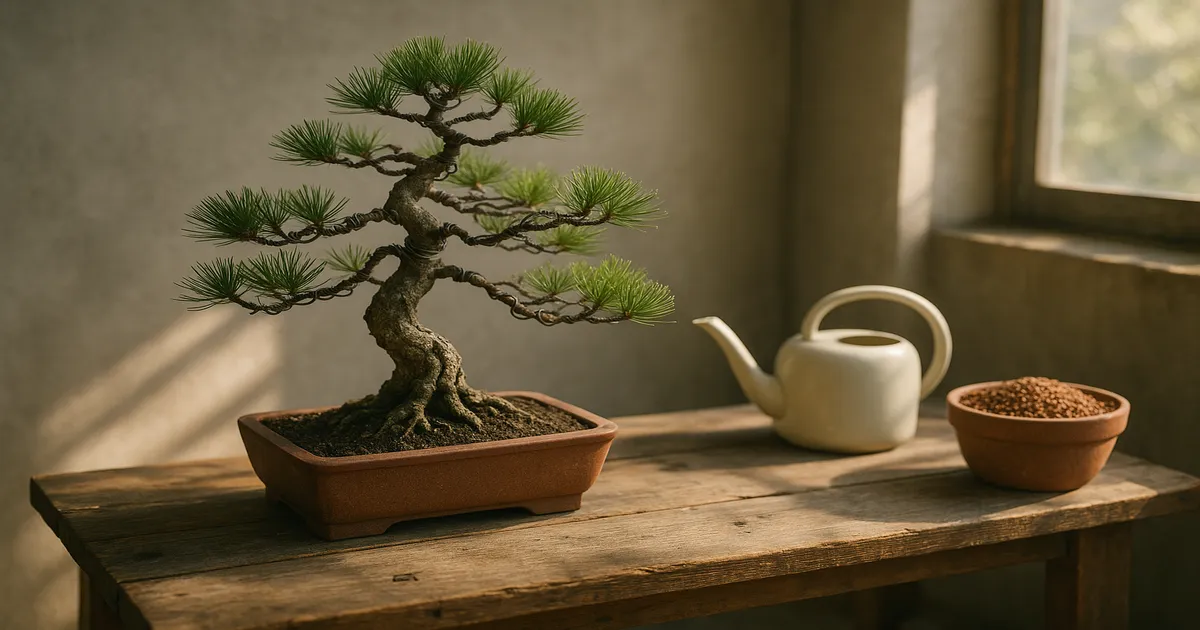
Quick Answer: How often to water a potted pine tree depends on observation, not a fixed schedule. In active summer growth, daily watering is common; in winter dormancy, once every one to three weeks may be enough. Use the finger or chopstick test — water when the soil feels barely moist to dry an inch or two below the surface.
Figuring out how often to water a potted pine tree is one of the most common questions new bonsai growers wrestle with — and the honest answer is that no single schedule fits every situation. Watering frequency shifts with the seasons, your container size, your local climate, and the specific pine species you’re growing. What follows is a practical, observation-based framework to help you dial it in for your tree.
How Often Should You Water a Potted Pine Tree?
No Fixed Schedule Exists
Pines in containers can dry out in hours on a hot, windy day — or hold moisture for several days during a cool, overcast week. Telling someone to “water every two days” is a shortcut that leads to dead trees. The only reliable method is checking the soil directly before each watering.
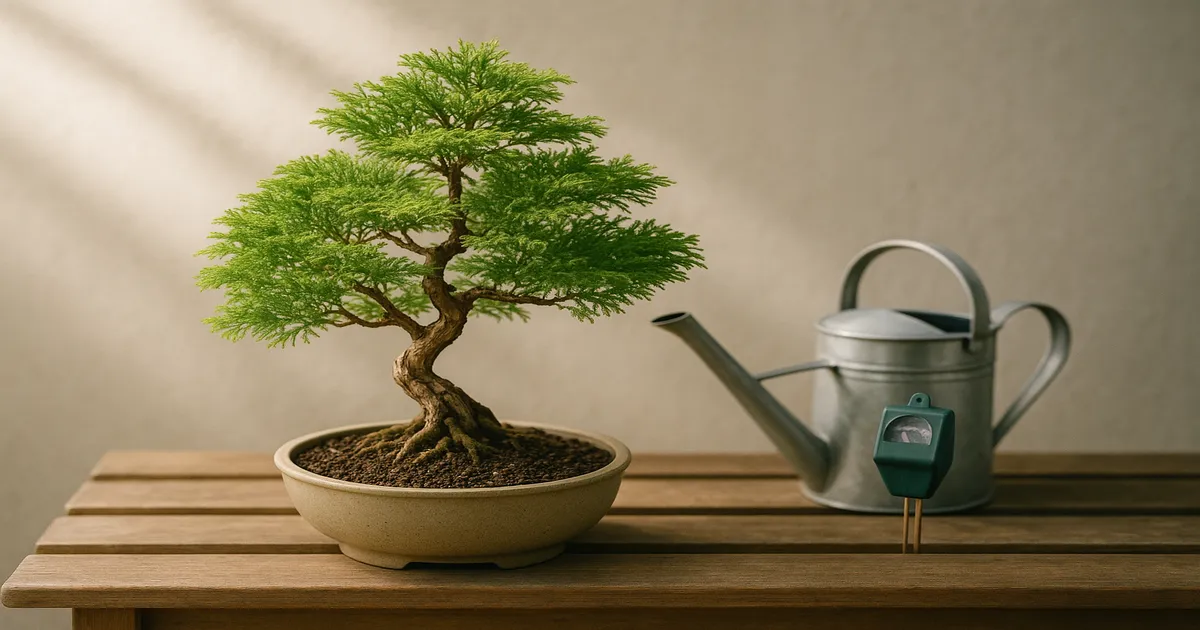
Use the finger or chopstick test: push a finger or an unvarnished wooden chopstick 1–2 inches (2.5–5 cm) into the soil. If it feels barely moist to dry at that depth, water now. If it still feels damp, wait a few hours and check again.
Seasonal Watering Frequency at a Glance
Use this as a starting point, not a rigid rule:
| Season | Typical Frequency |
|---|---|
| Spring (active growth) | Once or twice daily during candle extension |
| Summer | Once daily; twice on heat waves or for small pots |
| Autumn | Every 1–3 days as growth slows |
| Winter (cold storage) | Every 1–3 weeks; every 3–7 days in cold frames |
The rest of this article explains the why behind these ranges so you can adapt them to your own conditions.
Pine Species, Growth Habits, and Water Needs
Why Pines Are Different From Other Container Trees
Pines are gymnosperms with resin-based vascular systems that make them especially sensitive to waterlogged soil. More importantly, all pines form obligate symbiotic relationships with mycorrhizal fungi. These fungi dramatically improve the tree’s ability to absorb water and nutrients, but they need oxygen in the root zone to survive. Saturated or compacted soil suffocates them quickly.
The practical takeaway: pines tolerate approaching dryness far better than they tolerate sitting in wet soil.
Common Pine Species for Containers and Bonsai
| Species | Common Name | Water Sensitivity Notes |
|---|---|---|
| Pinus thunbergii | Japanese Black Pine | Vigorous; tolerates more frequent watering than most |
| Pinus parviflora | Japanese White Pine | Delicate; very sensitive to overwatering |
| Pinus sylvestris | Scots Pine | Cold-hardy; moderate water needs |
| Pinus mugo | Mugo Pine | Compact; dries more slowly due to lower transpiration |
| Pinus densiflora | Japanese Red Pine | Moderate vigor; similar needs to Japanese Black Pine |
| Pinus halepensis | Aleppo Pine | Heat-tolerant; adapted to drier conditions |
Single-Flush vs. Two-Flush Pines
Single-flush pines — Japanese White Pine and Scots Pine among them — produce one growth surge per year. Two-flush species like Japanese Black Pine push a second round of growth in late summer when managed correctly. During each active growth phase, water consumption spikes noticeably. Understanding your species’ rhythm helps you anticipate when daily checks become non-negotiable.
One important note: all pines are outdoor trees. They need genuine seasonal cycles to stay healthy. Indoor conditions cause slow, irreversible decline within one to two years.
The 5 Factors That Determine Watering Frequency
1. Season and Growth Stage
Spring candle extension is the most water-hungry period of the year. A tree pushing new growth in warm, sunny weather may genuinely need water twice a day. Summer heat typically calls for once daily. Autumn brings slower growth and cooler temperatures, so every one to three days is usually right. In winter dormancy, water needs drop sharply — but they never reach zero.
2. Container Size and Material
Small containers under 6 inches (15 cm) can go bone dry in just a few hours on a hot day. Pots in the 6–12 inch (15–30 cm) range typically dry out in one to two days in summer. Larger containers hold moisture for two to four days. Material matters too — unglazed terracotta is porous and dries faster than glazed ceramic or plastic. A classic unglazed bonsai training pot will need more frequent checks than a glazed equivalent.
3. Weather: Heat, Wind, and Humidity
A 95°F (35°C) day with low humidity and a stiff breeze can pull moisture from a small pot in two to three hours. The same tree on a cool, overcast, humid day might not need water for two days. Don’t assume rain has done the job either — a light shower rarely saturates a bonsai container deeply enough to count.
4. Soil Mix Composition
A well-draining inorganic mix — akadama, pumice, lava rock — dries faster than organic potting soil, and that’s a good thing. It gives you more control and dramatically reduces root rot risk. Standard potting soil stays wet far too long for pines and compacts over time, destroying the aeration that mycorrhizal fungi depend on.
5. Tree Vigor and Foliage Mass
A vigorous, well-ramified pine with dense foliage transpires significantly more water than a young tree with sparse needles. After heavy styling or needle thinning, water demand drops temporarily. Pay extra attention in spring, when a healthy tree is pushing hard — that’s when it’s easiest to underestimate how fast the pot is drying.
How to Check If Your Potted Pine Needs Water
The finger and chopstick test is the standard method. Push a finger or chopstick 1–2 inches (2.5–5 cm) into the soil near the pot’s edge. If it comes out clean and dry, or barely moist, water now. If damp soil clings to it, wait and check again. The surface can look completely dry while deeper layers still hold adequate moisture — surface appearance alone is not a reliable trigger.
Lifting the pot works well as a quick secondary check. Pick it up right after watering and note the weight. A noticeably lighter pot later in the day is a strong signal the soil has dried. This method becomes intuitive fast.
Visual cues also help. Soil pulling away from the pot edges means the root ball has shrunk from dryness — you’ve waited too long. Persistent surface moisture, algae, or spreading moss suggests the pot isn’t drying out adequately between waterings.
Correct Watering Technique for Potted Pine Trees
Water Thoroughly, Every Time
When it’s time to water, don’t just dampen the surface. Water until flow runs freely from every drainage hole, let it drain completely, then water again. This double-watering method ensures the entire root zone gets saturated and flushes accumulated mineral salts from the soil. A quick splash that only wets the top inch leaves the outer root zones dry while the center gets all the moisture — the opposite of what you want.
A bonsai watering wand delivers a gentle, rain-like flow that soaks the soil without blasting it out of the pot. Work from edge to edge across the entire soil surface — feeder roots concentrate toward the pot’s perimeter, not the center.
Best Time of Day to Water
Early morning is ideal. Foliage dries during the day, reducing fungal disease pressure, and roots have moisture available right when photosynthesis peaks. Avoid watering in midday summer heat — cold water hitting hot roots can stress the tree, and water droplets on needles in direct sun can cause localized scorch.
Winter Watering
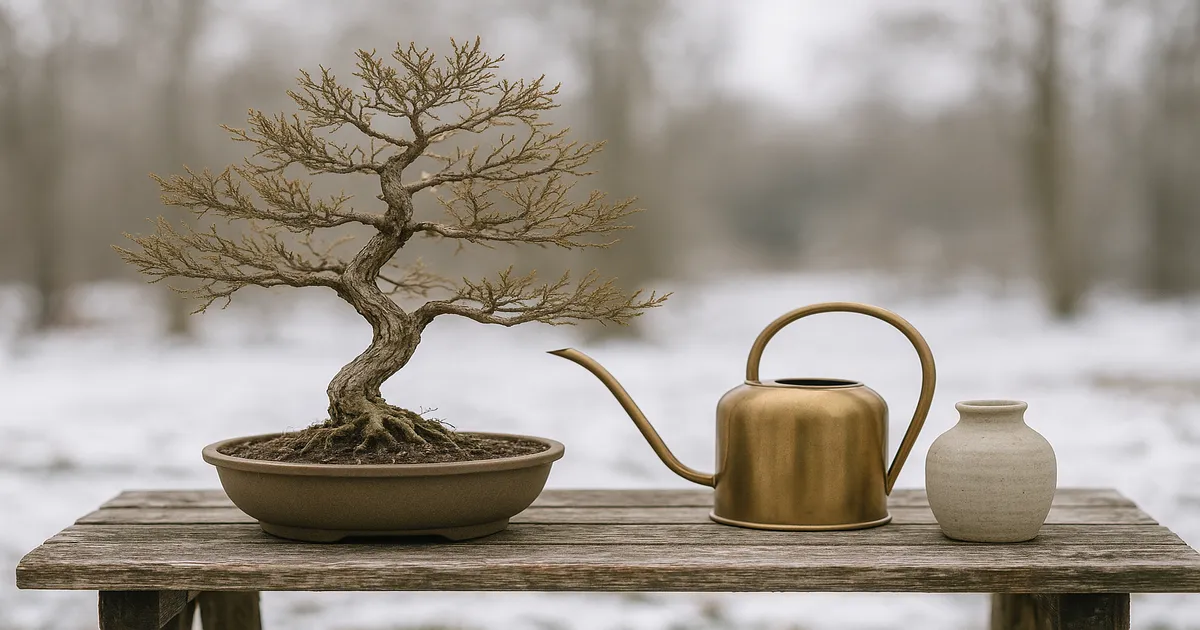
Dormant pines in cold storage still need water — just far less of it. Check soil every two to three weeks and water when it approaches dryness. Roots in a completely desiccated pot will die even in cold temperatures. Keep roots barely moist, not wet. Never bring a dormant pine into a heated room; that breaks dormancy prematurely and burns through energy reserves the tree needs for spring.
The Right Soil Mix for a Potted Pine Tree
Standard potting mixes are formulated to retain moisture — exactly the opposite of what a pine needs. They compact over time, cutting off oxygen to the root zone and eliminating the mycorrhizal fungi pines depend on. Even perfect watering habits can’t compensate for the wrong soil.
The go-to mix for most bonsai pines is:
- 40–50% akadama — fired clay that holds just enough moisture while providing cation exchange capacity
- 25–30% pumice — excellent drainage and aeration; structurally stable long-term
- 20–30% lava rock — drains fast, adds mineral content, never breaks down
This roughly 1:1:1 ratio is a solid starting point. In hot, dry climates, lean toward more akadama. In humid climates, increase the pumice and lava rock. Use particles in the 3–6 mm range for standard bonsai; shohin and mame trees benefit from a finer 1–3 mm mix. Target a slightly acidic pH of 5.5–6.5 — the sweet spot for mycorrhizal activity and nutrient availability. Kiryu volcanic aggregate is a premium alternative to lava rock that many pine specialists prefer for its drainage and pH properties.
Diagnosing Overwatering vs. Underwatering
Signs of Overwatering
- Needles yellowing from the base outward, starting with older interior needles
- Foliage appearing dull gray-green rather than vibrant
- Soil staying wet for more than three to four days in warm weather
- Roots that look brown and mushy, or smell sour
- Sudden wilting despite moist soil — a sign root rot has already compromised water uptake
If root rot is suspected, remove the tree from its pot, trim mushy roots back to healthy tissue, and repot into fresh, well-draining mix. A quality concave cutter makes clean cuts that heal faster than ragged tears. Avoid fertilizing until the tree shows clear signs of recovery.
Signs of Underwatering
- Needles curling inward and losing rigidity
- Browning starting at needle tips and progressing inward
- Premature needle drop across multiple branches
- Soil visibly pulling away from pot edges
- Candles wilting or failing to extend properly in spring
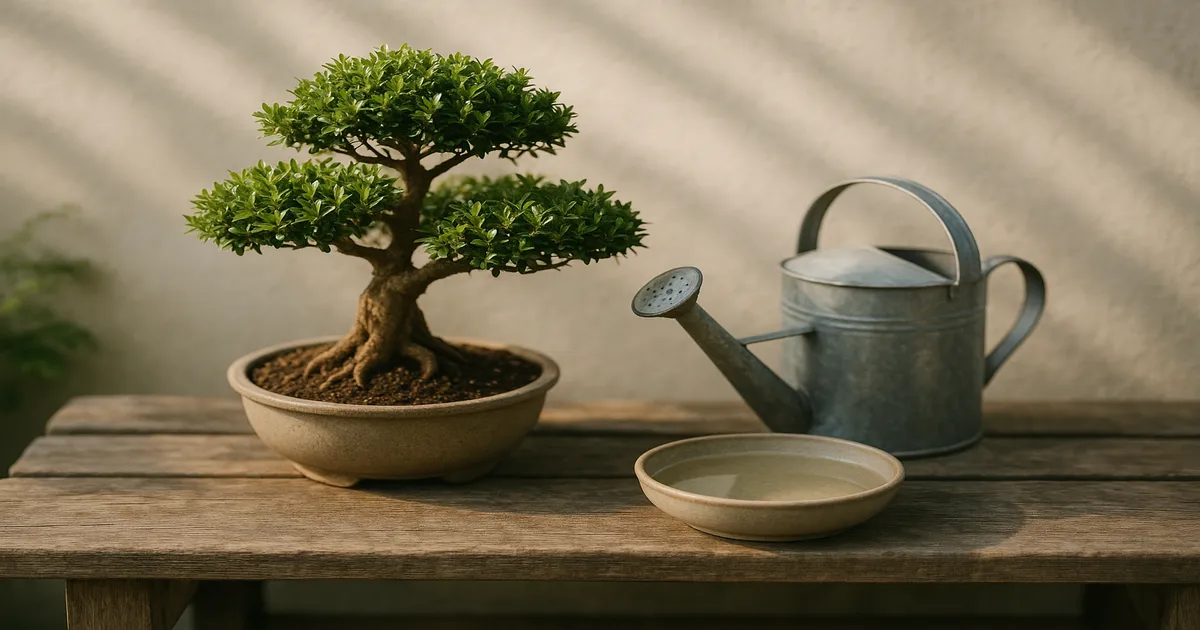
To revive a severely dried-out pine, don’t flood the root ball all at once — dry soil often repels water rather than absorbing it. Instead, set the pot in a shallow tray of water for 20–30 minutes to allow gradual rehydration from the bottom, then water normally from the top. Move the tree to a shadier spot temporarily to reduce transpiration stress while roots recover.
Frequently Asked Questions
How do I know when my potted pine tree needs water?
Insert a finger or wooden chopstick 1–2 inches (2.5–5 cm) into the soil. Water when it feels barely moist to dry at that depth. Lifting the pot also helps — a noticeably light pot usually means the soil is dry. Never rely on surface appearance alone; the top layer dries out long before the root zone does.
Can you overwater a pine tree in a pot?
Yes, and it’s one of the most common ways to kill a potted pine. Overwatering suffocates roots and destroys the mycorrhizal fungi pines depend on. Early signs include yellowing needles from the base outward, dull foliage, and soil that stays wet for days. If root rot sets in, recovery is difficult and often unsuccessful.
How often should I water a pine bonsai in summer?
Once daily is typical, but small pots in hot, dry, or windy conditions may need watering twice a day. Always use the soil check rather than a fixed schedule — a cloudy, humid day may mean the tree doesn’t need water at all. Never let the soil dry completely during the growing season.
Do potted pine trees need water in winter?
Yes. Even dormant pines in cold storage need occasional watering. Check soil every two to three weeks and water if it’s approaching dryness — completely desiccated roots will die even in cold temperatures. Trees in cold frames may need water every three to seven days due to ongoing evaporation.
What is the best soil mix for a potted pine tree?
A well-draining inorganic mix of roughly 40–50% akadama, 25–30% pumice, and 20–30% lava rock gives you the best margin for error. It drains quickly, maintains oxygen in the root zone, and supports the mycorrhizal fungi essential to pine health. Avoid standard potting soil entirely — it retains too much moisture and compacts over time.