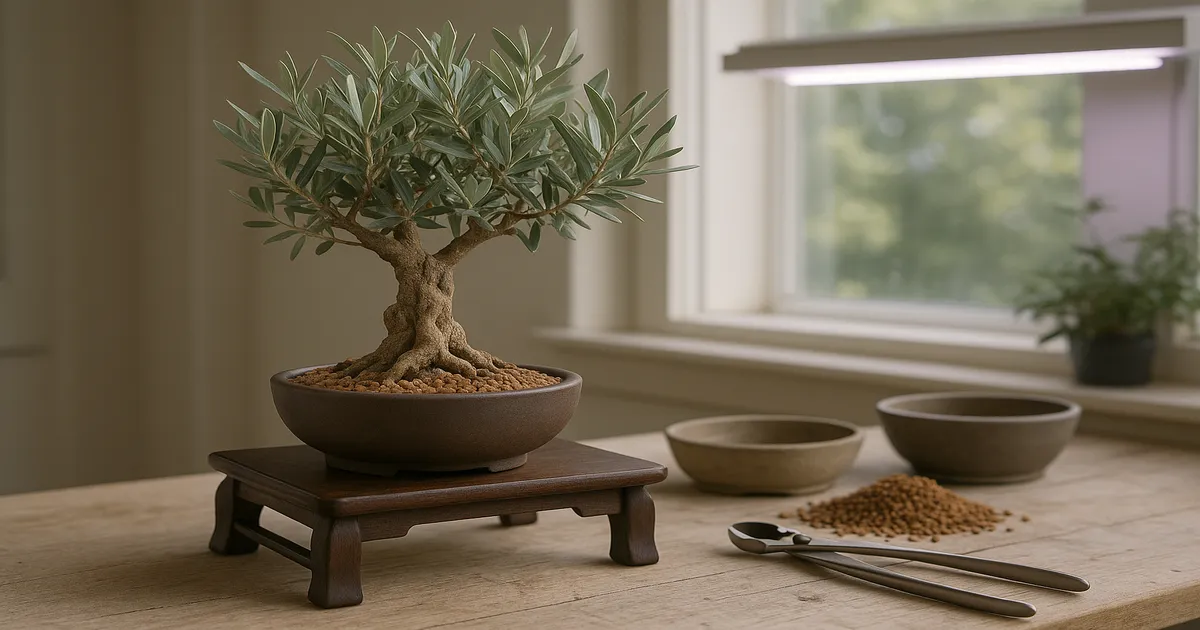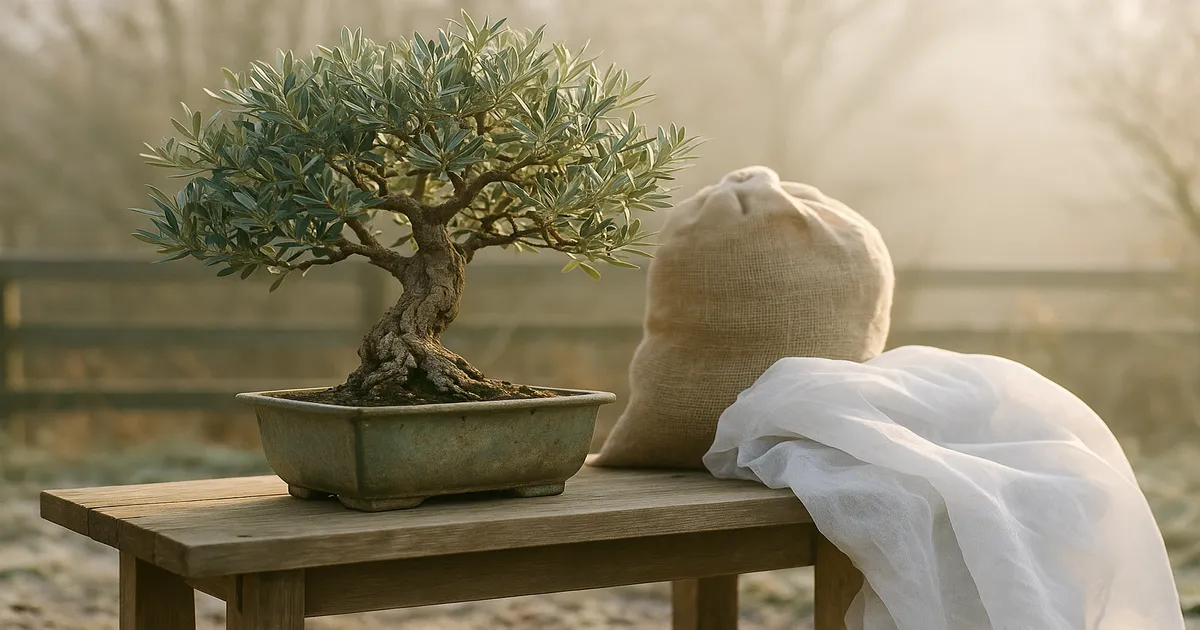
Quick Answer: To look after an olive tree bonsai in winter, keep it in a cool, bright spot between 40–55°F (4–13°C), water only every 10–21 days, and wrap the pot to protect roots from freezing. Olive bonsai need a genuine cool rest period — they are not houseplants — and cold, wet roots are the single biggest cause of winter losses.
Knowing how to look after an olive tree in winter is the difference between a tree that thrives for decades and one that quietly dies in a corner. Olea europaea is one of the most rewarding bonsai species — ancient-looking, tough, and endlessly characterful — but it has specific cold-season needs that catch many growers off guard. Get the basics right and the tree will reward you with years of vigorous growth and increasingly dramatic bark.
Understanding Why Winter Care Is Critical for Olive Bonsai
Mediterranean Origins Shape Everything
The olive evolved on rocky Mediterranean hillsides under blazing sun, thin alkaline soil, and dry air. It is built for drought, not dampness. Wild specimens can live 2,000–3,000 years, developing the deeply furrowed, gnarled trunks that make this species so compelling as a bonsai subject.
In its native habitat, winter means cool temperatures and reduced rainfall — not freezing, waterlogged soil. Replicate that, and your tree will thrive.
Why Bonsai Pots Make Frost Far More Dangerous
A landscape olive planted in the ground has its roots insulated by a large volume of soil. Your bonsai pot holds perhaps a litre or two of growing medium, with the entire root system exposed to the surrounding air temperature. Root damage that would never affect a garden tree can kill a bonsai in a single hard frost. That vulnerability is the central fact of olive bonsai winter care.
Olive Varieties and Cold Tolerance
Most bonsai olives are Olea europaea in one of several cultivars:
- Arbequina — compact habit, small leaves, good cold tolerance; widely available
- Little Ollie (Montra) — dwarf, non-fruiting, dense branching; excellent for beginners
- Cipressino — upright, columnar growth; suits formal upright styles
- Frantoio — vigorous Italian variety; better suited to larger bonsai
- subsp. cuspidata (African wild olive) — more cold-sensitive; needs extra winter protection
How to Look After an Olive Tree in Winter: Temperature and Location
Ideal Overwintering Temperature Range
The sweet spot for overwintering an olive bonsai is 40–55°F (4–13°C). This is cool enough to trigger genuine dormancy, but warm enough to keep roots safe. Don’t be tempted to bring the tree into a warm living room — sustained warmth through winter weakens the tree and sets it up for a difficult spring.
Frost Damage Thresholds
- 25–28°F (-4 to -2°C): Root damage begins in uninsulated pots
- 20–22°F (-7 to -6°C): Foliage damage becomes likely
- Below 20°F (-7°C): Serious risk of tree death without substantial protection
A healthy, well-insulated bonsai can survive a few nights nudging 20°F (-7°C), but treat that as the emergency margin, not the target.
Winter Protection by USDA Hardiness Zone
| Zone | Recommended Approach |
|---|---|
| 9–11 | Outdoors year-round; fleece for unusual cold snaps |
| 8 | Unheated greenhouse or cold frame, November–March |
| 7 | Cool garage or unheated greenhouse; add grow lights if light is poor |
| 6 and below | Heated greenhouse (minimum 32–40°F / 0–4°C); grow lights strongly recommended |
Choosing the Right Overwintering Location
The best locations, roughly in order of preference:
- Unheated greenhouse — best combination of light, temperature control, and ventilation
- Cold frame — excellent for Zones 8–9; cheap and effective
- Cool conservatory — good light and easy access; watch that it doesn’t overheat on sunny winter days
- Garage with a south-facing window — workable with grow light supplementation
Whatever you choose, ensure some ventilation. Sealed, humid, low-airflow environments breed fungal problems quickly.
Light, Watering, and Frost Protection
Why Olive Bonsai Need Maximum Light Even in Dormancy
Olives are among the most light-hungry species in bonsai. During the growing season they want 6–8 hours of direct sun per day. In winter, even in dormancy, they should not drop below 10,000 lux for extended periods. Chronic low light leads to weak, elongated growth, increased pest susceptibility, and gradual decline — even when everything else is correct.
Natural light, even in winter, is far superior to indoor conditions. The problem arises when trees go into a garage, shed, or spare room. A bright south-facing window delivers roughly 1,000–3,000 lux on a clear winter day. That is not enough on its own.
If you are overwintering in a low-light space, grow lights are essential. Look for full-spectrum LED panels or T5 fluorescent tubes with a colour temperature of 5,000–6,500K. Position them 6–12 inches above the canopy and run them for 12–14 hours per day, aiming for 20,000–30,000 lux at canopy level. A reliable timer removes the guesswork .
How Often to Water an Olive Bonsai in Winter
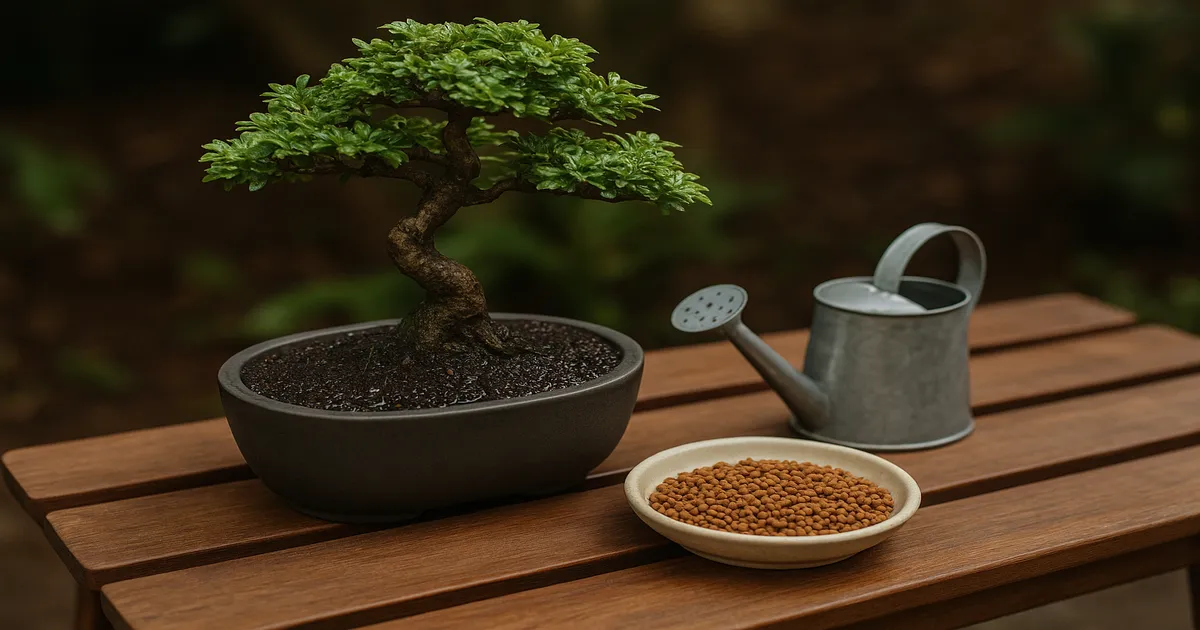
Reduce watering dramatically. Aim for once every 10–21 days during cold dormancy. The exact interval depends on your storage temperature, pot size, and soil mix. The goal is to prevent the roots from completely desiccating — not to keep them moist.
Cold, wet roots are the primary cause of winter fatalities in olive bonsai. This cannot be overstated.
Checking moisture correctly: Insert your finger 1–2 inches (2–5 cm) into the soil. If it feels barely damp at that depth, wait a few more days. If it feels dry, water now. Don’t rely on the surface — the top of the soil dries out first and is not a reliable guide. With experience, pot weight becomes equally useful: a dry pot is noticeably lighter than a freshly watered one.
Watering technique:
- Water thoroughly until water drains freely from all drainage holes
- Never leave the pot sitting in a tray of standing water
- Use water at room temperature — ice-cold water on dormant roots is an unnecessary shock
Olives prefer slightly hard, neutral-to-alkaline water (pH 6.5–7.5). Avoid very acidic rainwater or softened water as your primary source in winter. Don’t mist the foliage — wet leaves in cold, low-airflow conditions invite fungal disease.
Insulating the Pot Against Freezing
Wrap the pot — not the tree — in bubble wrap, hessian, or horticultural fleece . This traps residual warmth around the root zone without restricting airflow through the canopy. Place the pot on a wooden board or a piece of polystyrene rather than directly on concrete — cold conducts upward from hard surfaces and can chill roots faster than the ambient air temperature suggests.
For trees in milder zones that stay outdoors, keep horticultural fleece to hand for unexpected cold snaps . Drape it loosely over the canopy and pot when frost is forecast, and remove it during the day to allow light and air circulation. Don’t leave fleece on for more than a few consecutive days.
Pruning and Wiring in Winter
When to Prune
During the coldest months — roughly December and January in the Northern Hemisphere — leave the pruning tools in the drawer. The tree is dormant, wound-healing is minimal, and cuts made in deep cold are slow to callus and vulnerable to die-back.
Late February to March is the ideal window for structural work. The tree is still semi-dormant, which limits stress, but warming temperatures mean new growth will emerge within weeks and push callus tissue over wounds quickly.
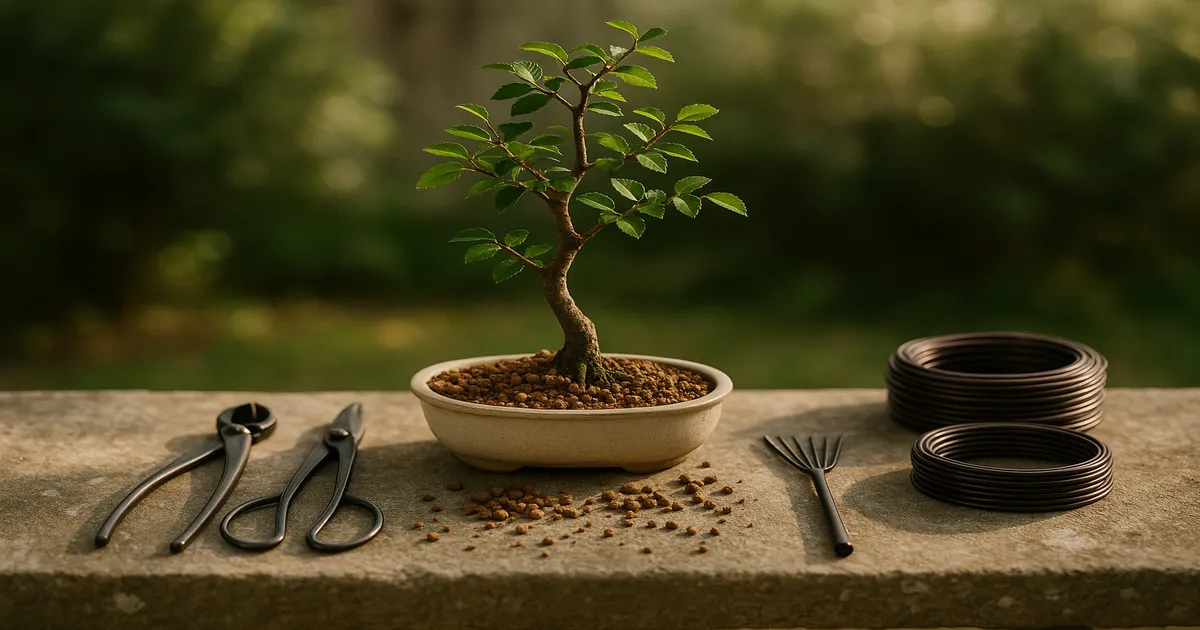
Remove branches growing straight toward the viewer, branches growing straight back (unless needed for depth), crossing branches, and anything that disrupts the overall flow and taper of the design. Apply cut paste to every cut larger than 5mm (¼ inch) . Olives callus slowly, and unprotected wounds can dry back further than intended.
Wiring in Late Winter
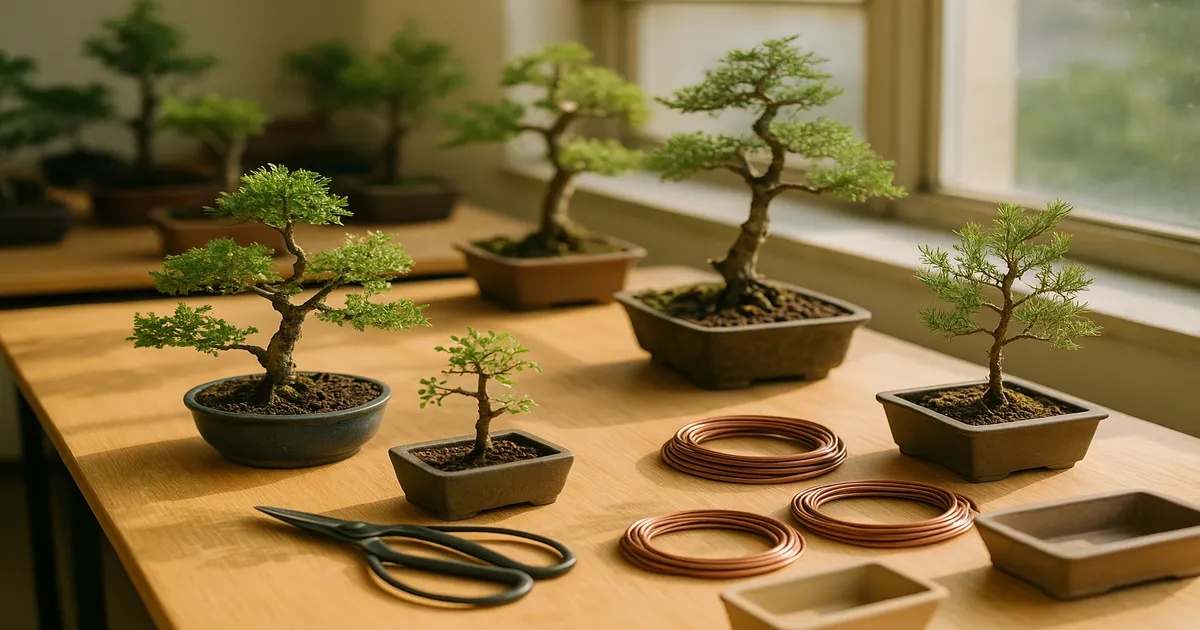
Late winter is a good time to wire. The tree is not in active growth, so there is no risk of wire cutting in quickly, and branches are slightly more pliable than in midsummer. Use aluminium wire at a 45-degree angle to the branch . Apply it firmly but not tightly — you should be able to slide a fingernail underneath. Once spring growth begins, check wire monthly. Olive bark heals slowly from wire scars, so remove wire before it bites in.
Troubleshooting Common Winter Problems
Yellowing leaves usually indicate overwatering or insufficient light. Extend the gap between waterings and move the tree to a brighter spot or add grow lights. Fertiliser in cold dormancy does more harm than good — don’t assume yellowing means the tree is hungry.
Leaf drop — a small amount is normal, as olives can behave semi-deciduously in cold conditions. Heavy or sudden leaf drop combined with soft stems points to root rot or cold damage. Check the roots immediately.
Root rot: Healthy olive roots are firm and white to tan. Rotted roots are soft, mushy, and dark brown or black. If you find rot, remove all affected roots with clean scissors, dust cut surfaces with powdered sulphur or a fungicide, and repot into fresh, well-draining mix — a reliable ratio is 2 parts akadama : 2 parts pumice : 1 part lava rock. Move the tree to a bright, cool location and do not fertilise until new growth confirms recovery.
Leaf tip browning in heated indoor storage usually means humidity is too low. A cooler location with naturally higher ambient humidity is preferable. Browning on windward-facing leaves in a greenhouse or outdoor setting is wind scorch — move the tree to a more sheltered position.
Fungus gnats hovering around the soil are a reliable sign the soil is staying too wet. Allow it to dry out more between waterings; the problem resolves itself quickly once the moisture cycle is corrected.
Frequently Asked Questions
Can an olive bonsai survive frost outdoors?
A well-established olive bonsai with an insulated pot can tolerate a few nights down to around 20°F (-7°C), but this is the outer limit — not a comfortable operating zone. Root damage begins at 25–28°F (-4 to -2°C) in uninsulated containers. For anything below Zone 9, reliable frost protection is essential.
Should I bring my olive bonsai inside for winter?
Only if your indoor space is cool, bright, and well-ventilated. A warm living room is worse than a cold garage. The ideal indoor overwintering spot is an unheated room, cool conservatory, or garage with a south-facing window, kept between 40–55°F (4–13°C). Add grow lights if natural light is poor.
How often should I water an olive bonsai in winter?
In cool dormant storage, water approximately once every 10–21 days. Always check soil moisture with the finger test before watering — insert a finger 1–2 inches into the soil and water only when it feels barely damp at depth. Cold, wet roots are the most common cause of winter losses.
Why is my olive bonsai dropping leaves in winter?
Some leaf drop is normal — olives can be semi-deciduous in cold conditions. Heavy or sudden leaf drop, especially with soft or discoloured stems, suggests root rot or severe cold damage. Inspect the roots: healthy roots are firm and pale; rotted roots are dark and mushy. Overwatering in cold conditions is the most likely culprit.
What temperature is too cold for an olive bonsai?
Root damage begins around 25–28°F (-4 to -2°C) in uninsulated bonsai pots, and foliage damage starts around 20–22°F (-7 to -6°C). Below 20°F (-7°C) risks serious or fatal damage. The target overwintering range is 40–55°F (4–13°C) — cool enough for proper dormancy, warm enough to keep roots safe.